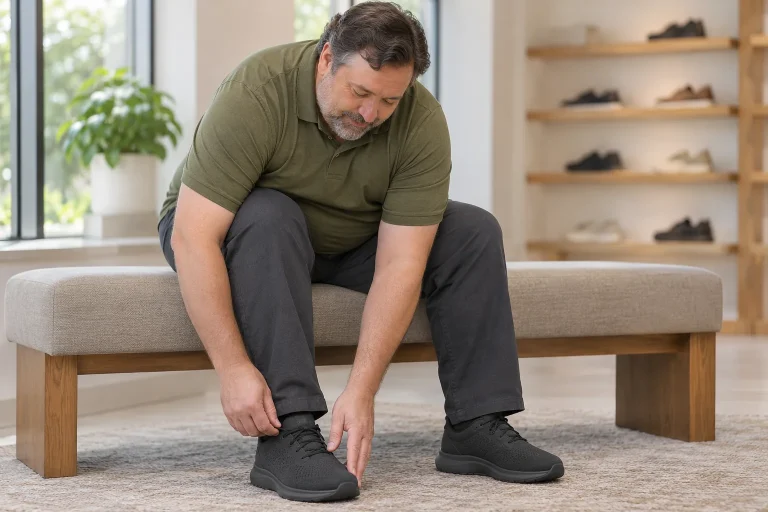

My feet change size during the day: when is a larger shoe not enough?
Shoes that become tighter by evening can raise both fitting and health questions. Timing, one-sided or two-sided changes and accompanying symptoms provide distinct…
Training. Health. Gear.
And everything beyond the kilometres. Find your next read.
1248 articles · one running community
Shoes that become tighter by evening can raise both fitting and health questions. Timing, one-sided or two-sided changes and accompanying symptoms provide distinct…
Zips, buckles, bottles and phones: with known carpal tunnel syndrome, connect the complete equipment-use task with your individual plan and symptom follow-up.
Outer-elbow symptoms can affect grip and daily tasks in runners too. Phone, work tools, water bottle: what should you observe and discuss in…
Asphalt sloping towards the road edge changes support beneath each foot. Geometry and original experiments clarify movement, muscle signals and energy demand.
Displayed target, average belt speed and within-step fluctuations are different data. Worked examples help interpret pace and ask for a useful service check.
Which fingers feel numb, when did it start, and has your grip changed? Observing running, daily hand use and a watch strap cannot…
MyRun’s tablet and phone connections, Apple Watch permissions and Strava routes in one clear system: a data-path plan, pace examples and saving checks.
The 2026 F80 touchscreen considered through real home tasks: content alongside workout data, separate profiles, saving, screen calculations and an acceptance test.
Beyond the F85’s large console, the app’s actual task matters: Kinomap incline, manual speed, Garmin data direction and a four-part compatibility test.
A soft sole does not make a narrow shoe spacious. Observing fit, lacing and symptoms separately helps clarify which problem actually needs solving.
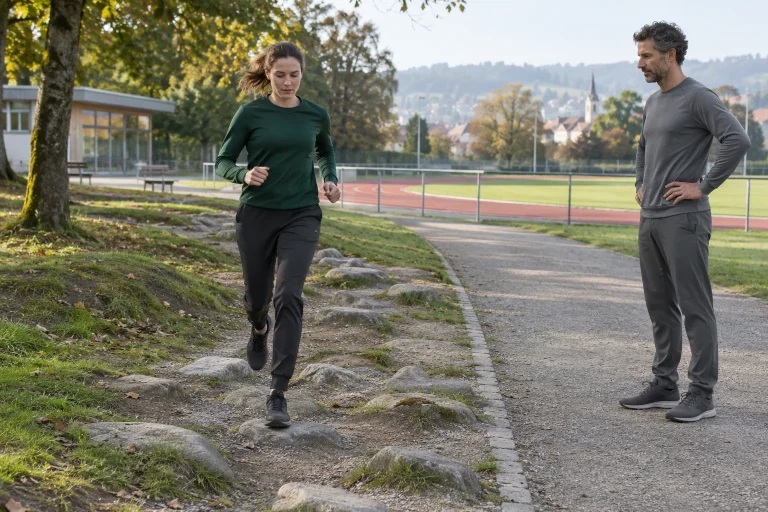
The shape and arrangement of bumps matter. Original experiments and a worked route example explain why one percentage cannot give you an exact…
Research risk is not a personal prediction. Participants, running volume, follow-up time and study methods together give meaning to an association.