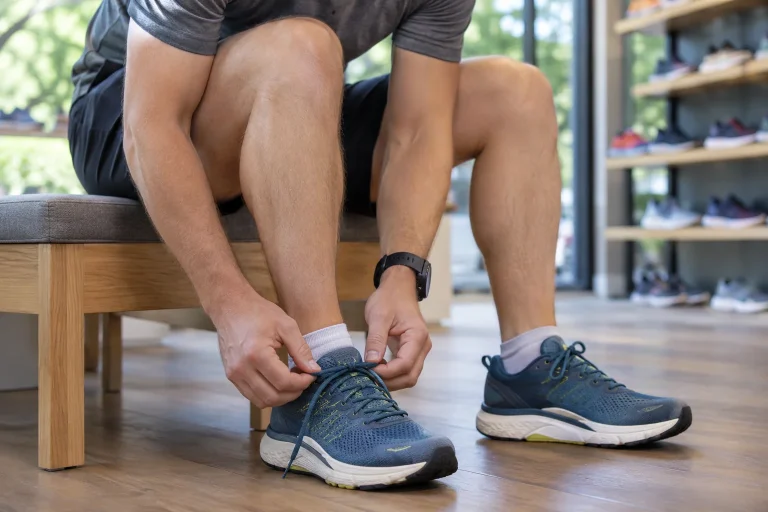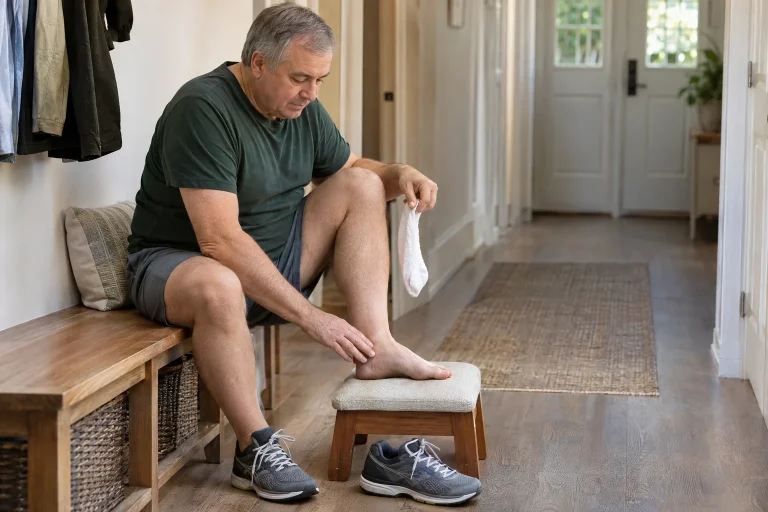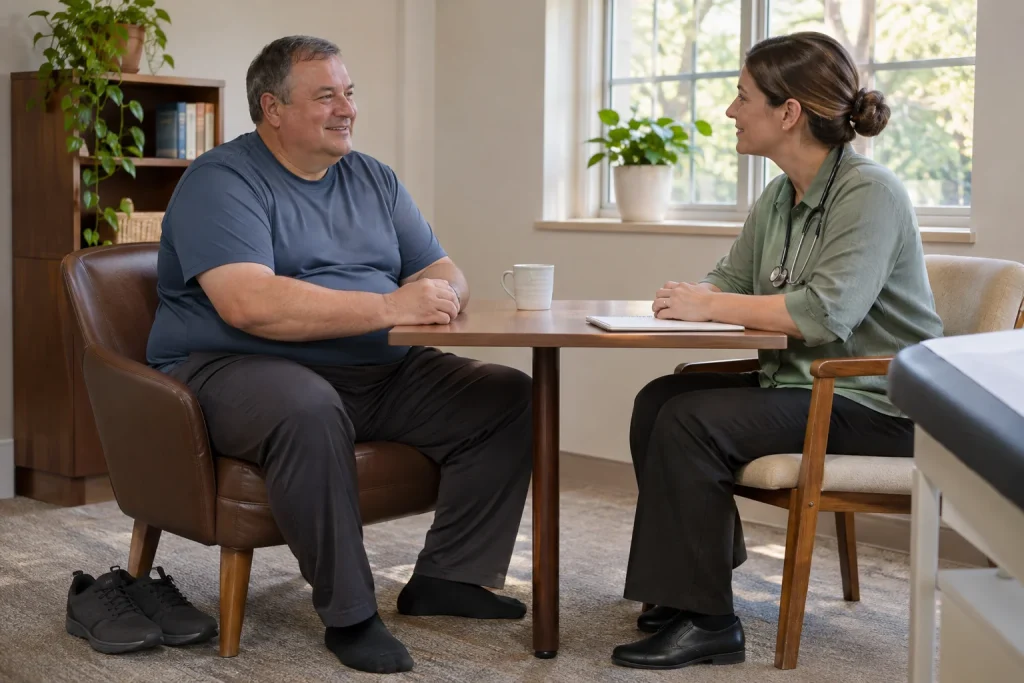
You put on your trainers easily in the morning, but by afternoon the same pair presses on your feet. It is easy to conclude you need a larger size. This can be an important fitting question, but not every situation is solved by the next size up. The change’s timing, whether one or both feet are affected and accompanying symptoms also inform whether medical assessment is needed.
With a larger body, it is particularly important not to accept a foot change as an automatic, inevitable consequence. Body size alone cannot establish why shoes became tighter. Seeking comfortable equipment is justified, but does not replace clarifying swelling’s cause. The two tasks may coexist: you may need both better fit and professional help.
New one-sided leg or foot swelling of unknown cause, sudden or severe painful swelling, a red or hot area, or fever requires urgent assessment. Accompanying breathlessness or chest pain needs immediate help. The NHS information on swelling and deep vein thrombosis explain why changing shoes or trying a jog is not the way to seek a solution in these situations.
How a shoe feels is not a precise measurement of foot health
A tighter-feeling shoe may alert you that something changed, but does not itself reveal how much or why. Different socks, altered lacing, a new insole or the upper’s condition can also change the sensation. Visible swelling or another bodily symptom is separate information. You need not use shoes as medical measuring instruments to take a change seriously.
You can describe daily fit differences more clearly by naming the location: toes, top of the foot, around the ankle or several areas. Whether it is truly the same shoe and setup matters too. This does not prove a cause; it makes the history more precise. It gives more usable detail than the general sentence ‘my feet are larger by evening’.
The AAOS fitting information also mentions changes during the day when choosing a time to try shoes. This does not mean every new or striking swelling is harmless. General clothing-comfort advice must not become medical reassurance in a situation the source has not assessed individually.
The side affected and timeline are particularly useful information
Describe whether one foot or both changed, when you first noticed it and whether something similar happened before. Both shoes feeling tight is not the same observation as sudden swelling on one side. Two-sided symptoms do not rule out a health problem either. These details support the history needed for assessment, rather than providing a home yes-or-no diagnosis.
Mention circumstances too: was there prolonged sitting or standing, a longer journey, injury, new activity or medication change beforehand? The NHS discusses several possible causes of swelling, including associations with medicines and different conditions. A familiar situation’s presence does not establish that it certainly caused the symptom. Do not stop medication independently on that assumption.
Also describe whether the change subsides, persists into the next day or becomes more frequent. You need not wait several days to collect data when urgent signs are present. Notes help when they do not delay seeking assistance. The aim is accurate transfer of history, rather than proving you tried alone for long enough.
 Enlarge image
Foot pain is not simply a size problem
The NHS page on pain in the top of the foot says tight shoes may play a role, but injury and other conditions are possible explanations too. Pain’s location alone does not determine its cause. You need not select a disease from an online symptom chart before seeking help.
If pain obstructs usual activities, worsens or returns, medical discussion is warranted. Loss of sensation or tingling cannot always be dismissed as tight lacing either. With known diabetes, foot pain and changes deserve particular attention. Choosing more comfortable shoes does not replace necessary foot checks and an individual care plan.
Inability to walk, severe pain, altered shape or a hot, swollen foot may indicate an urgent situation. Do not then ask a salesperson for shoes that let you complete the planned run anyway. Resolving symptoms cannot depend on finding the right model. Assessment of the bodily change comes first; further movement decisions require that information.
When can shoe fitting be a separate practical task?
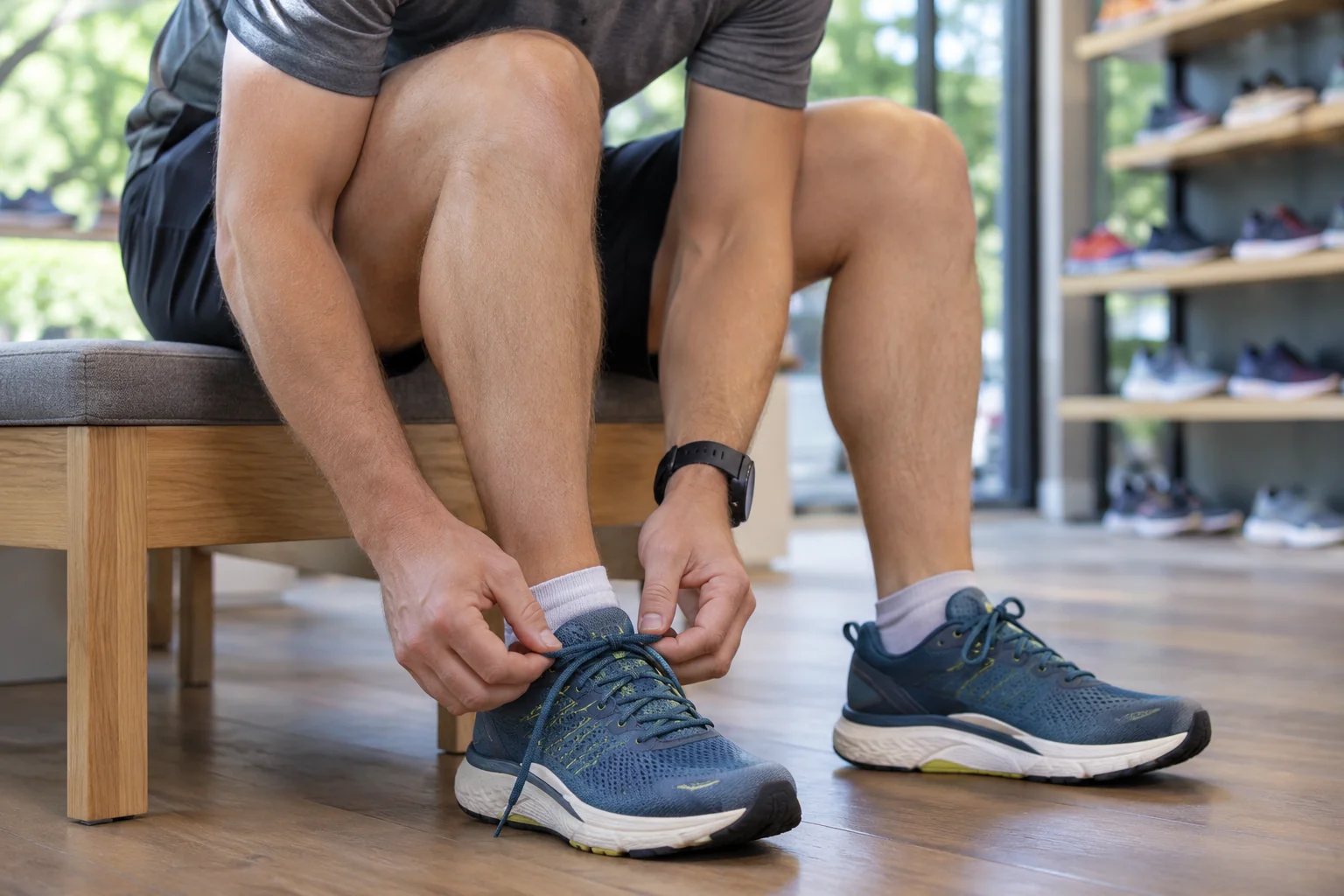
Once individual health circumstances are clarified, actual use matters when trying shoes. Describe when you wear the pair, with which socks and for what activity. If fit differs at day’s end, the fitting can account for it. You need not, however, spend a long time walking around a shop on swollen or painful feet to make a test more complete.
Appropriate length and width are separate questions. A longer shoe does not necessarily provide room where the foot is squeezed, and may permit unnecessary movement elsewhere. Ask about another width, toe shape or upper design. AAOS also highlights assessing actual fit because size labels and styles differ.
Adjustable lacing or another solution may improve comfort, but is not a diagnosis. Do not squeeze your feet down to keep using formerly comfortable shoes unchanged, or stack insoles to conceal an uncertain situation. If you use a prescribed insole or another aid, clarify its fit alongside your care plan. Using shoe and accessory together remains a separate question.
What is worth observing, and what need not be tested at home?
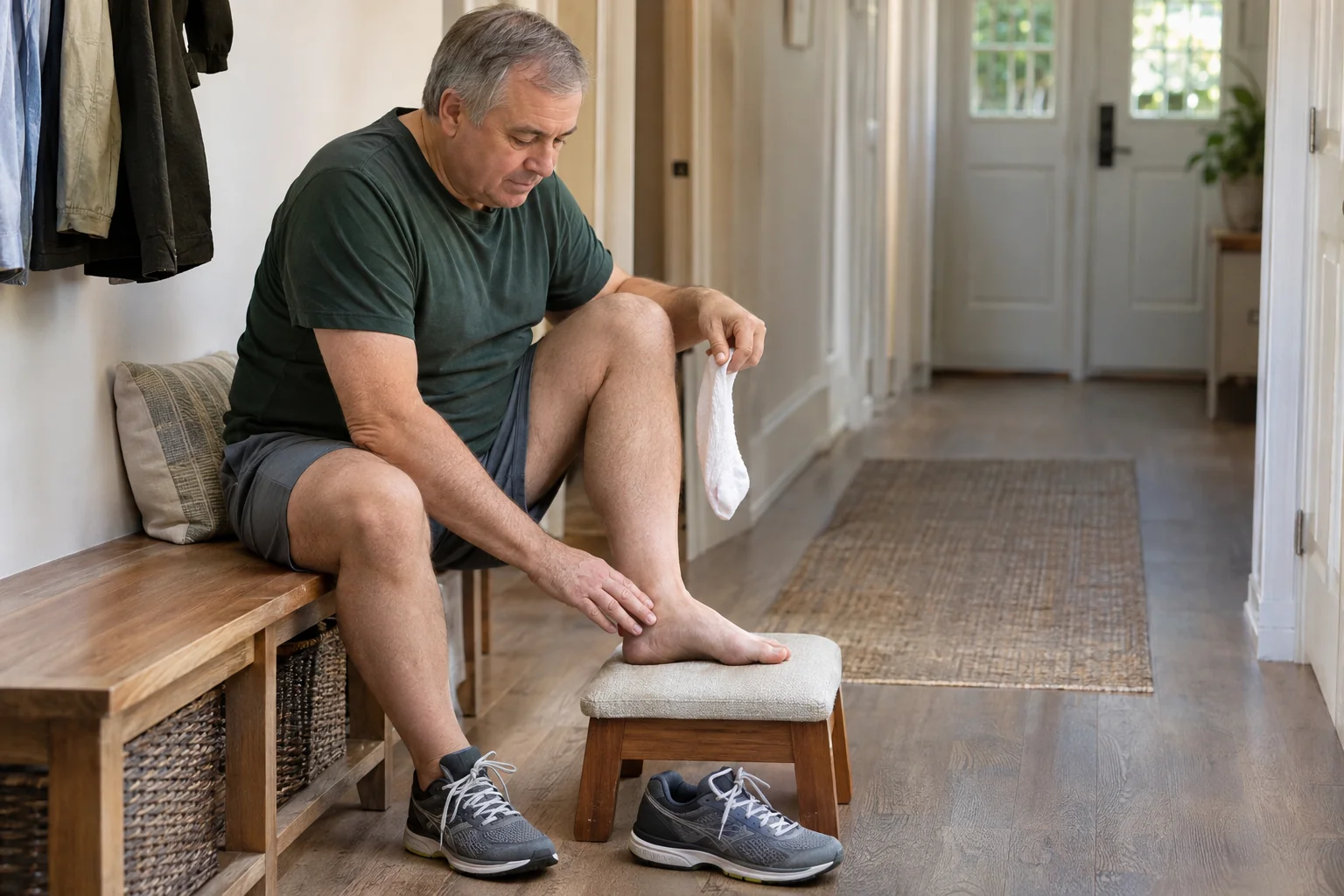
Useful notes may include onset, the affected side, pain or altered sensation and changes in everyday walking. A brief sentence for each may suffice. You need not press the ankle hard, deliberately leave the foot hanging down for a long time or provoke swelling through exercise. These do not replace professional examination, and provoking symptoms is not a condition of a credible account.
| Observable detail | How does it help the account? | What can it not do? |
|---|---|---|
| One side or both are affected. | Makes the change’s description more precise. | Does not alone rule out disease. |
| When it began and whether it persists. | Provides an understandable timeline. | Does not justify waiting with urgent symptoms. |
| Pain, warmth or altered sensation accompanies it. | Identifies additional symptoms. | Does not confidently name a single cause. |
| Which shoes and setup feel tight. | Helps clarify an equipment detail. | Is not a medical measurement of swelling’s extent. |
Take a photograph for your own use or consultation only if comfortable and without delaying help. An image may help show a previous state, but cannot diagnose alone. Do not expect a photo uploaded to a public running group to establish what causes the change. Commenters’ varied experiences are not an individual examination.
Why not choose compression or diuresis yourself?
Treating swelling also depends on its cause. A sports-sock advertisement or another runner’s successful solution does not determine which aid and use suit you. Compression products may serve different purposes; stronger is not automatically better. Do not choose a medical compression class from your own symptom list or cover an unexplained change with a new, tighter garment.
Equally, do not experiment with diuretics, ‘water-loss’ supplements or abrupt fluid restriction. Shoes becoming tighter by day’s end do not justify such treatment. If medication, a fluid plan or compression is already prescribed, discuss changes with your clinician. Altering your own treatment is not a shoe-selection question, and withholding prescribed medicine before training is not a safe workaround.
Your sporting goal can remain in the conversation. Describe the movement you want to return to and what matters in everyday life. Appropriate assessment does not necessarily mean abandoning all movement, but cannot be replaced by general advice to ‘move it around’ either. The next step suited to the current condition needs individual clarification.
 Enlarge image
Travel and work are not automatic explanations
If shoes became tight after a long journey or a day on your feet, that matters to report, but does not close the assessment. NHS thrombosis information mentions several risk situations while emphasising urgent symptom assessment. You need not decide at home how likely a specific cause is. New one-sided pain and swelling cannot simply be treated as ‘travel legs’.
Useful workplace adjustments may independently include reconsidering waiting, accessible seating or getting home. These support comfort and daily function without replacing medical treatment. If symptoms make standing work or walking harder, tell your clinician and, where appropriate, a relevant workplace professional too.
Do not let the planned run become a compulsory test at the end of the whole day. If putting shoes on reveals a new bodily change, its severity should guide the decision. You need not set off for weekly mileage hoping movement will resolve the question. A flexible plan includes symptom assessment as a legitimate next step, rather than ruining the programme.
Keep the task clear before buying the next shoes
Before shopping, separate what you know about your feet’s condition from what you want to improve in equipment. If the cause or necessary action remains unclear, a salesperson’s promise should not resolve that uncertainty. Once health conditions are clarified, you can give useful fitting information: where more room is needed, when you wear the shoes and which accessories you use.
Letting go of an old size is not failure, but a larger size is not a general cure either. Appropriate length, width and fastening matter together in a usable shoe. If the shop you try has no suitable pair, seek another range or more expert fitting help. You need not force your feet into a particular model or accept judgement about your body weight instead of an answer to the specific question.
Changes during the day become understandable when shoes are treated as a signal, rather than a diagnosis. Timing and accompanying symptoms support medical assessment, while precise fitting observations help equipment selection. The two may meet in an individual plan without merging: new shoes can be more comfortable while swelling still needs its own explanation and appropriate care.
Sources
- NHS: Swollen ankles, feet and legs
- NHS: Pain in the top of the foot
- NHS: Deep vein thrombosis
- AAOS: Shoes – Finding the Right Fit
How Futószív articles are prepared: our editorial guidelines.