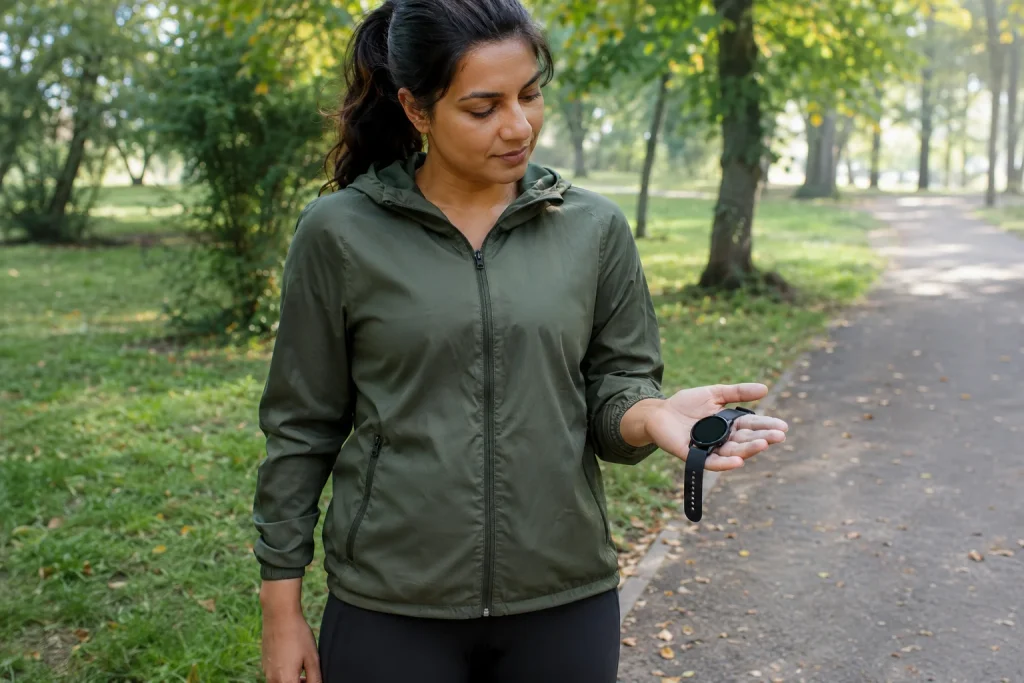
Your hand starts tingling during a run. You stop, remove your watch and a little later it feels different. It is easy to conclude that the strap must have caused it. The observation matters, but several other circumstances changed too: you stopped, may have let go of an object, changed arm position and allowed time to pass. Assessing the symptom requires a fuller story.
Hand numbness is not the name of a single diagnosis. Location, timing, grip and symptoms elsewhere all matter together. This article supports an accurate account; it does not determine whether the wrist, neck or another cause is involved. Seek medical assessment for new or worsening altered sensation and changes in function, and immediate help for severe sudden symptoms.
What do you mean by numbness, and where do you feel it?
Do you mean tingling, pins and needles, burning or reduced sensation? Everyday language often combines these under one word. Explain your own experience at the consultation. Say which side, fingers or part of the hand is affected too. You do not need to select a nerve name beforehand.
Showing the location does not require a painful test. Describe the area you naturally noticed, and say if you cannot define its boundaries precisely. Do not pinch, prick or examine your skin with a hot object. Testing sensation belongs to an individual examination; your observation remains valuable even if you cannot show a sharply bordered patch.
If only one hand is affected, or the two sides have different stories, describe that separately. Dominant-hand use, equipment and daily tasks may also form part of the history. Do not change your account to fit a coloured hand diagram online. Your personal symptom is the primary information.
Carpal tunnel syndrome is one possible explanation
According to the NHS, carpal tunnel syndrome involves pressure on a nerve passing through the wrist, which can cause hand and finger symptoms such as tingling, numbness and difficulty gripping. Symptoms often begin gradually, initially come and go, and may be worse at night. This describes a condition rather than automatically explaining every hand sensation during running. NHS: Carpal tunnel syndrome.
The AAOS description places the thumb, index finger, middle finger and thumb-side half of the ring finger in the median nerve’s sensory territory. Naming the fingers precisely can therefore help during assessment. But this pattern should not become a standalone diagnostic rule. A complete history and individual examination remain necessary. AAOS: Carpal Tunnel Syndrome.
If your symptoms affect another area or are less precise, report them unchanged too. A different description does not mean there is no problem to assess. You do not have to “fulfil” a familiar disease’s symptoms to request help. The clinician’s task is to judge possible explanations and further investigations.
The neck and arm history may matter too
If you also have neck pain, sensations spreading into the arm or another upper-body problem, include it in your hand account. The NHS neck-pain information also identifies accompanying tingling as a reason to consult a doctor. Deciding beforehand whether the two areas are connected is not your task. NHS: Neck pain.
Separate the chronology too. Was your neck uncomfortable first, followed by the hand sensation, or did the hand symptom come first while the neck problem is old and unchanged? Your story may be more complex than one internet diagram. Do not turn an uncertain connection into a definite conclusion; report what you experienced and what you cannot remember.
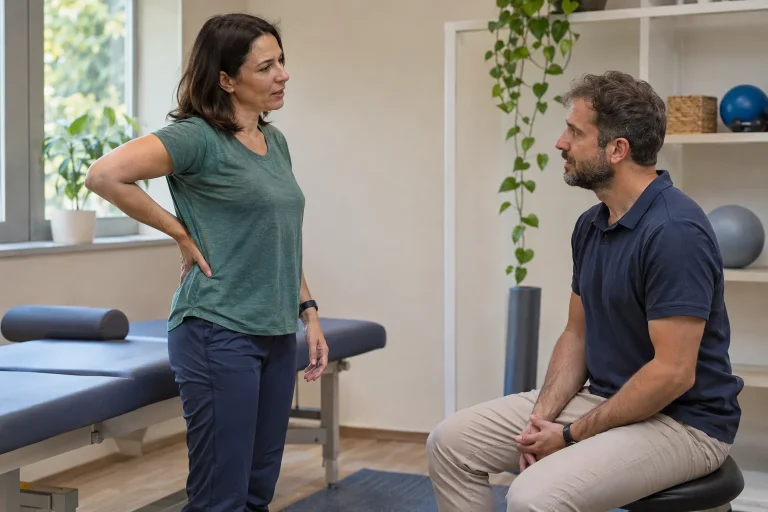
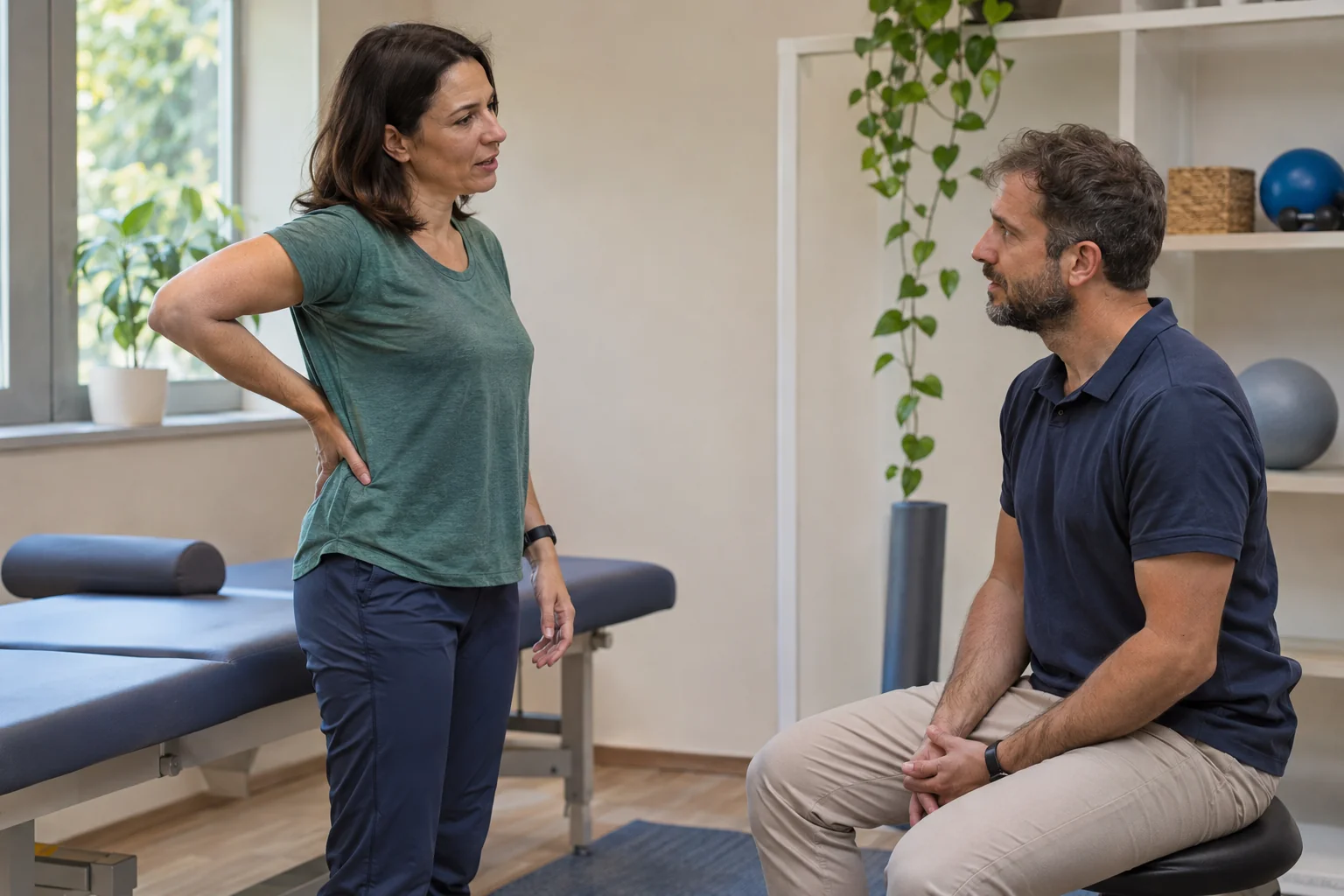
Describe your phone or desk position as part of the full day. A photograph may show your environment, but does not contain the onset, duration or grip changes associated with altered sensation. Do not choose neck or wrist exercises from a single posture image. Personal assessment also needs an account of function.
 Enlarge image
Removing a watch strap is an observation, not a diagnostic test
You do not need to keep wearing equipment that feels uncomfortable or tight to prove something. If you removed it, say when and what changed afterwards. This is useful context, but does not by itself establish that the equipment explained every symptom. Full assessment is particularly important when altered sensation recurs, persists or your grip changes too.
Do not tighten the strap again for a home comparison experiment. Nor do you need long test runs with several watches. Assessing a health symptom is not a product test. You can describe existing observations: which wrist wore the device, when you removed it and what else happened during the session.
Choosing a definite cause from timing alone is difficult because stopping can change several things at once. You can openly acknowledge that uncertainty. “I removed it and it felt milder later, but I also stopped” is more precise than claiming to have found and removed the cause. The professional can then start from the actual story.
Night-time and daytime patterns give a fuller picture together
Does it occur while sleeping, waking, reading, driving or during another daily situation? In discussing carpal tunnel syndrome, AAOS covers night-time symptoms and daytime symptoms with sustained hand positions. Describe these as part of your own history. Running and night-time experiences are not necessarily separate stories, but their connection needs clinical interpretation.
Do not deliberately hold your wrist in one position to see whether it goes numb. A test performed in an individual examination can provide different information from imitation at home. What you naturally noticed is enough for a consultation. Ask for advice about your circumstances rather than collecting new painful experiences in search of a diagnosis.
Report changes in frequency too. Have rare, brief episodes become more frequent or longer? Does a previously assessed symptom now behave differently? “It has always been there” can hide something new. The current change matters more than the familiarity of the symptom’s name.
Do not describe weak grip only through a pain score
Has holding objects, doing up buttons, handling a package or using familiar work equipment become harder? NHS and AAOS information on carpal tunnel problems also describes grip and dexterity changes. Report such functional changes even with little pain. Pain and strength are different experiences.
Add a naturally occurring example to the word “weaker”. You do not need maximal squeezing or heavy lifting to assess strength. Distinguishing caution caused by pain from an actual strength change belongs to the examination. Report new or worsening difficulties to your care provider promptly.
If other functions changed alongside the hand symptom, report those too. Do not narrow the symptom list to what you think fits your suspected condition. The professional needs the full current situation, previous reports and known conditions. Sports-watch data cannot replace your own account here.
Request personal assessment for a recurring problem
The NHS advises medical consultation when symptoms suggesting carpal tunnel syndrome worsen, do not go away or do not respond to steps taken at home. This does not justify labelling every numb hand yourself. Bring an accurate history of recurring symptoms and ask what assessment your personal situation requires.
History and examination of the hand may be the first steps; further investigations may be needed in some circumstances. For example, the NHS mentions nerve-conduction testing or imaging when the diagnosis is unclear. You do not need to choose among them beforehand. Ask which question they seek to clarify and how the result would inform the next step.
Do not choose a splint, exercise, treatment or medication from a running group’s experience. Clarify its purpose, method and follow-up in personal guidance. If you already have such a plan, report changes back there. Replacing a watch or another device does not automatically replace investigation of recurring altered sensation.
 Enlarge image
When should you not wait for the next review?
Sudden one-sided weakness or loss of sensation, facial drooping or speech disturbance may indicate a stroke. Seek immediate emergency assistance; in Hungary, call 112. Symptoms passing temporarily are no reason to wait. Running or wearing a watch does not provide a definite explanation for a sudden neurological change. NHS: symptoms of a stroke.
New arm numbness, marked movement difficulty, severe symptoms after injury, or a situation involving swelling and fever may also require urgent medical help. Sudden arm pain with chest pressure or tightness may be an immediate emergency. You do not have to determine the precise cause at home. NHS: elbow and arm symptoms.
Begin your request for help with the new symptom and its onset. Do not say only that your hand usually feels strange because of a strap. A previous assumption does not automatically explain the current situation. In a serious condition, do not try to drive yourself to care; follow the emergency responder’s instructions.
Brief observation without turning it into self-testing
The following overview organises experiences that have already occurred. You need not try every row, and missing information is not a negative test result. A few definite details can help in consultation when guesses do not fill the gaps.
| Topic | What is useful to report? |
|---|---|
| Sensation and location | Tingling or reduced sensation; which hand and area? |
| Chronology | When did it start, how long did it last, and what has changed since? |
| Circumstances | Running, holding a phone, a watch, work or night-time experiences. |
| Function | Has grip, dexterity or the need for help changed? |
| Other symptoms | Neck, arm, another area and sudden new changes. |
At review, ask what is known about your problem, what further assessment is needed and how the advice relates to your particular sport. Daily activity and a running programme may be separate questions. Clarify both the purpose of the next appointment and changes that warrant earlier contact.
Removing a strap may be one detail in a numb-hand history, while the fingers involved are an important observation. Personal decisions should relate to the complete situation: chronology, sensation, function and examination matter together. Clarify the next step from those details rather than conducting your own diagnostic experiment.
Sources
- NHS: Carpal tunnel syndrome
- NHS: Neck pain
- AAOS: Carpal Tunnel Syndrome
- NHS: Symptoms of a stroke
- NHS: Elbow and arm pain
How Futószív articles are prepared: our editorial guidelines.