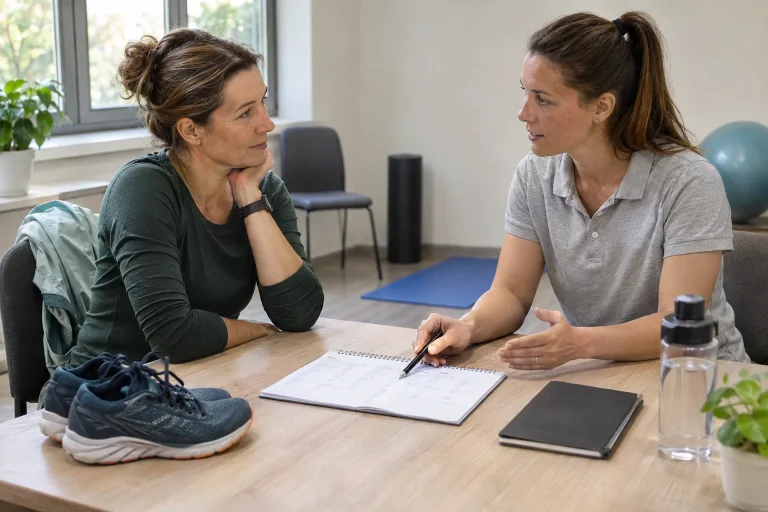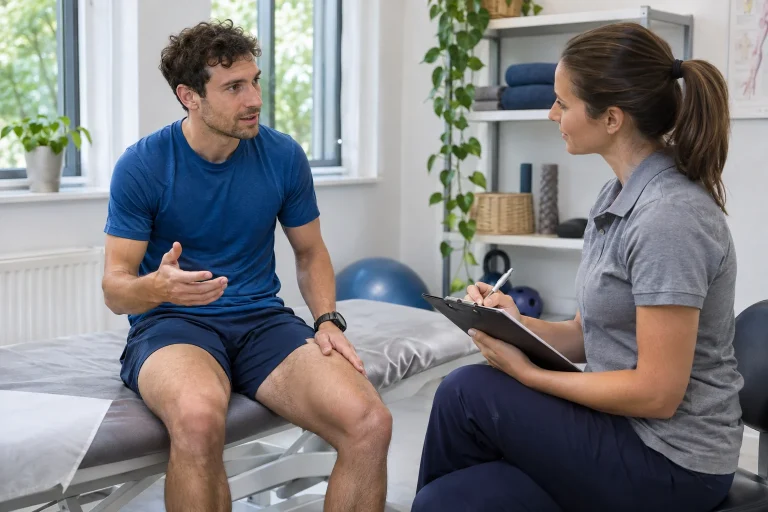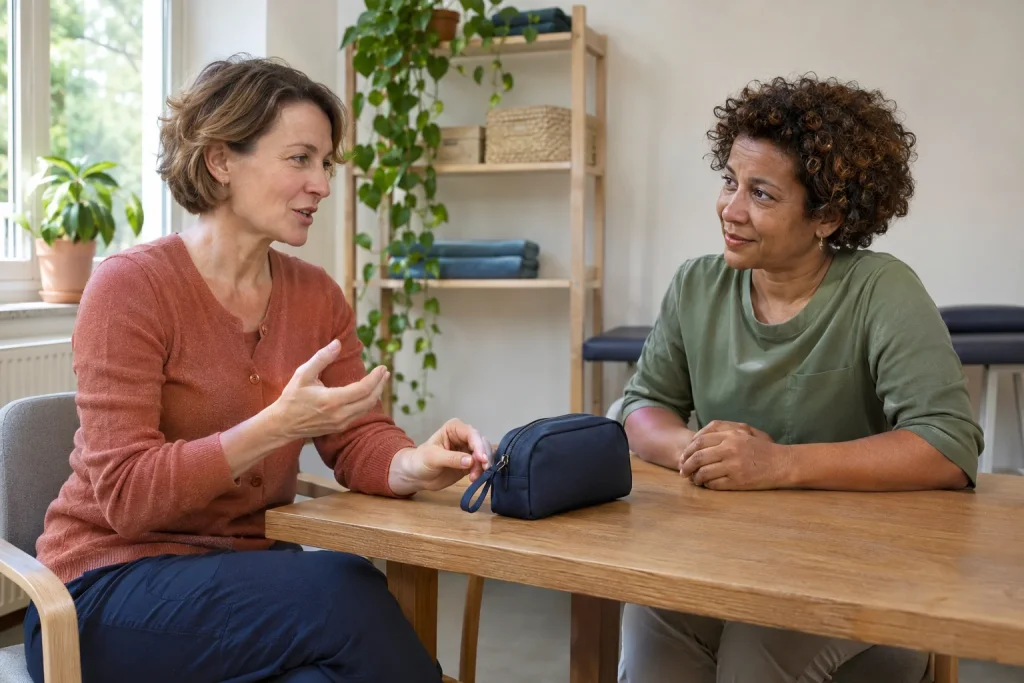
With known carpal tunnel syndrome, running equipment’s value is not shown solely by weight or pocket count. Grasping a zip, opening a buckle, handling a water bottle or retrieving a phone are specific hand-use tasks. If they become harder, it is worth showing within your individual care what you want help solving. New equipment helps when it is usable in your own situation too.
This article organises practical questions alongside an already known condition. It does not diagnose from wearing a sports watch, offer a wrist test or choose treatment. Following numbness, night symptoms and grip weakness remains important alongside equipment selection; worsening function must not be treated merely as an equipment problem.
Describe current function alongside the diagnosis
Carpal tunnel syndrome involves pressure on the median nerve passing through the wrist. The British Society for Surgery of the Hand information describes tingling, reduced sensation, weaker grip and clumsiness. Alongside the diagnostic name, which daily task has become harder now therefore matters too. BSSH: Carpal tunnel syndrome.
Bring the date of your previous assessment and advice received to the discussion too. Was there follow-up, did you receive an aid, exercises or other treatment, and what changed since? You need not quote every report from memory. Available documentation and the current history together can make the sporting question individual.
If grip worsens or a new symptom appears, do not mention it as an unchanged part of the familiar condition. Describe the new development separately. Already knowing the diagnosis does not mean every further question should be solved with a new bag or strap. Your own clinician can judge whether reassessment is needed.
Gripping, pinching and wrist movement are separate tasks
Holding a water bottle differs from grasping a tiny zip pull with two fingers. Opening a buckle requires another movement and degree of precision. At consultation, say more than ‘equipment is difficult’. Describe verbally which subtask stops you and when you experience changed sensation or uncertainty. You need not demonstrate the limit through a forceful test.
It may help to separate holding an object, fine grasping, pulling or opening, and access. The pocket itself may be easy to reach but have a tiny pull; at another time, opening works but holding the item is difficult. Those difficulties allow different practical questions. Clarifying the task helps avoid random equipment replacement.
Describe your own experience: is difficulty due to pain, numbness, weaker grip or uncertainty? These can be assessed together during examination. You need not decide at home which movement loads the nerve. Do not turn handling equipment into repeated diagnostic testing, particularly if symptoms worsen or become persistent.
Ask specifically about zip and buckle usability
A larger, accessible pull or easier fastening is a design possibility to ask about. This is not a therapeutic promise: easier grasping does not resolve the nerve condition. Your own use situation must determine whether a solution makes sense and how it relates to guidance received.
Here, the task matters more than a garment’s or bag’s colour or brand. Where is the fastening, what must be held, are both hands needed simultaneously, and can the complete operation be performed? ‘Easy to use’ in a product description is not an individual assessment. If possible, bring the item or a picture to consultation and discuss the difficult detail.
Complete operation matters with home modifications too. A larger loop, for example, may catch on something or change how opening works. This article does not recommend a particular DIY solution. The aim is usable equipment that makes sense in your environment and individual care framework, rather than simply gaining a larger component.
 Enlarge image
Consider bottle and phone use across the whole sequence
What matters is more than retrieving a bottle from a pocket. Can you hold it, operate its opening and return it in the intended situation? Retrieving a phone also involves the pocket, gripping the device and putting it away. Describe these already noticed difficulties, rather than gathering new data through a painful trial sequence.
Prolonged carrying in the hand and brief retrieval are different situations. AAOS carpal-tunnel information also discusses individual assessment of daily hand and wrist positions and activity. Therefore name objects carried in your hand within your running programme too. This does not establish that a particular bottle or phone caused the symptoms. AAOS: Carpal Tunnel Syndrome.
If you would transfer a task to the other hand or solve it with a companion’s help, ask about that within your own plan too. An adjustment’s meaning becomes clear across the whole programme: what do you carry, how do you access it and when is help needed? Treatment does not aim to maximise equipment trials. Individual function and symptom follow-up matter more than a quick purchase.
Gloves, wet conditions and haste create a new use situation
A fastening that seems simple with dry hands in a shop may handle differently elsewhere. With gloves, rain or hurried actions, access and precision become different questions too. Describe this as a planning consideration, rather than trying it as your own clinical test. If hand use is already difficult, clarify feasibility of the whole programme.
You need not stand in the cold seeking the symptom limit or decide whether equipment works on a distant route. Discussion of usability can begin in calm surroundings with the specific task. Within your individual guidance, ask how to become meaningfully familiar with the item without turning the trial into a painful strength challenge.
Organising the running programme also means avoiding making successful use a matter of time pressure. If a companion helps within the agreed framework, clarify your needs beforehand. You need not share every health detail with the group. Practical help does not mean others examining or testing your hand.
Night symptoms and grip changes should remain topics for care
BSSH lists symptoms causing night waking, frequent numbness and weakness involving dropped objects among situations warranting contact with a health professional. These must not be explained solely through running-equipment usability. An easier new zip by day does not remove the need to assess the history of night symptoms.
The NHS likewise recommends medical advice for worsening or persistent symptoms, or when steps tried do not help. Clarify which changes to follow within your care plan. You need not summarise every experience through a pain score: grip, dexterity, sleep and daily need for help are separate information. NHS: Carpal tunnel syndrome.
With new or substantial loss of function, do not wait for the next equipment purchase to solve it. Describe onset and change to your clinician and seek guidance on necessary assessment. A diagnostic name does not imply an unchanged condition. The current story needs connecting with individual examination.
A sports watch is only one item in the whole picture
Comfort of a watch strap or another wrist-worn object can be discussed, but carpal tunnel syndrome is not equivalent to symptoms caused by a sports watch. BSSH describes several possible associated factors and cases without a clear cause. Do not therefore reduce symptoms to a single item of equipment if the whole history is more complex.
If you removed the watch and sensation later differed, describe that precisely. Stopping, another arm position and time passing may also have occurred. You need not declare a definite cause from the observation. Do not tighten the strap again for a diagnostic trial or delay assessment of worsening symptoms while seeking new equipment.
Even with a known condition, different numbness may be new information. Report a location, duration or functional effect differing from before. You need not decide whether the same problem underlies it. Individual care can determine which further question or examination is needed.
 Enlarge image
Discuss equipment trials in connection with your own guidance
A brace, exercise, injection or postoperative situation may involve specific individual instructions. This article does not change them. Ask what current guidance means for handling sports equipment, running and daily tasks. Do not omit a prescribed aid or change treatment merely to make an equipment trial easier.
Clarify the equipment-handling goal too: do you want a specific task to become achievable, or are symptom changes being evaluated? These are separate questions. A usable zip is not a medical outcome measure, and a difficult buckle does not alone establish the condition’s severity. Task experience and clinical follow-up should connect without becoming conflated.
If you cannot implement advice, describe the obstacle. For example, the fastening is too small, the object is hard to hold or the other hand does not solve the situation either. You need not quietly invent your own technique. Interpreting and adjusting the individual plan forms part of working together.
Bring a task sequence to consultation, rather than one object
The following list organises difficulties already known. It is not a test, and nothing requires painful repetition to complete it. The aim is to turn ‘equipment is difficult’ into a specific, discussable question.
| Task component | A question about your situation |
|---|---|
| Grasping | Are you pinching a tiny pull, holding an object or opening a buckle? |
| Access | Can you reach the pocket within your individual guidance? |
| Complete action | Which is difficult: retrieval, use or putting it back? |
| Environment | Do gloves, moisture, haste or lack of help change the situation? |
| Care connection | Which symptoms and functional changes need following independently of this? |
At review, clarify which sporting task was decided on, what remains uncertain and when reassessment is needed. Equipment usability can form part of an individual goal, but is not a complete assessment of fitness to run. Points may need clarifying between general activity advice and a particular running programme.
Useful equipment helps in your own day: it can be prepared, accessed and handled within the agreed framework. In planning sport with carpal tunnel syndrome, discuss this alongside nerve-symptom and function follow-up. Make the next decision with your treating team in connection with your own care plan.
Sources
- NHS: Carpal tunnel syndrome
- AAOS: Carpal Tunnel Syndrome
- British Society for Surgery of the Hand: Carpal tunnel syndrome
How Futószív articles are prepared: our editorial guidelines.