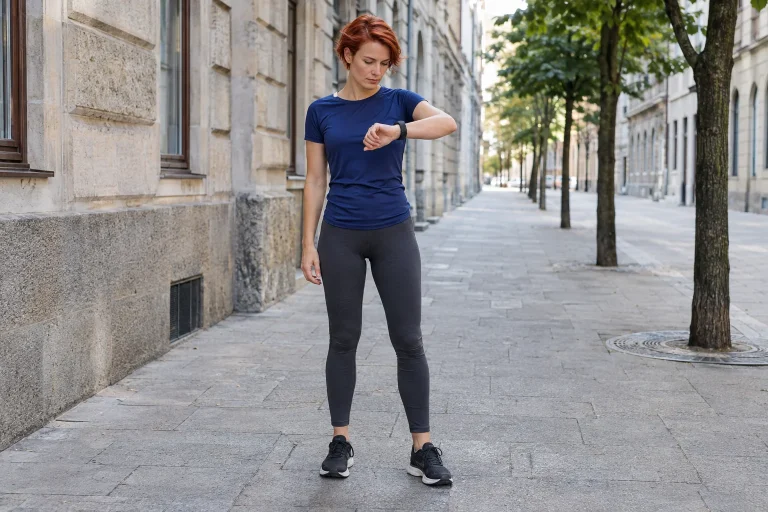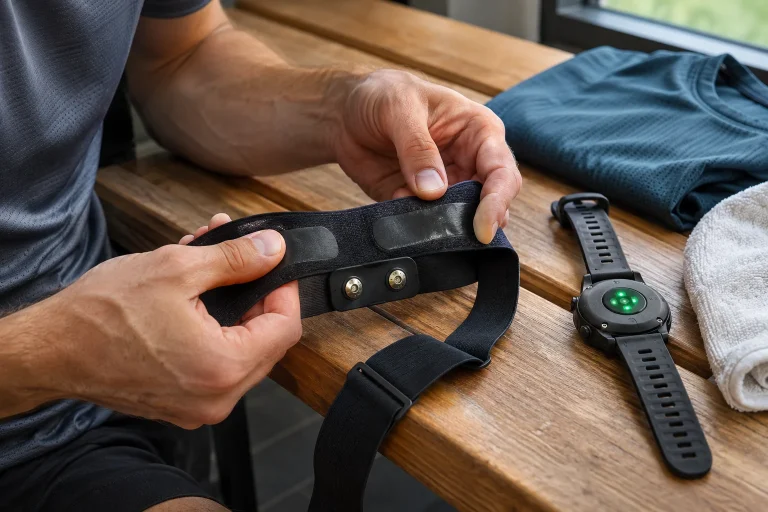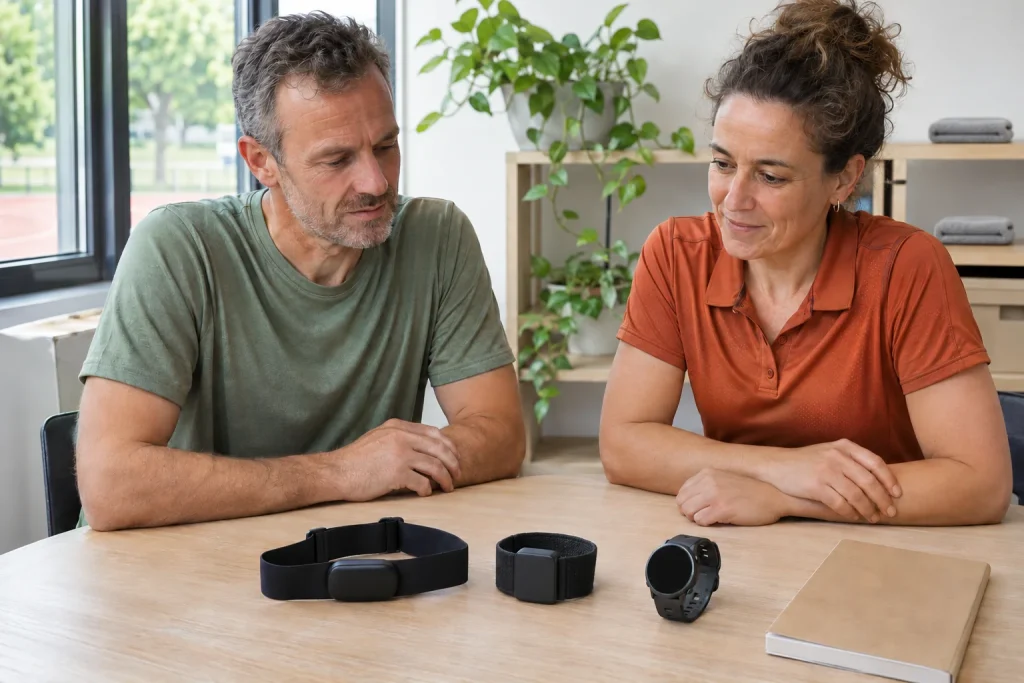
The watch shows heart rate, gives you an HRV value in the morning and lets you start an ECG in a separate menu. It is easy to feel as though you are seeing three views of the same heart examination. In fact, different signals, processing and purposes may be involved. For a runner, the distinction helps frame a more precise question: do you want to log exertion during exercise, track your own morning pattern or seek an answer to a health symptom?
The following guide connects measurement concepts with manufacturer examples checked on 21 November 2026. It does not interpret an individual’s rhythm recording or claim medical review. For new chest pain, fainting, severe breathlessness or another serious episode of feeling unwell, do not wait for a watch test result: stop exercising and seek urgent help, calling 112 if needed. A reassuring display does not rule out an emergency.
Three questions, three different kinds of data
Heart rate in beats per minute expresses a rate. HRV describes variability in the times between successive beats using a specified calculation. An ECG records a signal related to the heart’s electrical activity in a particular lead. The three may be related but are not interchangeable. A run’s average heart rate cannot reconstruct every beat interval, and a single HRV number cannot recreate the complete original ECG trace.
Give each a separate row on your data sheet. Beside heart rate, name the signal source, such as wrist optics or a chest strap. Beside HRV, record the metric named by the app and the time window. Beside ECG, record the device, app, recording time and available complete document. For a later question, you will then avoid guessing from an anonymous screenshot how each datum was produced.
Use these three questions to describe your purchasing purpose too. Tracking heart rate during running, maintaining a resting HRV log and access to a supported ECG app are separate requirements. A good heart-rate strap is not made suitable by ECG lettering on your watch box, and a watch ECG function does not guarantee every point in the optical trace during a run is correct.
Optical measurement: tracking a pulse wave through light
Wrist and many upper-arm optical sensors use PPG: light tracks changes related to blood volume in tissue. An electrode-based chest sensor instead identifies beats from an electrical signal. Polar’s own comparison treats these technologies separately too. Naming the measurement principle helps explain why fit, contact and data troubleshooting differ.
The Verity Sense provides an upper-arm optical example, and the H10 and H9 provide chest-strap examples. The same sports app can display their data, so a uniform-looking screen does not prove a uniform signal source. Check which external sensor connected in the activity settings and which source the system names in the later log.
If a trace is unusual, first identify the circumstances and actual signal source. Automatically calling every spike a technical fault is incorrect, but disease cannot be established from every spike either. Follow the manufacturer’s fitting and troubleshooting procedure, and seek healthcare assessment if symptoms occur. Looking for a technical explanation does not justify running on through feeling unwell.
Chest electrical signals: sport heart rate is not a complete cardiology report
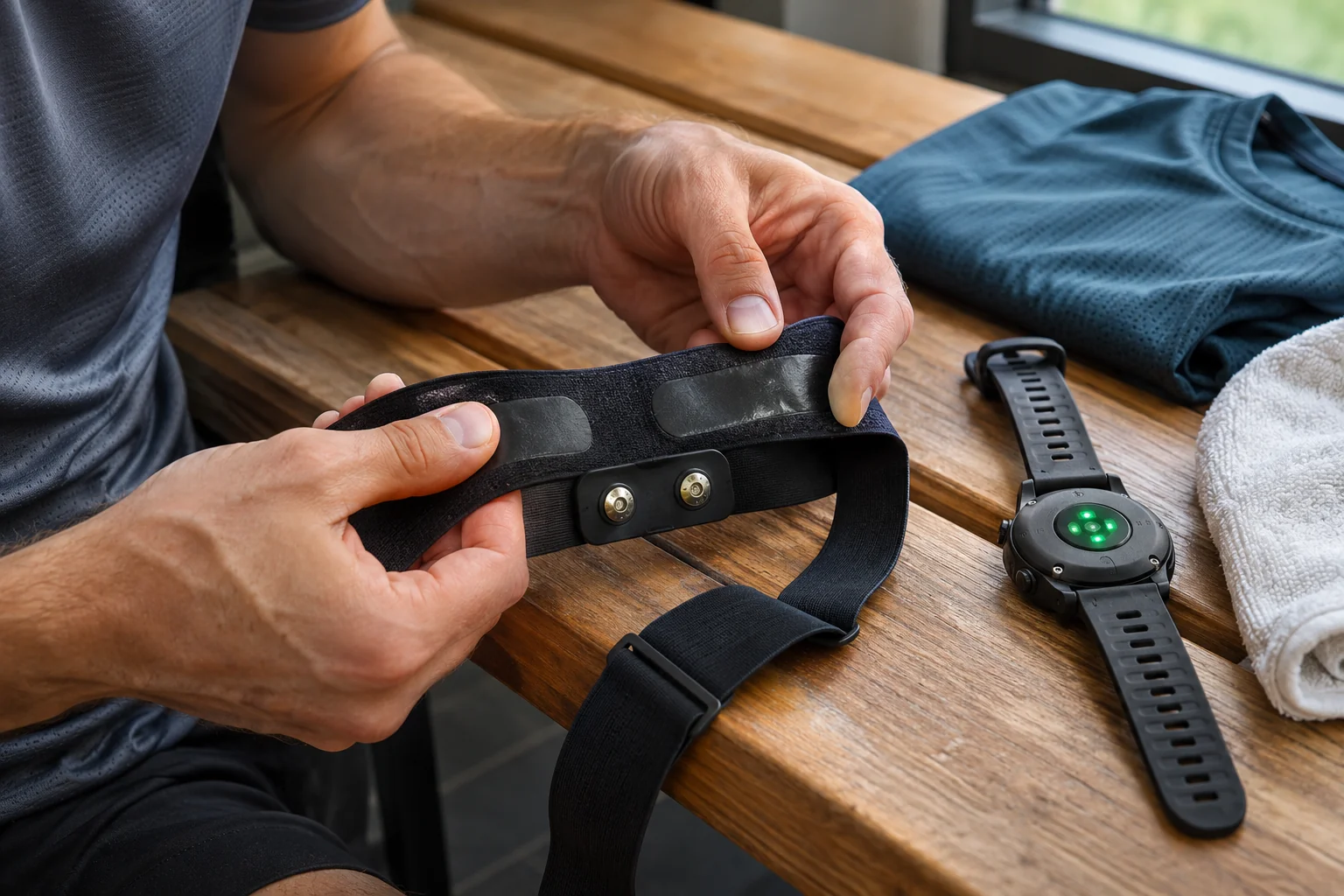
A sports chest strap may use an electrical signal to time beats and transmit heart rate and, where supported, beat intervals. This does not necessarily put a complete diagnostic ECG recording in the usual activity file. Detecting a signal, transmitting intervals and availability of a raw waveform are separate properties. An ECG measurement principle in a product description is therefore not the same as an ECG report prepared for a doctor.
When comparing the Garmin HRM 200 and HRM 600, the transmitted data and receiving device’s support matter together. More extensive running dynamics are not a heart-rhythm diagnosis. The HRM-Fit‘s clothing attachment shows that appropriate physical fit remains a separate requirement alongside a good wireless connection.
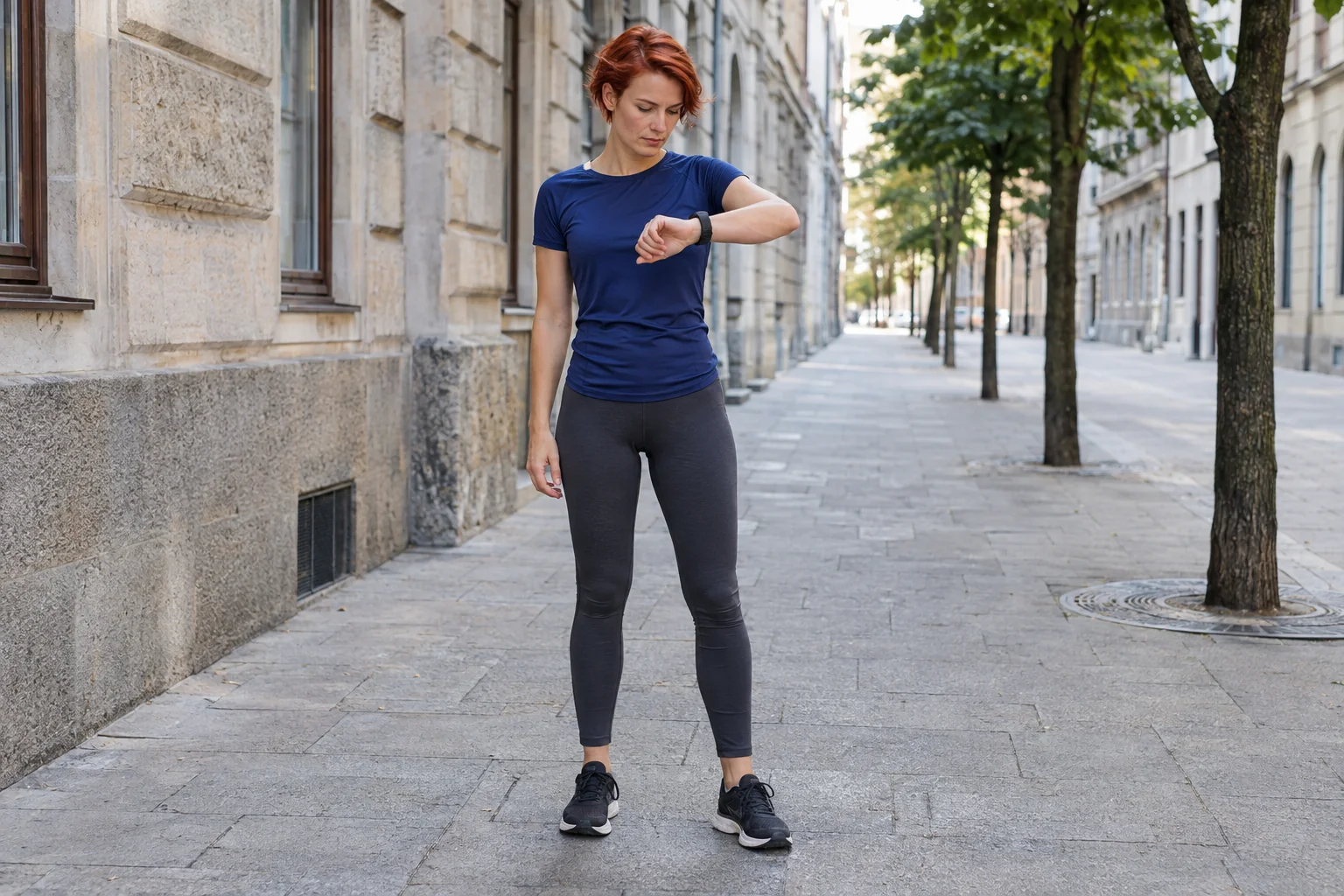
Before buying, clarify your question: do you want sport heart rate, analysis of beat intervals or a rhythm recording following healthcare advice? Different procedures and devices may be needed for the three tasks. If a doctor requests data, agree the type and format of recording with them. “It is on the chest, so it is the same” is not a suitable basis for choosing the required examination.
 Enlarge image
HRV: timing can differ even with the same average heart rate
HRV is not the name of one universal formula. RMSSD and SDNN, for example, characterise an interval series differently, and the time window is part of the result too. The 2024 methodological guideline on heart-rate and HRV use therefore discusses measurement and analysis quality separately. Milliseconds alone do not establish that two programs calculated the same metric.
An artificial numerical example helps explain the idea. One short series has intervals of 1000, 1000, 1000 and 1000 milliseconds; another has 900, 1100, 900 and 1100 milliseconds. Both average one thousand milliseconds, yet their timing differs. This is illustrative mathematics, not an examination of a real person, a normal range or a basis for a health conclusion.
An app’s daily score may involve further processing. Raw intervals, HRV calculated from them and a composite recovery label are three separate levels. Keep the app’s original terminology in your log. If you write only “48 today”, later you cannot tell whether you recorded milliseconds, a score out of one hundred or another metric.
Retain the measurement situation for comparisons too
A short daytime measurement, an overnight summary and an interval series during running are different recording situations. A different number does not require declaring one wrong based on the other. Posture, time of day, breathing, recording duration and data quality also matter in methodological comparisons. Consistently describing your own routine helps more than pursuing a general internet number for “good HRV”.
A practical log entry might include device and app, metric name, start time, recording length, sitting or lying posture and unusual circumstances. This need not become lengthy self-observation administration. Its purpose is to prevent mistaking a changed measurement procedure for a sudden bodily change. If switching to a new watch or daily algorithm, mark the changeover date rather than automatically treating the old and new series as continuous.
Higher HRV is not a performance goal in itself, and a lower value is not automatically a diagnosis. Consider measurement noise, personal history and how you actually feel together. A sports app’s suggestion does not override symptoms, prescribed treatment or a medical exercise restriction. If tracking data brings anxiety or constant remeasurement, seek help about how you use it too.
Polar wrist ECG: a resting sports feature with a specified purpose
Polar’s support page describes the wrist ECG test on Vantage V3 and other listed models as a thirty-second resting recording. Two electrodes are involved, and results can include a signal trace, average heart rate and further timing data. The manufacturer expressly states that this test is not for medical or diagnostic use. Preserve this limitation alongside the feature’s name.
The manufacturer’s procedure calls for a calm, stable posture and remaining still. This is not an ECG test performed while running. Follow the associated resting conditions to obtain the recording as the feature was designed to work, rather than waiting ten minutes to try to make an unpleasant symptom disappear from the log. With symptoms, assessment of the situation comes first; a product test is a later question.
If looking for this feature in a watch, check the current supported-model list and data-sharing options. “Polar watch” is a broader category than this particular wrist ECG feature. Do not call a resting sports test an automatic rhythm diagnosis or rewrite the manufacturer’s specified purpose as a general promise of heart examination. A clear device guide helps specify the intended use.
Samsung and Apple: app conditions matter separately
Samsung’s Hungarian Health Monitor information discusses regional availability and medical-device classification of the ECG app. Check supported device, phone, software and country conditions together. The classification does not mean every Galaxy model receives identical features in every country, or that the app replaces conventional diagnostics. The manufacturer asks users to consult a professional before clinical steps.
Apple’s ECG app guide likewise specifies supported models, regions and use conditions; the feature is not intended for people under 22. A recording similar to a single-lead ECG is not the same as a conventional twelve-lead ECG. The manufacturer also makes clear that the app does not detect heart attacks. It must therefore not be used to seek reassuring home confirmation during chest symptoms.
On your purchasing checklist, write the exact feature name rather than only the marketing phrase “heart monitoring”. A background irregular-rhythm notification, a manually started ECG and normal exercise heart rate can be different services. If switching phones or country settings, check operation again against support information. An earlier screenshot does not establish availability on a later device pairing.
Further assessment lies between a rhythm notification and a diagnosis
The European Society of Cardiology’s 2024 atrial-fibrillation guideline distinguishes PPG-based indications from ECG confirmation. Suspicion needs clarification using a suitable ECG recording and competent clinical assessment. This does not mean every watch notification is certainly disease, or that notifications can simply be ignored. The task is to assess the indication and the health situation.
If a recording needs preserving, a complete export may be more useful than a cropped piece of trace. Keep the time, device, original app wording and description of associated symptoms. You do not need to produce your own waveform diagnosis. Collecting the document helps the professional see what the system recorded rather than helping you decide at home which section proves which rhythm.
A normal label is an algorithmic classification of one recording, rather than clearance for your whole day or exclusion of every possible heart disease. An invalid result means neither health nor disease. Repeating too often can obscure the original circumstances, so also note the first discrepancy’s time and actual symptoms. With urgent symptoms, documentation must not delay seeking help either.
 Enlarge image
Transmission and preservation are also part of measurement
A sensor may send beat intervals without the chosen program saving an HRV result from them. Wahoo TRACKR documentation specifically distinguishes sensor transmission from the Wahoo app’s limits on HRV display and recording. An “HRV-compatible strap” alone is therefore not a complete purchasing answer. Identify the program and desired export too.
Make a short data test using your supported procedure: what appears during measurement, what is in the saved result and what can you share later? The activity’s heart-rate trace, daily HRV summary and ECG PDF may remain separate documents. If a service forwards only the first, do not imagine the other two inside the uploaded workout. Actually check the file’s existence and contents.
Such documents can contain data relating to personal health. Before sharing, check the recipient, public link and other profile information included in the file. You may not want to send a coach, healthcare professional and social feed the same data package. Orderly sharing also means necessary information reaches the appropriate person without unnecessary publicity.
Read the number alongside your own running week
In the running log, briefly note what happened beside the data: the workout type, which signal source operated and whether the device or measurement routine changed. Everyday context helps avoid interpreting an app switch as a fitness change. Personal observations do not establish a device’s clinical accuracy, however; that requires a suitable comparative investigation rather than a few matching numbers on a friend’s watch.
If working with a coach, agree beforehand what each datum is for in the plan. Heart rate can provide one exertion reference, HRV an observation interpreted with its circumstances, and a healthcare question remains a separate professional task. You do not need to measure every possible number daily to maintain a useful training log. A clear question and consistent procedure make valuable data usable.
At the end of choosing between watches and straps, be able to complete three statements: I record this signal with this device; this program calculates this metric from this period; I seek professional help for this kind of question. When these are clear, heart rate, HRV and ECG no longer appear as one vague “heart score”. Each can take its place with its own meaning, use conditions and limitations.
Sources and use conditions
- Polar: optical and chest electrical measurement, specific sensors
- Polar: basic concepts of heart rate and HRV
- Sammito and colleagues, 2024: methodological guideline for measuring and analysing HR and HRV
- Polar: supported wrist ECG models, resting procedure and non-diagnostic purpose
- Samsung Hungary: Health Monitor conditions and limitations
- Apple: ECG app, recording, export and detection limitations
- ESC/EACTS, 2024: atrial-fibrillation guideline, screening and diagnostic confirmation
- Wahoo: HRV transmission and differing support in the receiving app
- Garmin HRM 200 manual
- Garmin HRM 600 manual
How Futószív articles are prepared: our editorial guidelines.