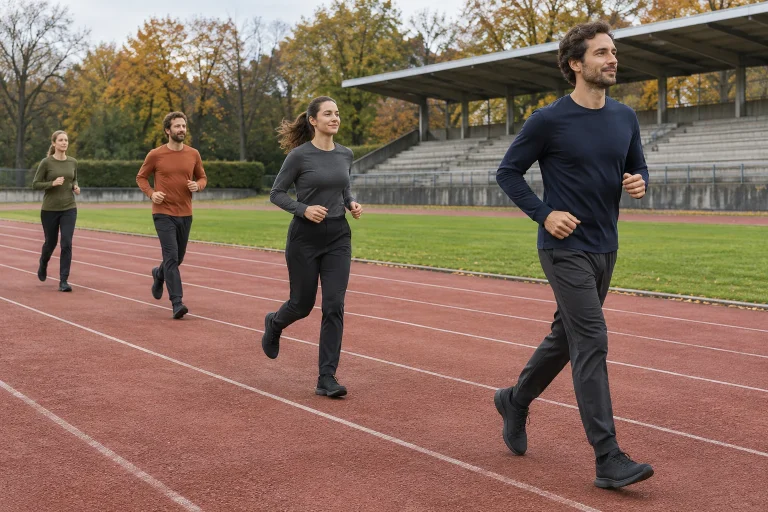
How close should you run to draft? The gap between modelled gains and safe space
Body centres, clear gaps and moving shoes: following distance is not one simple measurement. Original models and experiments help separate aerodynamic benefits from…
Clear training principles, technique guides and a thoughtful approach to building training load.
140 articles · one running community
Body centres, clear gaps and moving shoes: following distance is not one simple measurement. Original models and experiments help separate aerodynamic benefits from…
A crosswind changes the direction of relative airflow, and a runner's wake is complex. Direction examples and original measurements help interpret claims about…
An out-and-back route does not automatically balance an energy account. Force, work and section-time examples explain wind’s asymmetry and the model’s assumptions.
Why can a crosswind feel like a headwind from an angle? Vector examples, a guide to directions and official measurement definitions explain relative…
Effortless-looking running and measured economy are separate questions. Seven perspectives clarify observed associations, technique interventions and personal goals.
A two per cent result needs judging alongside measurement precision. Noise and confidence-interval examples distinguish a group mean from an individual benefit.
What did researchers hold constant: speed, a threshold proportion or perceived effort? Illustrative examples and original experiments clarify the different comparisons.
Litres to millilitres, minutes to kilometres, oxygen to energy: worked examples help interpret running-economy reports and research tables accurately.
Forward lean can redistribute tasks between knee and hip. Original experiments and an illustrative summation explain joint moments, work and energy demand.
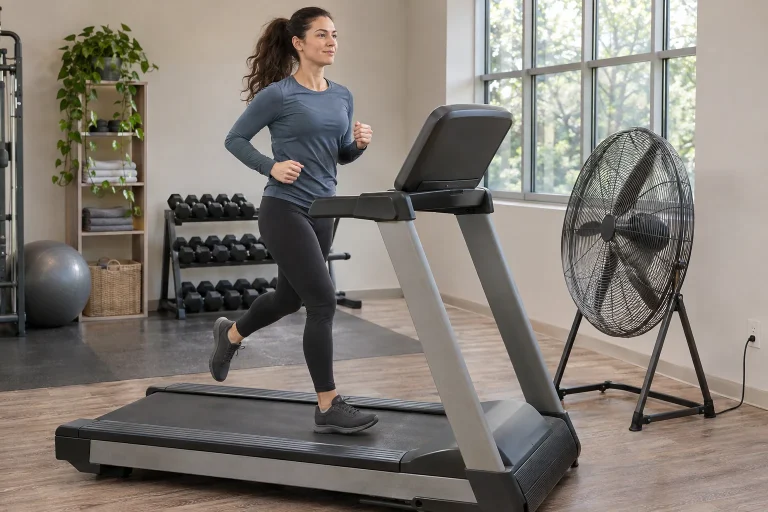
A fan can affect both air resistance and heat loss. Relative speed, recent running experiments and a room-setup example help explain the indoor…
Changing direction requires acceleration even at the same pace. Radius–speed calculations and recent experiments explain curves, leaning and the line you follow.
Asphalt sloping towards the road edge changes support beneath each foot. Geometry and original experiments clarify movement, muscle signals and energy demand.