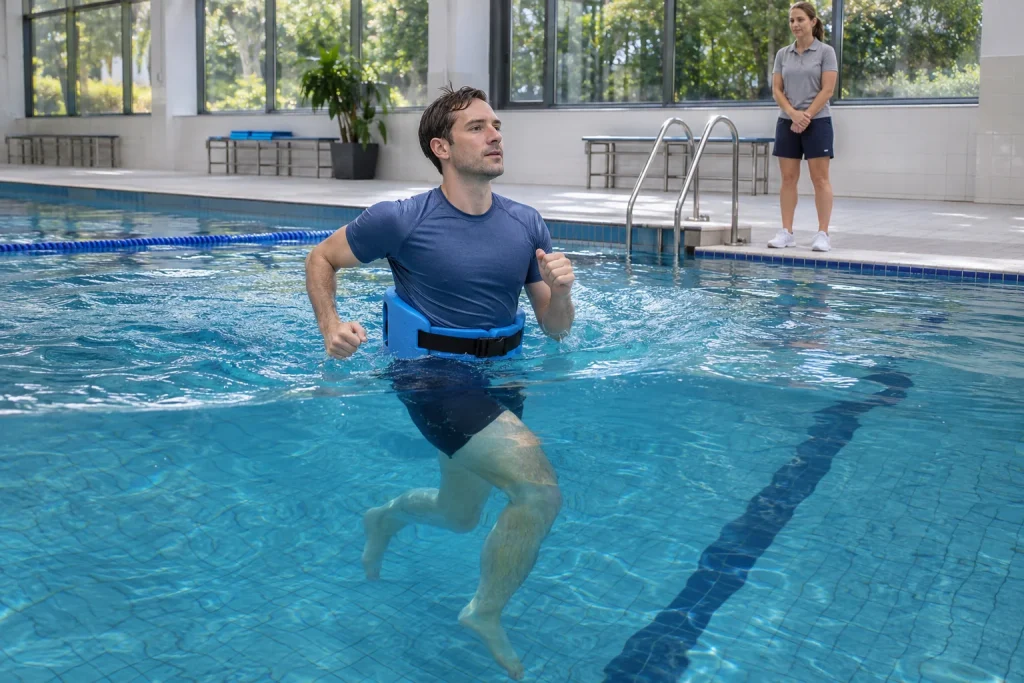
Water running can look unusual at first: the athlete moves without necessarily travelling along the pool, and in deep water their feet do not touch the floor. This may be precisely its appeal for a runner. Endurance work can happen in another environment without land running’s repeated ground contacts. That does not automatically make the session easy or suitable for every injury, however.
Three separate questions need clarification for a good start: can you move safely in this water situation, have you learned the technique and where does the session fit in your week? Running fitness is only one starting point. Pool experience and learning the distinctive movement matter equally.
Water depth matters
Deep-water running has no ground contact; the athlete moves using an appropriate flotation aid. In shallower water, feet may touch the pool floor, changing the task. Do not treat both as one unchanged workload or apply the same research to every form of jogging in water.
An experiment in fifteen trained male runners compared maximal responses on a land treadmill, in shallow water and in deep water. Peak values were lower in the water conditions, and the two water versions did not produce identical responses. The specific study shows clearly that surroundings belong to the exercise.
When consulting a coach or professional, therefore say more than “I would run in water”. Describe depth, ground contact, equipment and whether movement is stationary or travelling. Without these, the training log remains difficult to interpret later too.
Water safety before the training programme
Deep-water skills cannot be inferred from a land race time. Choose a pool where the activity is permitted, appropriate supervision exists and entry and exit are clear. For a first session, ask an instructor experienced in aquatic exercise; do not learn floating, positioning and equipment use through a solitary experiment.
The CDC water-safety guidance emphasises basic swimming and water-safety skills and having a companion. Do not treat flotation training equipment as a substitute for supervision or necessary skills. Learn the equipment’s purpose, fit and limits beforehand.
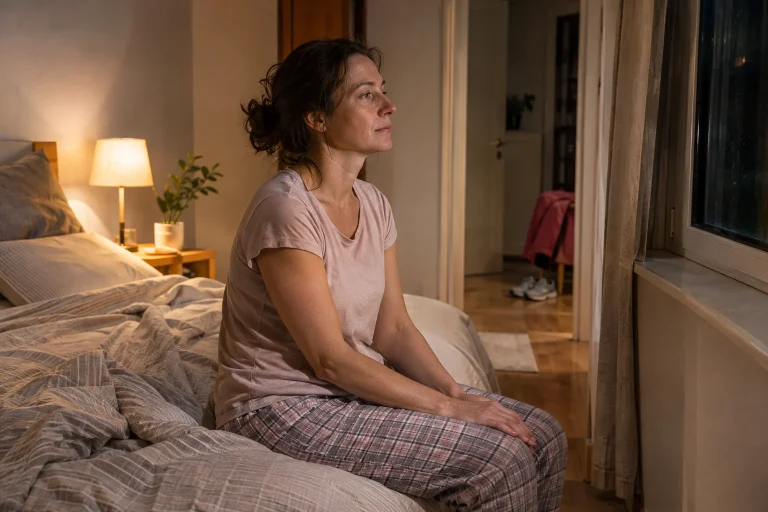
If the water situation causes anxiety or uncertainty, the first goal may simply be appropriate instruction and developing comfort. An endurance session is not compulsory immediately. A calm poolside decision is more valuable than finishing a predetermined duration at any cost.
The swimming pool is a shared activity space
Deep-water running’s space requirements and travelling speed can differ from swimmers’. Before a session, agree which pool area can be used, whether there is a separate time slot and which equipment rules apply. An apparently empty lane is not necessarily an available training area.
If exercising on the spot, be particularly careful not to obstruct turns or others’ paths. Use fixed equipment, cords or other accessories only as the facility permits and with knowledgeable assistance. You do not need to independently copy a research-laboratory arrangement in a public pool.
Pool hygiene is part of preparation too. The CDC prevention guide asks, among other things, that people stay out of the water with diarrhoea and avoid swallowing pool water. Follow additional local facility rules too.
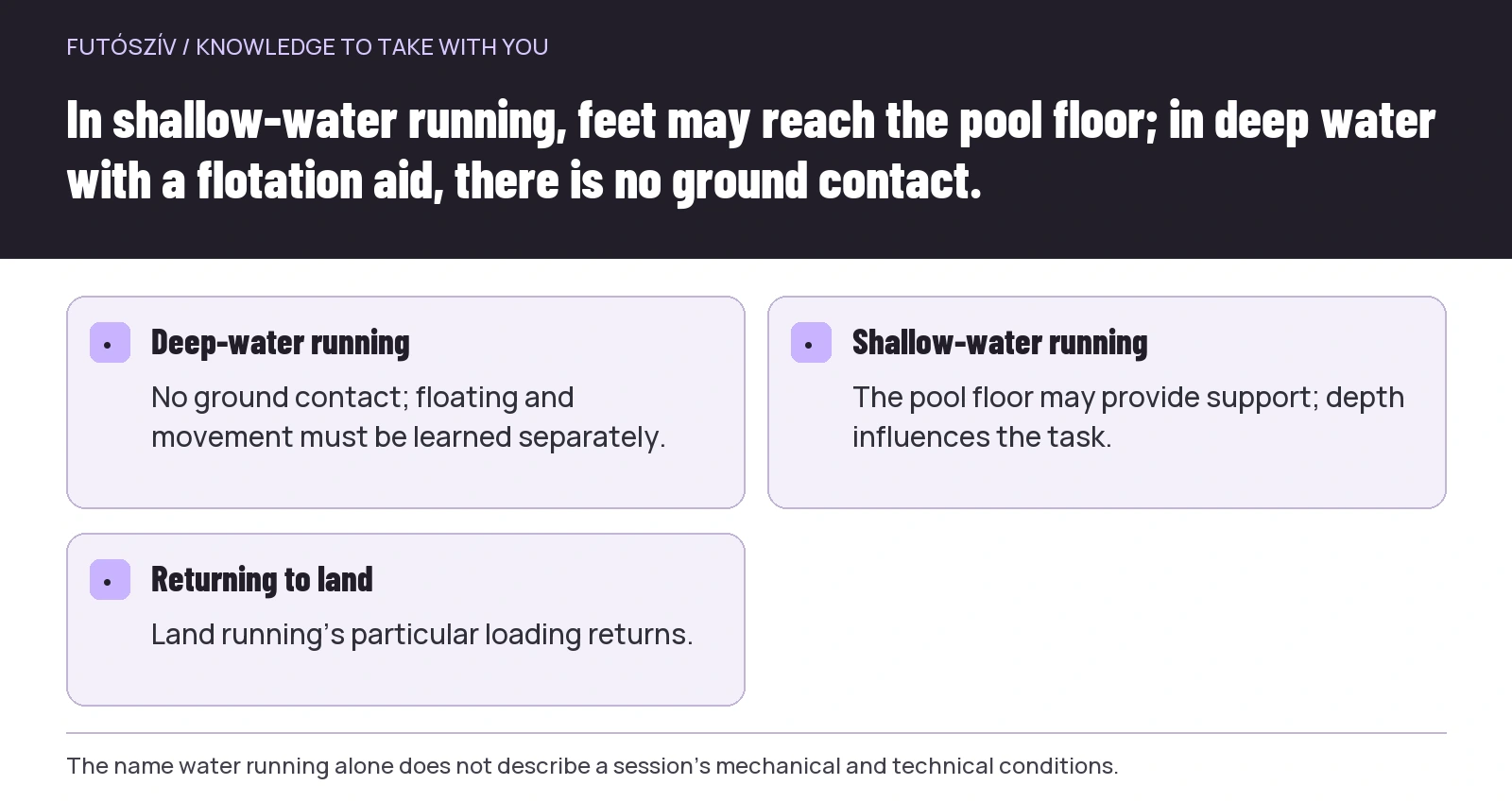 Enlarge diagram
Text version of the illustration
- Deep-water running
- No ground contact; floating and movement must be learned separately.
- Shallow-water running
- The pool floor may provide support; depth influences the task.
- Returning to land
- Land running’s particular loading returns.
Learning technique is a training goal in its own right
Familiar land-running sensations cannot be transferred directly into water. Support changes, water resists movement and maintaining body position becomes a new task. Success in the first sessions is therefore calm, controlled, repeatable movement rather than how exhausted you become.
Instructor feedback can help distinguish intended movement from rushing or struggling with equipment. Initially, allow time between short comfortable trials to adjust position and ask questions. The first day is not a performance examination even for an experienced land runner.
Note technique changes in the log too. A later session may feel easier because you perform the movement more skilfully. Do not automatically equate that with a large endurance gain. With a new activity, learning and adaptation to its load shape experience together.
Why do familiar running heart rates not transfer?
In an experiment with eight competitive runners, oxygen demand and perceived effort during hard deep-water running did not relate to land sessions in the same way as heart rate. This different relationship between heart rate and other effort signals makes simply chasing familiar watch numbers in the pool risky.
A later comparison in eleven recreational runners also measured lower maximal heart rate and oxygen uptake in deep water, while maximal perceived exertion did not clearly differ. The study provides no heart-rate difference applicable to everyone, but supports sport-specific interpretation.
Do not therefore accelerate until reaching your land target heart rate for a formula’s sake. Observe breathing, overall effort and preservation of the learned movement quality together. If planning regular targeted water training, adapt intensity to aquatic conditions with knowledgeable help.
What can short-term research establish?
In a four-week study, eleven trained runners followed a deep-water programme instead of land running, without a clear decline in several running-performance measures. This suggests the possibility of short-term maintenance in one group and programme. It does not establish that everyone’s running performance remains unchanged indefinitely.
Findings in trained research participants also differ from the situation of somebody returning from injury. For the latter, injury type, symptoms, entering the water and whether the movement is permitted are questions too. Performance research alone gives no personalised answer to these.
A realistic expectation is therefore specific and time-limited: alternative endurance work, variety or a temporary approach discussed with a professional. Judge the aquatic session against that, rather than the promise of a miraculous substitute working everywhere.
With injury, clarify permitted movement first
Lower impact does not mean suitability for every tissue and condition. If seeking replacement activity because of symptoms, discuss the precise aquatic task with your treating professional. Describing movement, duration and environment is more useful than “can I go to the pool?”.
Do not try to resolve new or increasing pain, numbness, dizziness or illness through harder water work. Stop, inform the supervisor and seek help appropriate to severity. In water, it is especially important not to remain alone if uncertain about movement or getting out.
Water training is only one possible element of a rehabilitation plan. It does not independently permit earlier running or replace agreement on return conditions. Feeling good in the pool is important information, but not a complete assessment of land exercise tolerance.
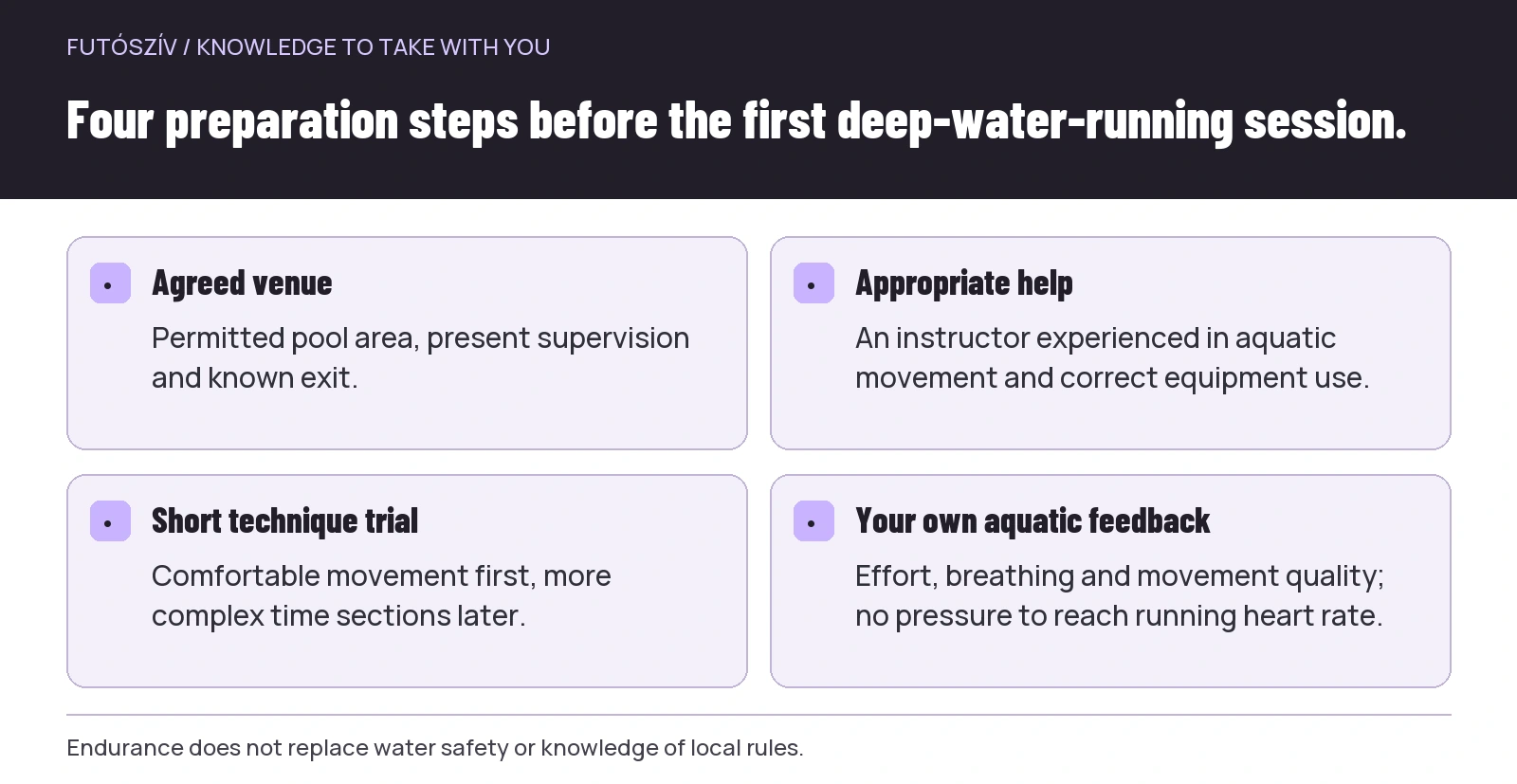 Enlarge diagram
Text version of the illustration
- Agreed venue
- Permitted pool area, present supervision and known exit.
- Appropriate help
- An instructor experienced in aquatic movement and correct equipment use.
- Short technique trial
- Comfortable movement first, more complex time sections later.
- Your own aquatic feedback
- Effort, breathing and movement quality; no pressure to reach running heart rate.
How the first few sessions can make sense
The opening stage aims at familiarisation: a permitted location, appropriate supervision, correctly used equipment and comfortable movement. Afterwards, ask whether you could regulate effort and understood the instructor’s feedback. If not, that can remain the main task next time.
Once the basic movement is controlled, separate easier and more lively periods may help maintain attention. Their actual duration and intensity depend on the goal and background. Every interval from running need not be moved unchanged into water.
Allow time for a comfortable finish and safe exit. Pool steps, slippery surfaces and the route to changing rooms belong to the outing. Exhausting yourself completely in the last minute leaves least attention for its most practical steps.
Do not seek virtual kilometres in the log
Record duration, water-running variant, equipment and main purpose. Add overall effort, technical experience and how you felt afterwards. Even when moving along the pool, distance cannot simply be converted into land-running kilometres.
A short useful entry might read: “Deep-water technique session with instruction; movement became more controlled, breathing livelier towards the end, no unusual fatigue next day.” This helps the next decision more than an arbitrary distance.
Compare similar situations. In another pool, with different depth or equipment, identical duration may not mean the same task. Recording surroundings is not administrative burden: it makes personal experience usable later.
Returning to the ground is a new task
After mainly training in water for a period, do not ask only how well your breathing tolerates running again. Land running’s ground contacts and rhythm return. Aquatic endurance work does not mean immediately needing the previous full volume on the first run.
After a symptom-related break, follow the professional return plan. Even as a healthy runner seeking variety, choosing a familiar manageable running task first makes sense. Aquatic and land sessions contribute together to the week’s workload, even if logged in separate columns.
A good return gathers experience: how was it during the run, later that day and the next day? Earlier success in water does not justify ignoring a new land signal. The activities’ relationship does not make them identical.
Who might find it a good choice?
A runner who enjoys the pool environment, accepts the learning stage and gives the aquatic session a clear task. It may be temporary, regular variety or part of a professionally agreed programme. If travel, changing and reserving space are burdensome, include that in sustainability too.
Choosing another solution is not failure if you do not feel safe in water or the available facility is unsuitable. A useful plan fits life circumstances and accessible surroundings. Water running’s value likewise comes from a well-managed task rather than novelty.
The first achievement may be simple: learning a new movement, regulating it comfortably and understanding its effect on the next day. A consistent programme can build on that. Uncertain conditions, borrowed heart-rate zones and absent supervision offer a weaker foundation.
Sources and interpretive context
- Four-week deep-water training study with runners – short-term performance maintenance in a small sample.
- The intensity of exercise in deep-water running – the relationship between heart rate, oxygen demand and effort.
- Physiological and muscle-activity comparison of water and land running.
- Maximal responses in shallow- and deep-water running.
- CDC: drowning prevention; healthy swimming habits.
How Futószív articles are prepared: our editorial guidelines.