Your body can be tired while you cannot sleep
You ran, worked and completed the day’s tasks, yet sleep does not come in the evening. Or you fall asleep easily, then wake for a long time or cannot return to sleep in the early morning. More exercise can seem tempting: exhaust yourself enough and surely it will work. Persistent insomnia, however, is not simply a lack of physical tiredness.
Regular sport can be part of a healthy life, but does not protect you from sleep problems. Another hard session does not replace understanding why sleep is difficult. This article supports seeking individual assessment and appropriate treatment; it does not provide a self-directed sleep-deprivation programme or medication advice.
First check whether there is a real opportunity to sleep
Leaving too little time for sleep is different from being unable to sleep despite adequate opportunity. Early training, late work, caring for a young child or shifts can severely narrow the scope for rest. Better techniques for falling asleep alone cannot resolve this.
Review the whole daily schedule: when do tasks genuinely end, when can you go to bed and why must you get up? Eight hours blocked in a calendar are not always eight free hours. On-call duties, caring, travel or expectations of constant availability may intervene.
If running regularly takes time from sleep, replan its place too. A running identity does not mean getting up earlier for every session. A shorter activity, different time or rest may be a more appropriate organisational choice. This is separate from whether an insomnia disorder is also present.
When are symptoms considered persistent?
The NHLBI diagnostic information considers frequency, duration and effects on daytime functioning. Regular sleep difficulties over several months have a role in assessing chronic insomnia. These are professional frameworks, not a reason to wait for a calendar threshold before seeking help.
If sleep problems make daily life difficult, discuss them earlier too. The NHS information recommends seeking help for symptoms lasting months or interfering with life, among other situations. You do not need to wait until completely exhausted or afraid to train at all.
One poor night before a race does not necessarily indicate a persistent disorder. Equally, do not conceal a long-standing problem behind ‘runners are always wired’. The personal pattern matters, not a cliché about athletes.
Daytime consequences matter too
Sleep is often measured only in minutes and numbers of awakenings. What happens the next day also shows a symptom’s significance. Is attention harder, are you more irritable, is work capacity reduced or do you doze off? Give specific examples in the medical discussion.
Running results are only one area. You may still complete training while the rest of the day becomes increasingly difficult. A watch reporting adequate sleep does not establish everything either: a device’s estimate and lived experience can differ.
With significant sleepiness, travel and sporting situations demanding attention need particular consideration. Do not drive drowsy or try to manage danger solely through willpower. Getting home safely is part of the running programme.
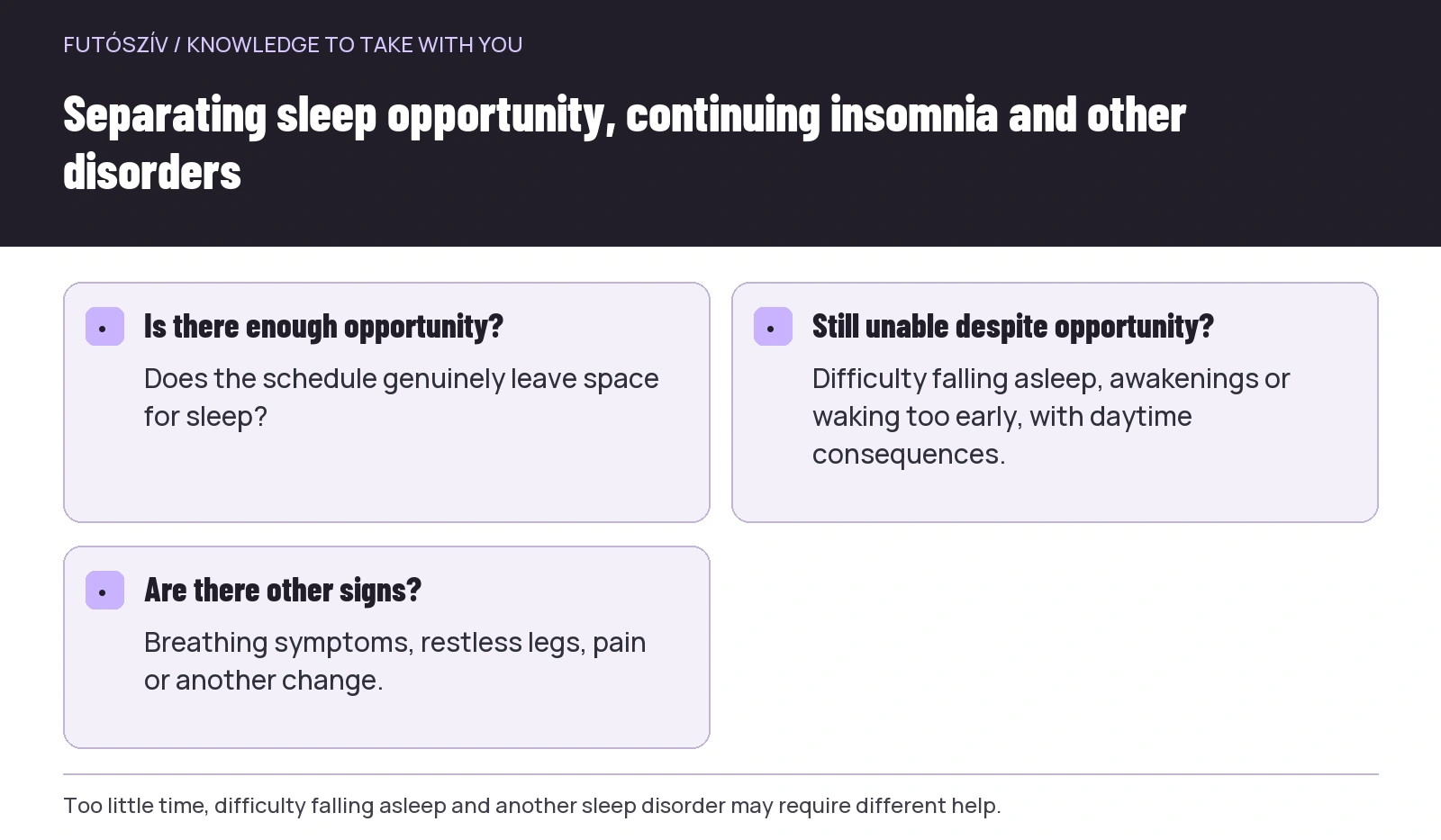 Enlarge diagram
Text version of the diagram
- Is there enough opportunity?
- Does the schedule genuinely leave space for sleep?
- Still unable despite opportunity?
- Difficulty falling asleep, awakenings or waking too early, with daytime consequences.
- Are there other signs?
- Breathing symptoms, restless legs, pain or another change.
What happens during assessment?
The clinician may review sleep habits, symptom onset, health history, medicines and other possible explanations. Snoring, gasping, evening leg restlessness, pain or mood changes can provide separate information. These may coexist, so do not select a single cause beforehand.
The NHLBI also mentions a short sleep diary to support assessment. Record bedtime and waking time, estimated sleep, daytime sleepiness and a few important circumstances. You do not need to watch the clock continually at night to produce a useful summary later.
A sleep laboratory is not an automatic investigation for every insomnia complaint. Necessary testing is chosen according to the individual situation. Mention signs of sleep apnoea or another disorder separately rather than discussing only time to fall asleep.
What is CBT-I?
The 2021 AASM guideline strongly recommends multicomponent cognitive behavioural therapy for insomnia, or CBT-I. This is targeted treatment, not simply an instruction to think positively or switch off your phone.
The NHLBI treatment page describes several components: reviewing sleep-related thoughts and habits, shaping the relationship between bed and sleep and other personalised elements. The participant’s situation and appropriate professional guidance determine the specific plan.
Mentioning CBT-I does not imply symptoms are imagined. Addressing behavioural and cognitive processes can be part of treating real sleep problems. The aim is not to blame the person but to establish workable changes and follow-up.
Why is an evening tips list insufficient on its own?
The AASM guideline does not recommend sleep-hygiene education as the sole treatment for chronic insomnia. A darker room or suitable evening surroundings can help, but a persistent problem may not resolve by following every general tip ever more strictly.
The 2025 VA/DoD guideline also emphasises targeted behavioural treatment. It is US clinical guidance, not a description of Hungarian access or funding. Its message matters to athletes too, however: ask about appropriate treatment for persistent symptoms rather than collecting another general evening list.
If you have already tried many tips, explain what happened. ‘I do everything right, yet it still does not work’ can involve overly rigid rules, another sleep disorder or other factors. Reviewing these is worth more than further increasing discipline.
Why do we not give a time-in-bed formula here?
Some CBT-I components can involve structured changes to time in bed. This is easily misunderstood as sleeping as little as possible or every poor sleeper needing the same strict window. Restricting sleep based on a blog is not an appropriate general solution.
The VA/DoD guide describes adapting or postponing some forms of behavioural treatment in several situations, such as significant daytime sleepiness, certain health conditions or particular life circumstances. Safety, daytime tasks and individual risks matter. Discuss these with a professional.
Runners should not independently shorten sleep opportunity further to make ‘the method work better’. Treatment is not a test of endurance. A properly guided process allows questions, feedback and adjustments.
Assess running times individually
You do not need to call every evening activity a mistake, but ignoring personal experience after a late hard session is unhelpful too. The load, time between finishing and bed, travel, eating and evening tasks shape the situation together.
If looking for a connection, change only a few things at once. For example, choose another time or an already familiar easier activity while sleep symptoms continue to receive appropriate assessment. One better night does not establish a lasting causal connection, and one bad night does not judge the whole sport.
The aim is not for training to force perfect sleep. Movement can bring enjoyment, social and health value even when sleep needs separate treatment. If every run becomes an examination of whether you fall asleep that evening, mention that burden during treatment too.
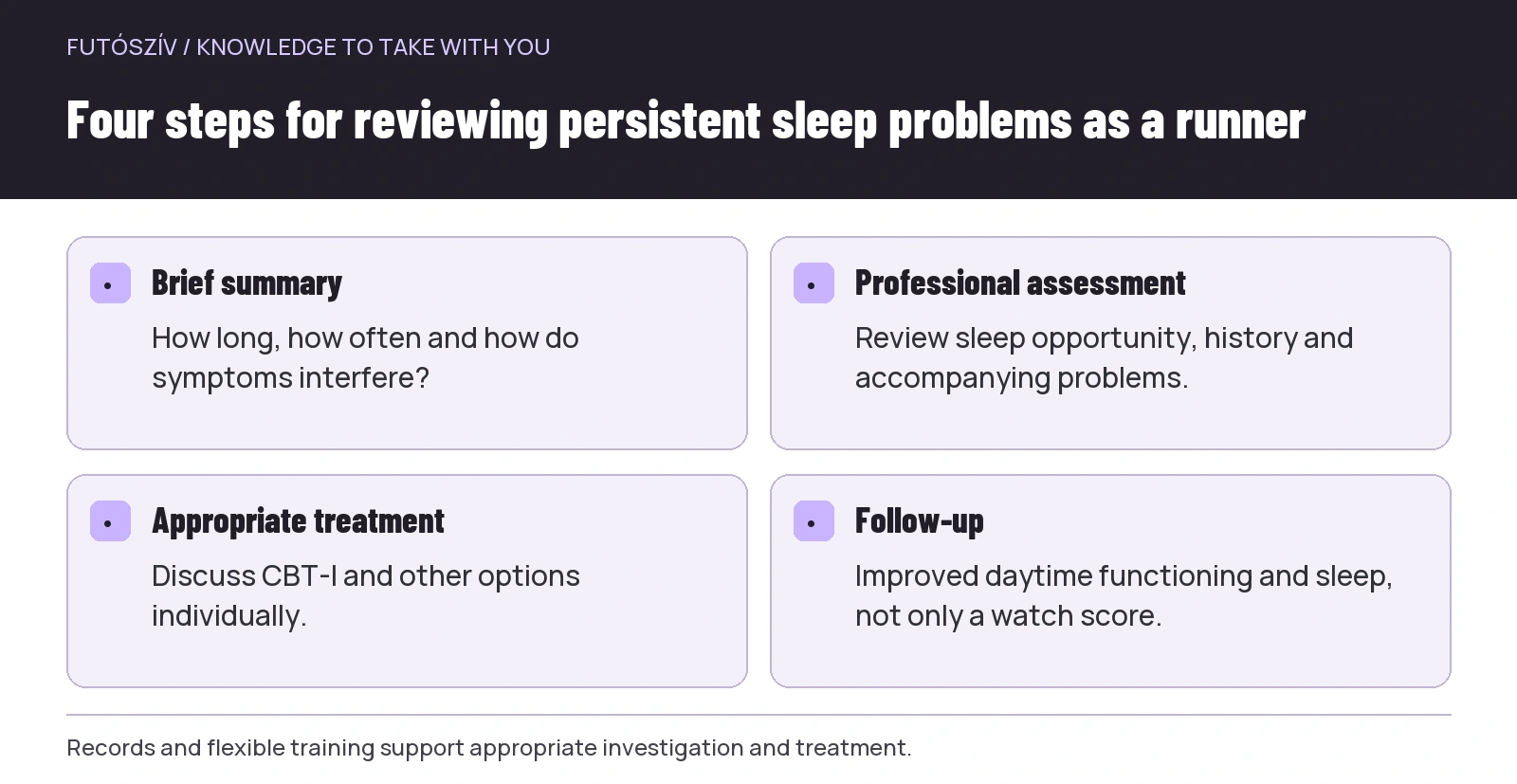 Enlarge diagram
Text version of the diagram
- Brief summary
- How long, how often and how do symptoms interfere?
- Professional assessment
- Review sleep opportunity, history and accompanying problems.
- Appropriate treatment
- Discuss CBT-I and other options individually.
- Follow-up
- Improved daytime functioning and sleep, not only a watch score.
Do not turn sleep into another performance score
Sports-watch scores can easily create a second competition. You check ‘success’ first thing in the morning and fear the next poor measurement at night. If watching data increases tension, discuss how much monitoring helps and what can be set aside temporarily.
A diary aims to support understanding, not force a perfect night. Inaccurate estimates do not, by themselves, invalidate personal experience. You do not need to time every awakening to the second, and an app’s reward badge is not a clinical goal.
Daytime function, symptom changes and personal treatment aims may matter more than the algorithm’s score. Coaches should not judge whether a complaint is legitimate from a single device indicator either.
Medicines and products: discuss them first
The NHS warns that sleep aids can also have side effects and recommends professional advice before use. A product available without prescription or advertised as natural is not necessarily suitable for the individual. Consider it alongside other medicines, illnesses and daytime responsibilities.
Do not take another runner’s sleeping medication or independently alter earlier treatment. Seeking a solution does not mean balancing a bad night with more stimulants and evening tension with a new substance. Explain such a cycle honestly to the clinician too.
If already taking something, bring an accurate product list to the discussion. Stopping can require consideration too; a portal article should not prompt abrupt changes. Treatment needs individual judgement and follow-up where necessary.
A flexible sporting day after poor sleep
An agreement with a coach can allow modifications beforehand. The specific choice depends on daytime condition, activity type and personal guidance. Every bad night does not require the same rule, and missed load need not be squeezed into the following day.
Consider technical or attention-demanding surroundings, long travel and competition separately. Meals, work and caring tasks also matter when changing the schedule. This is not measuring athletic toughness but seeking an appropriate decision in the real situation.
Running partners help by not shaming someone asking for a change. Persistent insomnia is not a community motivation task. Sport can matter while treatment is also necessary.
When should you take the next step?
If symptoms persist, daytime functioning worsens or a new symptom appears, tell the professional. Initial advice is not a final answer for every situation. Ask what comes next, which treatment is available and when follow-up is needed.
A severe physical or acute mental condition accompanying sleep problems may need separate care; seek urgent help in immediate danger. Do not wait for a sporting goal to be achieved before taking a health concern seriously.
Appropriate help aims for a more functional life and addressing sleep difficulties. Running can have a supportive role, but you do not need to prove through greater performance that you want to sleep badly enough.
Sources
- AASM 2021: behavioural and psychological treatment guideline.
- VA/DoD 2025: insomnia and sleep apnoea guideline.
- NHLBI: assessment of insomnia.
- NHLBI: treatment components.
- NHS: seeking help and treatment information.
How Futószív articles are prepared: our editorial guidelines.