A Monday-to-Sunday training plan does not describe every routine
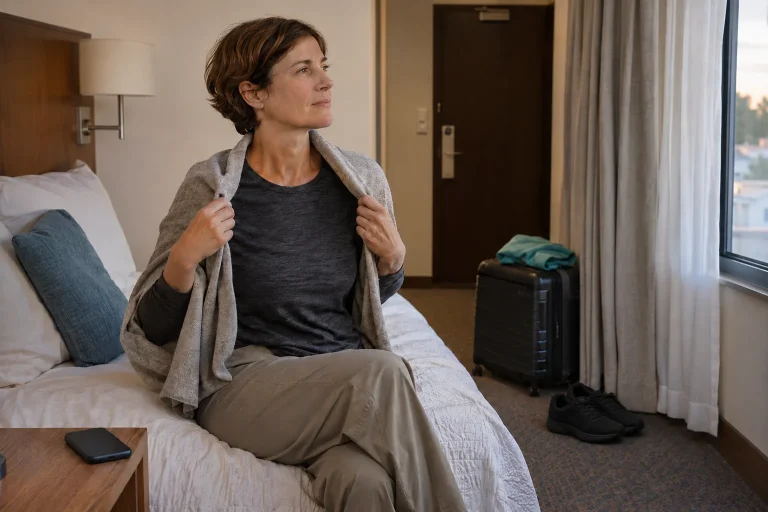
With rotating shifts, the day’s name says little about your condition. Saturday may end a long night at work, while Monday offers genuinely free time. If a running plan follows only the usual weekend rhythm, training can land where the calendar looks empty but rest has not yet happened.
See the work block, journey home and sleep opportunity together. This article presents organisational questions, rather than a personalised shift-work training plan or sleep therapy. Workplace fatigue, recurring sleep symptoms and current health may also need appropriate professional discussion. The sporting programme must fit these conditions.
Do not automatically call the end of a shift a rest day
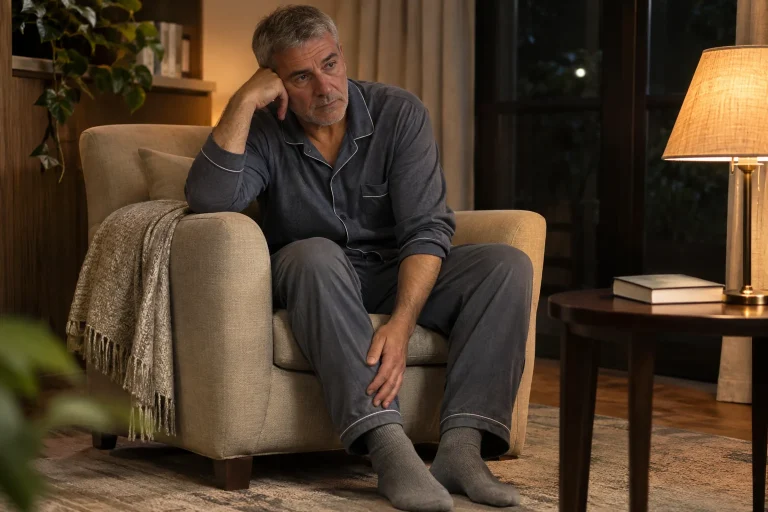
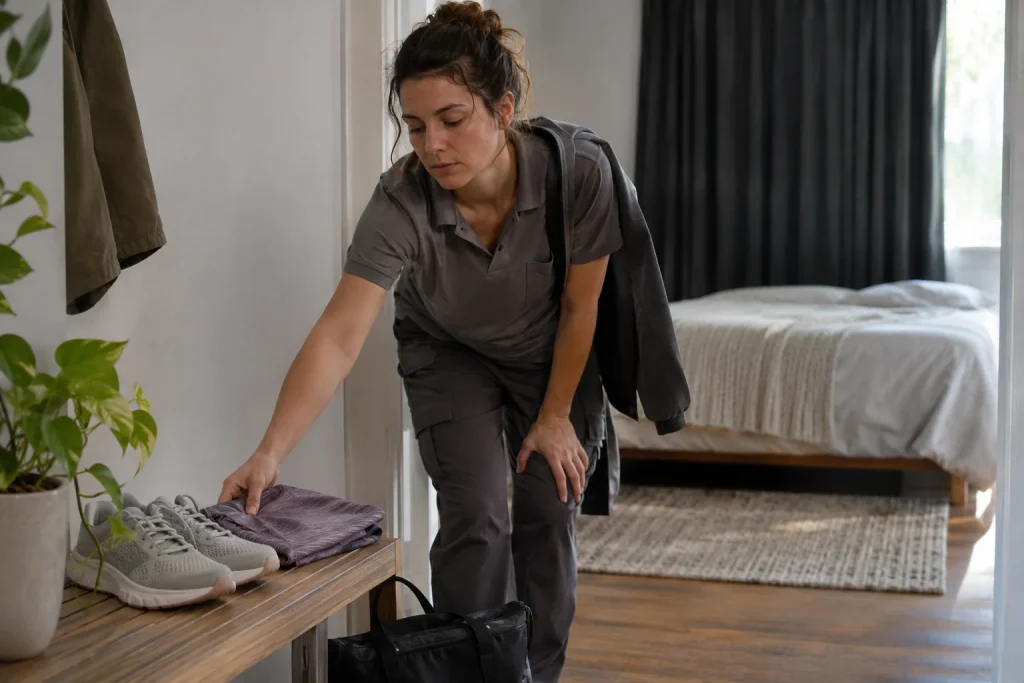
After a night shift ending in the morning, getting home and arranging sleep are only beginning. The next shift starting that evening or the following day does not make the intervening period freely available for training. Calendar free time and time genuinely suitable for recovery are different concepts. Show this distinction to your coach too.
NIOSH training material for nurses on night work emphasises protecting sleep opportunity after work. This guidance addresses healthcare workers’ circumstances, rather than providing a running programme for every shift. In your situation, the main question is what remains for sleep if the morning automatically fills with shopping, errands and sport.
Show your coach the timeline
Instead of, or alongside, weekly availability, create a simple timeline: work starts and ends, travel duration, sleep opportunities and fixed family responsibilities. You do not need to share every minute. Mark the points that genuinely affect when the agreed programme can be followed safely.
If the rota changes frequently, adapt the planning point too. A short discussion about sport might take place when the next schedule arrives. Changes then do not all appear as broken plans after the fact. The system already recognises that part of the routine is not fixed many weeks ahead.
Mark sleep opportunity before filling remaining training slots
As a practical experiment, first draw in work and necessary rest, then look for sport within that framework. This does not prescribe running volume, but reveals if a proposed plan only fits by regularly displacing sleep. You do not need to preserve a previous daytime-work calendar at any cost.
NHLBI general guidance separately discusses shift work and environmental factors disturbing sleep. Individual solutions depend on the rota and health, however. If you regularly cannot sleep despite adequate opportunity, or experience substantial sleepiness, review the situation with a professional. Training plans alone do not treat a sleep disorder.
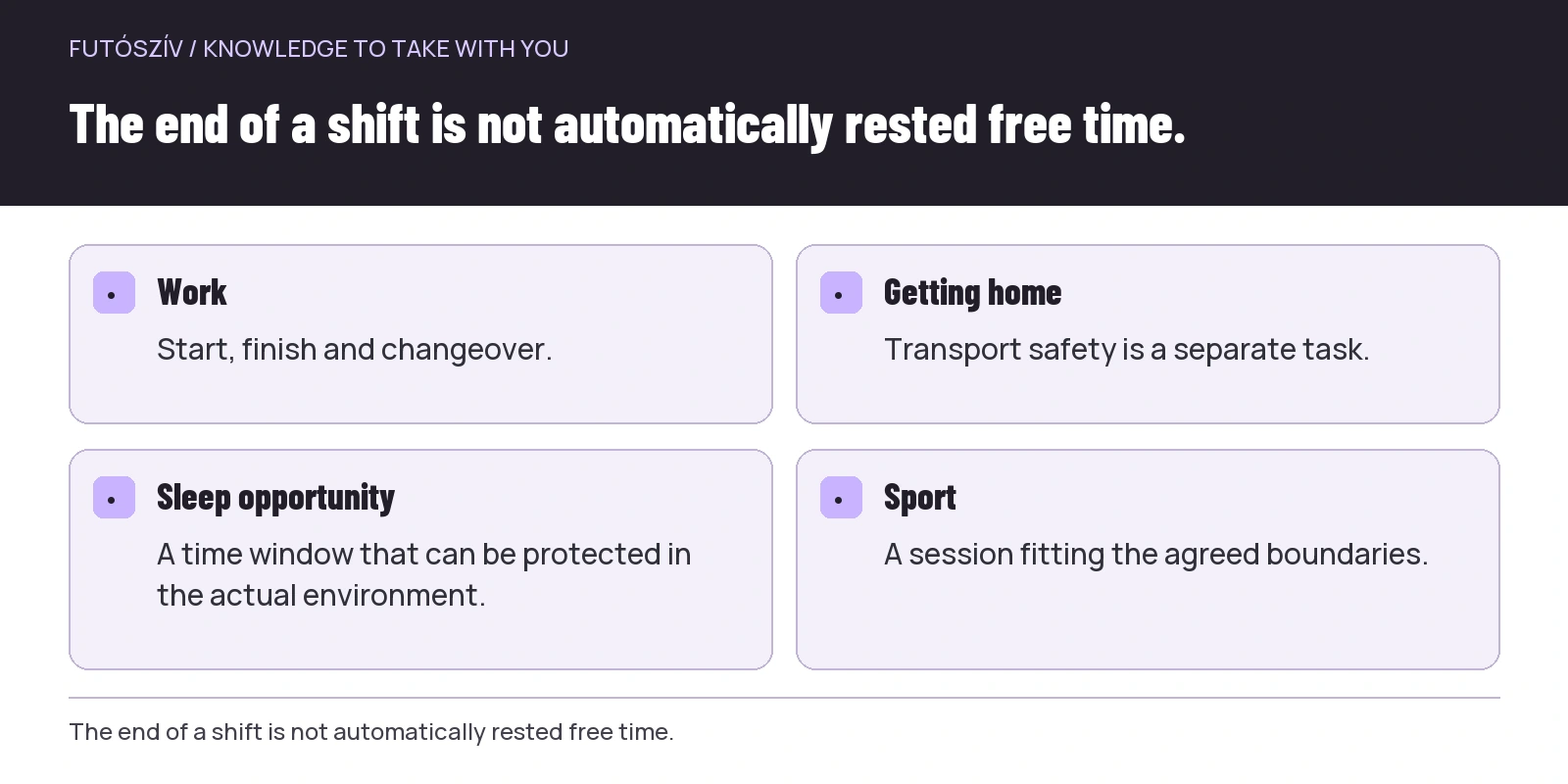 Enlarge diagram
Text version of the illustration
- Work
- Start, finish and changeover.
- Getting home
- Transport safety is a separate task.
- Sleep opportunity
- A time window that can be protected in the actual environment.
- Sport
- A session fitting the agreed boundaries.
Getting home safely is a separate decision
After a long shift, you may still need to drive, cycle or use public transport. Do not treat substantial sleepiness as something a run will definitely fix. Arranging a safe journey home is the priority. If you cannot concentrate appropriately, do not drive or enter risky transport situations.
Think through backup options beforehand, rather than only when leaving exhausted. Whom can you contact, which other transport is available and where can you ask for workplace support? Answers depend on local and personal conditions. This article provides neither employment-law advice nor a transport-safety protocol; it reminds you that training follows a safe daily framework.
The timing of a shared run can be reviewed too
If the club’s regular morning session coincides with the end of your night shift, attendance is not necessarily a good measure of commitment. Discuss another time, another social format or not joining during certain work blocks. Social connection need not always be demonstrated through the same sports session.
As a group leader, ask how accessible times are for different work patterns. Every session need not suit everyone, but choices and possibilities for change should be clear. A shift-working runner should not regularly need lengthy personal explanations because a weekend morning means a different condition for them.
Changing work blocks creates its own situation
Moving between daytime and night-time patterns may need separate arrangements. NIOSH warns that remaining awake for a long day before the first night shift or after the last can create risk. This does not establish one sleep timetable for everyone. Review your transitions with workplace and healthcare support.
Do not automatically treat a transition day as the freest day in a running plan. Add the preceding work block and when real rest becomes possible. This gives more useful planning information than simply saying there is no shift that day. The coach can then ask questions grounded in the actual timeline.
Discuss daytime sleep with people around you too
If you sleep during the day, make clear to family and a shared household which window needs protection. Ask for more than general quiet: discuss the doorbell, phone notifications, deliveries and noisy chores. Specific tasks can have specific agreements. Consider the other person’s needs too.
Not every environment can become ideal, and that is not personal failure. If sleep opportunity is persistently unavailable, the problem may extend beyond individual habits. Seek support through appropriate workplace or healthcare channels. Sport cannot be added without limit to a system regularly missing the basic conditions for rest.
Do not time food and caffeine solely by the calendar afternoon
With shifts, the timing of a drink or meal can depend on its position relative to planned sleep, rather than just the clock. Discuss individual caffeine questions with an appropriate professional. This article gives no dose or deadline applying to every shift. The aim is to make the whole day and sleep plan visible.
As a practical step, record which products you use during work and sport and what happens afterwards. Coffee, energy drinks and caffeinated sports products may play different roles in one day. Understanding the overall picture can support professional discussion. Do not try to address persistent sleepiness solely by seeking another stimulant each time.
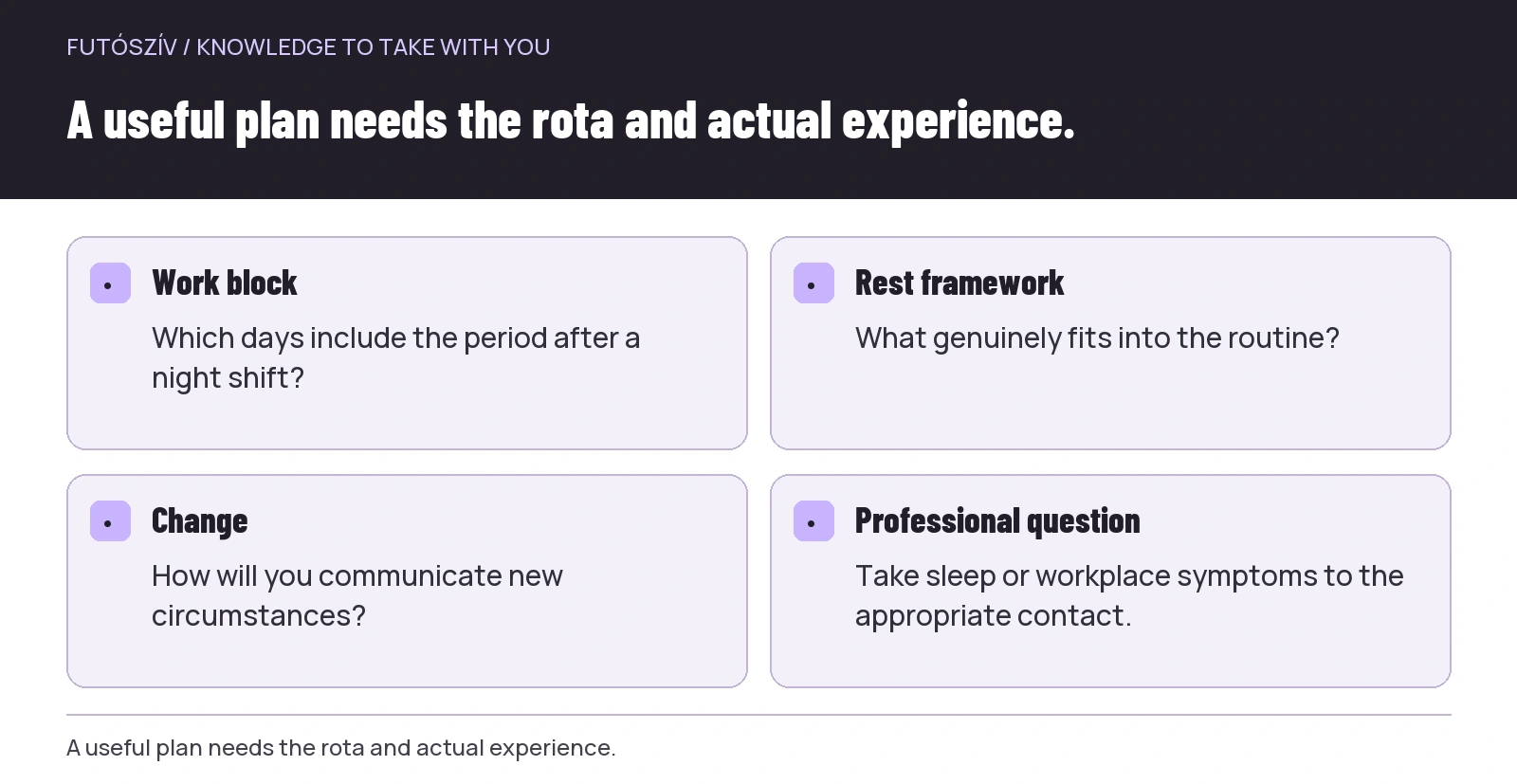 Enlarge diagram
Text version of the illustration
- Work block
- Which days include the period after a night shift?
- Rest framework
- What genuinely fits into the routine?
- Change
- How will you communicate new circumstances?
- Professional question
- Take sleep or workplace symptoms to the appropriate contact.
Include working conditions in feedback
If training feels harder than usual, note working and sleeping conditions alongside pace. You might record a changed rota and reduced rest opportunity. This is neither an excuse nor self-diagnosis. It is context without which a training number may be misunderstood.
Do not build a detailed performance system for every shift, however. Simple information supporting a decision may suffice. If a coach needs other data for a specific question, agree the format together. Logging supports interpretation rather than adding another compulsory administrative burden to changing work hours.
Sport and workplace fatigue have different management roles
A coach can adapt the sporting programme to known boundaries. Shift planning, workplace safety and occupational health belong to other professional fields. If work persistently prevents adequate rest or causes dangerous sleepiness, do not treat it solely as a training adjustment. Seek appropriate workplace support too.
Responsibility cannot be reduced to a worker managing leftover time more skilfully. Actual working conditions and the rota matter too. An appropriate professional can advise on personal options. A running website’s general practical examples cannot establish which shift pattern is medically or legally acceptable at a particular workplace.
When is healthcare advice needed?
Contact a healthcare professional if you repeatedly struggle to fall asleep, stay asleep or remain awake when needed. Work patterns are important background, but do not exclude other sleep or health problems. Describe the actual timeline, sleepiness and daily effects. You do not need to choose a sleep-disorder diagnosis beforehand.
Alarming physical symptoms or severe illness require appropriate urgent help. Personal safety matters more than planned training and completing challenges. A workable plan for shift-working sport is not a plan completed at any cost. Seek a system adaptable to the real conditions of work, health and rest.
An example of planning around a night-work block
A runner sends the next rota to their coach and marks the mornings that follow night work separately. They are not presented as empty days, but together with getting home and sleeping. They agree when to report actual experience and how to communicate if changing work conditions make the plan unworkable.
This example does not recommend one training amount for every shift worker. The point is information quality: the calendar connects with actual condition. When the next rota arrives, the previous block need not be copied automatically; plans can be discussed again using experience. Changes can then become part of shared planning rather than constant reports of failure. You are finding a suitable place for running in present life, with sleep opportunity and safety in mind.
Sources and further reading
- NIOSH: Coping with night and evening shifts, sleep
- NIOSH: Sleep and transitions between work blocks
- NHLBI: Healthy Sleep Habits and strategies for shift workers
How Futószív articles are prepared: our editorial guidelines.