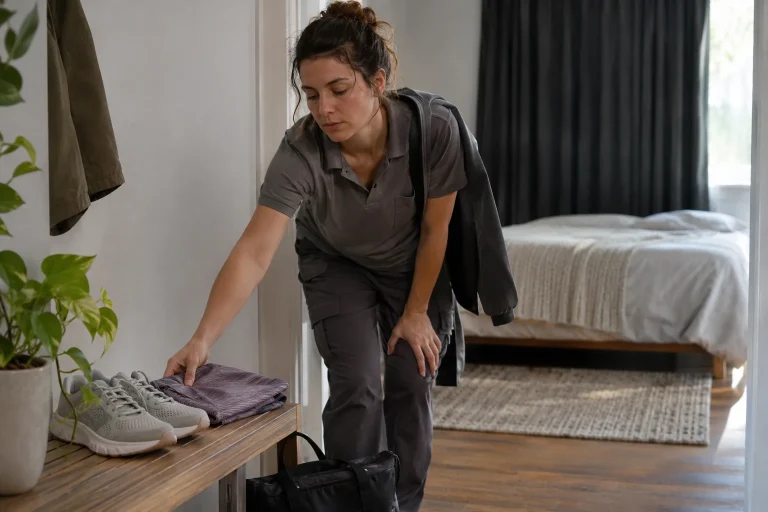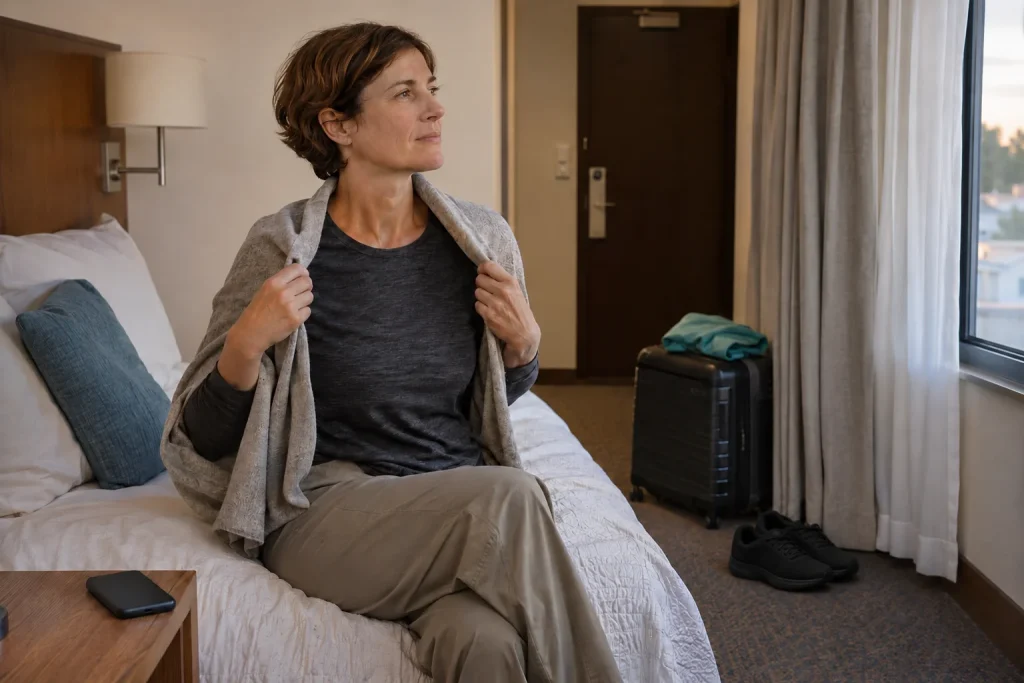
Local time and your familiar rhythm may differ
You have arrived in the race city and your watch shows local time, but you still feel sleepy or hungry according to your former routine. Crossing time zones can temporarily separate scheduled times from your internal rhythm. The start is therefore more than the endpoint of a travel booking. Review the days between arrival and the event beforehand too.
This article presents main planning questions, rather than personalised light therapy, a sleep timetable or medication advice. Appropriate strategy depends on the route, time difference, length of stay and personal health. Significant symptoms or complex travel call for discussion with a sleep or travel-health professional.
Travel fatigue and jet lag are different
A long coach journey or a flight with connections can be tiring without crossing time zones. The 2021 consensus on athletes’ travel distinguishes travel fatigue from jet lag related to time-zone displacement. They can coexist, but not every poor sleep or exhausted arrival has the same explanation.
The difference matters for planning. An extremely early departure, long wait or late hotel check-in may be the main burden. In another case, a substantial time difference needs separate attention. Name the actual difficulty: a copied jet-lag tip may not address the problem that matters on your journey.
Create an itinerary clearly identifying both time zones
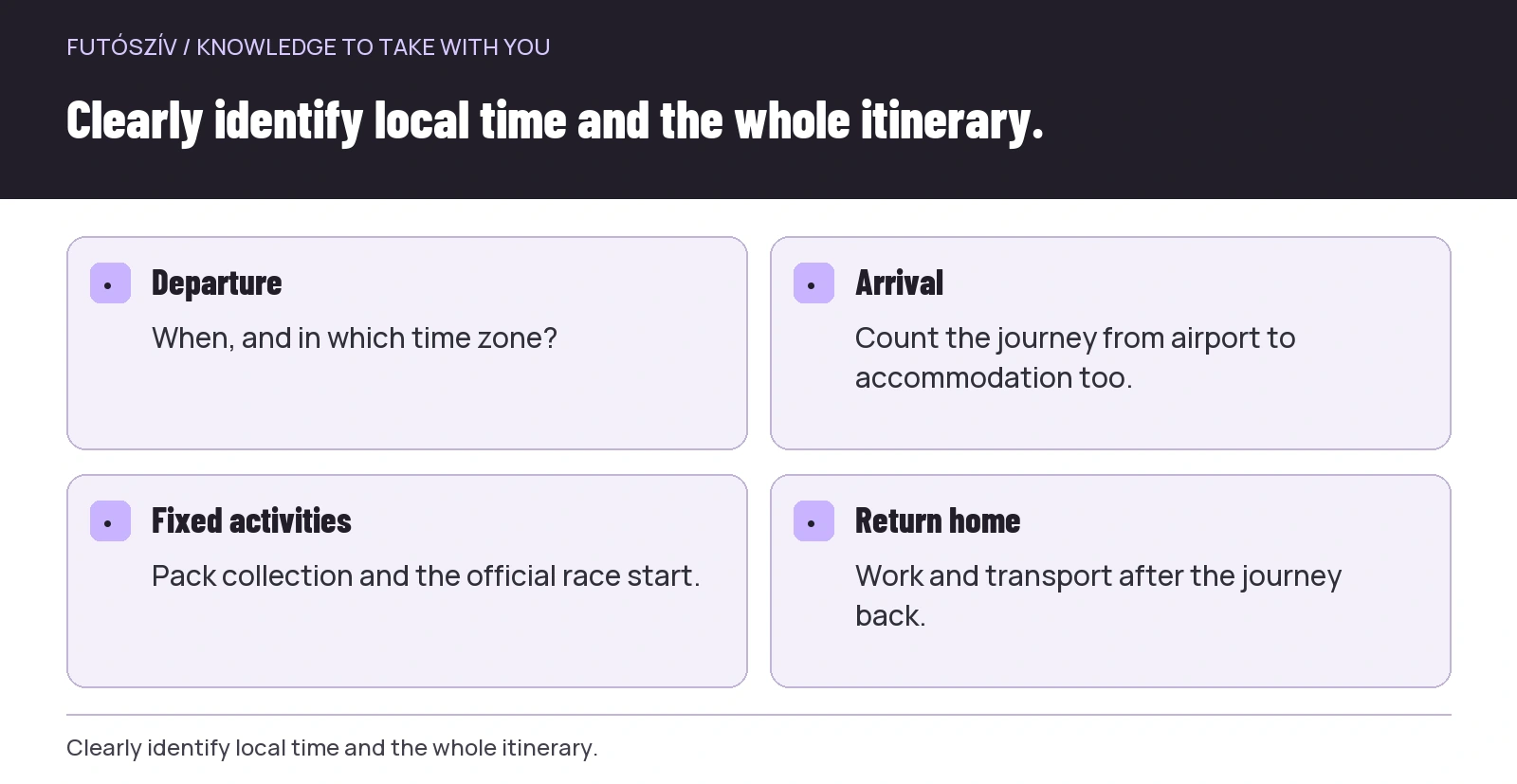
Alongside bookings, collection deadlines and start times, make clear whether times are local or refer to the departure location. A short table can list departure, connection, arrival and the first fixed activity. You do not need to live every day in two timetables; the labels prevent misunderstanding.
Pay particular attention if teammates or your coach remain in another country. Record a planned call with its time zone too. Do not take the official start time from an old search summary. Accurate information and individual sleep adaptation are separate questions; give both a place in preparation.
Make the programme between arrival and racing visible
After buying the flight, review everything before reaching accommodation and the start. How long is the airport transfer, when can you check in, where is pack collection and how many other on-site commitments remain? Even an early-looking arrival can lead to a day spent on practical tasks. Sleep opportunity emerges from the whole itinerary.
This article does not prescribe the same number of adaptation days for everyone. Personal plans, travel direction and health may call for different strategies. Show a coach or professional the actual timeline rather than only the arrival date. Details reveal the practical flexibility genuinely available.
 Enlarge diagram
Text version of the illustration
- Departure
- When, and in which time zone?
- Arrival
- Count the journey from airport to accommodation too.
- Fixed activities
- Pack collection and the official race start.
- Return home
- Work and transport after the journey back.
Light timing is not one general morning rule
The CDC Yellow Book 2026 chapter emphasises appropriate timing alongside personal and route factors in managing jet lag. Light’s role depends on the direction and size of the shift required. Copying another traveller’s schedule may therefore be unsuitable for you.
Seek professional assistance if you need a more complex plan. Provide departure and arrival locations, dates, flight schedule and the race’s local start. Everyday planning of outdoor time and a targeted circadian intervention are different levels. This article gives no light-avoidance or light-exposure timetable for every route.
Examine sleep opportunities during travel too
Think beforehand about where and under which conditions rest will be possible. Waiting areas, connections and the first task after arrival may affect it. Prepare familiar comfort arrangements in accordance with travel rules. You do not need to buy a complete new collection of devices before a first major race trip.
Opportunity and actual sleep differ here too. Falling asleep on board should not be treated as a task guaranteed to succeed. A plan that works only if you sleep perfectly on every leg leaves too little reserve. Consider what happens after a more uncomfortable or interrupted night as well.
Do not improvise caffeine and melatonin use on arrival
Caffeine timing and products affecting sleep are individual questions to discuss with a professional where necessary. The CDC chapter covers several options, but not every suggestion applies unchanged to every traveller. This article deliberately gives no medication or melatonin dose and does not recommend independent experiments in the days before a race.
If you take regular medication, seek appropriate advice about timing across the journey too. Do more than decide on your own whether the box fits in hand luggage. Health, interactions and travel circumstances may affect use. Well-intentioned advice from companions before a race does not replace your treatment plan.
Do not immediately fill the local schedule with every activity
Major events offer interesting options: sightseeing, an expo, group runs, sponsor meetings and dinners with friends. Each can appeal separately while leaving little free time together. Identify what is necessary and what is optional. Do not load the day after travel solely according to empty calendar spaces.
Make social plans flexible beforehand. Agree that someone can return to accommodation earlier or join the next day. This does not make the trip less communal. Clearly expressing your needs can be part of sporting preparation, rather than treating attendance at every available event as compulsory.
Travel experience belongs alongside the training goal
After arrival, discuss actual condition and journey circumstances with your coach rather than merely repeating the planned workout. Delays, interrupted sleep and changed routines may be important. Adapting the sporting programme is an individual decision; this article prescribes no general intensity or distance for the first local days.
A session others call an easy shakeout does not necessarily mean the same thing to everyone. Your plan, health boundaries and current experience matter. Seek discussion if the original programme cannot be followed. Honestly reporting travel difficulties provides useful information, rather than judging your preparation or willpower.
 Enlarge diagram
Text version of the illustration
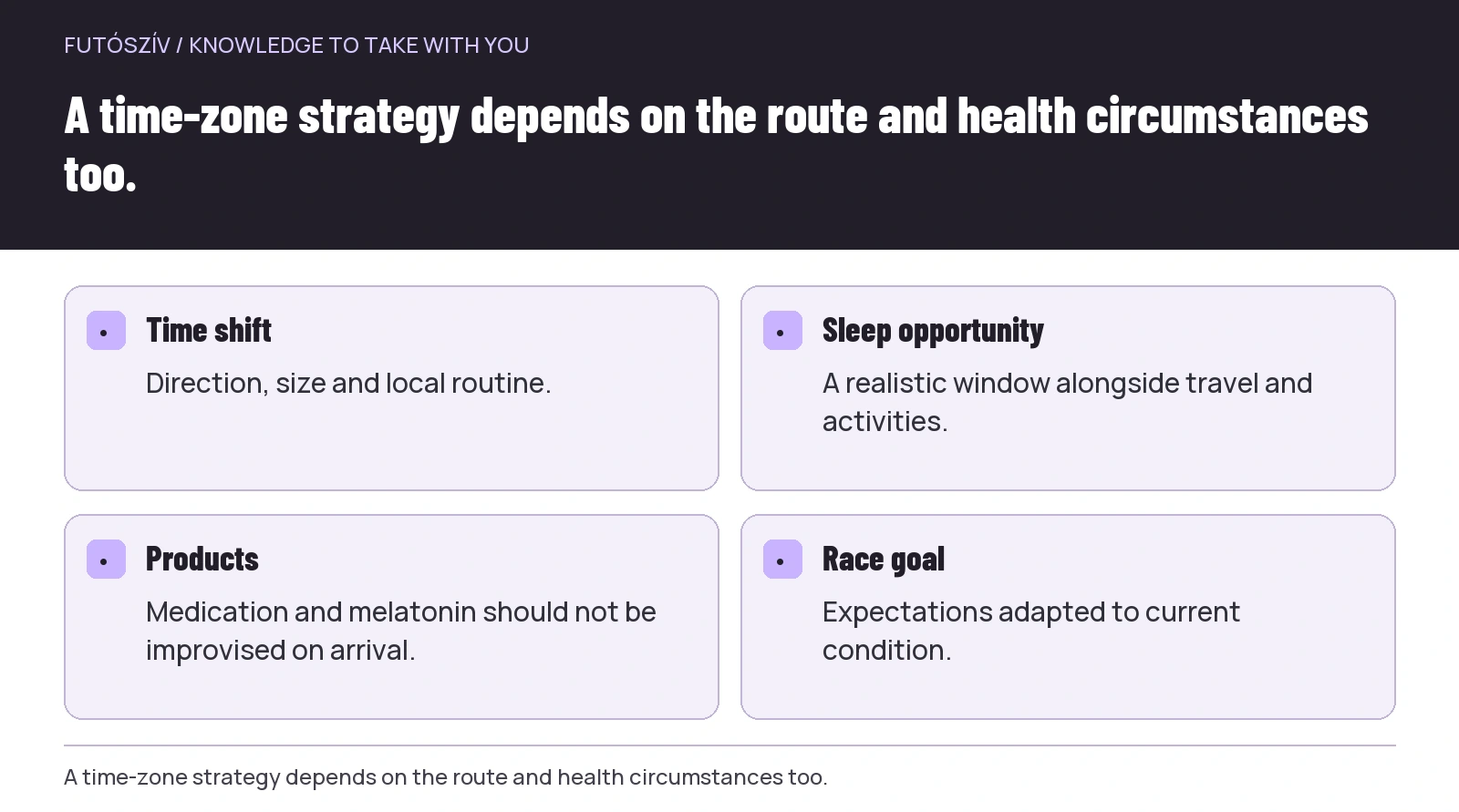
- Time shift
- Direction, size and local routine.
- Sleep opportunity
- A realistic window alongside travel and activities.
- Products
- Medication and melatonin should not be improvised on arrival.
- Race goal
- Expectations adapted to current condition.
Interpret race expectations alongside circumstances
An overseas event can be an important personal goal, but travelling does not automatically create ideal racing conditions. Discuss expectations beforehand: the primary goal, what can change according to your condition and when safety takes priority. Travel costs do not need to become a sporting result that must be achieved at any cost.
Changing a goal does not erase the experience or preparation. Current health and race rules matter more than a time previously promised publicly. If uncertain, assess the situation with appropriate professional help. The paid entry and personal sporting risk are separate questions, even if emotionally difficult to separate.
Do not automatically call significant symptoms jet lag
Seek appropriate healthcare for new, unusual or alarming physical symptoms. Being in the period after travel is not a reason to explain every illness as a simple time difference. Persistently disruptive sleep or daytime symptoms may need professional discussion too. Describe the symptom and travel circumstances without a ready-made self-diagnosis.
Do not drive while sleepy or enter dangerous situations in an unfamiliar city. Local transport and team movements belong within safety planning. If a task cannot be followed with appropriate attention, find another solution. A traveller preparing for a running race is entitled to help and changed plans like anyone else.
Count the days after travelling home too
The time-zone change does not necessarily end at the finish. Check when you reach home and which fixed tasks follow. Another early work start or long drive can strain an otherwise well-organised trip. Review the full return timeline just as you review arrival before the race.
Tell your coach the return-home circumstances when planning the next period. Include travel and rest in the calendar, not only race distance. Experience may eventually improve your individual travel plan, but one journey should not become a definite rule for every future situation.
Agree the team’s shared and individual parts
Before travelling together, identify fixed activities and where individuals can follow their needs. A shared transfer is a different commitment from an optional late dinner. Without that distinction, someone choosing rest may feel obliged to explain repeatedly. Clear agreement preserves both team operations and individual adaptation.
An example of a useful race-travel sheet
A short sheet lists local departure and arrival times, accommodation contact details, fixed collection time, race start and contact person. A separate line identifies sleep and scheduling questions still needing professional discussion. Optional activities can be distinguished in text too, rather than only through colour or symbols, so they are easy to omit.
The sheet is neither a circadian treatment plan nor a guaranteed adaptation recipe. It prevents important information being scattered across messages and screenshots with unclear time zones. Precise arrangements can leave room for personal decisions. Sleep and expectations before the race then become a consciously reviewed part of travel, rather than an afterthought improvised at the airport.
Sources and further reading
- CDC Yellow Book 2026: Jet Lag Disorder
- NHS: Jet lag
- Managing Travel Fatigue and Jet Lag in Athletes, 2021 consensus
How Futószív articles are prepared: our editorial guidelines.