An important vitamin does not imply unlimited supplementation
Vitamin D’s role in bone health is well known, so among runners it can easily become general performance insurance. But that idea mixes several questions: is adequate intake needed, is individual testing appropriate, does deficiency exist and does increasing intake beyond adequate status help? These do not have the same answer.
The Egészségvonal information on vitamin D explains its role in calcium and phosphorus metabolism and bone health. This does not mean every running symptom is vitamin D deficiency or a larger dose automatically produces stronger bones and better training.
This article helps separate the questions. It gives no individual dose or laboratory target. With bone pain, repeated injury, absorption problems, known bone disease or another health question, seek professional advice for your circumstances. A product label is not a complete care plan.
What is adequate status for?
Vitamin D relates to calcium absorption and appropriate maintenance of bone mineral content. Severe deficiency can cause bone disease. The NIH ODS professional overview discusses this role in detail. Adequate intake therefore matters and is not merely a marketing topic.
Bone health is not determined by one vitamin alone, however. Loading history, overall energy and nutrient provision, hormonal status, age, previous injury and other conditions may also be significant. Buying vitamin D independently does not replace assessment of a possible bone stress injury in a runner.
In an individual discussion, name the question: general prevention, treatment of confirmed deficiency or investigation of a specific symptom? Clarifying the purpose helps avoid applying the same information sheet to every situation. The need for supplementation and further tests can be considered separately.
Routine screening and targeted testing are not the same
The USPSTF recommendation found insufficient evidence on the benefits of general vitamin D deficiency screening in asymptomatic, community-dwelling, non-pregnant adults. This does not mean the vitamin is insignificant or targeted testing never has a place. The document answers a precisely defined population-screening question.
The 2024 Endocrine Society guideline likewise distinguishes disease prevention from situations with an existing indication for testing or treatment. In general, it does not support routine 25(OH)D measurement in healthy populations solely for disease prevention. This cannot be turned into an individual testing ban for someone with symptoms or known bone disease.
When consulting a doctor, ask more than whether you can have a number on a laboratory sheet. Explain which symptom, history or risk situation prompted the question. Testing becomes meaningful when appropriate interpretation and a next decision accompany the result.
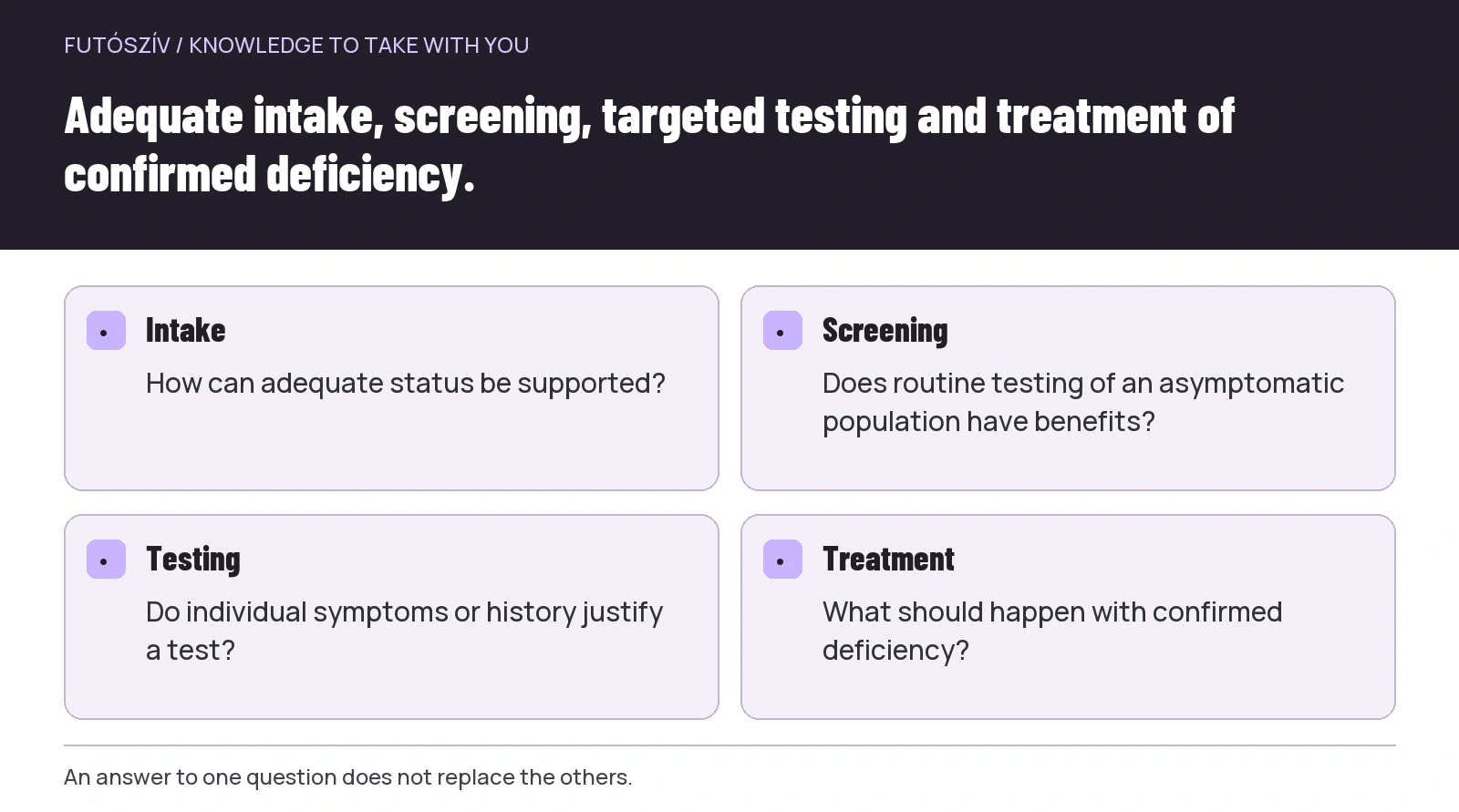 Enlarge diagram
Text version of the diagram
- Intake
- How can adequate status be supported?
- Screening
- Does routine testing of an asymptomatic population have benefits?
- Testing
- Do individual symptoms or history justify a test?
- Treatment
- What should happen with confirmed deficiency?
Why might seasonal recommendations differ?
Population recommendations can differ with geography, dietary practices and the question assessed. The 2026 Semmelweis University information emphasises vitamin D supplementation from autumn to spring in Hungary when discussing bone health. An American routine-screening recommendation asks a different question from planning seasonal intake in Hungary.
It would therefore be misleading to infer from a foreign guideline’s title that nobody in Hungary needs supplementation, or from a general Hungarian message that the same high dose and laboratory target suit everyone. Individual condition and precise product use remain important.
Discuss your own plan with a doctor or pharmacist, particularly with illness, several products or previously treated deficiency. Explain what you currently take, since multivitamins and other products may contain vitamin D too. A seasonal routine should not become unnoticed multiple supplementation.
What did the VITAL fracture study show?
A randomised analysis within VITAL examined vitamin D supplementation and fractures in generally healthy middle-aged and older US adults. Participants were not selected specifically for deficiency, low bone density or osteoporosis. In the 2022 publication , supplementation did not clearly reduce the fracture risk examined.
The participant group is the important limit. The result does not refute appropriate treatment of confirmed deficiency and is not a study of every young runner’s bone stress injury. It shows that adding a vitamin in generally healthy people is not an automatic guarantee of fracture prevention.
As a runner, it is useful to ask in which group, for which purpose and against which comparison a claim arose. “Good for bones” and “reduces fractures in everyone” require different evidence. Product advertising often jumps from the first to the second, although an individual decision requires more information.
Read the laboratory report with units and purpose
Assessment of vitamin D status often involves measuring 25-hydroxyvitamin D, abbreviated 25(OH)D. Interpret results alongside laboratory units and the clinical situation. Directly comparing numbers in different units may mislead, so show the original report.
A population cutoff, a laboratory reference range and an online supposedly optimal running target are not identical concepts. The Endocrine Society disease-prevention guideline notes that a clear optimal target applicable to every prevention goal was unavailable in the groups assessed. Do not build your own dosage from a forum number.
If deficiency was treated previously, ask the purpose and timing of any review. Do not arrange constant repeat measurements merely to keep the number continuously higher. Equally, do not skip a doctor-prescribed check on the basis of an article about general screening.
Several products can add up
Check whether vitamin D is present in a multivitamin, a product described as bone-protecting and a separate supplement too. Active ingredient and quantity matter more than a brand name. If using several products, show a professional the entire list rather than asking general advice about each separately.
Excessive intake can be harmful. NIH ODS discusses high calcium levels and possible serious consequences in vitamin D toxicity. A high dose is therefore not sports insurance from which only more benefit can come. The next race’s proximity does not determine individual dosage or treatment duration.
Different medicines and illnesses may bring further supplementation considerations. Follow the patient leaflet and instructions received, and seek advice about new or concerning symptoms. This article gives no home loading dose, injection approach or other personal treatment schedule.
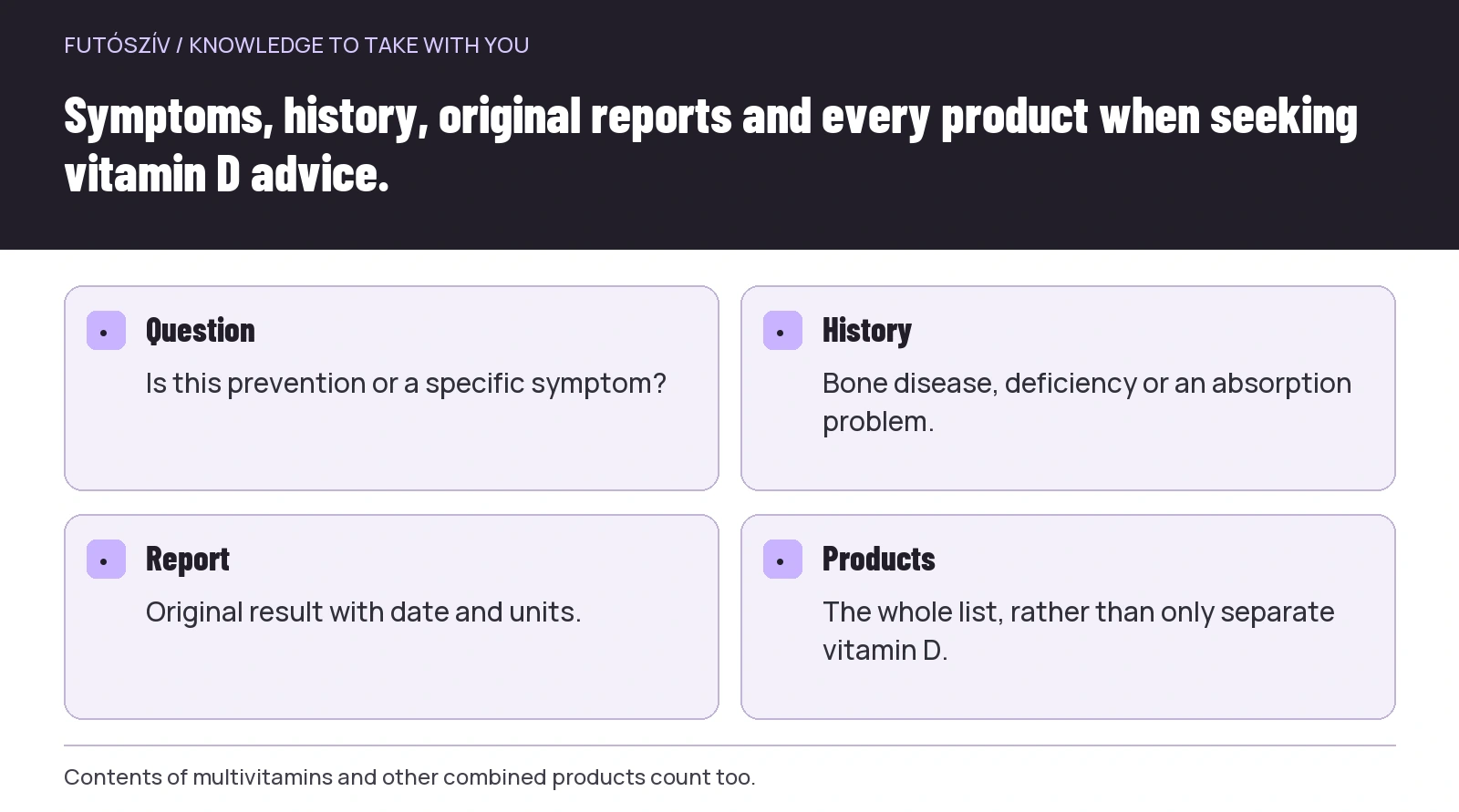 Enlarge diagram
Text version of the diagram
- Question
- Is this prevention or a specific symptom?
- History
- Bone disease, deficiency or an absorption problem.
- Report
- Original result with date and units.
- Products
- The whole list, rather than only separate vitamin D.
Outdoor running is not a personal vitamin D measurement
Being outdoors frequently does not tell you your own vitamin D status. Season, geography, time of day, clothing and other factors influence production in the skin. No running-watch data can reliably calculate individual status. Do not turn weekly outdoor time into a laboratory result.
Vitamin D is no reason to seek supplementation through long unprotected sun exposure or sunburn. Address skin protection and seasonal intake separately through appropriate advice. There is no single reliable number of minutes for every skin type and situation that you must fulfil while running.
In the everyday plan, diet and supplementation advice received are more trackable than the feeling of sunshine. If uncertain, list current habits and products. The discussion should aim for a proportionate solution matching your needs, rather than as many interventions as possible.
Do not delay assessment of bone symptoms until a vitamin course ends
Local bone pain recurring with activity, worsening walking or repeated bone stress injury needs individual assessment. A presumed vitamin D deficiency does not automatically explain every symptom. Do not try to resolve symptomatic running through a vitamin purchase and a few weeks of waiting.
Bring the symptom timeline, earlier injuries, significant training changes and diet-and-product list to the appointment. The clinician uses these to decide which questions and tests are appropriate. A bone-health plan may include load, nutrition and other health factors together.
Give your coach the activity framework, rather than only saying you started a vitamin. A new product is not clearance to run. If your provider recommends temporary modification, adapt the race calendar too. Coordinating treatment and sport helps more than a quick explanation reduced to one nutrient.
When should you seek individual advice?
Discussion is particularly appropriate with known bone disease, previously confirmed deficiency, malabsorption, significant underlying illness, pregnancy or several products. Explain symptomatic situations and general prevention separately. You do not need to select a laboratory panel or treatment dose in advance.
At the end of the discussion, know the purpose: planning intake, targeted testing or treating confirmed deficiency? If you receive supplementation, understand its use and any review. If no test is needed, ask the reason and what might change that decision later.
Good information about vitamin D for runners does not promote one high target number. It shows the importance of adequate status, the boundaries of evidence and personal questions. This can lead to decisions placing bone health and your own sporting life in appropriate context.
Sources
- Egészségvonal: Vitamin D
- NIH ODS: Vitamin D, health professional fact sheet
- Endocrine Society: Vitamin D for the prevention of disease, guideline 2024
- USPSTF: Vitamin D deficiency screening in adults
- VITAL: Supplemental vitamin D and incident fractures in midlife and older adults
- Semmelweis University: Prevention and treatment of osteoporosis, 2026
How Futószív articles are prepared: our editorial guidelines.