
Bleeding is not a sign of a well-completed training session
Blood in stools, bloody diarrhoea, vomiting blood or black, tar-like stools puts healthcare before sporting performance. Digestive discomfort may be common among runners, but that does not make bleeding something adequately addressed with a new gel or different breakfast. Occurring after running does not identify the cause on its own.
The NIDDK, the US institute also addressing digestive diseases lists bloody or coffee-ground-like vomit, black tarry stools and blood mixed with stools among possible signs of acute gastrointestinal bleeding. Severe bleeding can also involve dizziness, fainting or circulatory illness. Such a condition needs prompt help.
This article helps you recognise the need for help and explain the history. It cannot locate bleeding or determine its cause at home. Take symptoms seriously even if you are trained, young and all earlier results were normal.
Immediate help: which situations should not wait?
Continuous or heavy bleeding, large clots, fainting, confusion, cold sweaty pallor, severe weakness or feeling very unwell requires urgent care. In Hungary, call 112 if a life-threatening situation is suspected. Do not continue training or drive yourself for care if unwell.
The NHS information on rectal bleeding treats bleeding that does not stop or is heavy as requiring immediate care. Black or dark-red stools or bloody diarrhoea also warrant urgent medical advice and assessment. Urgency is not determined solely by how much pain you feel.
Always seek medical help for vomiting blood. The NHS page on vomiting blood particularly highlights urgency when accompanied by feeling generally unwell, dizziness, abdominal pain or black stools. Even if vomiting blood stops and no other symptoms occur, this is no reason to close the question: medical advice is needed promptly.
What if you saw only a little bright-red blood?
A single small amount of rectal bleeding does not necessarily mean serious disease. The NHS explains this too while emphasising that a GP can check the cause. “Not necessarily serious” does not mean you can confidently call it haemorrhoids without assessment or judge every later similar event identically.
If bleeding recurs, persists or occurs with abdominal pain, changed bowel habits, unexplained weight loss or unusual tiredness, seek medical examination. An old haemorrhoid diagnosis does not automatically establish a new symptom’s origin either. Age, history and accompanying symptoms matter together.
Do not wait until blood reaches a threshold you invented. Neither a photograph nor toilet-water colour can calculate precise blood loss. Useful observations are where and in what form you saw it, whether it recurred and which other symptoms appeared; these support targeted advice.
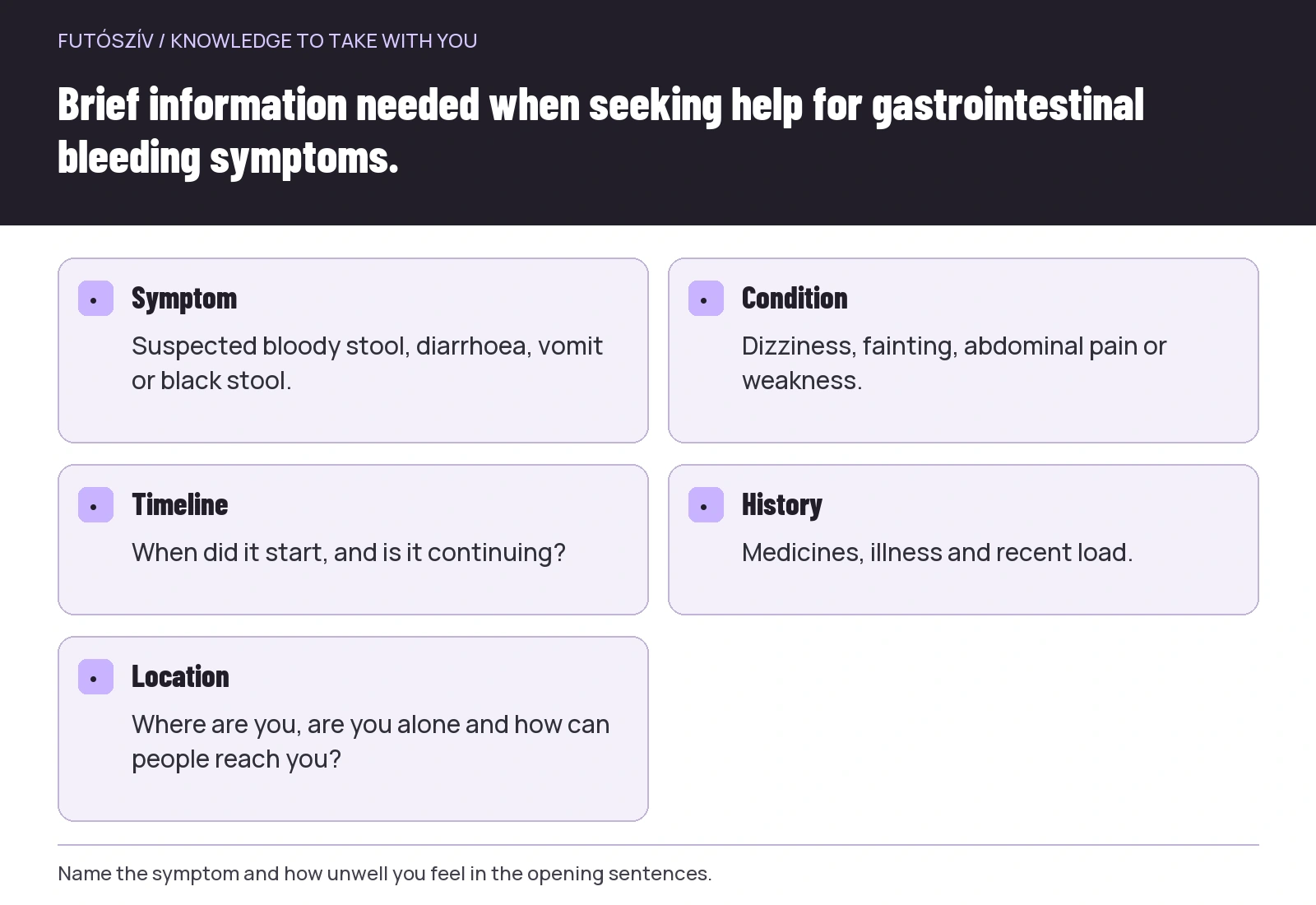 Enlarge diagram
Text version of the diagram
- Symptom
- Suspected bloody stool, diarrhoea, vomit or black stool.
- Condition
- Dizziness, fainting, abdominal pain or weakness.
- Timeline
- When did it start, and is it continuing?
- History
- Medicines, illness and recent load.
- Location
- Where are you, are you alone and how can people reach you?
It happened after running: connection or coincidence?
The timing is important information for the doctor, but not a complete explanation. Mention a long run, heat, a race or unusual load preceding symptoms. Also say if similar symptoms occurred previously on a rest day or in another situation. Do not select only the part fitting a sporting story.
The American College of Gastroenterology clinical guideline on colon ischaemia discusses a condition in which disturbed blood supply to the bowel causes problems. This illustrates that abdominal pain and bleeding can have serious medical causes. It does not mean every post-run bleed is ischaemia or the runner should decide this at home.
Medical assessment may also explore other digestive, medication-related or additional causes. Being trained offers no general immunity. The term runner’s gut can easily merge recurring urgency without bleeding with an event needing an entirely different step.
Colour helps description but does not replace examination
Specify whether blood appeared on toilet paper, the stool surface, mixed in stools or in diarrhoea. With vomiting, fresh red blood differs in description from dark coffee-ground-like contents. You need not use technical language: an accurate everyday description is appropriate.
Colour is not a reliable home map of the precise problem location. Do not infer a certainly harmless cause from brighter blood or regard every dark stool alone as proven bleeding. If uncertain, seek professional advice with food and product information; do not dismiss suspicious symptoms through guesswork.
Do not delay leaving for care to gather more evidence or await another bowel movement. With acute illness, observation must not precede help. If you think a picture useful and can make it safely, show it to the doctor rather than asking a public running group for diagnosis.
The medicine list is an important part of the history
According to the NIDDK diagnostic information , the doctor may ask about non-prescription medicines, NSAIDs and products affecting clotting too. List more than regular prescriptions. A painkiller taken on race morning, a combined cold remedy and a new supplement may also matter.
Write down or show the actual product, when you used it and under which instructions. The active ingredient helps alongside the brand, particularly with several products. “Just one painkiller” is less useful than packaging or an accurate list.
Do not change prescribed medicine independently based on this article. With suspected bleeding, report use to the provider and ask them for further guidance. Immediate reporting is particularly important during anticoagulant treatment; arbitrarily skipping medicine and investigating bleeding are not interchangeable tasks.
What should you say in the first phone call?
- The main symptom: suspected vomiting blood, bloody stools, bloody diarrhoea or black tarry stools.
- Your condition: whether you feel faint, dizzy, have severe abdominal pain, weakness or other illness.
- The timeline: when it began, whether it continues and whether it has recurred.
- Important history: previous bleeding, known digestive disease, medicines and recent load.
- The location: whether you are at home, at a race, alone and how easily you can be reached.
You do not need to identify an illness over the phone beforehand. To arrange care, the key is saying more than “my stomach feels a little off”. Clearly state bloody symptoms. Your opening sentence may determine how accurately the situation is understood.
If a companion seeks help for you, give them the product list and basic history. With severe illness, do not remain alone because the topic feels embarrassing. Intimate symptoms are healthcare information and belong within appropriate care.
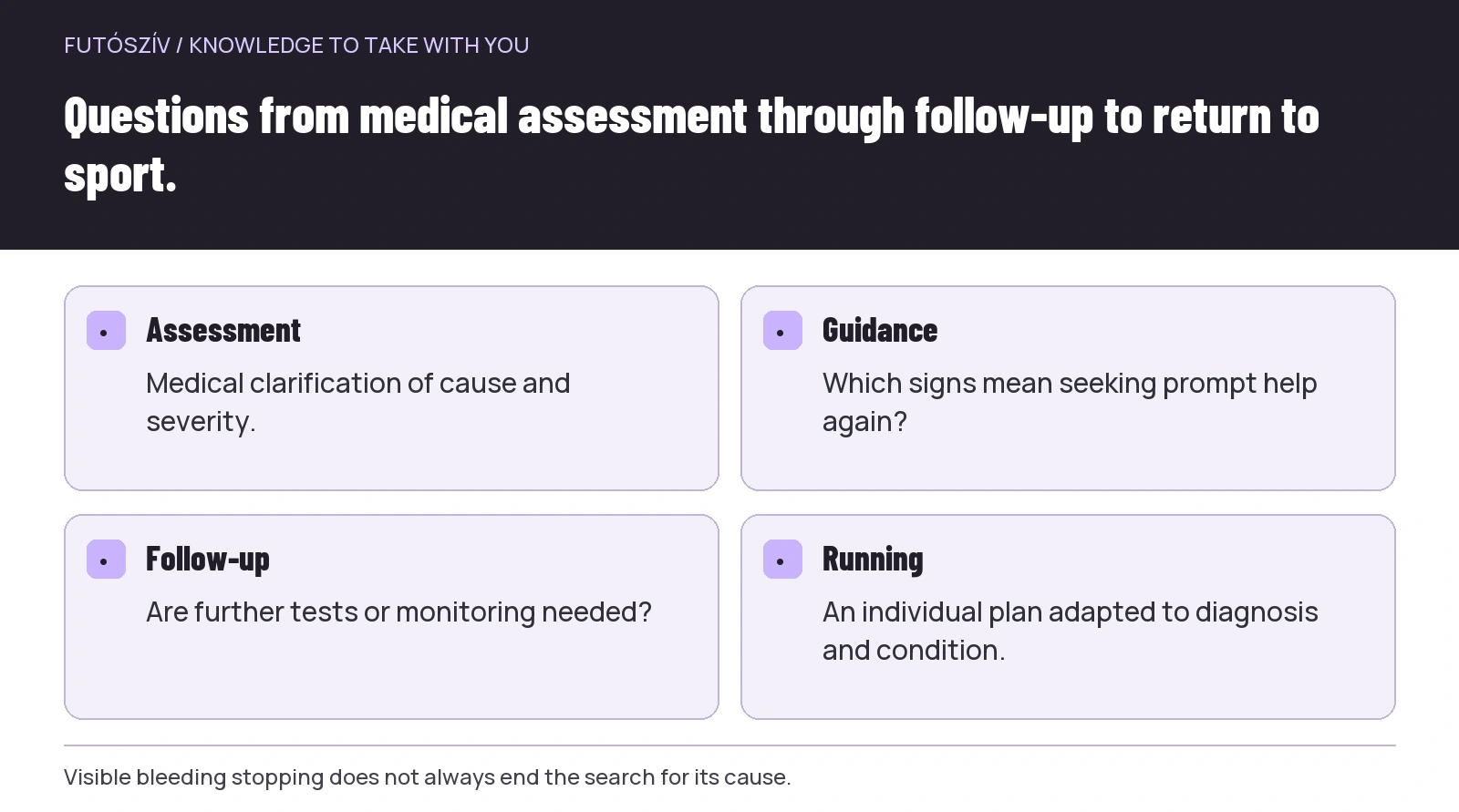 Enlarge diagram
Text version of the diagram
- Assessment
- Medical clarification of cause and severity.
- Guidance
- Which signs mean seeking prompt help again?
- Follow-up
- Are further tests or monitoring needed?
- Running
- An individual plan adapted to diagnosis and condition.
What might happen during medical assessment?
NIDDK describes history and physical examination alongside possible blood or stool tests and, when appropriate, endoscopy and imaging. Not every patient receives every test. Condition, suspected bleeding location and severity, and history guide selection.
You can ask the present test’s purpose: assessing severity, finding the source or ruling out another illness? It also matters what a reassuring result means and whether further checks remain necessary. Do not infer from an earlier negative test that a new event must be insignificant.
Prepare for tests according to instructions from the provider. Do not independently begin laxatives, fasting or a “bowel cleanse” because you read that endoscopy might be needed. With acute bleeding, the care team determines the next step.
Have a clear conclusion even after symptoms stop
No longer seeing blood is a welcome change but does not necessarily reveal what happened. Ask whether the case can be closed, whether follow-up is needed and which signs require immediate contact again. Seeking help does not become unnecessary because you improved temporarily while waiting.
A brief symptom timeline may help at review: when did bleeding, abdominal pain, bowel changes or unusual tiredness occur? Do not continue daily self-checks based solely on blood colour. Monitoring aims to support appropriate medical decisions, rather than make every minor digestive difference feel dangerous.
If symptoms return, do not hide that by assuming the same earlier cause. Explain what changed, whether medicine changed or another load occurred, and how similar it is to the previous event. Recurrence is new information even if you were entirely well between episodes.
When can you run again?
Return depends on the cause, severity and treatment received. One general duration cannot responsibly apply to everyone. If urgent care or investigation was necessary, individual movement guidance should form part of the plan.
Ask what is permitted now, which symptoms mean stopping movement and whether reassessment is needed before a race. Performance goals and travel-home logistics can change too. “It no longer hurts” alone does not answer whether the cause and consequences of bleeding have resolved.
Later review of diet and fuelling may make sense, but only after addressing the medical question. A new gel, fibre reduction or another breakfast does not investigate bleeding. If assessment recommends nutritional changes, plan them alongside the actual diagnosis and running load.
The running community can help you avoid being alone
The best response from companions is not “it happened to me too, carry on”. They can help reach a medical point, identify your location and arrange getting home if care permits. Their own reassuring story does not replace assessment of your condition.
Talking about gastrointestinal bleeding can feel uncomfortable, but a race result need not justify seeking help. Running remains an enjoyable long-term part of daily life when you also have a workable response to unusual health signals. In this case, seeking help is the specific, useful step.
Sources and further reading
- NIDDK: Symptoms and Causes of Gastrointestinal Bleeding
- NIDDK: Diagnosis of Gastrointestinal Bleeding
- NHS: Bleeding from the bottom
- NHS: Vomiting blood
- American College of Gastroenterology: Clinical Guideline on Colon Ischemia, 2015
How Futószív articles are prepared: our editorial guidelines.