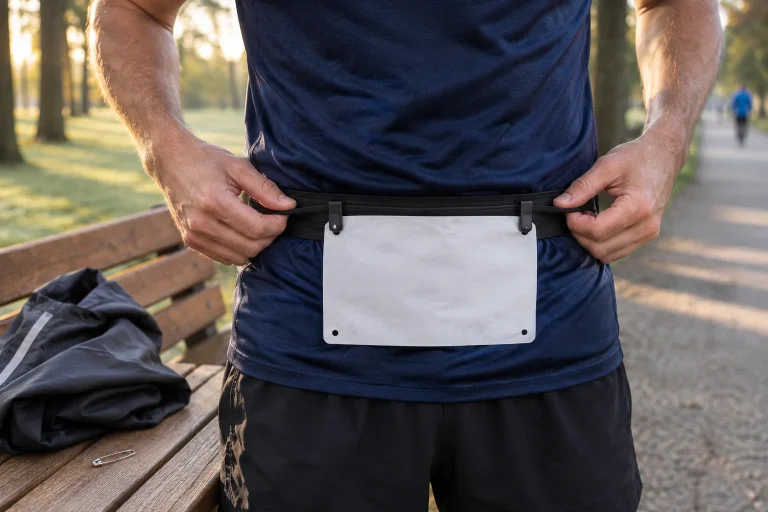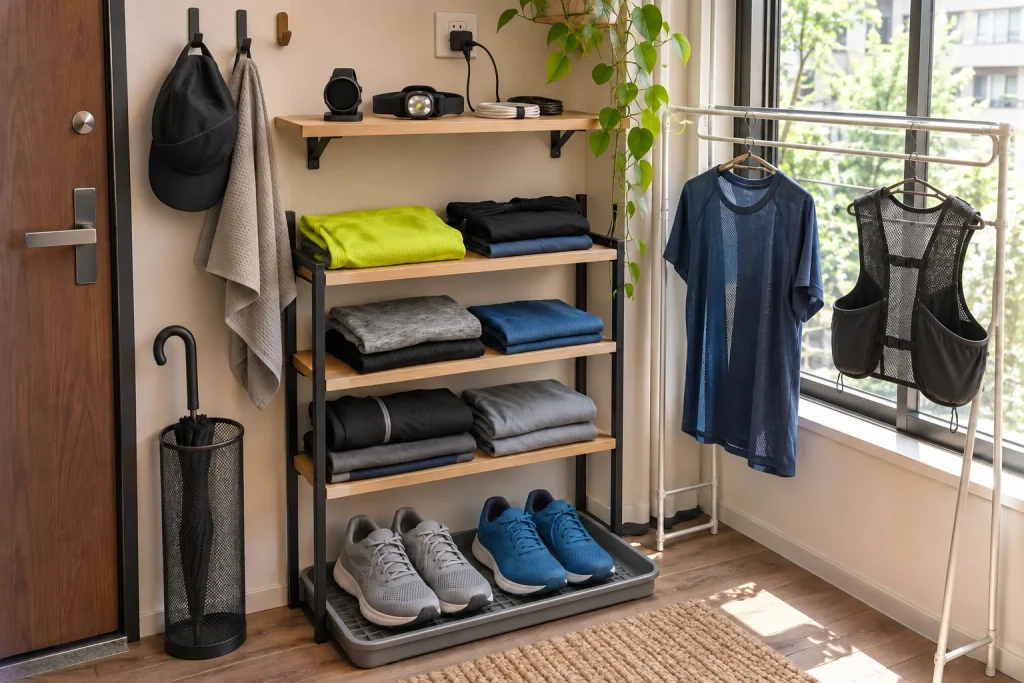
Two shoes by the door, a wet vest on a chair, a cable on the table and one clean sock on the airer: running kit can spread through a small home. A new cupboard is not necessarily the answer. Objects often lack a clear journey from arriving home to the next departure. Wet muddy things need different handling from dry clothes or electronics awaiting charge. Organising the process can create a clearer, more usable collection in the same space. Seek less searching and forgotten care, not a perfect photograph.
Think in conditions rather than rooms
You may lack separate hallway, laundry and sports storage. Conditions can still be distinct: newly arrived, needing cleaning, drying, ready and awaiting repair. One corner can serve several roles with clear sequence. A wet vest should not go straight among ready clothes, nor a faulty light remain beside usable equipment. A hook, tray or labelled box can separate them. Recognisable status, not furniture type, creates the system.
Describe an ordinary return: removing shoes, keys, emptying pockets and drying clothes. Steps requiring detours or repacking are easily skipped when tired. Arrange storage around this real route, not an imagined ideal day. Everyday items belong within reach; rare reserves farther away. A good system reduces movements rather than adds tasks. Observe before buying containers.
Arrival zone: small, cleanable and temporary
Give muddy shoes and wet bags an easy-to-clean first place without blocking movement. A suitable tray or floor-compatible surface can contain dirt, chosen for your home’s materials and use. Keep entrances and shared walkways free of permanent piles. This is a transition zone, not final storage: items move on to cleaning, drying or readiness. Without that step, a tray becomes a tidy-looking heap.
Keep suitable basic cleaning tools nearby without piling chemicals beside shoes. Follow product guidance. Give keys and small objects their own place rather than muddy shoes or wet belt pockets. You avoid later searching everything again. Emptying pockets fully is both care and organisation: packaging stays out of the wash and personal essentials remain findable.
Drying needs space, not necessarily another room
Open wet items and position according to material instructions. Crumpled clothes and compressed vests dry differently from ventilated arrangements. Bottles and reservoirs may hide moisture. The HydraPak container-care guide gives specific cleaning and full-drying steps, for example. Other systems need their own guidance. Dry-looking exteriors do not prove dry interiors.
Sharing space over time can help: drying items temporarily occupy ventilation, then move to ready storage. Every object need not have a permanent hook, but know when closed boxes or cupboards are appropriate. Do not accelerate through unsuitable heat. Clothes, shoes and containers can have different instructions. Storage should provide time and space for care rather than ignore requirements. Neatly stored wet equipment is not ready equipment.
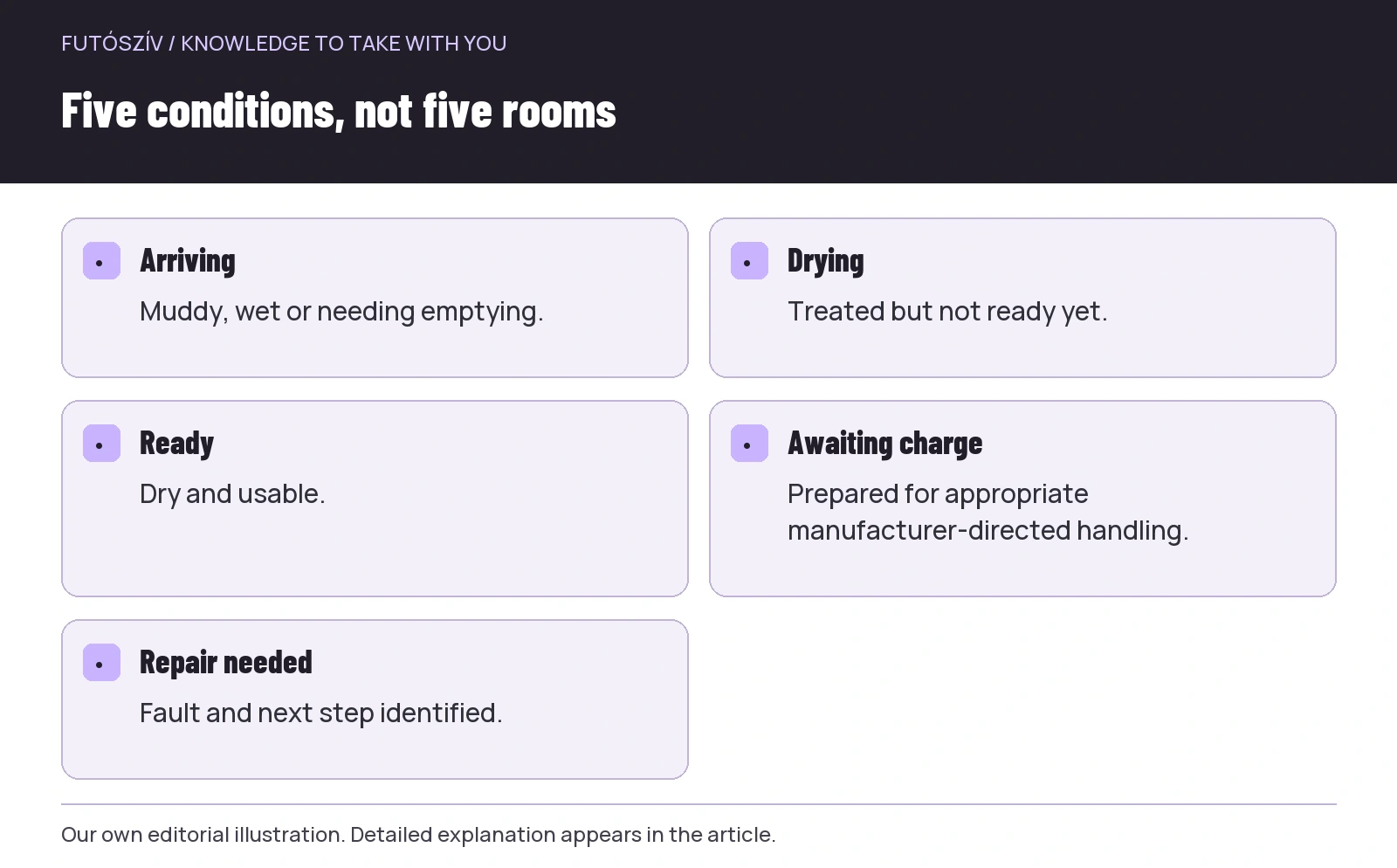 Enlarge diagram
Text version of the illustration
- Arriving
- Muddy, wet or needing emptying.
- Drying
- Treated but not ready yet.
- Ready
- Dry and usable.
- Awaiting charge
- Prepared for appropriate manufacturer-directed handling.
- Repair needed
- Fault and next step identified.
Make the ready zone easy to read
Keep frequent combinations accessible among dry usable clothing. Sort by task: warm easy running, cool mornings, rain or evening. Separate compartments are optional, but know the logic. Long searches for socks and tops suggest an overabstract system. Rare reserves can sit higher or behind daily items. Storage should follow usage frequency rather than purchase order or attractive colour gradients.
Keep paired accessories together: matching bottles and caps, watch and charger, chest strap and transmitter according to care rules. One cable box can save space but cost time. Use product names or simple identifiers without sensitive information on exposed labels. Quick recognition is the aim. In multi-runner households, separate by person or device; apparently compatible parts may differ.
Electronics: charging and storage are different conditions
Give charging equipment a location suited to its instructions, separate from wet kit. Follow manufacturer directions. Cables should not hang where movement or objects can pull devices down. Mark what is ready and awaiting action. A light switching on may lack energy for the intended run; “on the shelf” is not a status. Learn indicators and checks rather than rely on vague memory.
Battery-powered products may have specific long-term storage rules. The Garmin long-term storage guidance treats this separately, for example. Do not copy charge-level or periodic-charging rules to other devices. Note exact model and instructions when storing seasonally. Separate damaged from usable equipment and resolve through suitable service or manufacturer support. Storage must not conceal unresolved faults.
The repair box should not be the final destination
A torn strap or broken zip can disappear for months. Pair the repair place with a next step: fault, exact product and whom to consult. Arrange suitable repair; otherwise decide further use or collection. The GORE-TEX repair information illustrates specialist repair requirements. Hiding a hole and restoring original function are not always equivalent.
Do not return faulty items among ready kit merely for lack of space. A rushed departure can hide memories of an unreliable switch or leaking valve. Make status clear and retain information. Repairable backup and unusable equipment differ. Too many set-aside items do not always need another box: unmade decisions often occupy shelves. Resolving them frees space and attention.
| Zone | What belongs here? | When does it move on? |
|---|---|---|
| Arriving | Wet, muddy items needing emptying | After unpacking and deciding care |
| Drying | Correctly treated but still wet equipment | When genuinely dry enough |
| Ready | Usable organised equipment | For the next run |
| Awaiting charge | Cared-for equipment suitable for charging in proper conditions | When ready according to the manufacturer |
| Repair needed | An item with a documented fault | After repair or a clear further decision |
In a shared home, agree the system
Do not automatically claim every ventilated communal surface for drying. Agree places, times and durations. Predictability prevents conflict. Put items away after drying so temporary arrangements remain workable. Simple cleanable use of a shared airer, bathroom or hallway often beats a large permanent sports station. The system must suit home life, not only the runner.
Similar socks, bottles and chargers mix easily among runners. Use clear simple identification and keep components in their own systems. Shared storage does not make accessories interchangeable. Return used objects in appropriate condition. “Put back” helps only when dry, clean or charged status is understood. Few visible categories work better than numerous rules. Clarity is the shared system’s value.
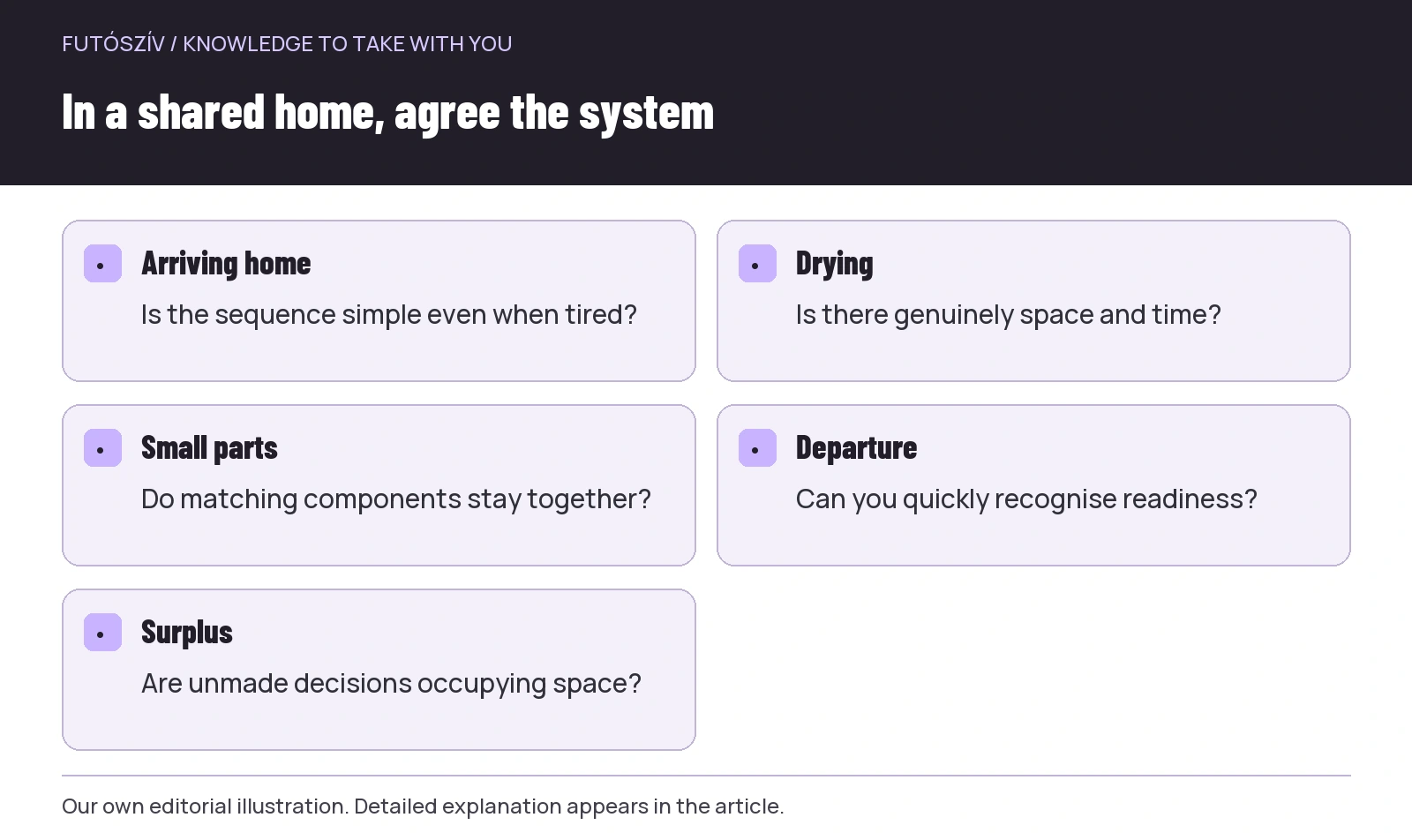 Enlarge diagram
Text version of the illustration
- Arriving home
- Is the sequence simple even when tired?
- Drying
- Is there genuinely space and time?
- Small parts
- Do matching components stay together?
- Departure
- Can you quickly recognise readiness?
- Surplus
- Are unmade decisions occupying space?
Seasonal changes: everything need not remain on daily shelves
Rearrange rare warm- and cold-weather equipment periodically, not solely by calendar month. Keep layers and reserves for actual conditions accessible. Clean, dry and inspect before long storage. Faulty straps or forgotten wet reservoirs are unpleasant next-season discoveries. Long-term storage may have special rules, especially electronics. A short label or digital note helps identify pre-use checks.
Seasonal changes also reveal genuine surplus. For long-unworn clothing, ask about purpose, size and condition. A useful reserve has an identifiable situation; vague “maybe someday” piles obscure the collection. Describe faults and repairs accurately when passing on and check current local collection terms. Not everything suits donation or one collection point. Leaving storage can be as considered as new equipment arriving.
Measure space and tasks before buying
Before storage purchases, measure available surfaces and actual objects. An attractive box may be wrong for a vest, too enclosed for drying or inaccessible daily. Visibility, ventilation and cleaning are different tasks needing different solutions. Rearranging existing hooks, shelves and containers may suffice. Container count does not measure order. Shorten and clarify use, or new storage fills with disorganisation too.
Try a simple temporary arrangement for a week first. Observe tired returns and rushed mornings. Change the role or location of constantly misplaced objects. One forgotten charger does not require reorganising the whole home. Small precise changes are more sustainable. Once it works, choose lasting solutions. Purchasing then follows a real need rather than promising an illusion of order. The best storage works within your process.
The next departure is the final test
Storage succeeds when you quickly find suitable usable equipment rather than discover unfinished tasks: shoes not left wet, bottles clean and dry, small items placed and electronics status known. This need not require large rooms or dedicated cupboards. Clear conditions, a simple sequence and occasional decisions about reserves suffice. In a small home, process can create more room than another box. Equipment then supports running rather than occupying everyday living space.
Sources and further reading
- HydraPak: cleaning and drying containers
- Garmin: long-term storage of battery-powered devices
- GORE-TEX: appropriate repair options
How Futószív articles are prepared: our editorial guidelines.