A seasonal menu helps on busy running days when the produce currently available becomes food you can actually prepare. A basket of beautiful vegetables is not dinner on its own, and a calendar divided into months does not tell you how much cooking time you will have on Tuesday. Seasonal shopping is a good starting point for discovering variety, but it needs connecting to your own kitchen, diet and storage options. The aim is varied, enjoyable meals whose ingredients are actually used in an appropriate condition.
This guide supports household menu planning for adult recreational runners. It is not a personal sports diet, a certificate of origin or a harvest calendar covering every Hungarian growing region. The food combinations below are ideas: they do not represent specified energy, protein or fluid amounts. If you have an individual dietary restriction, allergy or illness, adapt substitutions to your personal requirements. The season offers choices; it does not override those requirements.
First clarify what the season means for you
The Nébih Education Programme explanation connects seasonality with vegetables and fruit naturally growing at that time in a location’s climate. A shop’s year-round range and the Hungarian harvest season are therefore different things. When shopping, it is also worth asking whether produce is freshly harvested or stored from an earlier harvest. Both can have a place in the kitchen, but they provide different information about availability.
Hungarian origin alone does not identify the growing method or harvest date. Goods bought locally were not necessarily grown locally. An organic label describes a different property from seasonality. You can therefore use four short fields in your menu plan: what the product is, where it comes from, whether it is freshly harvested or stored, and what you will use it for. If you do not know something, leave it unknown; the atmosphere of a market cannot establish a definite origin.
A calendar is a guide; check again at the stall
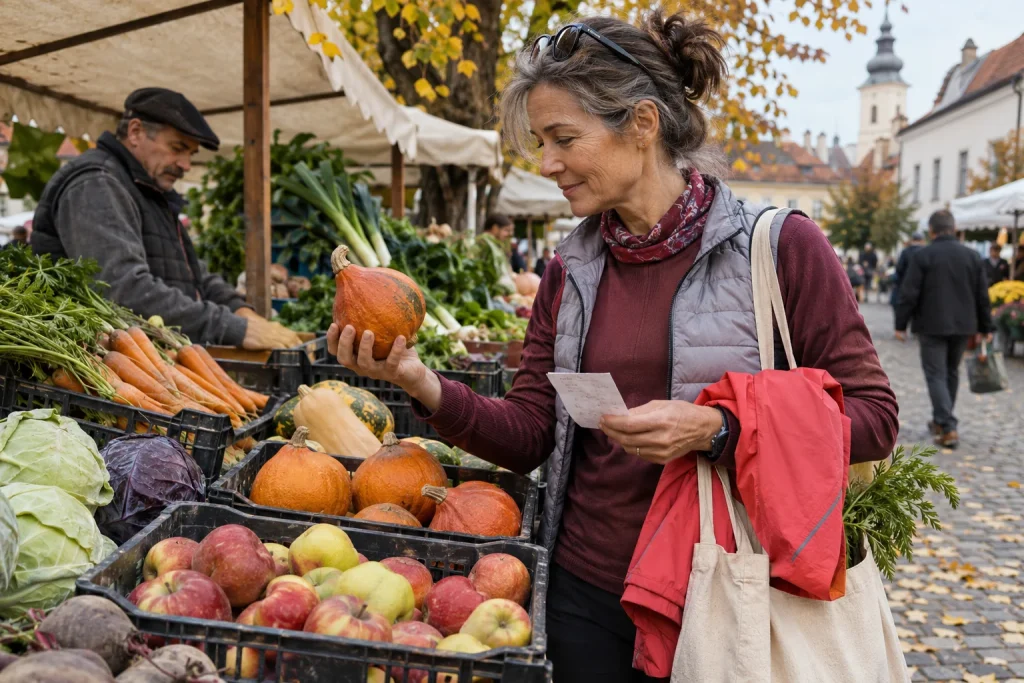
The European Commission fruit and vegetable calendar provides a non-exhaustive overview by climatic region. Hungary appears in the group of temperate-climate countries. Such a list is useful for regional orientation, but does not prove that every listed product in a particular shop was grown outdoors in Hungary. Check the origin of the actual product; the week’s available range may differ from the overview.
Do not use the calendar as an instruction to buy a particular crop on a marked day. Instead, bring questions: what has just arrived, what is available in a usable quantity, and what fits the cooking time? Choose two or three ingredients from the appealing selection for which you already have a reliable preparation method. With something unfamiliar, a smaller quantity you can actually process is practical first. Discovering the season then need not mean trying ten new recipes at once.
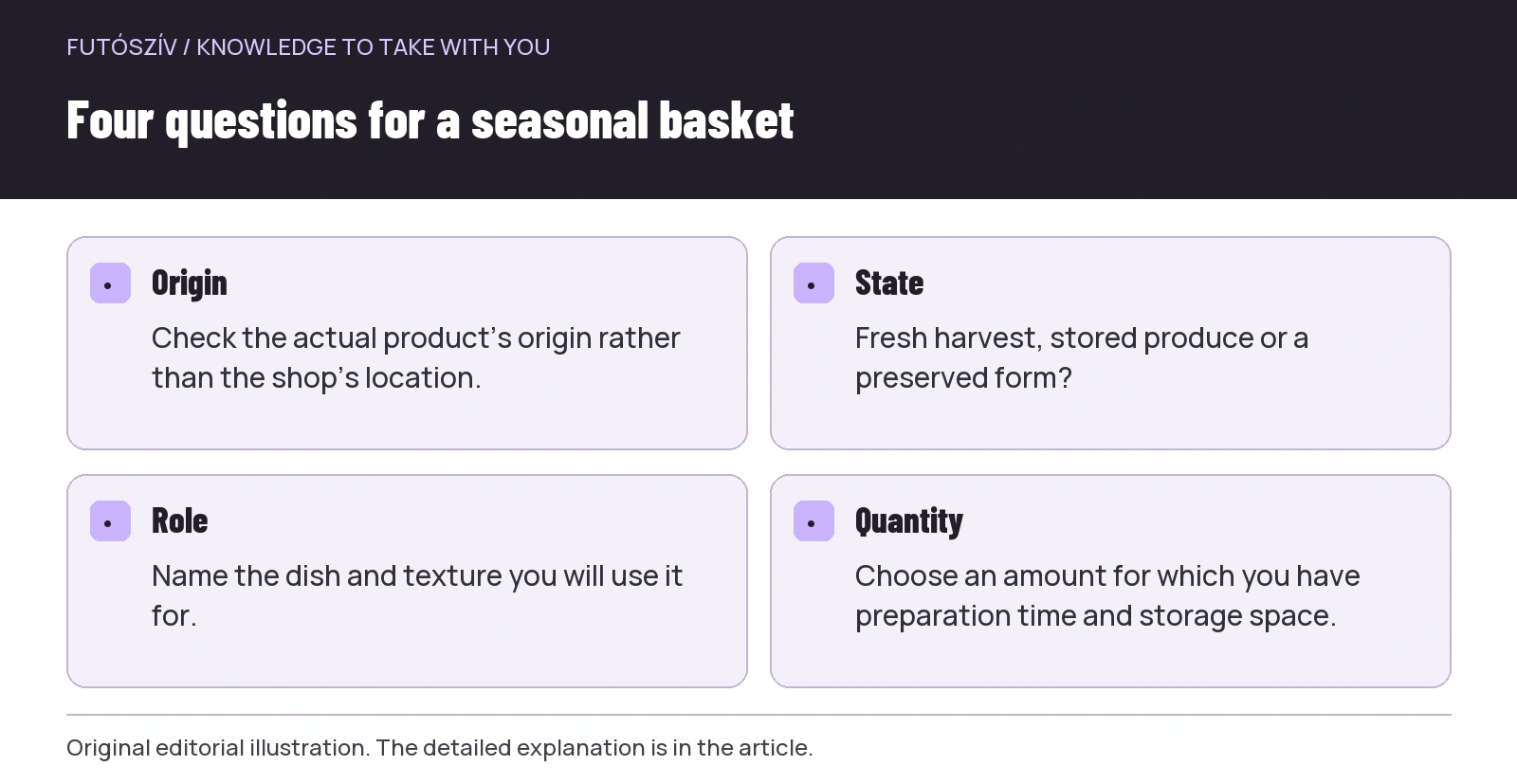 Enlarge diagram
Text version of the illustration
- Origin
- Check the actual product’s origin rather than the shop’s location.
- State
- Fresh harvest, stored produce or a preserved form?
- Role
- Name the dish and texture you will use it for.
- Quantity
- Choose an amount for which you have preparation time and storage space.
Make substitutions according to the ingredient’s role in the dish
A substitution works because of preparation and the structure of a dish, not because ingredients have similar colours. A raw, crunchy component has a different job from a vegetable cooked until creamy or pieces roasted in the oven. Seeing these roles in a favourite meal makes it easier to adapt to availability without learning a completely new dish every time. The ingredients still do not become nutritionally identical.
| The component needed in the dish | A possible culinary approach | What to check before substituting |
|---|---|---|
| A crunchy addition to a sandwich | A vegetable from the available range that can be eaten raw | Cleaning, ease of slicing, moisture and your own tolerance |
| A warm vegetable side dish | Appropriately prepared pieces suitable for roasting or steaming | Different cooking times and the pan required |
| The base for a creamy soup | A vegetable that can be cooked and blended within a familiar recipe | Liquid requirements, consistency and safe use of a hand blender |
| Fruit with breakfast | Washed fruit in an appropriate condition, cut up if needed | Stones or seeds, skin, packaging and storage of the prepared meal |
For example, when thinking about a vegetable pasta dish, consider the sauce, vegetable pieces and other necessary components separately. An ingredient that releases a lot of liquid may produce a different result from a dense root vegetable. The latter may need preparation and longer cooking; it may not be ready within the pasta’s final two minutes. A substitution is useful when the whole dish still works, not simply when the shopping list sounds more seasonal.
Fresh, frozen and canned ingredients involve different work
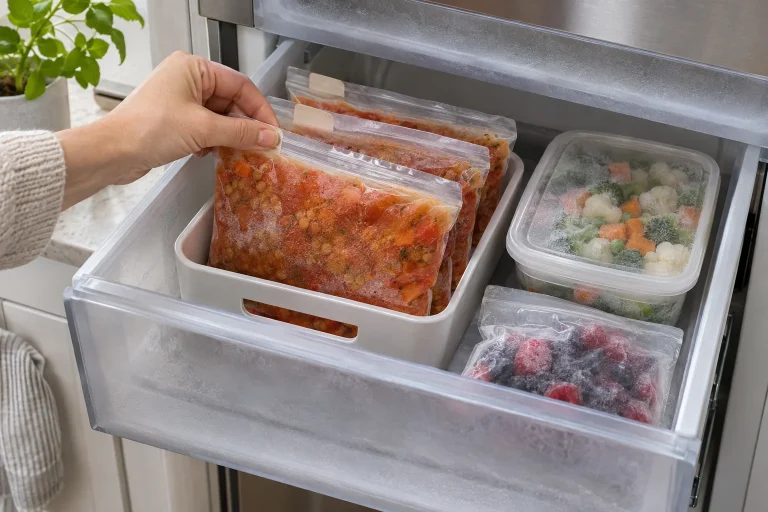
The NHS information on eating fruit and vegetables includes frozen and canned versions among options for the diet. You therefore do not have to restrict every dish each week to the fresh range. Still read the particular product’s label, composition and preparation instructions. Frozen vegetables are not always ready to eat, and canned food is not automatically in the same state as a raw ingredient.
From a kitchen perspective, consider how much preparation, space and time the three forms require. With fresh produce, cleaning and the usable portion can matter; frozen products need appropriate freezer space; canned products have different storage rules after opening. During a busy week, a suitable backup is not a failure of the seasonal idea. It can make a meal possible when a market visit or longer vegetable preparation does not happen.
Do not build a weekly menu from produce alone
Choose a few realistic meals, then adapt their fruit and vegetable components to what is currently available. Planning a main meal involves more than choosing the vegetable you like. Keep the other ingredients suited to your needs and an adequate amount of food in the plan too. If you need individual help with this, work with a dietitian; a produce calendar cannot determine the diet appropriate for your running demands.
A fictional Monday plan might be pasta with a familiar sauce and whichever vegetable is usable at the time. You could plan a different freshly prepared soup for Wednesday and a simple cold meal for Friday. These are three preparation occasions, not permission to store the same finished dish throughout the week. Calculate ingredients for those meals when shopping, and identify what goes in the refrigerator, what belongs in suitable dry storage and what goes in the freezer according to its own instructions.
Four seasons, four kinds of planning question
In spring, when fresh leafy vegetables and other newly available produce appear, consider the time needed for cleaning and prompt use. You need not buy large bunches of everything if you will be away from home for two days. You can choose an appropriate quantity for a specific dish and make the other meals from ingredients already available. An actual occasion to use produce preserves the benefit of freshness within the household.
In summer, alongside the abundant choice, plan transport home and a place to process the food. A large fruit purchase should not be followed by a long wait in a hot car. Match storage conditions to the particular product, especially items already cut or requiring refrigeration. Variety need not be compressed into one shopping trip: several smaller choices actually used may be easier than a large basket relying on rescue cooking on Sunday.
In autumn, check the manageable size of ingredients intended for roasting or soup. A large piece of produce may seem cheap, but does it fit on the chopping board, can you process it safely, and do you have a plan for the excess? In winter, distinguishing produce sold as fresh from stored and preserved options helps. You do not have to base the entire diet on a single crop that stores well; several suitable forms together can provide variety.
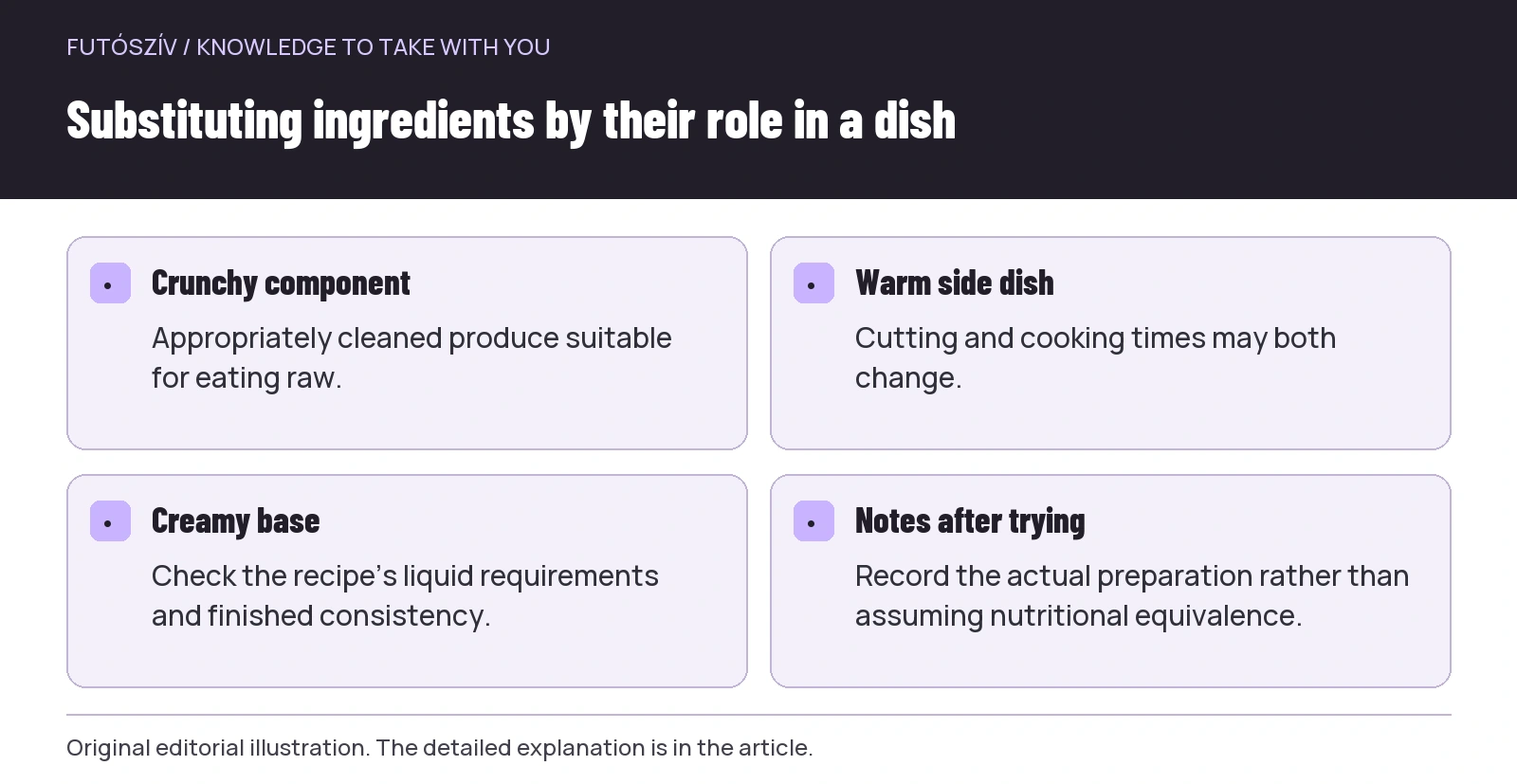 Enlarge diagram
Text version of the illustration
- Crunchy component
- Appropriately cleaned produce suitable for eating raw.
- Warm side dish
- Cutting and cooking times may both change.
- Creamy base
- Check the recipe’s liquid requirements and finished consistency.
- Notes after trying
- Record the actual preparation rather than assuming nutritional equivalence.
Seasonal does not automatically promise a lower price
Current availability may offer good buying opportunities, but compare prices where you shop. Check the quantity basis and the condition, size or degree of processing of the products compared. The prices of a large untrimmed item and a small pack prepared for use include different amounts of work. Your criteria should be how much usable food it produces, whether it fits the budget and whether you will actually have time to prepare it.
Do not assume every well-priced item will automatically be eaten. If you enjoy an ingredient in only one dish and cook that dish once, a large crate is not necessarily a good choice. Ask at the market whether you can buy less. Following the season can also mean a rhythm of buying: purchase a usable quantity now, then decide from the selection available next time. It does not require stocking up for the entire season in advance.
Do not turn environmental claims into homemade scores
Seasonality, origin, growing method, storage and the quantity wasted are separate pieces of information. Knowing only one cannot establish a precise product footprint. In shopping notes, stay with observable facts: this pack labels its origin as Hungarian, this vegetable is currently available locally, and you plan to use this much of the quantity. Do not label a product definitely greener in your own spreadsheet without a verified comparison.
You can make specific changes to your own practices, however: list existing supplies, avoid surplus without a plan for use and choose a form that fits the preparation time. This does not require an invented carbon saving. If a grower or retailer provides detailed origin information, you can record it as their claim, without adding what you do not know. Transparent menu notes are more useful than an uncertain green label.
A short note you can use again next week
After shopping, put the intended dish and first occasion for use beside the selected produce. When cooking, note in one sentence whether the cutting, cooking time and texture worked. If much remains, identify why: too large a pack, a missed cooking session, an unpopular preparation or insufficient storage space? These need different improvements. Next week’s change can then build on experience in your own kitchen.
A usable seasonal repertoire develops over time from a few familiar dishes and clearly understood substitutions. You know which ingredient needs separate precooking, which makes a good crunchy addition and which form fits a rushed day. The weekly menu stays flexible: it adapts to actual availability while maintaining adequate meals and safe preparation throughout.
Sources and further reading
- Nébih Education: What does it mean for a vegetable or fruit to be seasonal?
- European Commission: Fruit and vegetables calendar
- NHS: 5 A Day – what counts?
How Futószív articles are prepared: our editorial guidelines.