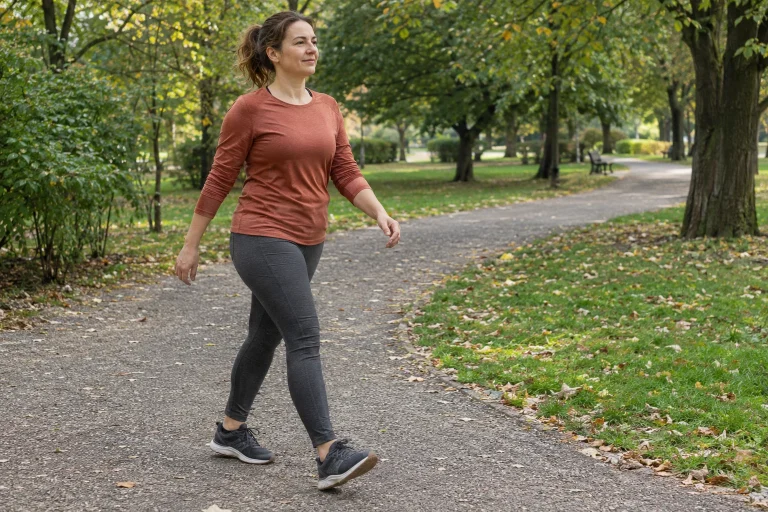
A previously easy run may now feel like a different task
Your body barely shows a change, yet the familiar morning loop is harder and by afternoon your energy feels gone. In the first trimester, changing a running programme need not follow a visible external change. Wellbeing and manageable demands across the whole day provide more important feedback than whether your old clothes still fit comfortably.
The NHS page on pregnancy tiredness explains that fatigue, even exhaustion, is common particularly during the first twelve weeks. This can make days difficult while few people yet know about the pregnancy. You need not prove appropriate adaptation by completing previous training unchanged.
This article concerns daily routines in the early weeks and decisions about nausea and fatigue. It does not grant every pregnant person clearance to run. Individual boundaries agreed with your maternity professional, the pregnancy’s course and current symptoms determine appropriate movement.
What is the basic framework in an uncomplicated pregnancy?
The Irish HSE information supports continuing usual physical activity during an uncomplicated pregnancy while comfortable, with adjustments as needed. Someone previously active differs from someone beginning movement now. Pregnancy is not an ideal time to independently introduce an intense running programme you have not previously done.
In an individual discussion, explain what running means for you: distance, frequency, intensity and preferred terrain. I exercise and I race intensely several times a week provide different information. The answer can then fit your actual programme more precisely.
The HSE page on seeking medical advice separately discusses situations requiring advice before exercise. With bleeding, illness, complications or other concerning symptoms, do not apply a general recommendation instead of individual assessment. Another pregnant person running well does not describe your situation.
Morning sickness is not necessarily in the morning
The 2024 RCOG guideline regards the common phrase morning sickness as inaccurate because nausea and vomiting can occur at other times of day. This matters to running plans too: you need not retain an assumed time window if your own symptoms follow another pattern.
If a more comfortable window exists, adapt movement to it within your personal boundaries. A short afternoon walk or another easy occasion may replace the former dawn run. Choose according to the day’s actual condition rather than protecting a habit.
Do not try to conquer nausea with training discipline. If a smell, route or early departure consistently feels unpleasant, omitting or changing it makes sense. If symptoms obstruct normal eating, drinking or everyday functioning, this becomes a healthcare question too, not merely a scheduling inconvenience.
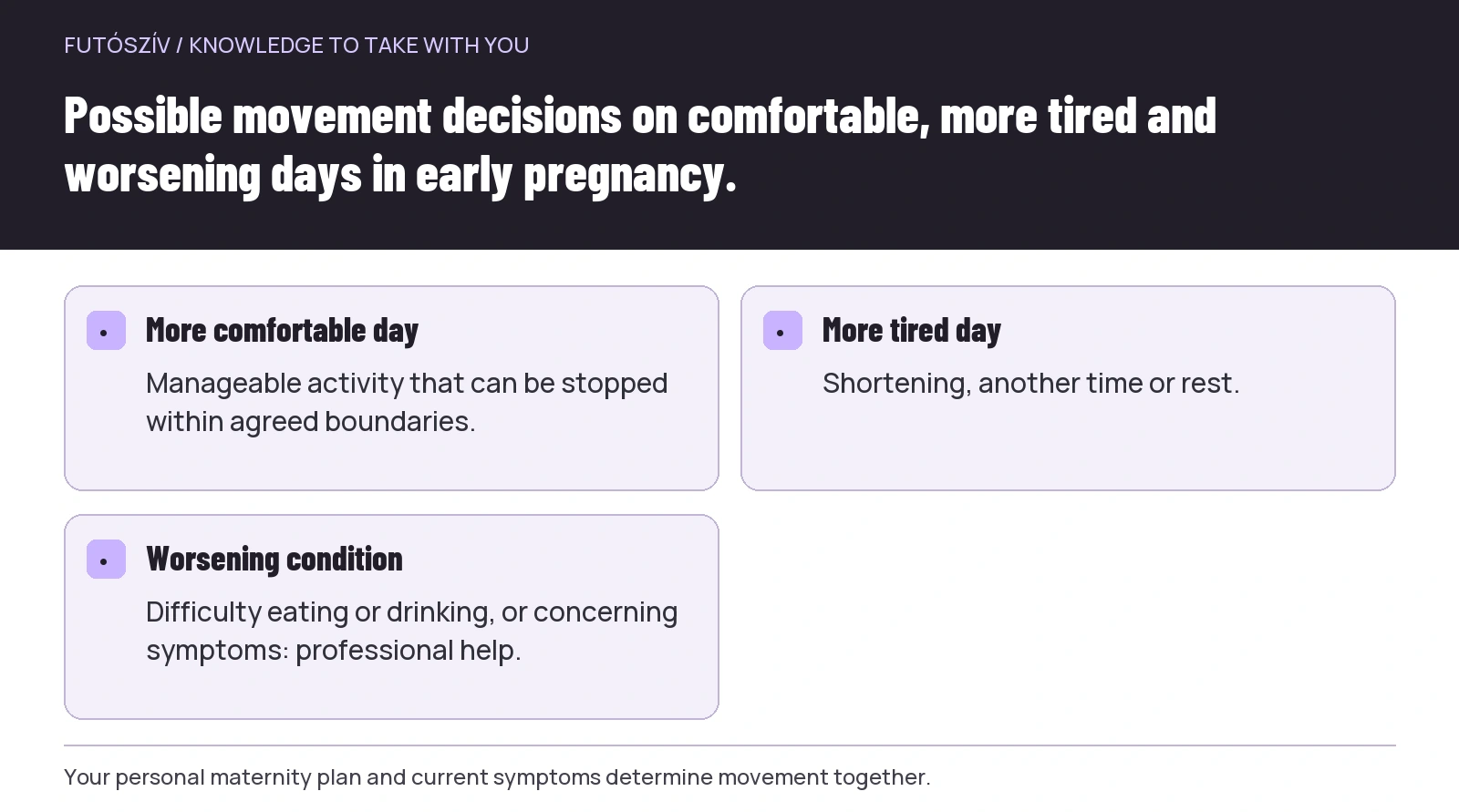 Enlarge diagram
Text version of the diagram
- More comfortable day
- Manageable activity that can be stopped within agreed boundaries.
- More tired day
- Shortening, another time or rest.
- Worsening condition
- Difficulty eating or drinking, or concerning symptoms: professional help.
Three possible days requiring different programmes
More comfortable day: movement agreed with your maternity professional feels good, you can eat and drink and have no unusual symptoms. Choose manageable activity that can be stopped. You need not crowd every previously missed occasion into this day because you finally feel better.
More tired, nauseous day: daily tasks already require more energy. Shortening, another time or rest may be appropriate. You need not correct the easier plan with an equal amount of other movement; adjustment is meaningful when it makes the whole day easier.
Worsening condition: you cannot drink or eat normally, repeatedly vomit, feel dizzy, have pain or another concerning symptom. Medical advice and care where needed take priority. Exercise’s general benefits do not prescribe training through illness.
When does vomiting require professional help?
The RCOG patient information explains that severe nausea and vomiting preventing normal eating, drinking and daily activity may be part of hyperemesis gravidarum. This can also cause dehydration. You need not make the diagnosis, but report this deterioration in functioning to maternity care.
Seek advice promptly for pronounced thirst, darker or reduced urine, drowsiness, feeling unwell and difficulty retaining fluids. Symptom significance does not depend on another pregnant person telling a worse story. What matters to your care is how you are and what you can actually consume.
Severe abdominal pain, bleeding, fainting, severe weakness or another sudden illness requires prompt healthcare help. Do not automatically assume every symptom belongs to pregnancy nausea. RCOG also emphasises assessing other possible causes with certain accompanying symptoms.
Fluids and eating should match actual tolerance
As a runner, you may be used to precise planning before and after exercise. Nausea can disrupt this routine. The aim then is not flawless maintenance of former sports nutrition, but appropriate provision and symptom support where necessary within maternity care.
Explain what you can consume, what worsens symptoms, how long eating or drinking has been difficult and whether fluids stay down. This lets a provider understand more than my diet is bad now. Report if you cannot retain your usual preparation either.
Do not begin unfamiliar herbal or sports-supplement solutions simply because someone calls them natural. Ask for individual advice about nausea management and preparations used in pregnancy. A new product taken for training does not replace appropriate assessment.
Consider fatigue across the whole day
If you barely function for the rest of the day after a short morning run, that is important feedback too. The feeling during activity is not the only consideration. Examine compatibility with work, travel, caring responsibilities and rest.
The NHS also highlights rest and accepting help. Ask specifically for support with shopping, a household task or an opportunity for earlier bedtime. Reducing movement alone may not resolve an overfilled day if another obligation immediately fills the freed time.
Do not automatically dismiss persistently unusually strong or worsening fatigue, or fatigue accompanied by other symptoms, as normal pregnancy. Tell your maternity provider. General frequency and individual assessment both matter: a common symptom deserves attention if substantially limiting.
Make the route easy to change
If running or walking fits your personal plan, a loop near home that can be shortened at several points may reduce pressure. Include toilet access and a safe journey home. In the early weeks, a route allowing decisions to finish at any point is often more practical than a distant out-and-back.
Every occasion need not have a precise distance. Agree with a companion that the aim is a shared outing and length depends on wellbeing. Shortening then becomes part of the plan rather than breaking it.
If setting off alone, carry a phone and information needed for help. This is a simple organisational step, not a message that pregnancy prevents independence. Good logistics give more freedom for reasonable decisions in the moment.
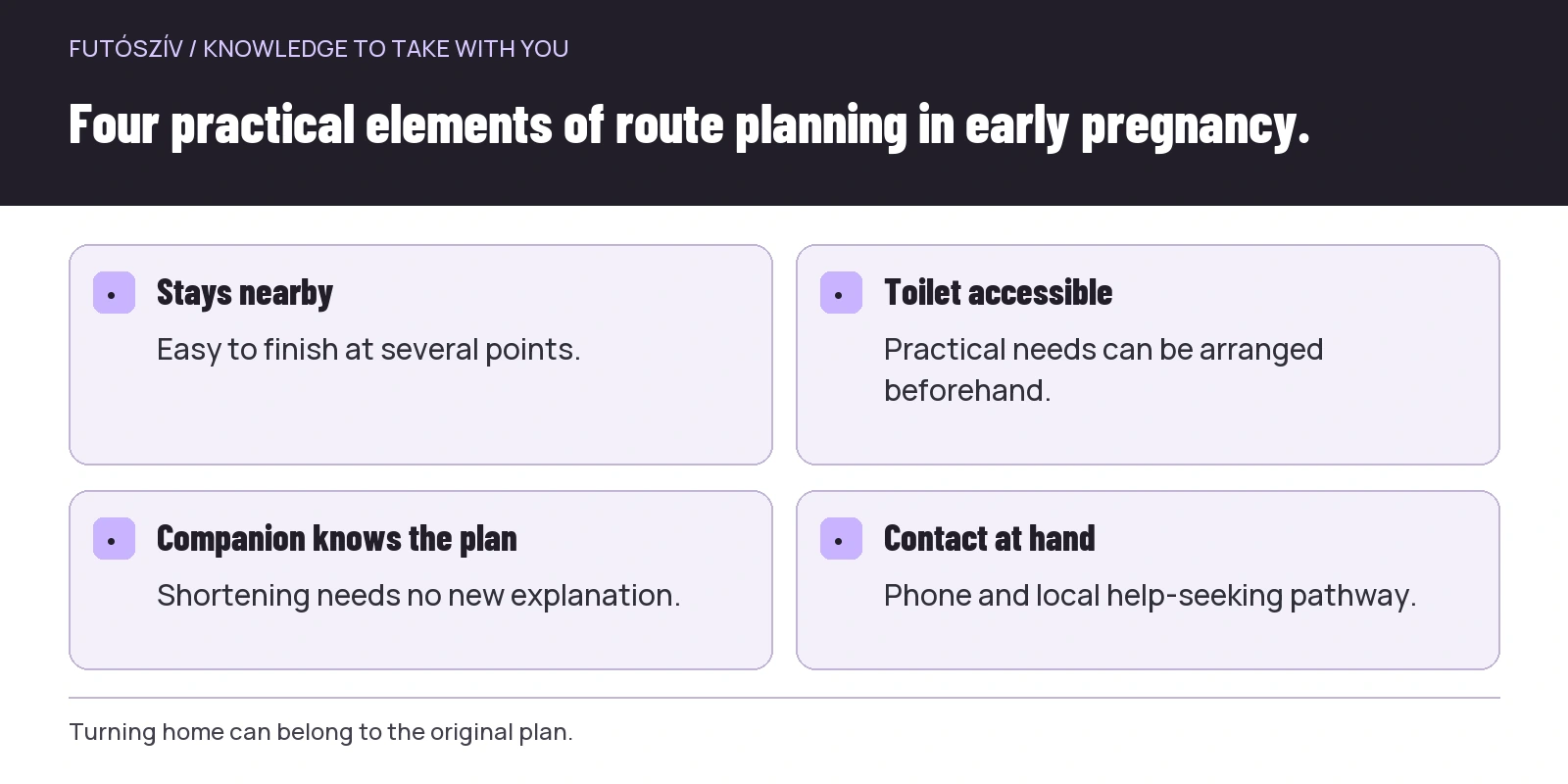 Enlarge diagram
Text version of the diagram
- Stays nearby
- Easy to finish at several points.
- Toilet accessible
- Practical needs can be arranged beforehand.
- Companion knows the plan
- Shortening needs no new explanation.
- Contact at hand
- Phone and local help-seeking pathway.
What about pace and old results?
Your former easy pace may no longer represent the same exercise demands. Do not make previous racing form compulsory or try to satisfy the watch while body and routine change. Agree individual movement boundaries with your maternity professional and, if necessary, a professional experienced in pregnancy exercise.
If constant watch performance ratings frustrate you, hide the pace field or choose simpler recording. You need not invent an explanation for changing results after every run. Your diary’s current aim may be understanding wellbeing and manageability rather than comparing records.
A missed interval session or long run is not a debt. Plan pregnancy activity forwards from current circumstances rather than catching up with an old plan. Even when feeling better later, take the next step gradually within personal boundaries.
What can you share with a coach before you want to tell everyone?
Early pregnancy is personal information. However, someone directing training load may need enough detail for appropriate adjustment. Explain privately and state clearly that you do not yet want to share it with the group.
If you do not want to give even a coach details, request a temporary reduction for health reasons and discuss movement with your maternity provider. Full private history is not a condition of respectful treatment. Do not nevertheless turn new exercises or intense demands into a secret test of yourself.
A brief neutral statement for running companions may help: I am planning more flexibly now and may walk or go home earlier. Every occasion need not require a new excuse. A good community accepts adjustments without detailed explanations.
Be specific about running in maternity discussions
- What did you do before pregnancy, and what would you like to continue now?
- What fatigue, nausea or other symptoms do you notice, and how do they affect the day?
- Does a health or pregnancy circumstance change the movement plan?
- Which symptoms require stopping, and when should prompt help be sought?
- Whom can you contact between appointments if your condition changes?
A plan developed from the answers can be reassessed over time. The first conversation need not settle the whole pregnancy’s sports programme permanently. Actual experience in coming weeks can provide new information.
Changes in wellbeing are not a promise for a predetermined week
Many stories suggest fatigue or nausea definitely disappears after a particular week. Individual courses differ, however. If symptoms persist, worsen or make days substantially difficult, seek help; do not feel you have missed an expected energetic trimester.
The NHS page on pregnancy warning symptoms also emphasises appropriate contact with maternity care. In Hungary, clarify your local pathway with your provider. UK telephone numbers and care units do not replace help available to you.
In the first trimester, a successful running plan may be much smaller and more variable than you previously imagined. Rest, addressing personal health questions and comfortable permitted movement can form a meaningful routine together. Retaining previous mileage does not determine how well you care for yourself.
Sources and further reading
- HSE: Safe exercise during pregnancy
- NHS: Tiredness and sleep problems in pregnancy
- RCOG: Pregnancy sickness, nausea, vomiting and hyperemesis gravidarum
- RCOG Green-top Guideline 69: Management of Nausea and Vomiting of Pregnancy, 2024
- HSE: When to get medical advice before exercising during pregnancy
- NHS: Pregnancy symptoms you need to get help for
How Futószív articles are prepared: our editorial guidelines.