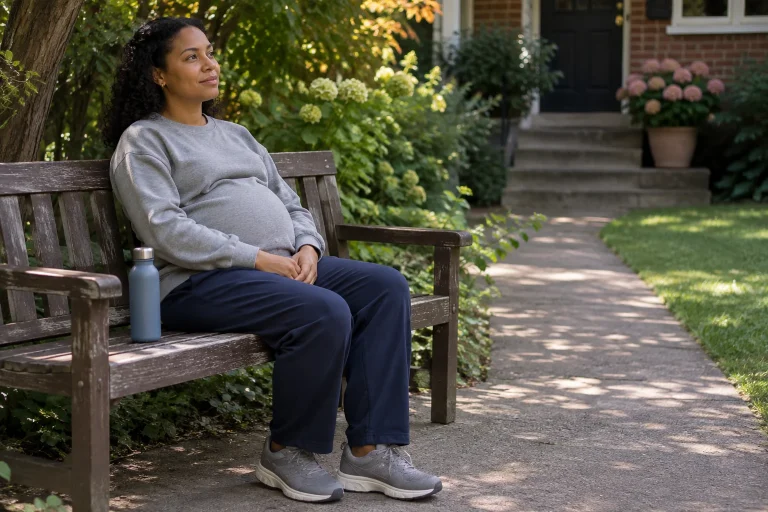
The second trimester is not a compulsory return to former fitness
Days may feel easier than in the first weeks and movement appealing again. Fatigue or nausea may also remain. The energetic period often associated with the second trimester is neither a performance expectation nor a promise that every former running session will now be comfortable.
A growing abdomen, clothing fit, toilet needs and comfort in motion may raise new questions. Refining a previously successful routine becomes a planning task in its own right. You need not wait for a major problem before choosing a shorter route, different time or another activity.
The personal maternity plan remains fundamental. With a complication, new symptom or uncertainty, clarify appropriate activity with your maternity professional. This article helps consider everyday adjustments and does not replace individual pregnancy-related medical assessment.
Changed comfort is information, not failure
The Australian health recommendation explains that physical activity may need adjustment as pregnancy progresses and the body changes. It also emphasises avoiding movements causing pain or discomfort. The aim is not to retain every previous exercise unchanged.
Notice precisely what differs. Does the waistband press? Is breast support insufficient? Do steps feel less certain on the same descent? Are you regularly seeking a toilet halfway around? These are specific, separate questions. Such descriptions make workable changes easier to find than I cannot run anymore.
A small adjustment does not resolve every symptom. Report recurring pain, pressure, bladder-control difficulty or other symptoms to maternity care too. You need not decide alone whether the issue concerns clothing, technique or health.
Clarify the nature of movement before pace
Your former easy run may now require different effort. The UK Chief Medical Officers’ pregnancy recommendations summary emphasises adaptation and listening to bodily signals. A general activity target does not require everyone to complete the same minutes by running.
The Australian recommendation also mentions being able to talk as a simple reference for moderate activity. This is not a medical test and does not override symptoms or individual restrictions. It can instead reveal when a supposedly easy pace actually requires much greater effort.
If alternating running and walking makes movement more comfortable, the change can belong to the plan. You need not wait for exhaustion or call walking a failed run. Appropriate exercise demands do not depend on the movement labels distinguished by a sports watch.
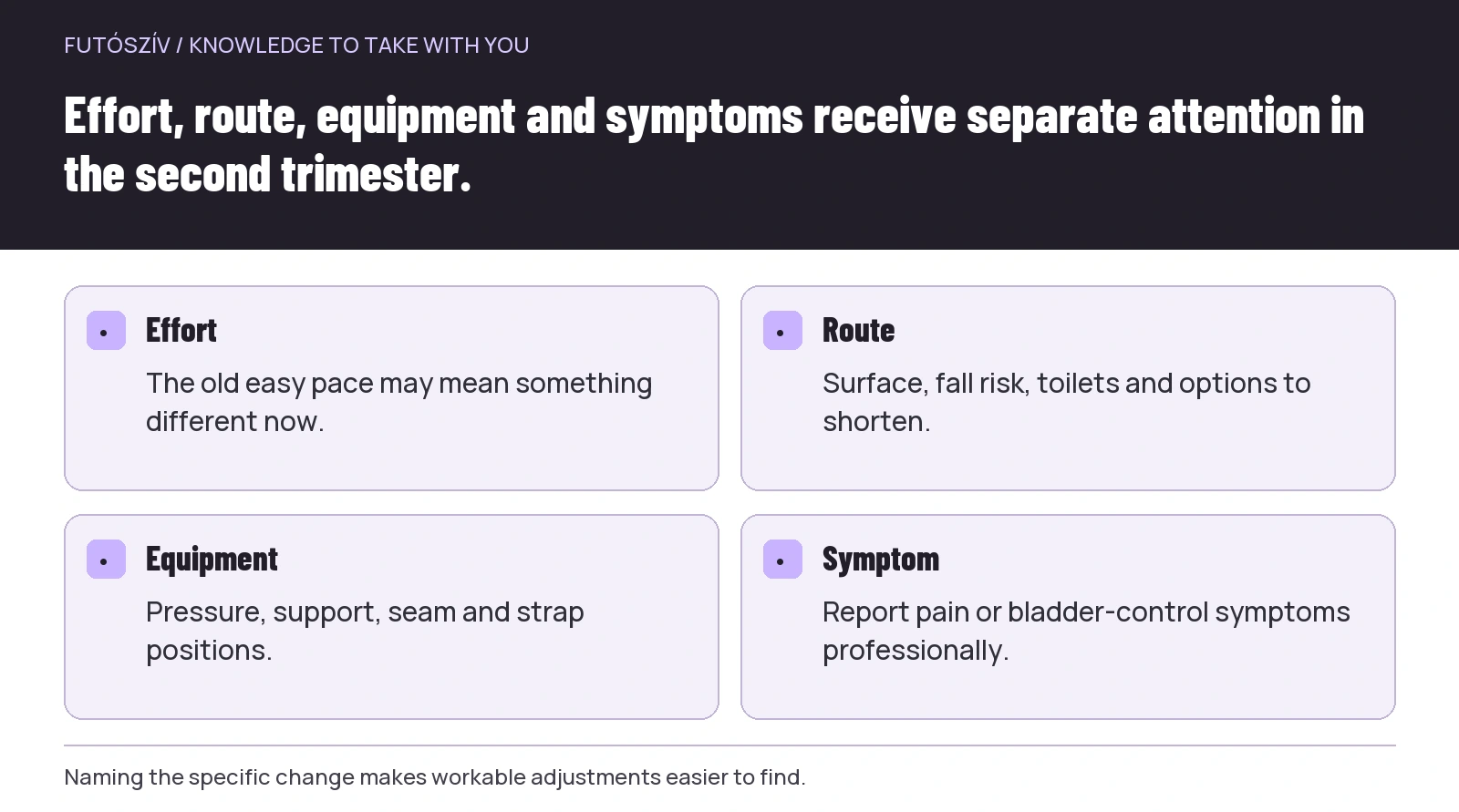 Enlarge diagram
Text version of the diagram
- Effort
- The old easy pace may mean something different now.
- Route
- Surface, fall risk, toilets and options to shorten.
- Equipment
- Pressure, support, seam and strap positions.
- Symptom
- Report pain or bladder-control symptoms professionally.
Route choice: several small conditions may matter now
Examine surface, potential falls and collisions, lighting and ease of returning separately. The HSE page on activity types also discusses avoiding activities with substantial risk of lost balance, falls or injury. Previously favoured technical trails may therefore need reconsideration.
A predictable, flatter, clearly visible loop is not necessarily a duller session. Choose a park, waterside promenade or another place where you can shorten safely. Enjoyment of scenery and company can remain without making every run special through difficult terrain.
Do not consider only outward distance. Returning home, toilets and rest opportunities are parts of a manageable loop too. With a distant nearest exit, even minor discomfort can create a large organisational task. Adaptability gives greater freedom to decide.
Bra, trousers and belt: the previous size is not an obligation
The Australian recommendation also advises appropriate shoes, non-restrictive clothes and a supportive bra. During a clothing trial, do more than stand: walk, raise your arms and notice the waist, underband and armpits. A dry, stationary trial does not reveal complete movement comfort.
If previous trousers or a belt press, you need not hold out in them for another few weeks. A different cut, position or omitting that accessory may be more comfortable. Everything need not be replaced at once; first identify the actual troublesome point.
Do not regard a support device or strap as automatically enabling running with pain. If you have symptoms without a product, seek individual assessment of the cause. Discuss selection and use with a physiotherapist or maternity professional as needed.
Pelvic and bladder-control questions should not stay beneath running clothes
The NHS information on common pregnancy problems also discusses bladder-control difficulty and the role of appropriate pelvic floor exercises. A common symptom does not mean you must accept it without help. Report it to maternity care if it occurs during running.
The NHS page on pelvic girdle pain explains that treatment by an experienced professional can improve symptoms during pregnancy. Pain on stairs, turning in bed, walking or running should therefore not be solely a training-technique task. Advice fitting your movement may help more than a general exercise video.
Do not automatically choose more contractions or stronger trunk bracing for every pelvic sensation. The relationship between symptom and appropriate exercise may need individual assessment. A coach can help change the plan, but examining and treating pelvic floor function is a different professional task.
Strength work: comfortable positions may change too
Pregnancy recommendations include strengthening activity, but exercises, positions and loading may need adjustment. Instead of completing a former sequence unchanged, examine what is comfortable within personal boundaries. General running strength work is not automatically a pregnancy-specific programme.
If lying on your back causes dizziness, nausea or discomfort, change position and report the symptom. Clarify pregnancy advice about positions with your maternity professional or an appropriate specialist. Do not remain in a position because the video has not reached the next exercise.
Tell a new exercise instructor about pregnancy and any restriction. Participants in a group class may not need the same exercise variation. Agreeing adjustments beforehand reduces uncertain choices during the class.
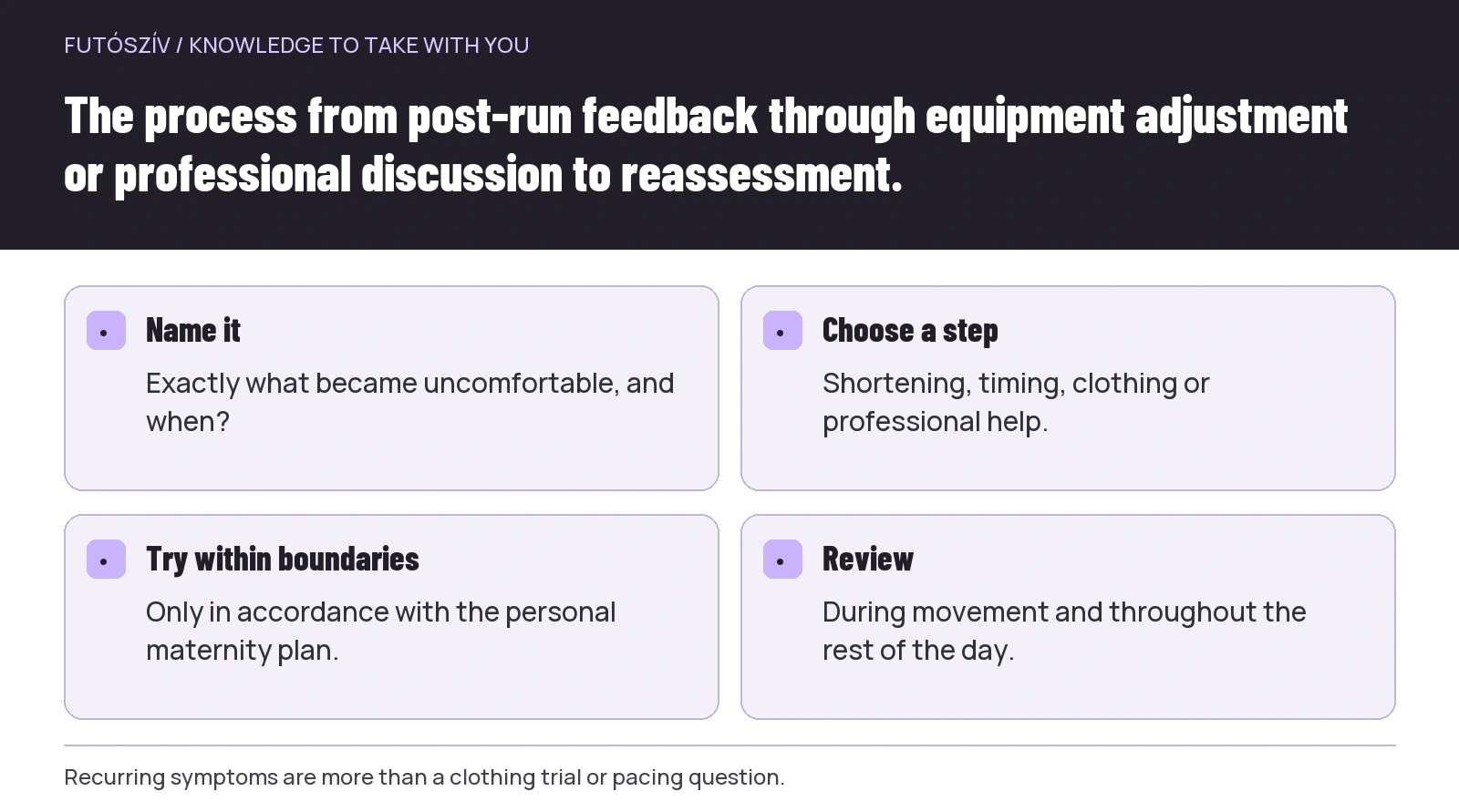 Enlarge diagram
Text version of the diagram
- Name it
- Exactly what became uncomfortable, and when?
- Choose a step
- Shortening, timing, clothing or professional help.
- Try within boundaries
- Only in accordance with the personal maternity plan.
- Review
- During movement and throughout the rest of the day.
Weather and daily organisation: the original time need not matter most
The Australian recommendation emphasises avoiding heat, particularly humid heat, and maintaining appropriate hydration. If planning to run during the day, consider a different time or cooler environment. Previous heat acclimatisation does not guarantee suitability for every current situation.
Keep fluids accessible and avoid letting movement displace usual meals. Clarify pregnancy eating or fluid questions in maternity care where necessary rather than relying solely on an old race-fuelling plan. Report nausea or other symptoms making intake difficult separately.
Include daily tasks in planning too. After a long working day, prolonged standing or childcare, different activity may feel comfortable from a more restful weekend. Every day need not produce identical sporting quantities to remain meaningfully active.
Four practical questions after a run
- During movement: was effort comfortable, or were you trying to maintain old pace?
- Equipment: was there pressure, rubbing or a badly positioned strap?
- Symptom: did pain, bladder-control symptoms or another unusual sensation appear?
- The rest of the day: how did activity affect later wellbeing and tasks?
Answers may suggest a single well-chosen change: shorter loop, more comfortable clothes, different time or professional discussion. Every small discomfort need not trigger an entire programme replacement. Equally, do not handle recurring symptoms solely with another clothing trial.
For new symptoms, do not follow a story assigned to the trimester
The NHS page on pregnancy symptoms requiring help urges appropriate contact for bleeding, severe abdominal symptoms, severe headache and other concerning changes, among others. Agree your local pathway with your maternity professional and know whom to contact out of hours.
Do not continue movement with bleeding, suspected fluid leakage, fainting, chest pain, substantial difficulty breathing or another severe illness. Current symptoms and condition determine urgency. Descriptions of the second trimester as often more favourable do not provide personal safety clearance.
If you receive a new restriction or diagnosis, update training too. General advice given early in pregnancy need not be treated as unchanged permission for every later situation. One advantage of ongoing maternity care is adapting to new information.
Ambition can take a different form now
Your goal may be keeping comfortable movement in the week, having a few enjoyable shared outings or seeking help promptly for a troublesome symptom. These are specific, valuable aims. Progress need not always mean faster pace or longer distance.
If already entered for a race, check modification or postponement options. The decision need not wait until race morning, when costs and social expectations may exert more pressure. Participation fitting your personal health plan can take different forms, and missing the event is a real choice.
A second-trimester running routine can be varied, flexible and still enjoyable. In a working plan, comfort and health information are not obstacles to bypass but information supporting better decisions. Previous running experience can help when used as self-knowledge rather than an unchanged benchmark.
Sources and further reading
- Australian Government: Recommendations for pregnancy, updated 2026
- UK Chief Medical Officers: Physical activity for pregnant women, 2026 text version
- HSE: Activities to avoid and recommended exercises during pregnancy
- NHS: Common health problems in pregnancy
- NHS: Pelvic pain in pregnancy
- NHS: Pregnancy symptoms you need to get help for
How Futószív articles are prepared: our editorial guidelines.