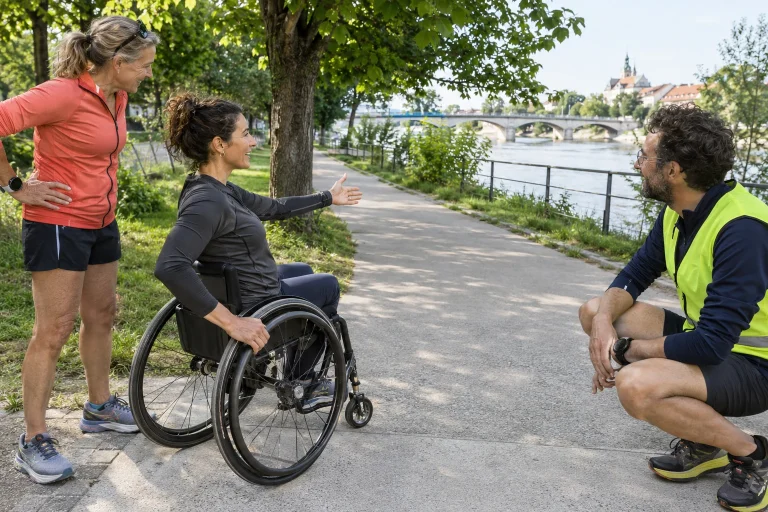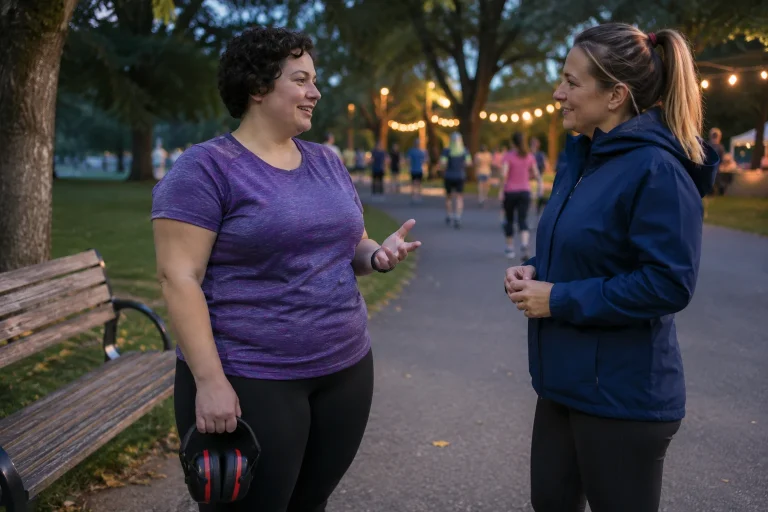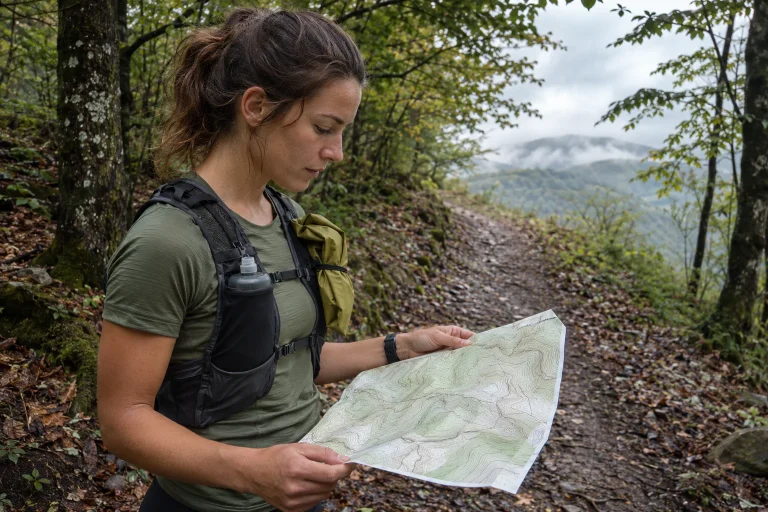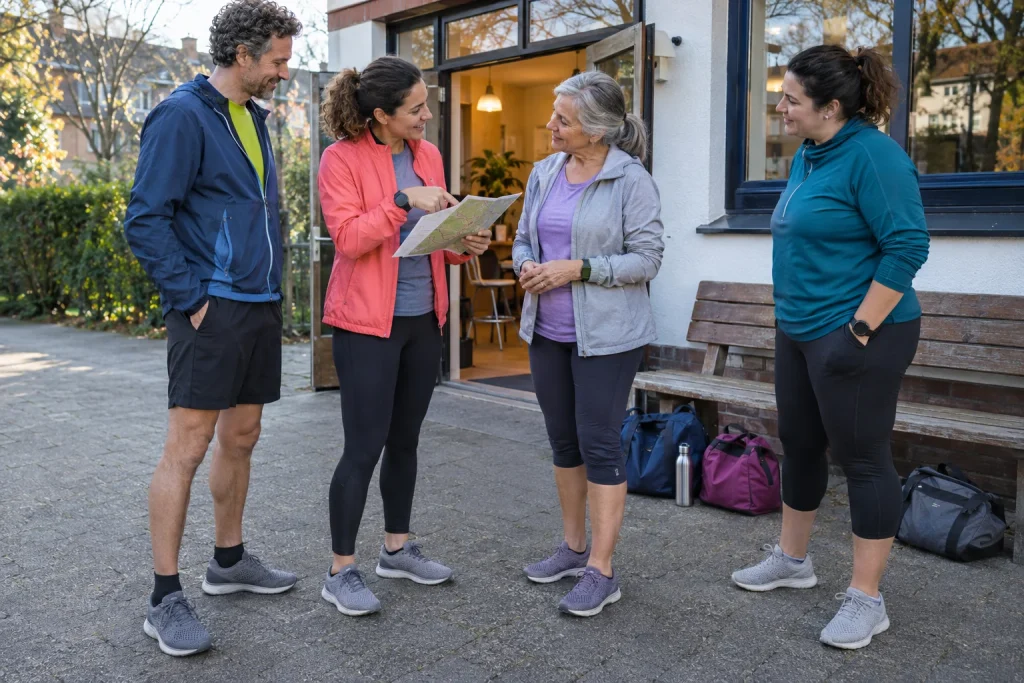
Looking for a running club often begins not with a training plan but with an uncertain thought: am I even fast enough to turn up? Someone else may ask whether the meeting point is accessible, a suitable guide will be available, information will be understandable or they can comfortably decline a group photo. A genuinely inclusive community does not regard these as awkward exceptions. It provides information from which participants can decide for themselves.
A good club is not necessarily the biggest, fastest or most visible group. The right one works in a way that fits your goals and participation requirements. You may want coach-led training, informal shared activity or a predictable run–walk group. These are different needs; none makes a runner less valuable.
Inclusion needs a practical meaning
“Everyone is welcome” is friendly, but does not explain what happens when someone moves more slowly. Is there a separate group? Do people wait at junctions? Does everyone return to the same place? Who accompanies the last participant? Answers reveal whether useful organisation supports the welcome. No invitation can solve every situation, but it can describe its limits accurately.
In Hungary, the community work of SUHANJ! and the inclusive operation of SUHANJ! Fitness provide concrete examples of organising sport together for people with different abilities. This does not mean every session automatically meets every need. Always clarify current programmes, guiding and access details directly with the relevant organiser.
First, define your own search criteria
You need not send a life story to explain what you need. A few practical sentences suffice: what activity you want, how much time you have, what route you seek and what information would help. Say if you want a run–walk rhythm. If steps rule out a route, ask more than whether the course is easy. A precise question is more likely to receive a precise answer.
Your expectations may include social considerations too. Do you want conversation, or would you prefer a quieter introduction? Are you seeking race preparation, or is it more important that nobody asks for your next target time every week? Groups need not all provide the same thing. Honest self-description helps both sides avoid a first meeting built on misunderstanding.
Twelve questions that build a real picture
| Question | What to look for in the answer | Why it helps |
|---|---|---|
| At what pace and for how long do you move? | A specific range or clearly described activity | “Easy” means different things to different people |
| Can I join with run–walk? | A separate group or clear agreement | Different needs are not discovered on the route |
| What happens if I fall behind? | A named responsible person and return arrangements | This makes “we leave nobody behind” assessable |
| What are the surface and elevation like? | Steps, narrow points, roots and crossings are included | Kilometres do not describe access |
| How will I find the group? | A precise place and recognisable organiser | The first arrival does not involve guessing |
| Must I register beforehand? | A simple, accessible process | You know what to arrange before leaving |
| What does it cost? | Session fee, membership and possible extras | No uncomfortable financial surprises |
| Who leads the session? | Clear roles for a community leader or coach | You understand the service provided |
| How do you accommodate different needs? | They ask and discuss rather than guess | Participants retain control over their own situation |
| Can I decline a photo? | A straightforward, normal option | Participation does not depend on public exposure |
| Is there a point for shortening or leaving? | A specific location and way to communicate | Finishing earlier can be planned |
| Whom can I approach with a problem? | An accessible responsible person and meaningful response | Feedback has a place in how the group works |
A good answer is not an unconditional yes to every request. Organisers can responsibly explain what a particular route or group size prevents them from providing. The distinction is between clear information and vague promises. If a condition is unmet, the club may still suit others while another session suits you better.
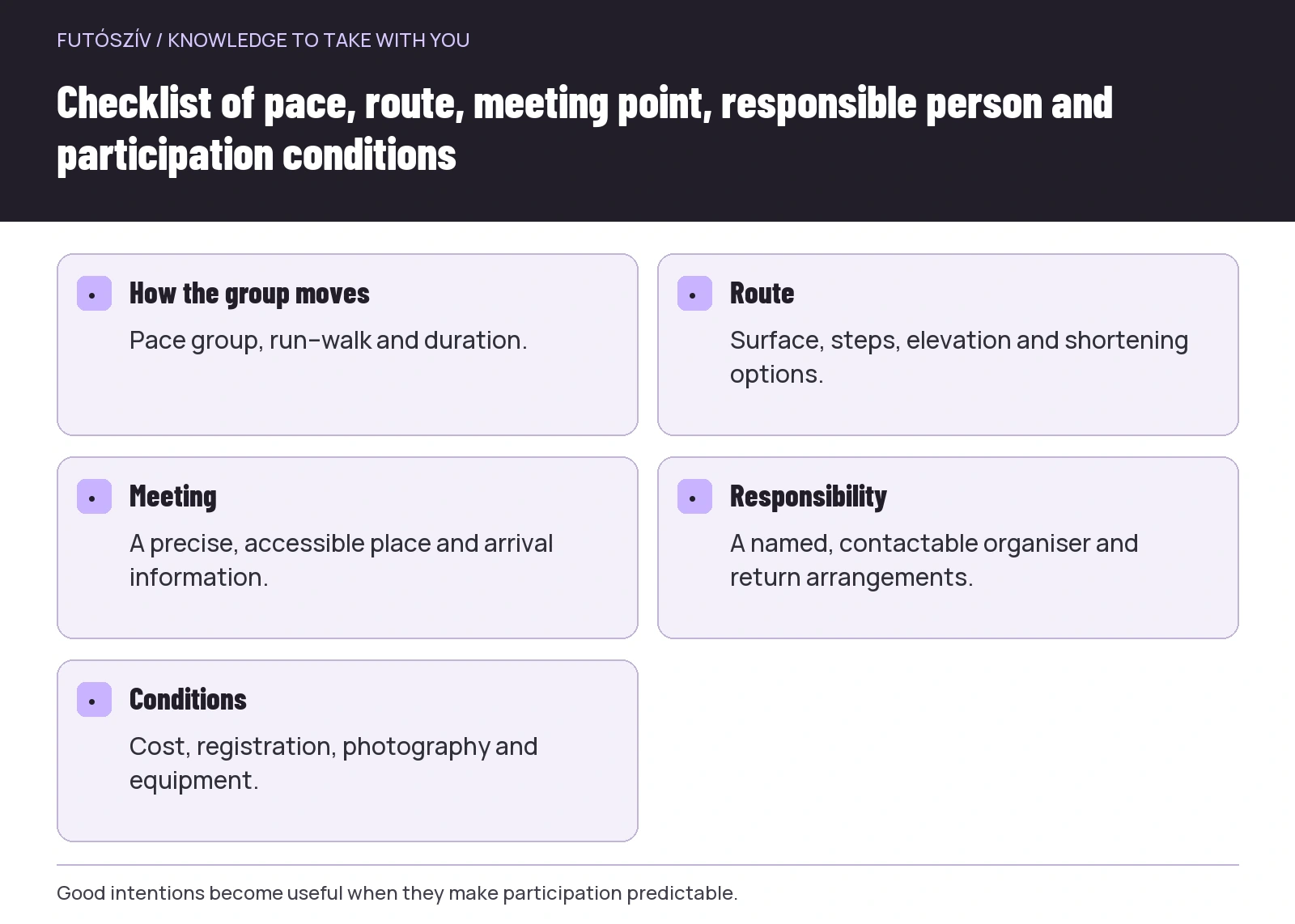 Enlarge diagram
Text version of the illustration
- How the group moves
- Pace group, run–walk and duration.
- Route
- Surface, steps, elevation and shortening options.
- Meeting
- A precise, accessible place and arrival information.
- Responsibility
- A named, contactable organiser and return arrangements.
- Conditions
- Cost, registration, photography and equipment.
Pace-group names also need a reference point
Beginner, intermediate and advanced are imprecise labels. One club’s beginner group may already expect continuous running, while another includes walking. Minutes per kilometre can help but are insufficient alone. The same number represents different tasks on hills, trails and flat asphalt. Include duration, stops and group structure in the picture.
Ask whether the advertised pace means the whole session’s average or just the running sections. If one person counts stops and another does not, you can arrive with different expectations. A good organiser will not resent the clarification. It helps everyone, both those wanting to move slower and those wanting a faster pace.
Route accessibility is more than one checkbox
A step-free path can still be narrow, poorly lit or very uneven. A wide promenade may have an unusable toilet or high kerb near the meeting place. If access matters to you, review the full arrival chain: stop, meeting, route, rest point and departure. A detailed location description helps more than an unchecked “accessible” label.
You do not need to explain your needs through broad disability categories. It may be enough to say that clearly audible route instructions, a written programme, a step-free section or a quieter gathering place matters. The club’s task is to describe actual conditions. The Athletics Australia inclusion guidance also emphasises approaches adapted to individual differences.
Ask before helping
With guiding and support, avoiding decisions on someone’s behalf is especially important. Even well-intentioned help can be uncomfortable when someone takes an arm, moves equipment or publicly explains another person’s situation without asking. The simplest opening is: “Do you need help? If so, what works best?” Accept the answer even if it is no for now.
If a club organises specialist guiding, agree it beforehand with someone appropriately experienced. Not every enthusiastic running partner is prepared for every role. Shared pace, signals and route characteristics may need a separate conversation. A good community treats this as normal organisation rather than expecting gratitude in return from the person requesting support.
What happens in the first five minutes?
It says a great deal when someone notices a newcomer, introduces the leader and explains the session. Understanding does not require a loud round of introductions. It is enough to know where you are going, where you stop, whom to tell if you want a change and when you return. Other names can be learned later; essential information is needed before departure.
Difficulty joining in among inside jokes and old stories does not necessarily mean hostility. It may simply be inattention. Say what would help: “This is my first time; could you briefly explain the loop?” The response reveals much. An open group sees such questions as part of functioning together, rather than a disturbance.
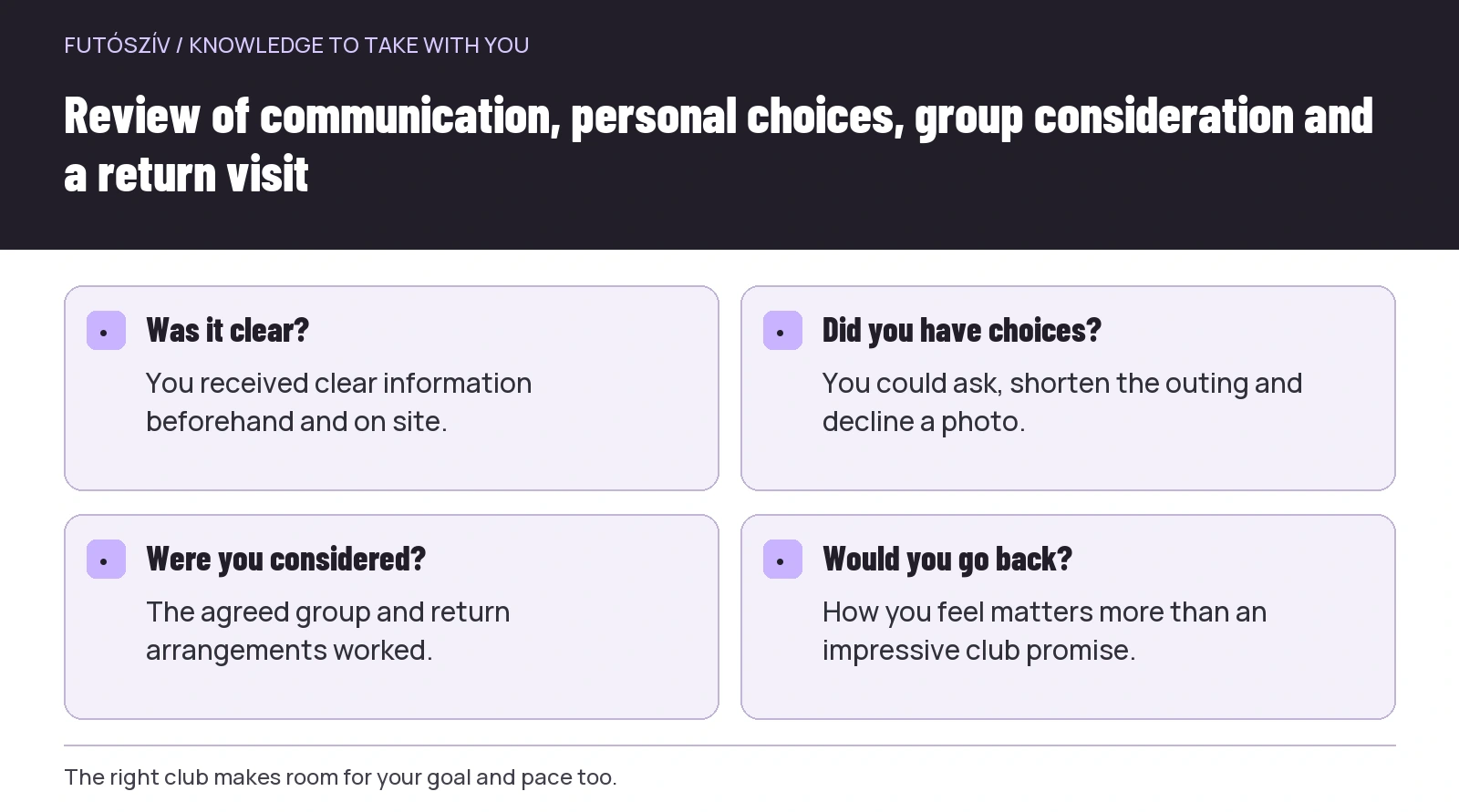 Enlarge diagram
Text version of the illustration
- Was it clear?
- You received clear information beforehand and on site.
- Did you have choices?
- You could ask, shorten the outing and decline a photo.
- Were you considered?
- The agreed group and return arrangements worked.
- Would you go back?
- How you feel matters more than an impressive club promise.
Make “we leave nobody behind” a specific agreement
This phrase can mean three different things: everyone stays together throughout, people regroup at particular points or everyone runs separately and meets at the end. All can work if clear beforehand. A bad experience comes when you expect the first and the group means the third. Clarify how to communicate turning back and finishing earlier too.
This matters still more on trails and after dark. A leader who knows the route at the front may not see what happens at the back. Group size, communication and the back-marker role are therefore organisational matters. Without a system, do not assume good spirits will substitute. You have a right to know precisely how independently you are expected to participate before deciding.
Cost, membership and expected attendance
Community runs, sports-club membership and coaching services are different arrangements. Find out in advance which is offered. A free first session may be followed by membership fees, advance registration or extra charges for certain programmes. Price alone does not show inclusion, but transparency does. Asking about fees is not impolite; they are a condition of participation.
Know attendance expectations too. Must you come regularly? Is occasional participation welcome if work or family schedules limit you? Are race entries or matching equipment expected? Your time and budget are real considerations. You need not accept an obligation and only later try to make it work for the sake of belonging.
Warning signs unrelated to pace
Regularly shaming slower participants, commenting on bodies or demanding explanations for saying no are poor foundations for a community. Mocking a newcomer’s questions or responding to concerns about behaviour with “that is our humour” is problematic too. The parkrun code of conduct also values respectful community participation; this is a foundation, not extra kindness.
You do not have to return repeatedly just to prove you are open-minded. If something does not suit you, choose another group. If safe and useful, give the organiser specific feedback. Your comfort and sustainable participation matter more than living up to an impressive community promise.
A short review after the first outing
Ask whether the programme was understandable and matched what you agreed beforehand. Did choices remain? Could you ask without feeling an awkward exception? Did people know you had returned at the end? Assess more than difficulty. A physically successful session can still be socially tiring, and vice versa.
If it was broadly good but one detail was missing, discuss it specifically. “Next time I would like to know beforehand where we regroup” is more useful than “I felt a bit lost”. Even a suitable club may need time to learn your needs, but openness should be visible in the first outings. Choosing a community means getting to know each other: you also have the right to decide where to become someone’s running partner.
How Futószív articles are prepared: our editorial guidelines.