Running to work or another regular destination can be a good way to organise your time, but packing can easily change the entire experience. A change of clothes, shoes, keys, food and perhaps electronics would all go into the same bag you have to carry while running. The first question is therefore not which backpack is biggest. Start by considering what you actually need to take, what you can deliver at another time or in another way, and what facilities await you on arrival. The carrying system is only one element of this arrangement. A good solution manages the necessary load rather than trying to make as many possessions as possible runnable.
Reducing the load starts with organisation, then shopping
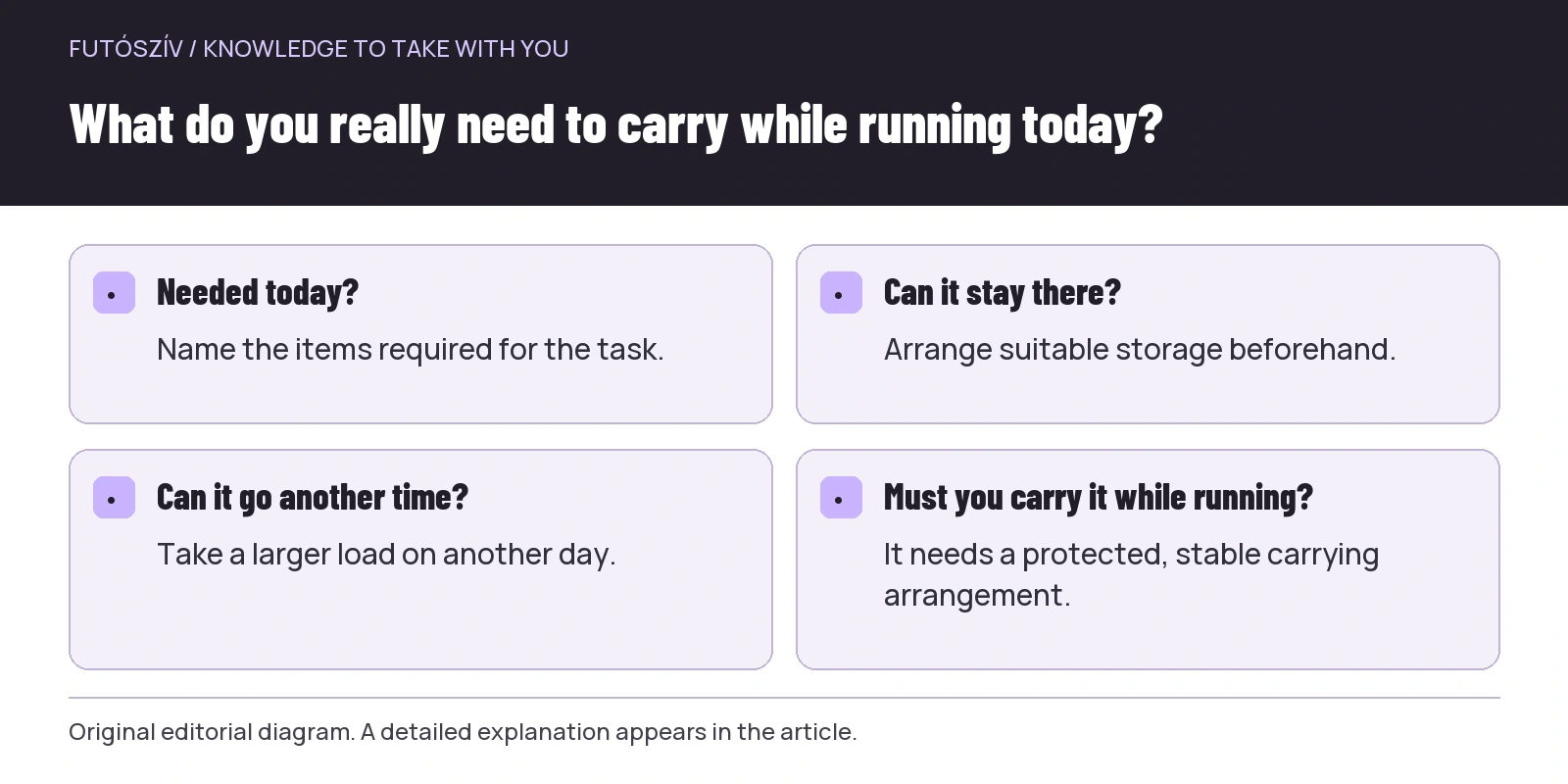
List the items you need at your destination, then mark which ones you must take there and back every time. Perhaps a pair of spare shoes or some clean clothes can safely remain in suitable storage. Another option may be to take a larger load on another day. Coordinate this with the location’s rules and your own schedule. Everyone does not have to follow the same minimal list. The aim is to identify unnecessary daily transport. One item you can leave there may provide more comfort than buying a more elaborate backpack.
Separate essentials, convenience items and uncertain “just in case” objects. Do not automatically discard the latter; give each a specific role. If there is no recognisable situation it serves, perhaps it does not need to come on every run. However, do not leave out important personal or safety items simply to use a smaller bag. Reducing the load is not about giving things up at any cost. It means distinguishing precisely between real needs and available alternatives. This also makes the decision about bag capacity better informed.
Bag capacity is not the same as fit
The litre figure describes storage; fitting your torso also requires considering back length, strap shape and adjustment. The official Osprey sizing and fitting guide separately addresses wearing various backpacks and running packs. Follow the instructions for your own product, because a hiking backpack and a lightweight running backpack may not have the same adjustment system. Your usual clothing size does not provide all the necessary information. Try the design with the clothing layers you intend to wear and the actual load.
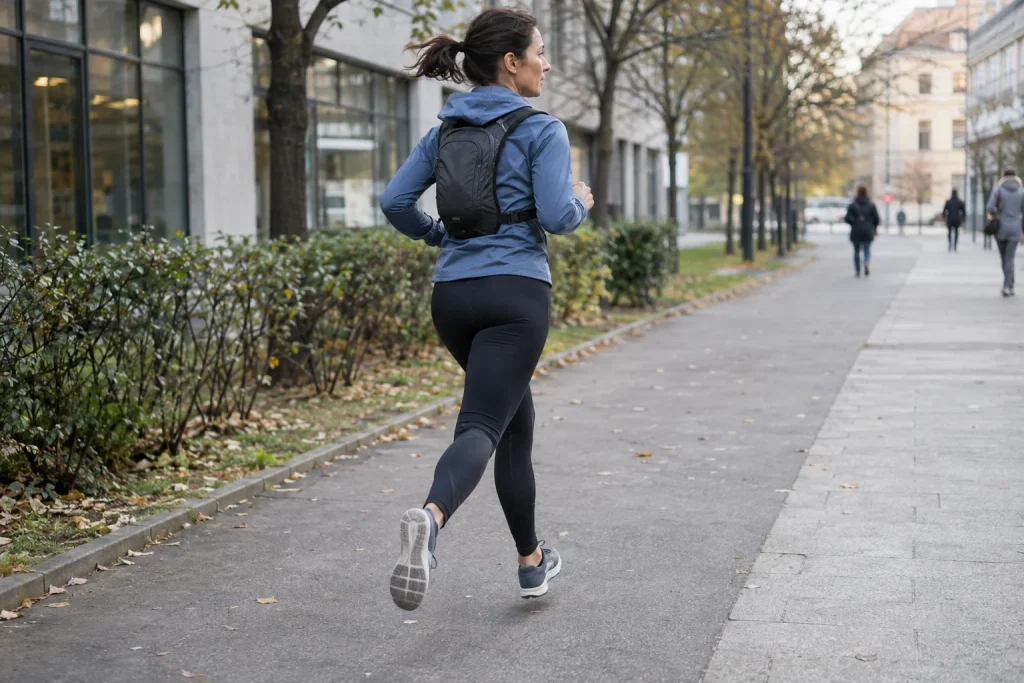
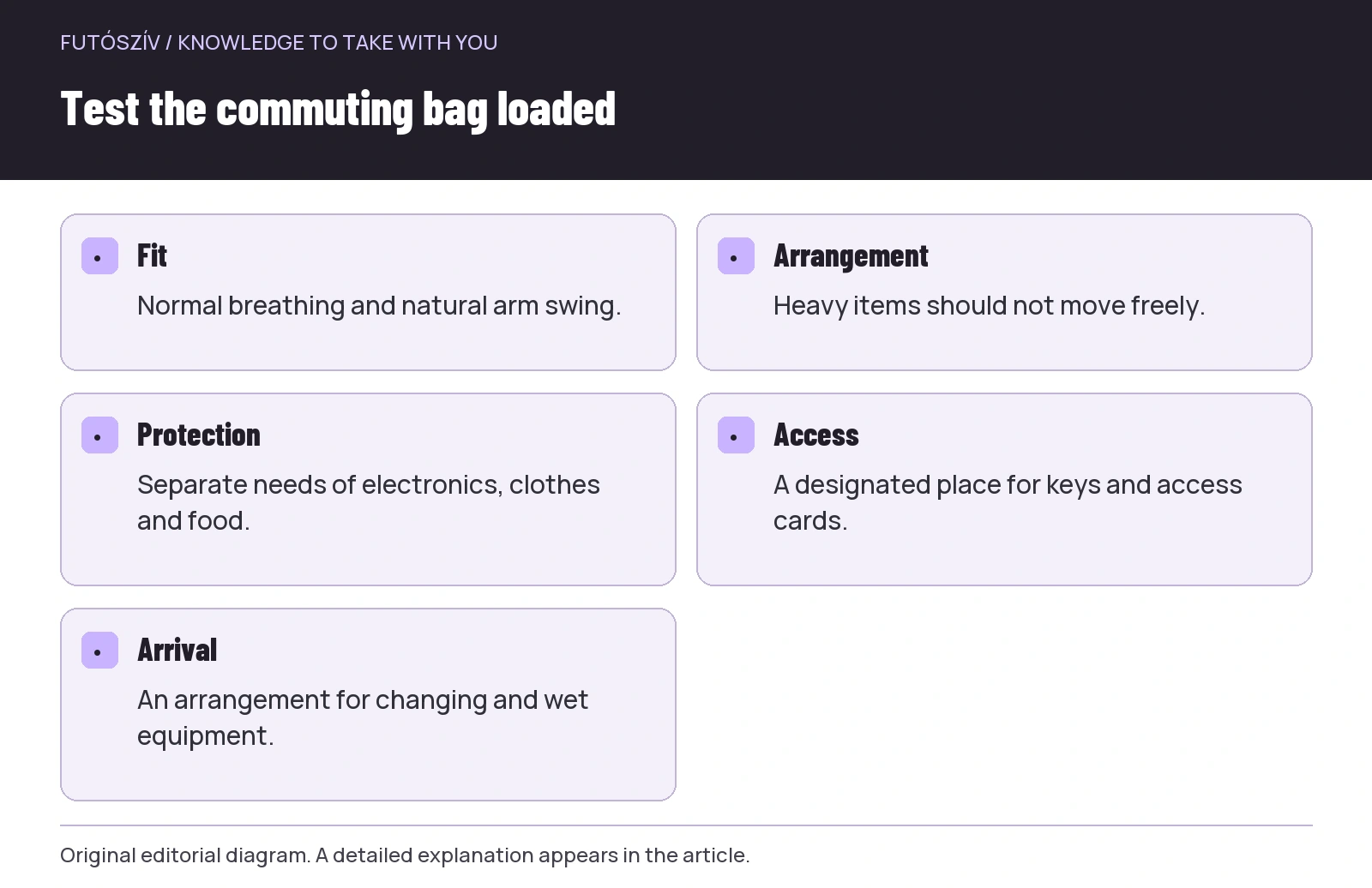
Many bags seem stable when empty but sit differently when filled. The load may pull on the shoulder area, rigid items change the feeling against your back, and contents can start moving in loose internal space. The aim is not to tighten every strap as far as possible. Normal breathing and natural arm swing should remain comfortable. If it only feels tolerable with an unusual posture, reconsider the shape and contents. A commuting bag is not there to provide a separate weighted-vest workout. It needs to serve everyday travel under suitable conditions of use.
 Enlarge diagram
Text version of the diagram
- Needed today?
- Name the items required for the task.
- Can it stay there?
- Arrange suitable storage beforehand.
- Can it go another time?
- Take a larger load on another day.
- Must you carry it while running?
- It needs a protected, stable carrying arrangement.
The position of the weight matters too
A heavy, freely moving item farther from the torso can feel different from one organised and held closer to the body. The Deuter packing guide considers weight distribution in relation to the type of use. This is a hiking packing source, so its specific layout should not be copied unchanged for running. The useful general question is where the heavier items are and how much they can move. Arrange them according to the pockets and securing system of your own running backpack.
A soft clothing layer can help separate items, but does not replace a suitable protective case or a compartment designed by the manufacturer. The corner of a box or a hard device should not press uncomfortably into your back. Use the bag’s internal fastenings and external compression as intended. If the necessary load cannot be arranged stably, the bag may be unsuitable for the task, or the method of transport may need reconsidering. Movement caused by overpacking cannot always be solved with another tighter strap. A good trial can reveal this before you leave.
Electronics: a pocket does not automatically provide protection
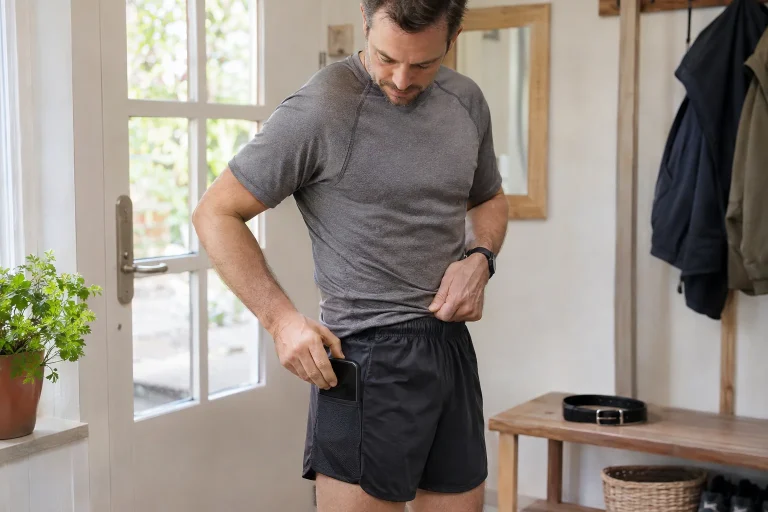
Carry a laptop or another sensitive device only with its transport and protection requirements in mind. A flat compartment in a bag is not necessarily designed to protect against impacts, vibration or water. Check the requirements of the particular bag and device. If suitable transport for a daily run would be disproportionately complicated or uncomfortable, find another way to get the device there. Running to work does not oblige your equipment to carry every object while running. A system partly using other transport or packing arrangements can work well too.
Chargers, cables and small electronic accessories can easily slide together. Arrange them so that they do not form a hard lump against your back or press on another item’s connector. If you also bring wet clothing home, keep it appropriately separate from sensitive objects. Assess rain protection across the bag’s whole system: material, openings, zips and separate protection where necessary. Labels such as “urban” or “outdoor” are not enough by themselves. Carrying quality and protection of the contents are related but different questions, so each needs its own answer.
Clothing: arrive with it dry and usable
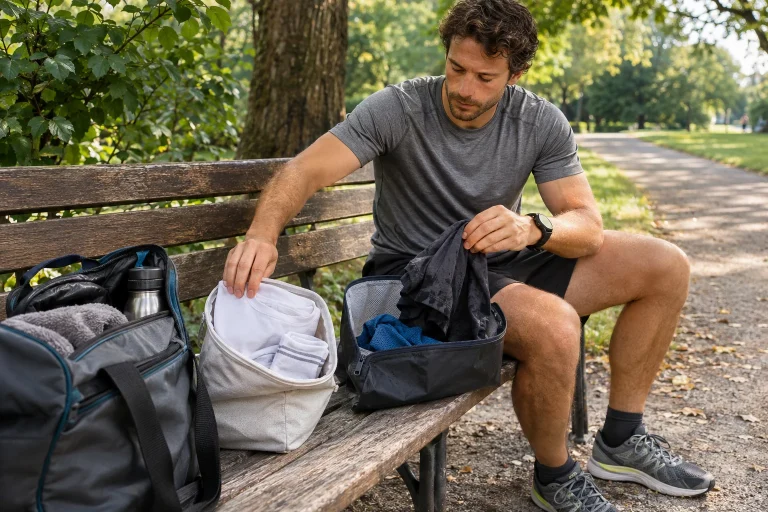
Do not treat the clothes you need on arrival merely as a volume. They should not be compressed together with wet equipment, and they need to be accessible in the right order. If you change or shower, consider what you need first and where you can put it down. Separate packaging suited to the task can help distinguish clean and used items. Do not, however, leave damp clothes sealed away for days: unpacking and appropriate care should be part of the homeward process. A daily commute has two directions, and the return load often differs from the morning one.
Shoes can take up particularly large amounts of space. If suitable storage is available at the destination, consider whether you really need to carry them every time. If you do, deal with dirt and protecting their shape in a way that suits the bag’s capabilities. Do not place used shoes loosely alongside clean clothes and food. You do not need to buy a separate product for every item, but separation must actually work. The quality of arrival is not determined by how attractive the packing looks at home, but by whether the things you need come out in usable condition.
Carrying food is a separate packing task
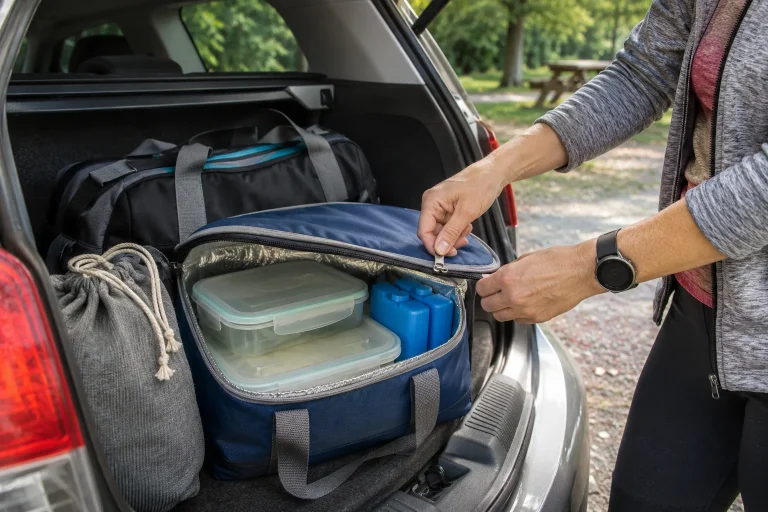
If you take food, plan food-safe storage and transport separately. A running backpack does not become a cool bag just because a food container fits inside. Match necessary cooling, travel duration and storage at the destination to the particular food. Even a container described as leakproof should be selected and closed according to its instructions. Do not place unchecked liquid contents above electronics. Running’s vibration and the full length of the journey are important circumstances. If the system is too cumbersome, delivering food at another time or eating at the destination may be practical alternatives.
The position of food and drinks changes weight distribution and access too. Fluid used during the run should not be buried beneath spare clothes, while food to be eaten later does not need a pocket you can constantly open. A system separating clean and used items helps here as well. If something leaks, care for the bag according to its material and assess the affected contents appropriately. Allow time for checking within the daily packing routine. A quick departure is of little value if arrival involves lengthy cleaning and replacement.
| Part of the load | Planning question | Possible simplification |
|---|---|---|
| Spare shoes | Must they be carried every time? | Arrange suitable storage at the destination |
| Clothing | Is it dry and accessible in the right order? | Take a spare set there in advance |
| Electronics | Can you provide real protection? | Use another day or mode of transport |
| Food | Can you meet the necessary storage conditions? | Separate logistics or food at the destination |
| Small personal items | Do they have a secure, easily accessible place? | A designated, closed compartment |
 Enlarge diagram
Text version of the diagram
- Fit
- Normal breathing and natural arm swing.
- Arrangement
- Heavy items should not move freely.
- Protection
- Separate needs of electronics, clothes and food.
- Access
- A designated place for keys and access cards.
- Arrival
- An arrangement for changing and wet equipment.
Do not make the first workday your first trial
If the bag or packing arrangement is new, first try it when there is no arrival deadline or important work equipment at risk. You can model the intended load in an appropriate, safe way, then move along a short, familiar route. Observe the straps, arm swing, shifting contents and whether you need to hold your torso unusually. You do not need extra distance or intensity for the trial. Its purpose is to learn about the system. If it is unsuitable, leave yourself the option to turn home and adjust it before it becomes a condition of the daily commute.
Try one change at a time: another item position, strap adjustment or less content. This makes it clear what improved the situation. Feeling “it is better now” after repacking the entire bag teaches less than understanding the specific relationship. Note the successful arrangement, but remember that winter clothing or different daily contents require another check. The kit is not a constant weight, and clothing layers change too. A familiar setting gives you a basis to adapt to the actual load. The aim is not to find one eternal strap position.
The route becomes usable together with the load
Your usual easy running loop and the journey to work are different tasks. Pedestrian traffic, junctions, pavements and entry points all matter. Adapt running with a bag to the surroundings too; you do not have to maintain your usual unloaded pace in every situation. If a section is slippery or crowded, walking or another mode of transport can be part of the plan. The purpose of commuting is appropriate travel, not a separate performance test every day. Based on the weather and daily load, have a workable alternative for days when running is not a good solution.
The final minutes before your destination and the arrival routine matter too. Where can you reach your key or access card, where can you put the bag down, and what happens to a soaked outer layer? A clearly designated pocket can prevent prolonged searching. Do not sacrifice the security of personal items for speed: the fastening and carrying position should remain appropriate. If you run early or in darkness, do not let the bag cover lights or visibility panels. Assess the entire commuting setup, not just the backpack separately.
Daily use also means daily care
Empty and inspect the bag regularly. Crumbs, forgotten packaging or damp clothing can hide in a less-used compartment. The manufacturer’s product care guide , for example, separately addresses care of the bag’s materials and components. Use the instructions for your own product as the basis, particularly for glued, coated or reinforced parts. Dry it appropriately after cleaning, and inspect buckles, seams and zips. For an item used regularly, spotting a small fault early can prevent considerable inconvenience.
A run-commuting system works well when the necessary load can be carried stably, the contents are suitably protected, and you do not need to rethink everything on arrival. Sometimes this takes a new backpack; at other times it takes fewer transported items, clothes delivered in advance or a different daily schedule. Buying is only one possible step. Organise the actual task first, then evaluate the loaded bag with your own clothing on an easy trial. Good commuting equipment is not good because it carries anything. It is good because it handles the necessary things usefully within your own day.
Sources and further reading
- Osprey: backpack sizing and running-pack fit
- Deuter: packing and weight distribution
- Osprey Europe: product care
How Futószív articles are prepared: our editorial guidelines.