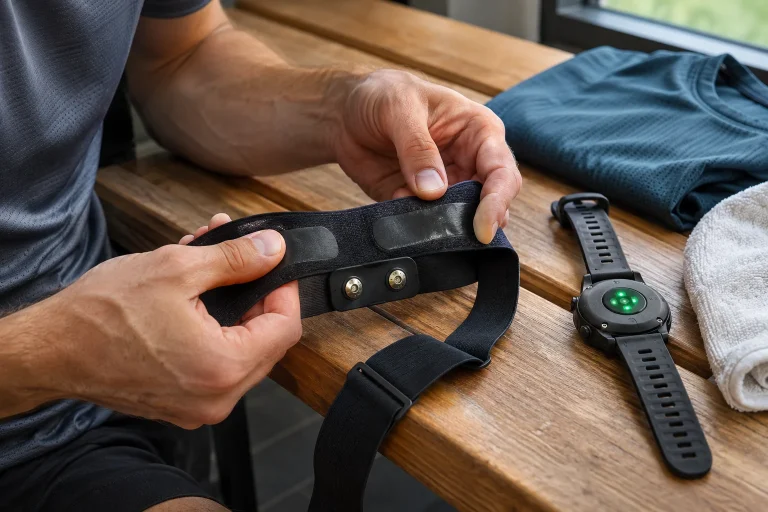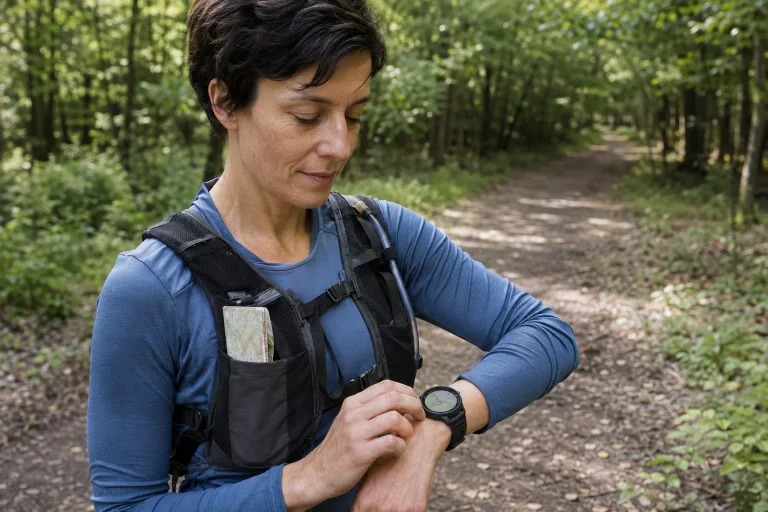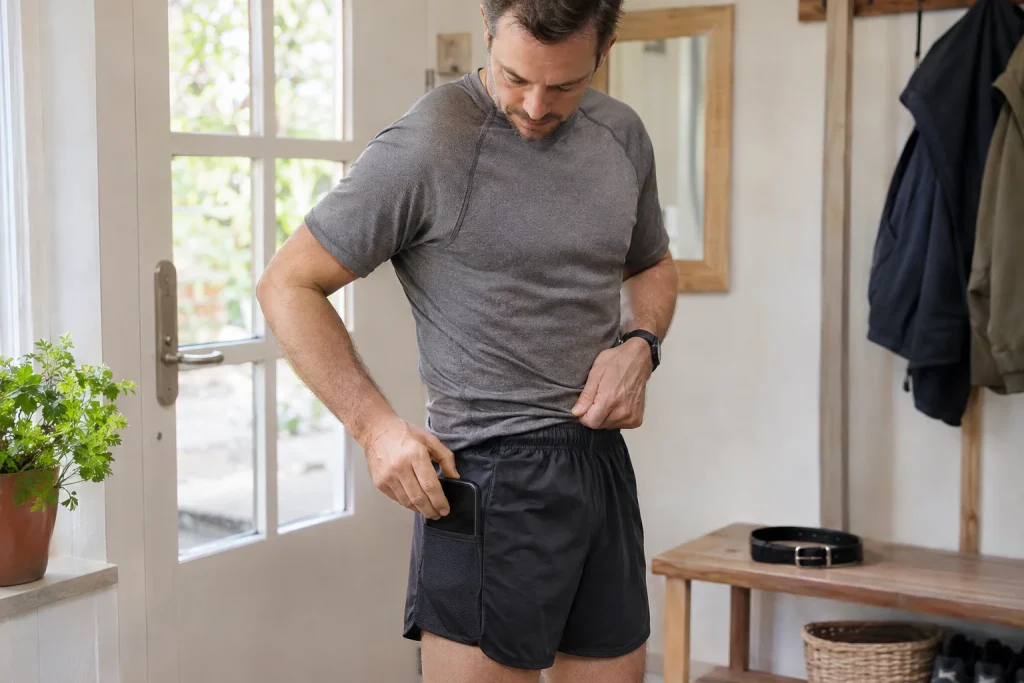
On a hanger, running shorts look simple. During running, however, they must stay in place, allow leg movement, touch skin comfortably and often carry a few objects too. A model that seems perfect empty may bounce with a phone; a soft inner layer may end in the wrong place. Choosing therefore involves more than a taste for short or long legs. Try the full construction for your own use. Good shorts do not demand constant attention when you want to run.
Name the task before looking for a size
Short park runs, longer road sessions, trails and after-work urban loops may need different storage. If your phone always rides in a vest, an enormous shorts pocket is not necessarily an advantage. For keys and one small personal item, simple secure storage may suffice. Consider weather, route, expected duration and other kit. Choose for actual days rather than every catalogue function. Accumulating features can also add seams and adjustments.
Write a brief use statement: “an easy one-hour urban loop with a phone” or “longer trail running with a vest and little pocket weight”. This guides the trial. Shorts reliable for another sport may work if tested in actual running movement. A deep side pocket can be convenient standing but let a phone move while running. You need not reject clothing by its sport label, yet securing items and contact in motion are real issues. Seek usable clothing rather than perfect category compliance.
Three inner constructions, different decisions
Options include unlined shorts, built-in brief-style liners and longer, close-fitting inner shorts. Check precisely which the manufacturer describes. One original Nike product description identifies a brief-style liner and adjustable waist, for example. Read it as a construction example, not a model recommended for everyone. Structural names narrow the search, but only your movement reveals comfort.
With no liner, separately chosen underwear belongs to the system. With a built-in layer, use manufacturer guidance to consider whether another layer is needed. Do not automatically pile up fabric if that creates folds and pressure points. Try the combination together while following retailer hygiene and return conditions. A liner fitting the torso may still be loose or tight at the thigh. One size number cannot describe every proportion.
 Enlarge diagram
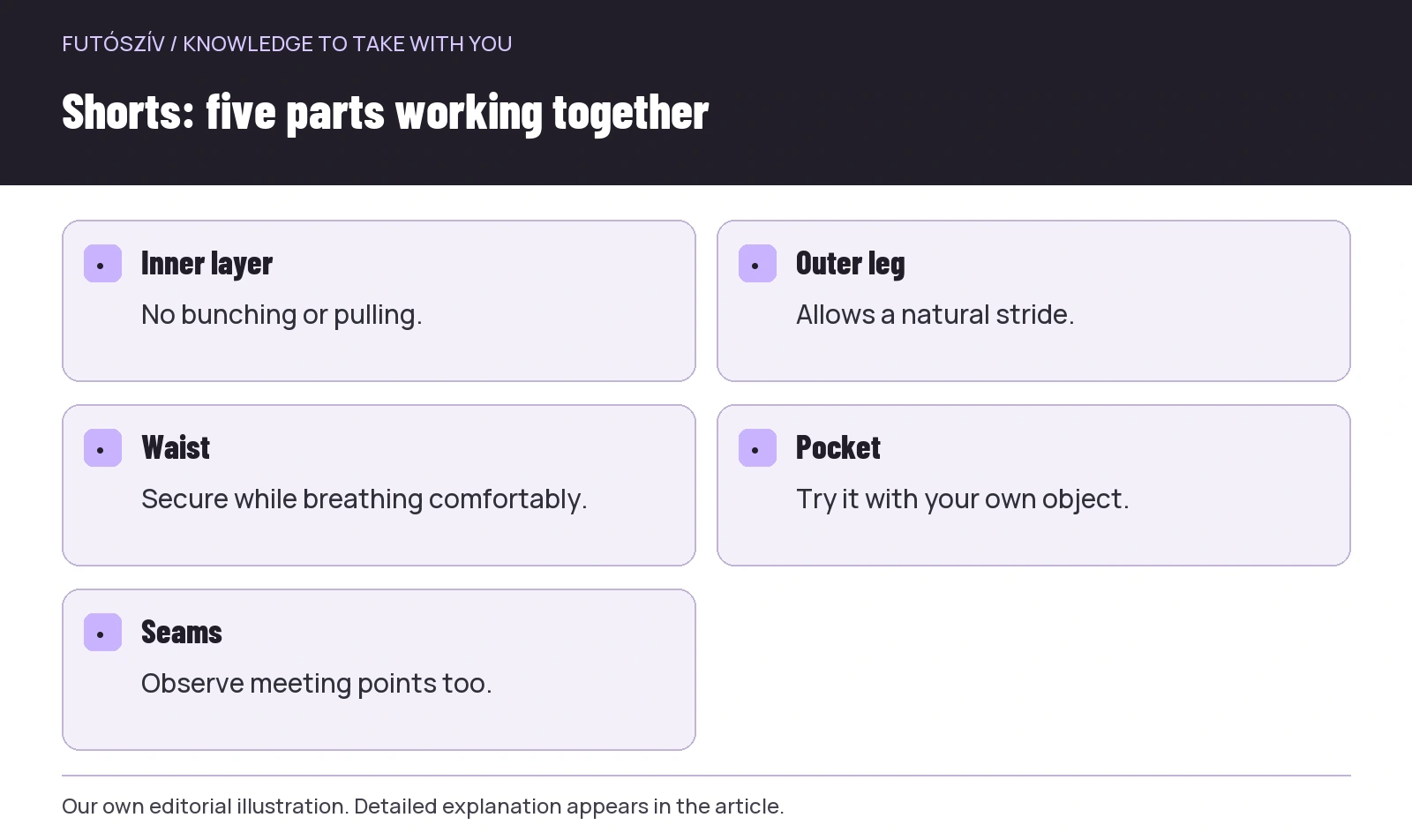
Text version of the illustration
- Inner layer
- No bunching or pulling.
- Outer leg
- Allows a natural stride.
- Waist
- Secure while breathing comfortably.
- Try it with your own object.
- Seams
- Observe meeting points too.
The inner leg’s ending may matter more than expected
A longer liner’s edge can shift, roll up or press uncomfortably during movement. Try natural steps and easy jogging where the fitting area permits. Check where it ends standing and after running. Continual riding up does not necessarily need stronger compression. Another length, cut or material may suit. Good clothing need not remain motionless everywhere on your body. Ask whether it stays comfortable and orderly while you move freely.
Look beyond closeness of fit. Check seam positions, crotch construction and pulling forwards or backwards. One tight point does not necessarily mean sizing up the entire product; the cut may not suit you. Name the precise location. “Pulls at the thigh, fits at the waist” is more useful than “odd sizing”, helping target the next candidate.
Interpret outer leg length in motion
Product pages often give inseam length, sometimes in inches. Useful for comparison, the number does not fully determine where it sits: rise and cut matter too. Identical labelled lengths may reach different points on your thigh. Examine actual fit rather than model-photo proportions alone. Shorter legs may feel freer for some movement; longer legs give different coverage and contact. Neither is universally for more advanced runners. Your own comfort is legitimate.
Splits, looser sides and material stretch together influence stride. Use natural, safe movements: easy steps, knee lifts within your usual range and a slight forward bend. Do not over-test through stretching exercises. Pulling or catching during intended running movement is relevant. Also check whether outer fabric clings to the liner and pockets change how the leg hangs. Shape may look orderly in the first minute after dressing but behave differently with movement.
Waistbands should hold without compromising breathing
Waist comfort matters while running, bending, after eating and drinking, and under downward pocket weight. Elastic and drawcords may serve different functions, so learn adjustment. Cords and knots should not occupy irritating places or press beneath a hard object or belt. Overtightening is no universal answer to bouncing pockets. If shorts stay put only through constriction, review size, cut and load distribution. Clothing must work with normal breathing.
Test your phone in its intended pocket. Does the waist slide, the whole garment twist or one band area tighten? A long close-fitting phone pocket differs from a loose side pocket. A photographed storage space does not guarantee your phone fits with its case. Size, shape and mass matter. Bring it when shopping and check within retailer rules. “Phone pocket” is not certification for every phone.
More pockets do not automatically make better shorts
The Brooks shorts range also demonstrates different pocket layouts and storage functions. These manufacturer examples illustrate varied intended tasks, not universal benefits from more pockets. Check which close, which remain open, what is reachable in motion and which objects touch your body. Keys should not scratch phones or packaging corners press one spot continually. Consider the pocket’s function object by object.
The difference between empty and loaded trials is often decisive. Objects may rotate or settle lower while moving. If overloading one pocket to carry all supplies, a separate belt or vest may work better. Equally, a short loop needs no unnecessary equipment. Seek enough stable, manageable storage for your task. Decide which items genuinely need access during running and which can remain securely closed. The arrangement may become simpler.
| Detail | Question at home or in the shop | Signal during running |
|---|---|---|
| Inner layer | Does it end appropriately without pulling? | Does it roll up or need adjustment? |
| Waistband | Comfortable with normal breathing? | Does it twist or slide when loaded? |
| Phone pocket | Does your own device fit with its case? | Does it bounce, tilt or press? |
| Outer leg | Does it allow a natural stride? | Does it catch, cling or pull? |
| Seams | Where do they touch skin? | Does sensitivity increase at one point? |
 Enlarge diagram
Text version of the illustration
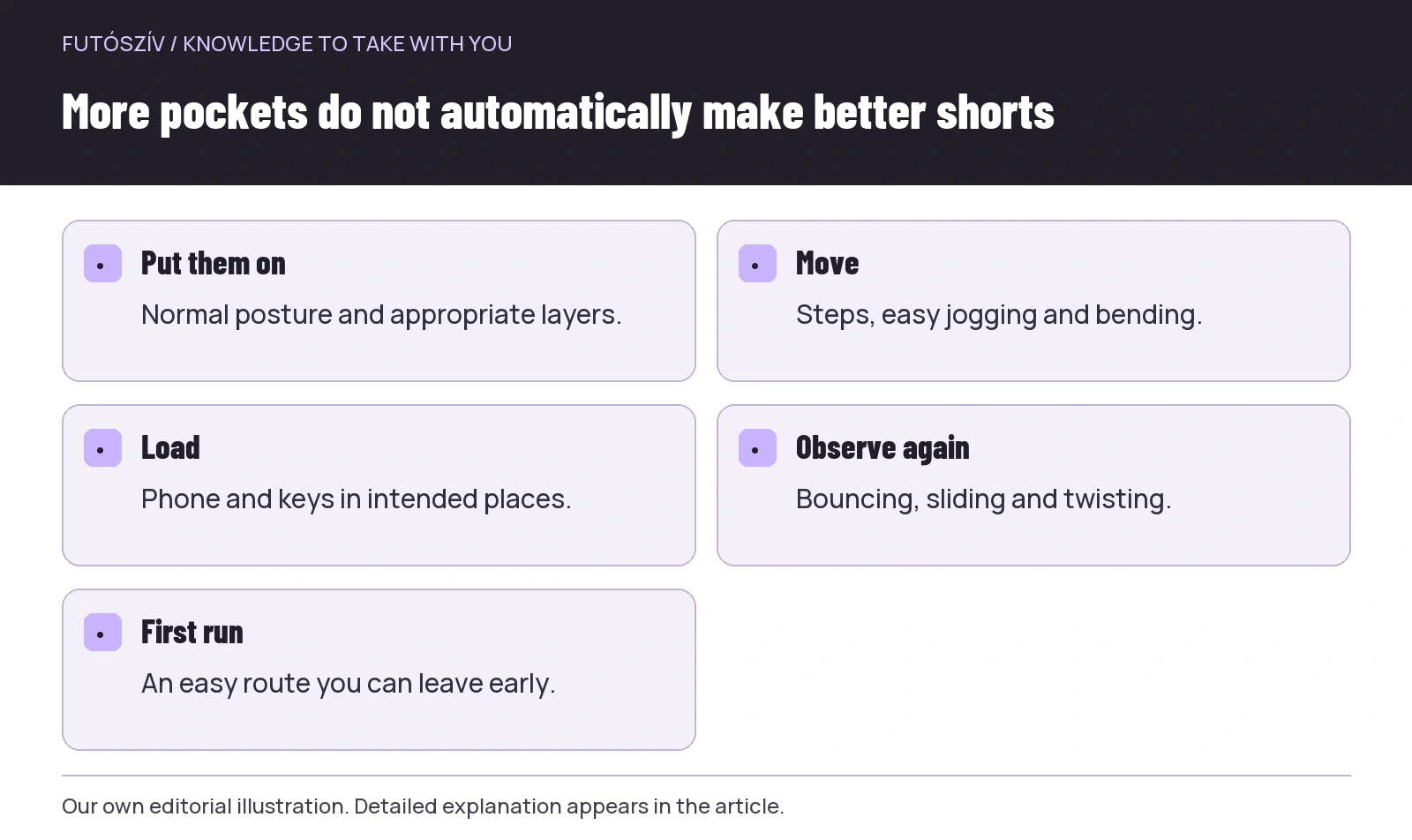
- Put them on
- Normal posture and appropriate layers.
- Move
- Steps, easy jogging and bending.
- Load
- Phone and keys in intended places.
- Observe again
- Bouncing, sliding and twisting.
- First run
- An easy route you can leave early.
Look at the cut as well as women’s, men’s and other labels
Categories offer starting points but cannot describe everyone’s proportions and clothing needs. Waist, hips, thighs and torso length relate individually. If no size in one category works, another cut or construction may. Do not adapt posture to the label. State personal coverage and inner-support preferences without meeting a popular fashion. Clothing serves running when comfortable and predictable in your movement.
Use size charts with fresh, actual measurements and check which body dimension they mean. Garment width differs from body circumference. For online orders, material, cut and return conditions inform decisions. Follow hygiene rules and avoid alteration before deciding. Cutting out a liner or changing a cord is an intervention, not a fitting. Exchange a poorly fitting new item for a suitable one before irreversible tailoring.
Make the first run easy to stop
Use new shorts on a familiar easy route with an option to return home. A first long race or remote trail should not supply your entire experience. Observe initial feel and changes with movement, warmth and moisture. Increasing chafing is not a natural “breaking-in” cost. If stopping to adjust, remember exactly what happened. Specific clothing observations improve decisions; determination alone cannot move a seam or widen a tight inner leg.
Afterwards inspect shorts and accompanying underwear. Where did fabric twist, the pocket settle and objects remain? If several elements were new, distinguish their roles. A new belt can change previously comfortable shorts too. Make few changes next time. You will know which arrangement works rather than have a vague “another outfit was better” impression. Reliable combinations are then easier to recreate.
Washing and lasting comfort
Liner, outer fabric, elastic and bonded parts may need different care, so follow the item’s label. The manufacturer care guides also describe material- and product-specific treatment; one washing trick should not apply to all sportswear. Afterwards check inner-leg position, seams, pockets and cord. A twisted liner or forgotten wrapper may disturb the next run. Cleaning and unpacking belong to the same routine.
Assess wear through function. Fading alone may not justify replacement, while a stretched waist or separating inner seam can change use. For minor faults, investigate repair and whether necessary comfort can remain. Good running shorts are valuable through fit, handling needed objects and leaving attention for running, rather than many technical adjectives. The trial is therefore central to choosing and cannot be replaced by a product photo.
Sources and further reading
- Nike: example of a built-in brief liner and adjustable waist
- Brooks: manufacturer examples of different shorts pocket layouts
- Patagonia: product care and treatment
How Futószív articles are prepared: our editorial guidelines.