You can notice something new even on a familiar route
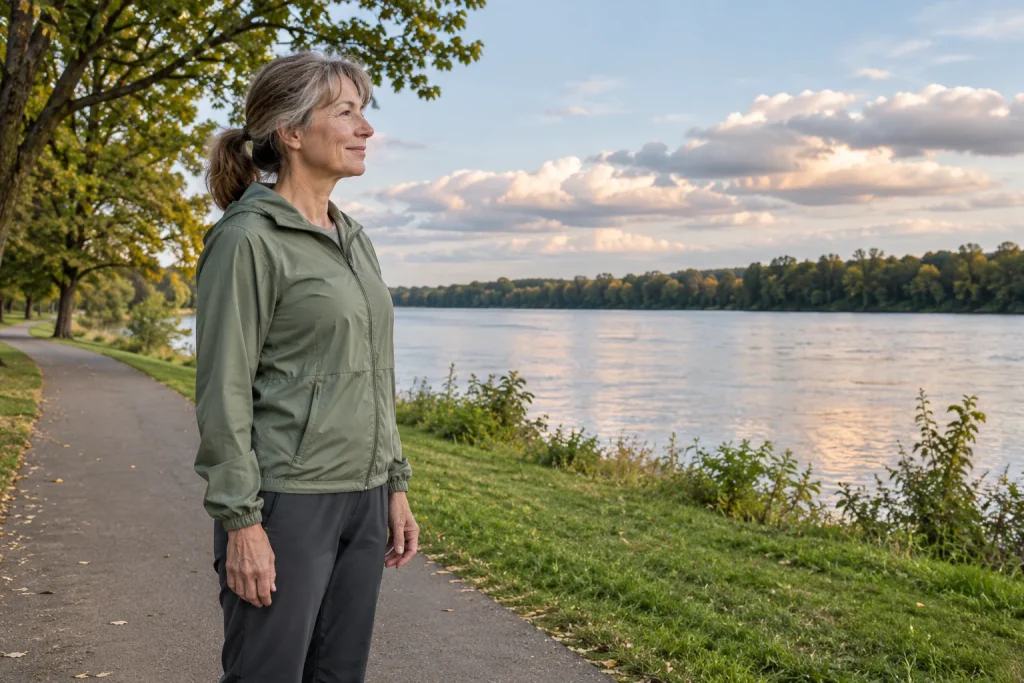
The same riverside or park path often becomes little more than a passage between the start and finish of a run. Then one day you notice light on the water, an unusual cloud or how large a tree is that you have always passed. Everyday wonder requires no special performance. Psychological research uses the concept of awe to examine an emotional experience in which something seems vast, greater or beyond a familiar understanding.
This shift in attention may interest a runner. But keep the distinction between a pleasant moment and a studied intervention. If a study used walking and specific instructions, it does not directly become a programme valid for running at every pace. Awe is not a compulsory workout outcome, and you do not need to seek a special emotion at the end of every loop.
This article presents an awe-walk study involving older adults and considers how to think about it without exaggerated promises. The practical examples are original editorial ideas for perceiving a familiar route differently. They are not treatment instructions or conditions for reproducing the research at home.
What did participants do in the awe-walk study?
Sturm and colleagues’ Big Smile, Small Self study enrolled 60 healthy older adults; 52 were included in the final analyses. Participants were asked to take weekly 15-minute outdoor walks for eight weeks. One group received instructions intended to encourage awe; the other received conventional walking instructions. Joy and prosocial positive emotions during walks developed more favourably in the awe group, while general anxiety, depression and life-satisfaction measures did not change from baseline.
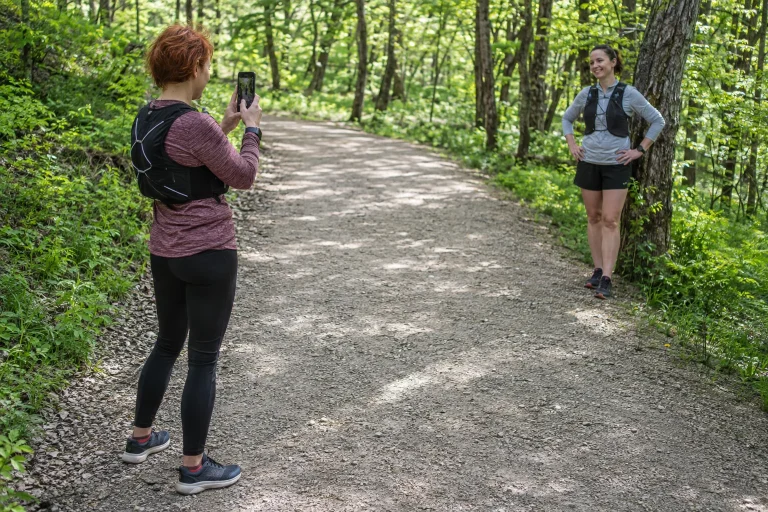
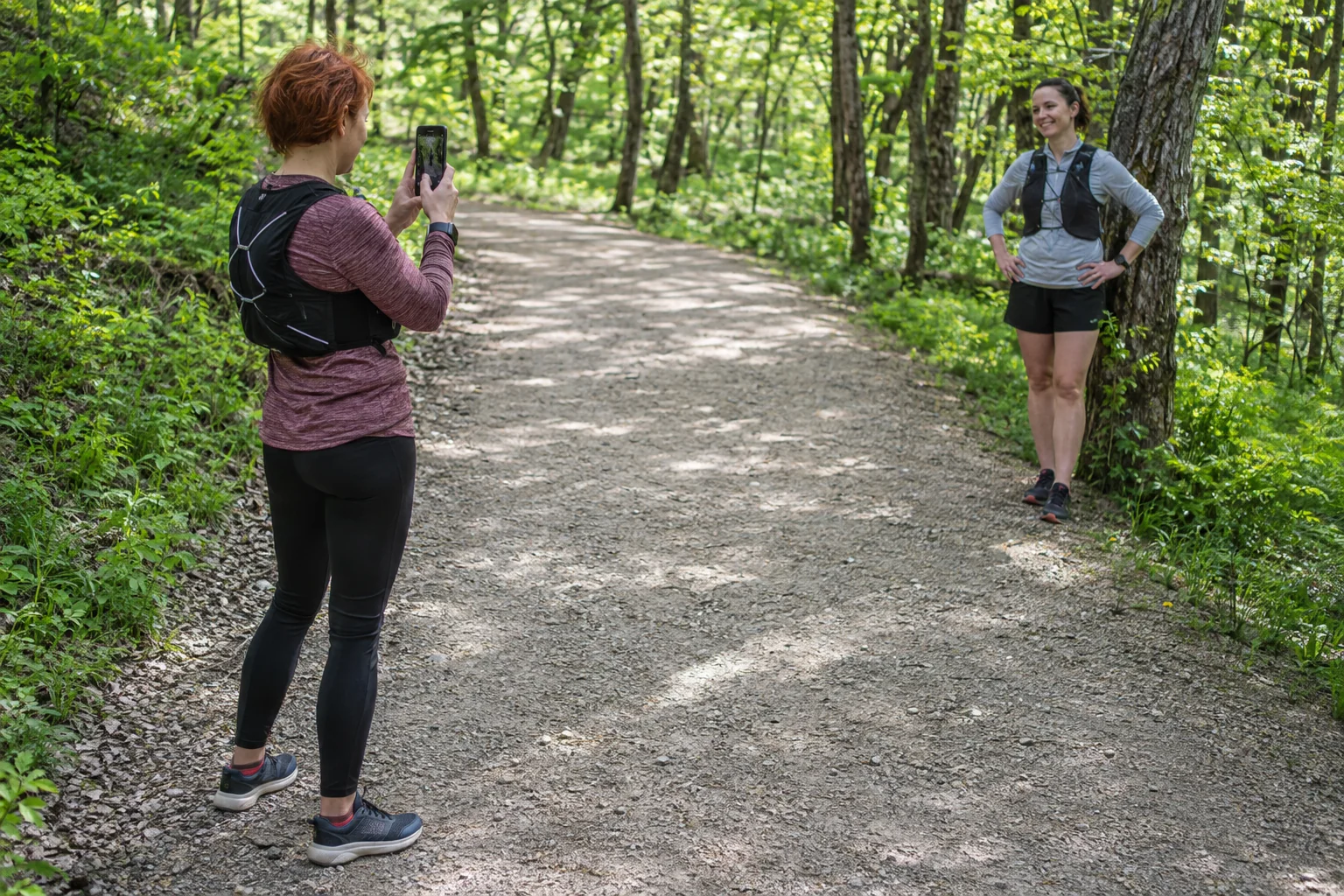
Participants took photographs of themselves during walks and provided emotional reports. Some features of the photographs were also analysed. This does not mean a bigger smile alone proves improvement in someone’s overall mental health. The study included several separately named measurements. A more pleasant walking experience and change on a broader assessment questionnaire remained different questions.
The active control is important: both groups walked. The researchers were therefore not simply comparing movement with waiting without exercise; they also examined different attentional instructions added to walking. The result remains tied to that sample and programme. It did not establish that every runner following the same schedule would experience the same thing.
Wonder need not depend on spectacular scenery
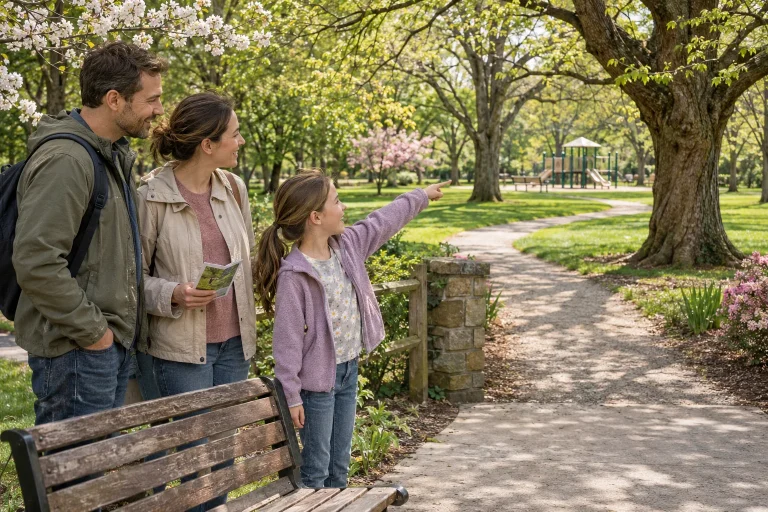
In everyday terms, wonder may come from a broad landscape or a new detail in something familiar. A building’s proportions, the evening sky or moving water can draw attention differently. These are original illustrative examples here. We do not claim that each element proved effective for every research participant, or that observation is pointless without a particular type of route.
A familiar loop may have the advantage that finding your way does not demand all your attention. Yet new details may remain despite familiarity. If you are curious, occasionally noticing a point you normally pass may be enough. You do not need a checklist. Openness of attention is a personal possibility, not a requirement for completing a run correctly.
You do not have to travel farther to make a route seem scientifically suitable. Access, available time and safe use still matter. A nearby place for a simple walk or easy movement may offer an interesting detail. If nothing special catches your attention that day, it does not discredit your attention or make the workout a failure.
 Enlarge image
What might a smaller self-focus mean?
The phrase ‘small self’ is easy to misunderstand through the everyday language of self-esteem. The research focused on the relationship between the self and the wider environment, not on valuing yourself less. Perceiving a larger space may temporarily change the importance of your daily concerns. This concerns experience, not a judgement of personal worth.
Consider an original illustration: after a run, you stop somewhere safe with clear sightlines and notice the landscape’s spaciousness. Your daily task does not disappear, but for a few moments it no longer fills all your attention. This is not a guaranteed effect or a therapeutic exercise. It illustrates how the proportion of attention directed towards yourself may change within an experience.
If large spaces or unfamiliar places feel unpleasant to someone, that should not be overridden in pursuit of awe. Personal environmental needs and current circumstances matter more than an idealised emotional target. You can remain curious within familiar, manageable surroundings. The findings do not justify sending anyone into a situation they find distressing.
Emotional experience and clinical condition are measured separately
One important nuance is that some emotional outcomes during walks and daily life developed differently from broader questionnaire measures. Highlighting only the favourable emotions could make the programme appear to be a general mental-health intervention. The source requires a more precise reading. A more pleasant experience can be valuable even without changes on every broader scale.
A runner’s account can likewise include a beautiful session while everyday difficulties remain. That does not mean the experience did not count. Equally, a brief good feeling does not prove that all necessary help has become unnecessary. With persistent mental-health symptoms or difficulties, movement can be one part of the individual situation, rather than a complete care plan.
Awe is therefore not a compulsory explanation for every good run. A conversation, rhythm or completing a task may have brought joy. You do not need a special name for it. A research concept helps when it makes experience more precise, rather than narrowing which experiences you are allowed to value.
Walking, running and room for attention
The programme described used walking, so pace and attentional demands may differ from a running workout. Technical terrain, traffic or a task at a specified intensity do not leave equal attention for wider environmental details. The research does not imply that you should look around in every such situation. Safe movement and following the task take priority.
If an easy session or a brief stop afterwards provides a manageable setting, you can notice something about the place out of personal curiosity. You do not have to keep taking photographs while moving, disregard the surface or focus on a phone. Photography was a research tool in the study, not a condition for having your own experience.
It is equally valid to let running remain simple movement for now. A sustainable habit does not need a new psychological exercise every time. Noticing an occasional detail can be a small pleasure that requires no separate evaluation. Movement can retain an ordinary, predictable side too.
How do wonder and idea generation differ?
Oppezzo and Schwartz’s 2014 research examined walking and creative idea-generation tasks in several experiments. That is a different question from the emotional instruction in awe walking. An interesting walk may bring both ideas and an emotional experience, but the two research outcomes are not identical. A change measured on a creativity task is not automatically awe.
In everyday life, not every pleasant observation has to yield a useful idea either. You may notice something unusual and simply enjoy it. At another time, a possible solution may occur while walking. An experience’s value does not rest only on the work produced afterwards. Both experiences can be named and retained separately.
If you turn every moment of running into a productivity task, the free attentional space you seek may disappear. This is an editorial consideration, not a universal proposition derived from the studies. In your own movement, you can decide when to think about something and when simply to notice the surroundings without another goal.
 Enlarge image
New details on a familiar loop
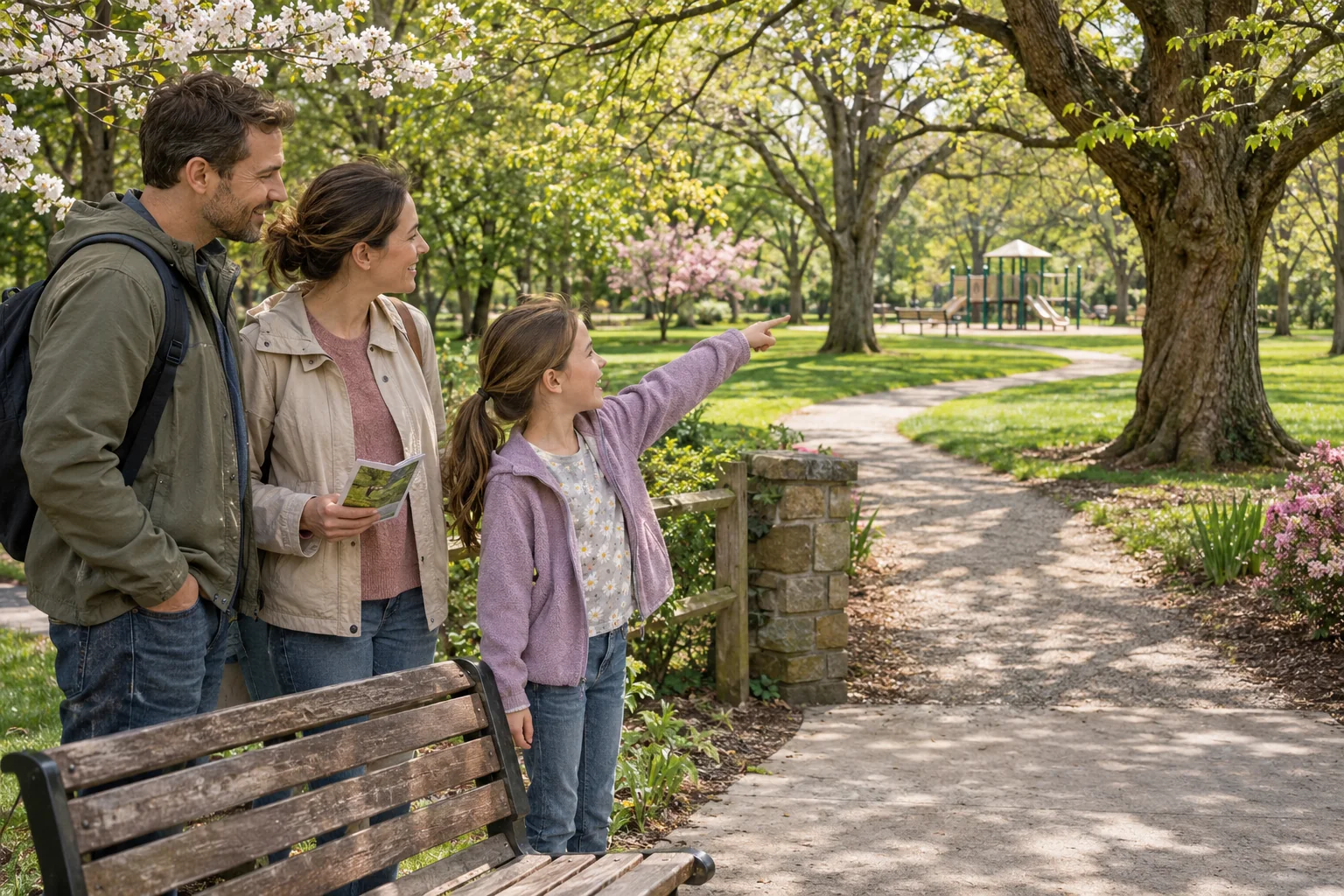
One personal observation idea is to name a detail on a familiar route that previously received little attention, without making a special search. It might be a cloud’s movement, a tree’s proportions or the space visible from the path. You do not have to repeat the research instructions or follow the same duration. The question is whether the situation leaves room for curiosity.
In a group, you can share what each person noticed, but this should not become a competition either. One person may mention a detail, another a mood, and another nothing special. Different answers cannot decide who has better attention or is a more open person. A shared conversation is an option you may decline.
For photography, the real environment and other people’s consent matter. An image is not necessary to validate the experience. If you do stop for a photograph, choose somewhere you do not obstruct others and do not need to accept uncertain footing for the shot. The findings do not make the photograph more important than safe use of the place.
Remembering without seeking a compulsory result
Afterwards, one sentence may be enough: what caught your attention, and which feeling went with it? A log is not an awe-measuring instrument or a health assessment. It can preserve another layer of the location in your memory alongside finishing time. There is no need to score every occasion against the others or expect increasingly intense experiences.
Neutral days remain part of your movement too. Even without a special moment, you may have completed the agreed task, met someone or simply spent time outside. Scientific interest in awe does not rewrite the value of everyday running. Your experience does not have to resemble a study title.
The research may chiefly offer a new question about directing attention towards the wider environment in a manageable movement setting. In your own practice, that can remain occasional curiosity. It need not become a performance goal, treatment promise or another compulsory routine. A familiar route can remain a simple running route on which something sometimes catches you by surprise.
Sources and the scope of application
Sources were checked on 21 November 2026. The awe-walk study appeared online in 2020 and in a 2022 journal issue. The older adults’ walking programme is considered separately from the 2014 research on walking and creative tasks. The examples are original editorial illustrations; the images are AI illustrations, not research documentation.
- Sturm and colleagues: Big Smile, Small Self: Awe Walks Promote Prosocial Positive Emotions in Older Adults
- Oppezzo and Schwartz: Give your ideas some legs: the positive effect of walking on creative thinking, 2014
How Futószív articles are prepared: our editorial guidelines.