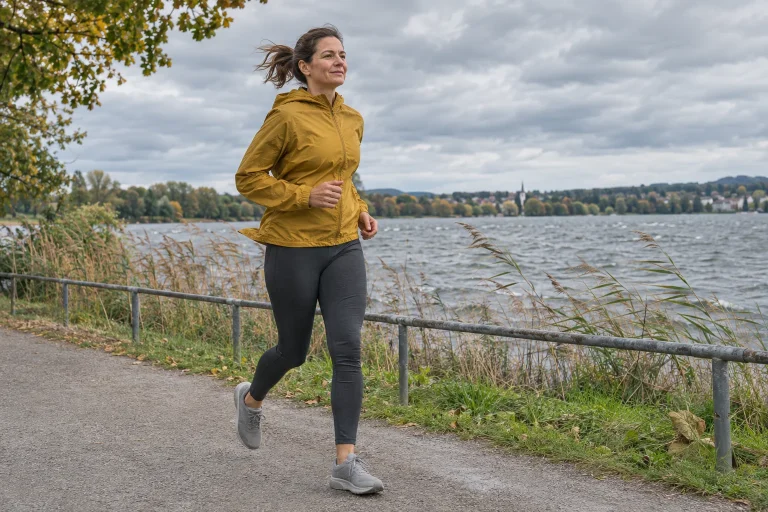
In November, the main question is often not how many kilometres fit into the day, but where you can see the ground clearly, how long you will stay in wet clothes and how you will get home if the run does not feel right. A good winter routine answers these questions in advance. It is not about conquering the cold: it creates conditions in which activity is a safe, enjoyable option.
This article provides general information. If you have cardiovascular disease, respiratory symptoms, circulation problems or a previous cold injury, discuss your individual needs with a healthcare professional. Do not change your medication or asthma treatment on the basis of a running article.
The thermometer tells only part of the story
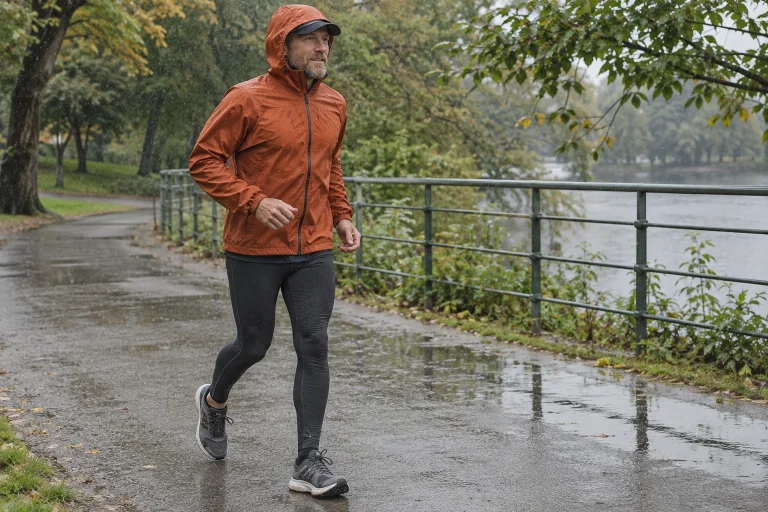
The same few degrees above freezing can mean a very different situation in a dry, sheltered park and on a windy, rainy riverbank. Before leaving, check the forecast, wind gusts, precipitation and the time it gets dark. Alongside the expected conditions, plan how long you will actually be outside: waiting for a tram and a long walk also count towards your total time outdoors.
There is no universal temperature threshold below which running is forbidden for everyone and above which it is fine for everyone. Wind, moisture, clothing, route and individual condition all matter together. The CDC guidance on cold weather also warns about the risk of hypothermia; the danger is not confined to exceptionally low thermometer readings.
Have three options agreed with yourself in advance: the planned loop, a shorter and more sheltered loop, and an indoor alternative. This makes the decision before leaving easier. If you know the night before what you will do when paths are icy, you are less likely to bargain with yourself in a bad situation the following morning.
Layering means a system you can adjust
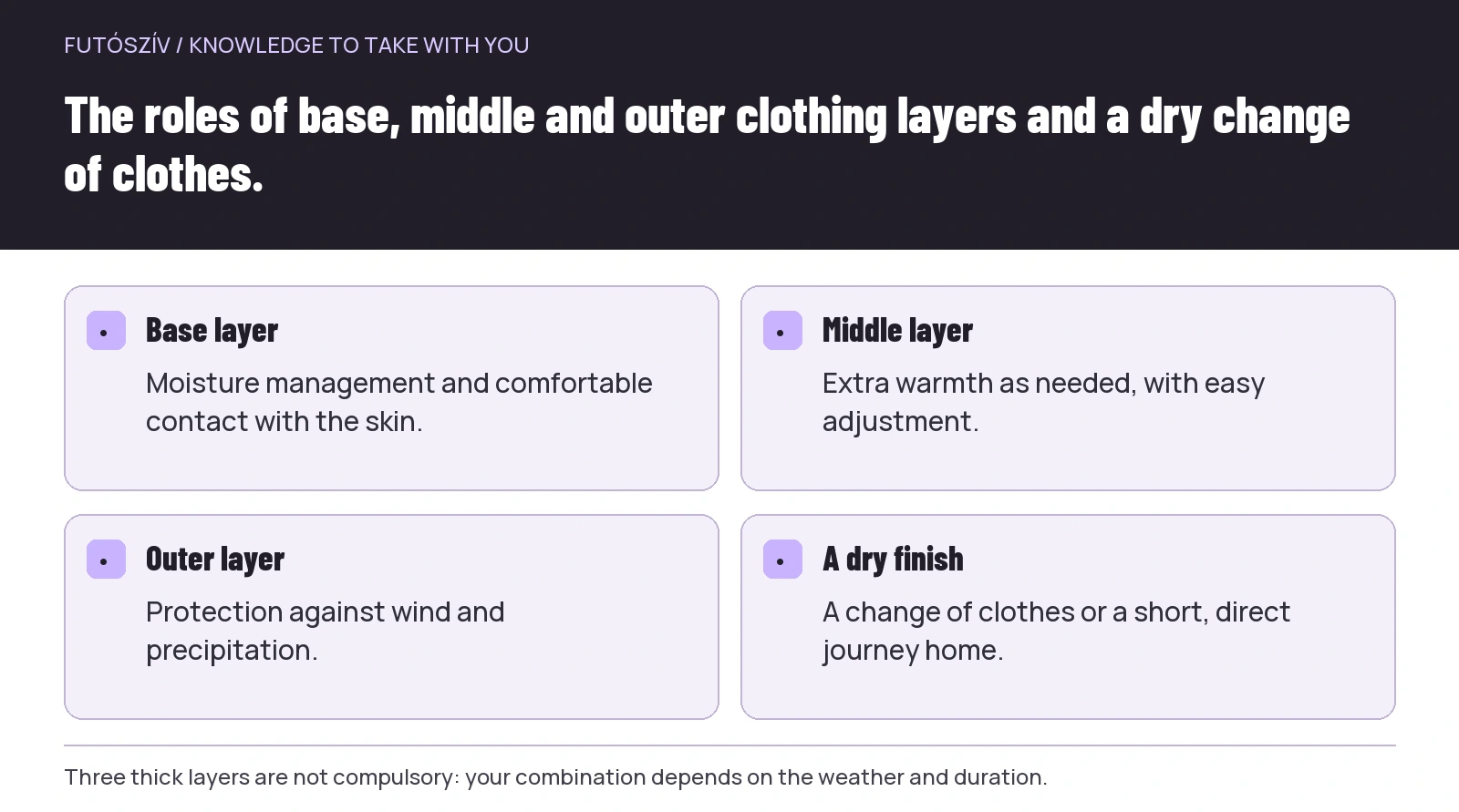
Each layer can have a different job. The one closest to your body helps manage moisture, the middle layer keeps you warm and the outer layer protects against wind and precipitation. This does not mean you need three thick tops for every run. A short loop in milder weather may call for a different combination from a long, windy session.
The American Heart Association guide to winter exercise also highlights layers and staying dry. In practice, you need something you can unzip, take off or put on. In an overly warm top kept closed throughout, you can easily become soaked with sweat and then get uncomfortably cold when you slow down or stop.
Test clothing on a short, familiar route first. Notice where moisture collects, whether the hood gets in the way and whether you can reach the pocket with gloves on. Record a combination that works, together with the conditions. “Thin top, gilet, gloves, no wind” will help more the following week than “winter kit”.
 Enlarge diagram
Text version of the illustration
- Base layer
- Moisture management and comfortable contact with the skin.
- Middle layer
- Extra warmth as needed, with easy adjustment.
- Outer layer
- Protection against wind and precipitation.
- A dry finish
- A change of clothes or a short, direct journey home.
Hands, ears and neck: the practical value of small items
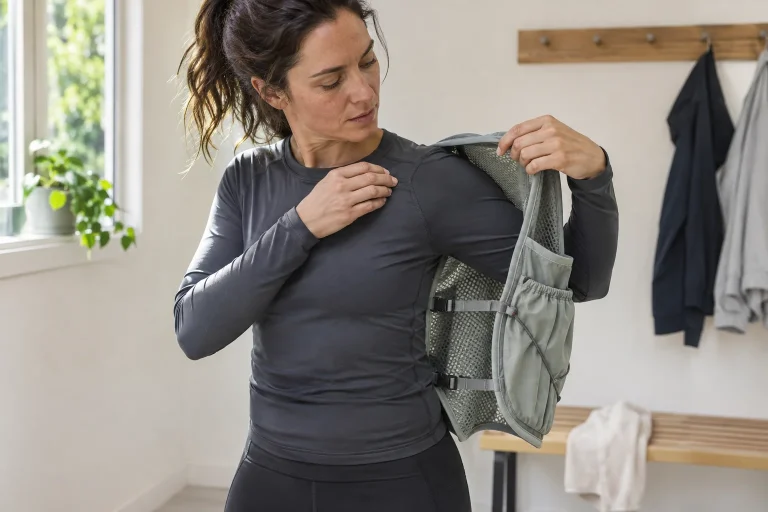
Gloves or a neck tube are easy to put away as you move, so they often fine-tune your clothing better than another thick jacket. Do not automatically buy a complete kit: first observe what gets cold or soaked on you and which items you can manage comfortably. Also try operating your phone and getting out your keys while wearing gloves.
With glasses or a light, misting and rain are separate issues to solve. Fabric pulled in front of your face can affect where your breath escapes; you can test this on a walk of a few minutes. If equipment regularly obstructs your vision, do not try to get used to it halfway through a session. Change your clothing combination or route.
Have a dry top or a direct journey home ready for the end of the run. If you drive to your running location, put the change of clothes somewhere accessible in advance. If you use public transport, plan the end of your loop and the stop together. The twenty minutes before a warm shower matter just as much as the last kilometre of the session.
Seeing and being seen need separate checks
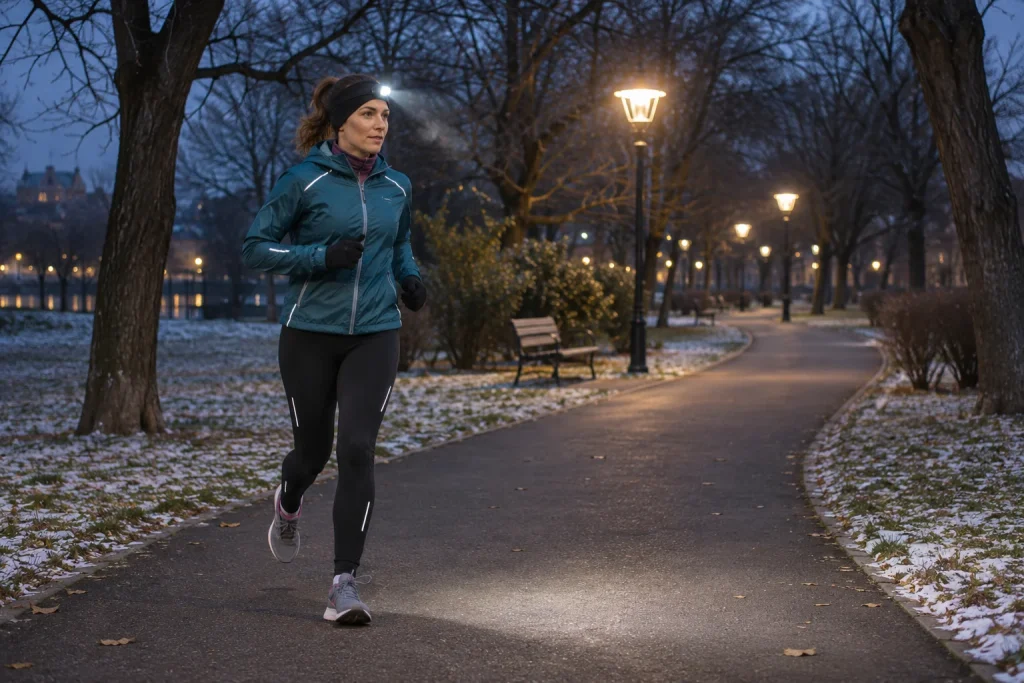
Reflective material helps when light shines on it. Your own light can also help you recognise the ground and route. Neither automatically replaces the other. Before leaving, check that your bag or jacket does not cover reflective areas and that your light really illuminates the surface ahead.
Maximum brightness alone is not a good enough basis for choosing a light. Beam distribution, attachment, battery life, charge level and how much you dazzle approaching people all matter. A familiar loop with street lighting may require a different solution from an unmarked woodland path. Check the settings while stationary.
With a running partner, test how visible you are to each other from the front, side and back. No photo shoot is needed: moving a few metres away can show what a backpack hides. This is only a practical check, not a road-safety guarantee. On roads and shared surfaces, local rules, attention and predictable movement remain important.
Choose the session to suit the ground
One of winter’s biggest traps is that even a familiar loop is not always the same. Wet leaves, a thin layer of ice, mud and a hard-to-see verge can occur side by side. A few secure steps do not establish that the whole route has adequate grip. Pay particular attention to changes around bridges, shaded areas and overpasses.
If the ground continually forces you into hurried, uncertain steps, a pace target loses its purpose. Shortening the outing, walking or exercising indoors is then a good decision. A shoe’s tread can help on certain surfaces, but equipment does not provide a blanket exemption from the risk of an icy route. Test new traction aids in controlled conditions first, too.
Do not set out on unfamiliar terrain in darkness expecting your daytime pace. Navigation and reading the ground can demand more attention. Before joining a group run, ask about the surface, the lighting required and whether there is a point where turning back is easy. “An easy loop” can mean very different things to different groups.
Start gradually and keep waiting brief
Prepare the timer, music and route indoors so you are not searching for settings while standing in the cold. Use walking and easy movement during the first few minutes to ease into running. Warming up does not promise that speeding up is a good idea on any surface or in any condition; circumstances can change the whole plan.
For a group run, agree on a precise meeting point and start time. If someone is late, the whole group should not stand in the wind for a long time in sweaty clothes. You could do a short loop back to the meeting point or agree on a sheltered waiting place beforehand. A simple group rule prevents much unnecessary uncertainty.
Even after a relaxed start, do not try to reproduce your summer pace at any cost. In wind, thicker clothing and more difficult underfoot conditions, times are less comparable. The day’s task might be easy continuous movement or a shorter walk–run outing. Define the purpose before leaving, making it easier to let go of the number on the screen.
 Enlarge diagram
Text version of the illustration
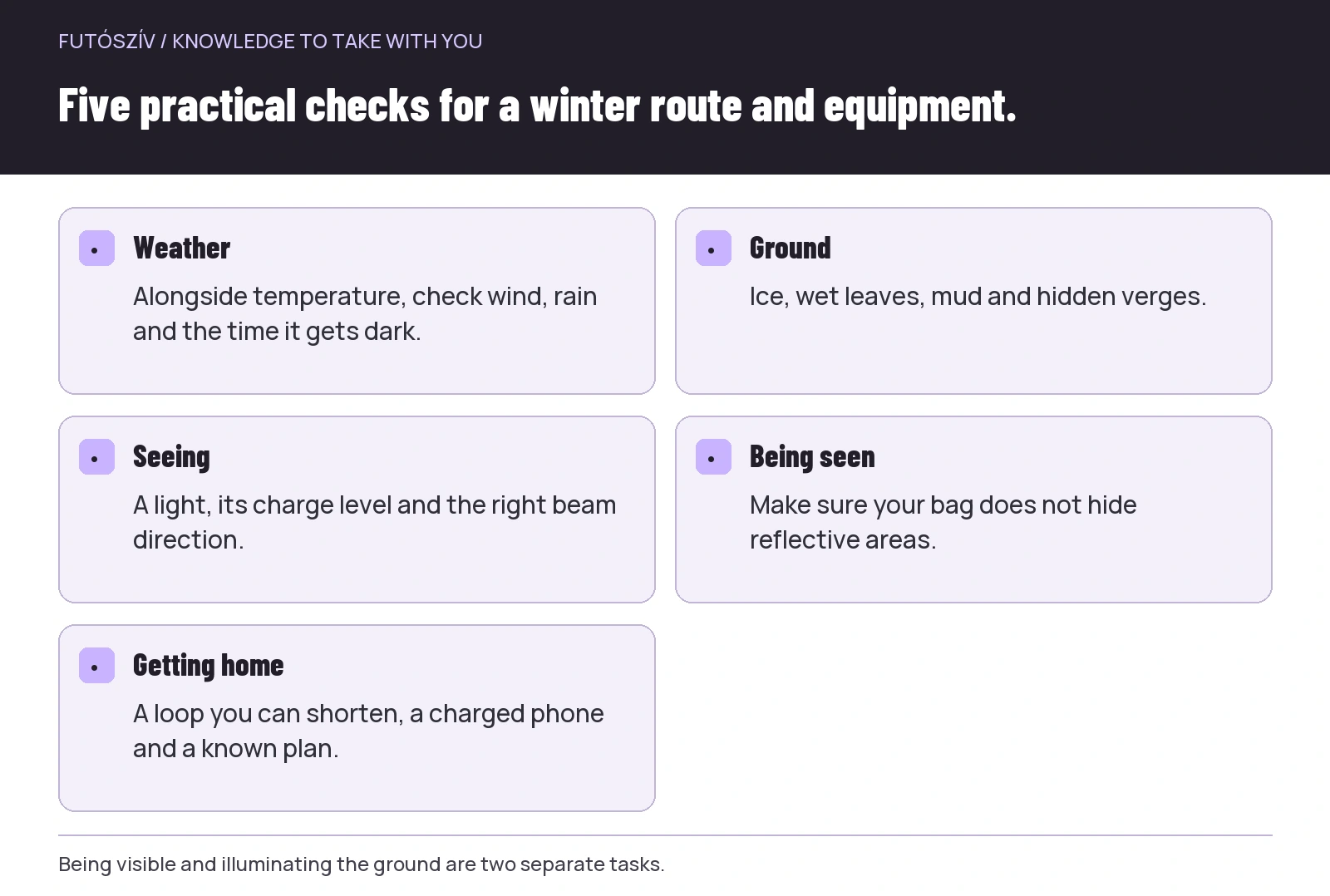
- Weather
- Alongside temperature, check wind, rain and the time it gets dark.
- Ground
- Ice, wet leaves, mud and hidden verges.
- Seeing
- A light, its charge level and the right beam direction.
- Being seen
- Make sure your bag does not hide reflective areas.
- Getting home
- A loop you can shorten, a charged phone and a known plan.
Cold can interfere with measurements too
A wrist-based heart-rate reading is not equally reliable in every condition. The Garmin manufacturer guidance mentions cold weather and so-called cadence lock among possible causes of inaccuracy. With the latter, the optical measurement can confuse the rhythm of movement with heart rate.
If an unusual graph suddenly appears during a comfortable conversational run, check your watch’s fit and treat the suspect section cautiously. At the same time, do not automatically explain feeling unwell as a measurement error. Interpreting the display and responding to your own symptoms are separate matters.
Instantaneous GPS pace can also jump around in narrow streets or at turns. You can choose a longer average or a simple time-based session. In darkness, needing to look at your wrist less often is especially useful. Technology helps when it supports navigation and the purpose of your session rather than distracting you from your surroundings.
When should you turn back, and when is help needed?
You do not need to wait for a serious problem. If you cannot move safely, your clothing is soaked or the route is worse than expected, turn back at the nearest safe opportunity. This is precisely why a short loop and an exit point you know in advance make good winter defaults. A number in a running programme does not change the conditions outside.
The CDC lists confusion, clumsiness and slurred speech among warning signs of hypothermia. Someone affected may not be able to judge their situation well. Severe illness, altered consciousness or chest symptoms require urgent help; in Hungary, the emergency number is 112. Do not leave an unwell person alone.
The National Institute on Aging guidance also recommends telling someone your outdoor route and carrying a charged phone. Even for a short winter loop, sharing a plan is useful: where you are going, roughly when you will return and what you will do if you need to change it.
Five minutes of preparation for next time
When you get home, put the light on charge, dry equipment according to its instructions and check which items worked well. Note a pocket that was difficult to open, gloves that became soaked or a section of the loop that regularly causes problems. These small improvements often make a winter routine comfortable.
Do not write down only a distance target for the next session. Add a route, a turnaround option and an indoor alternative. If you see running as a series of sound decisions, a shorter, considered outing can also be a successful day. Consistently recognising when to adapt during winter also contributes to spring preparation.
Choose one small improvement for the following week. You might always put your light in the same place or walk your after-dark loop in daylight. A well-established habit makes preparation easier on every later outing.
Sources
For the health risks of cold weather, we used the CDC, American Heart Association and National Institute on Aging information linked above; for the limitations of optical heart-rate measurement, we used Garmin support material. The clothing and route-planning examples are our own editorial suggestions. This is not individual medical advice and does not replace assessing current weather, traffic and health circumstances. Sources checked: 18 November 2026.
How Futószív articles are prepared: our editorial guidelines.