Nothing bothers you in the opening minutes. Later, burning develops at the underarm and you keep pulling the neckline away. Blaming the fabric is easy, yet problems often emerge where cut, seam and equipment above meet. Soft textile can rub when it folds in the wrong place; a long-reliable shirt can behave differently under a new vest. Touching it on the shelf is therefore insufficient. Learn the garment through your own movement and full setup.
First, specify what bothers you
Separate pulling, pressure, warming and rubbing. All can feel unpleasant but require different observations. For pulling, trace where fabric stretches; for pressure, look for an edge, buckle or overlapping layer; for rubbing, identify repeated movement at the same point. The MedlinePlus information relates chafing to skin friction against skin, clothing or materials. This does not mean you can identify every skin symptom as chafing yourself.
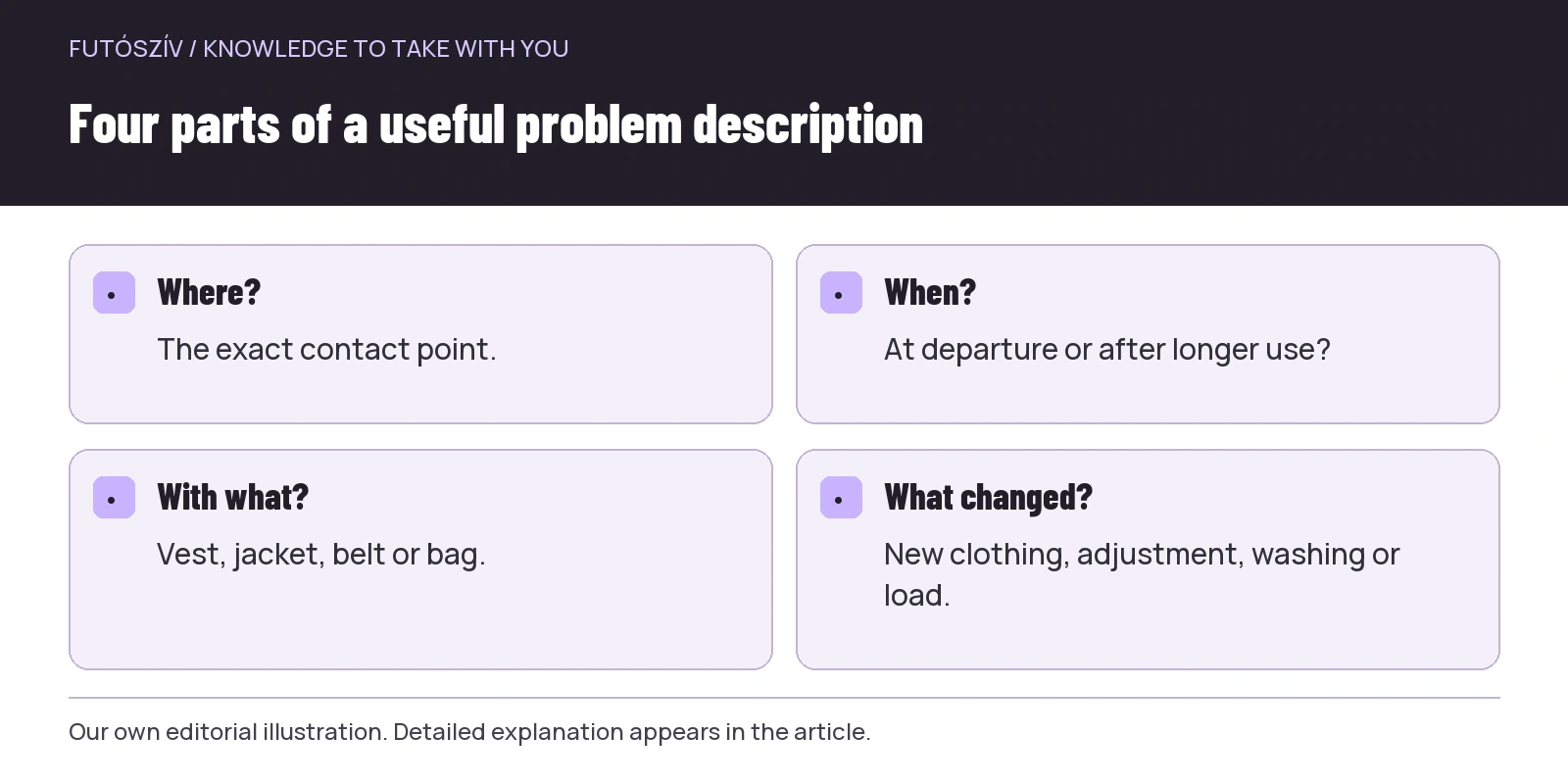
Name the location precisely too: neckline, front or back of the underarm, shoulder tip, chest, back or waist. Note onset, layers above and any adjustment. If the shirt bothers only under a vest, assess their interaction rather than necessarily discarding the whole top. If different clothes cause symptoms at the same point, another purchase is not automatically the answer. A good description is not diagnosis; it helps separate equipment and health questions where needed.
Turn the top inside out before wearing it
The inside reveals details absent from product photos. Examine seam thickness, meeting edges, labels, bonded edges and stiff decoration. Run a hand gently along them, looking for sharp, hard or protruding spots. This is not a complete comfort test but explains construction. “Flat seam” may indicate a favourable design without guaranteeing placement will suit your movement. Location and contact matter as much as thickness.
With older tops, check twisting after washing, pilling, hardened or damaged areas. Failing seams, peeling bonds or partly detached labels create new contact. Fading and functional faults differ. Every wear mark does not require replacement, but do not overlook rubbing edges. Adapt repair to material and purpose. Avoid random cuts or stitches in waterproof or other specialist layers.
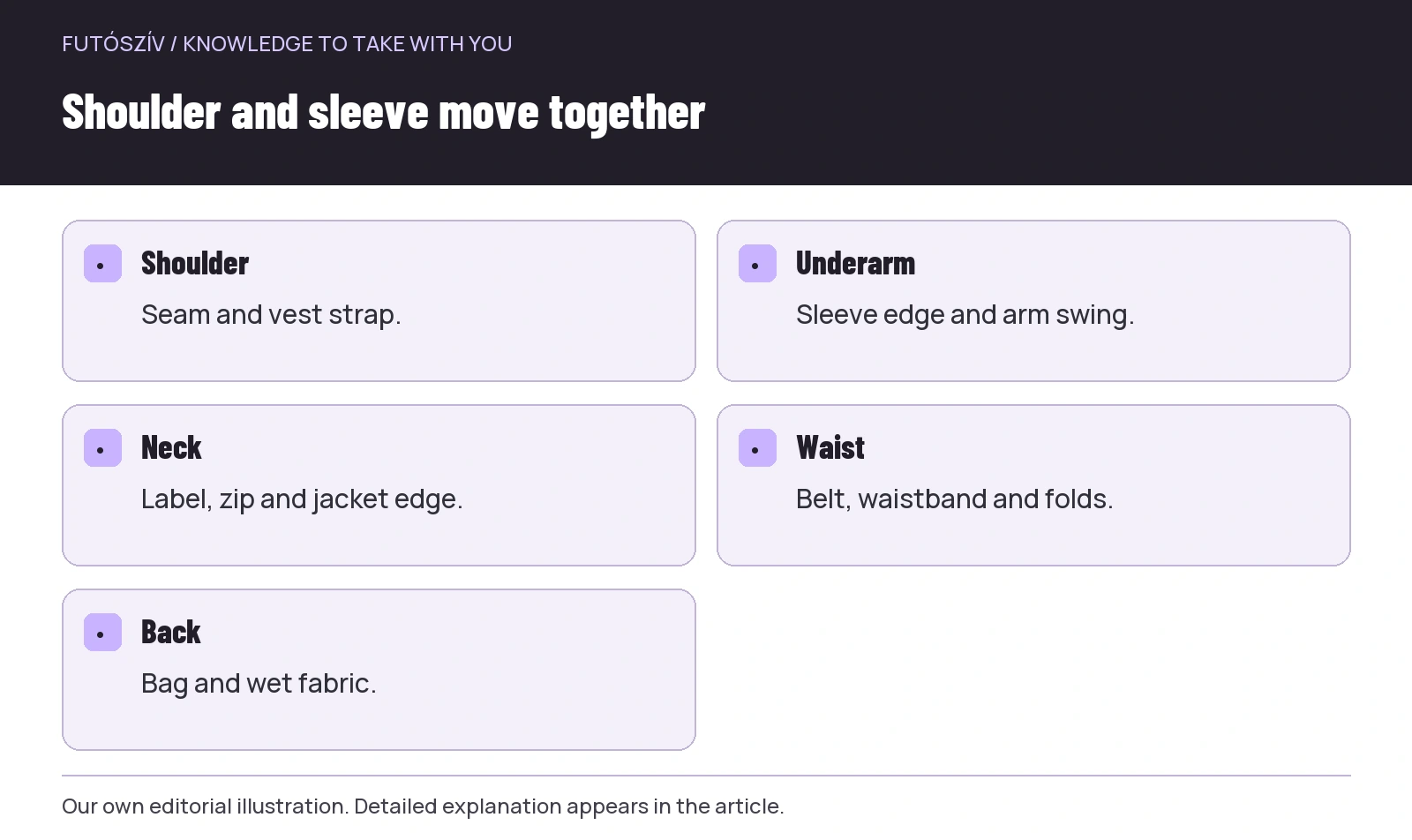
Shoulder and sleeve move together
Shoulder-seam placement affects where a top meets vest or backpack straps. Raglan and traditional shoulders position seams differently; neither is universally better. Wear it, relax shoulders and swing arms naturally. Watch pulling at the neck, a rising hem or tension across the back. Do not pose with an exaggeratedly lifted chest for the garment. It must allow your familiar running movement.
Sleeve length and looseness change underarm contact. A tight short edge can sit where every arm swing touches skin; excessive fabric can bunch beneath a vest. Examine free movement and repeated contact. If the torso fits but sleeves do not, another cut may suit better than increasingly large versions of the same top. Size and shape differ. A suitable label number does not override actual experience.
 Enlarge diagram
Text version of the illustration
- Shoulder
- Seam and vest strap.
- Underarm
- Sleeve edge and arm swing.
- Neck
- Label, zip and jacket edge.
- Waist
- Belt, waistband and folds.
- Back
- Bag and wet fabric.
Neckline and zip: a small area with much movement
Observe the neck edge standing and moving. Does it press at the collarbone, slide backwards or place a label where head and shoulder movements repeatedly rub it? On zipped tops, inspect the closure’s upper end and protective flap. A pull away from skin standing may approach when bending. A jacket above can press the two neck sections together. Test the whole combination rather than judge clothes in isolation.
Be able to operate a ventilation zip too. A number, vest or another layer covering it makes the intended function less accessible. Open and closed positions can hang differently, so move briefly in both. Do not immediately reshape a new neckline with scissors before exploring exchange and repair. Cut edges may create another problem. A simpler well-fitting design often works better than a complicated technical piece needing continual adjustment.
Assess the hem with your shorts or trousers
A top’s lower edge may meet a waistband, running belt or vest edge. Fabric bunching there creates repeated contact in motion. Test how you intend to wear it, tucked or untucked. A short top may ride up with arm swing, while a long one can gather at the waist. No universal length suits everyone; torso proportions and other garment positions decide. Examine the whole movement, not just a mirror silhouette.
Loading a running belt can change shirt behaviour. A phone or bottle may press against fabric; a sliding belt can drag it. If symptoms occur only with full equipment, inspect object placement too. Another material does not solve every rub. Rearranging a pocket or adjusting a strap may be more precise. A good solution changes the provoking situation rather than adding another layer at the same point. Recheck the revised setup on a short, easy run.
Dry feel and wet wear
Fabric touched dry in a shop differs from its state during a longer run. Moisture, shifting material and outer layers can change sensation. The American Academy of Dermatology information on exercise and skin also addresses clothing fit and irritating friction. The practical lesson is testing in your own conditions, not prescribing one material for everyone.
Ask whether the system remains comfortable over longer use. Schedule a new top’s first test on a run you can shorten. Observe clinging, folds and needed layer changes, then note experience while fresh. Not every product needs a full diary, but recurring problems benefit from detail. “Left shoulder seam presses under a vest, not without it” is more useful than “bad when sweaty”, leading to a targeted next trial.
Labels cannot always be removed the same way
If a label irritates, inspect its attachment. A separate removable label differs from one caught in a structural seam or information printed onto fabric. Do not randomly undo supporting stitches or leave a hard stub. Preserve care information, perhaps in a photo, for later washing and repair. For a new undecided purchase, check returns too. Alteration is different from trying on.
Another cut, label position or garment may avoid contact at that point. Not every irritation needs home repair. Keeping a comfortable familiar top is valid if it still serves. Technical adjectives do not make replacement compulsory. If only branding or striking fabric appeals while several points bother during fitting, take that seriously. The top must work while running rather than look convincing on the shelf.
| Contact point | What to inspect | What to change |
|---|---|---|
| Shoulder | Seam meeting a vest strap | Strap adjustment or another seam line |
| Underarm | Sleeve space, edge and arm swing | Another sleeve shape or cut |
| Neck | Label, edge and zip end | Arrangement and suitable construction |
| Waist | Belt, waistband and bunching | Object position, length and layering |
| Back | Bag, seam and wet fabric | Trial of the full loaded setup |
 Enlarge diagram
Text version of the illustration
- Where?
- The exact contact point.
- When?
- At departure or after longer use?
- With what?
- Vest, jacket, belt or bag.
- What changed?
- New clothing, adjustment, washing or load.
Do not call every skin symptom an equipment fault
Seek healthcare help if symptoms fail to improve, worsen, recur or are not clearly associated with clothing contact. Irritation and skin diseases differ, and an equipment guide cannot distinguish them. The Baylor College of Medicine expert material also separates friction-related and other irritant situations. This article therefore recommends no medicines, disinfecting recipes or piles of new cosmetics. A specific symptom needs appropriate assessment, not another online product list.
Increasing discomfort while running is not a performance trial either. Stop safely and check the arrangement; if it cannot be addressed simply, change or end the outing. Testing clothes does not justify further rubbing damaged skin. Make the next trial in suitable condition and circumstances. With recurring problems, notes on running, clothes and equipment also support a professional discussion. They improve its precision rather than replace it.
Care can change the way clothing feels
Wash and dry by the top’s instructions. Excessive heat, unsuitable products or damaged bonds can alter fabric and edges. Afterwards check twisting, hard deposits and zip or label placement. If a comfortable item suddenly becomes troublesome, care and use history matter too. Do not immediately attribute change to your body or “tired” fabric. Find the part that actually changed.
Repairs must preserve comfortable inner contact too. A durable-looking but thick, hard patch can cause new problems. Tell the repairer about repeated arm swing, possible vest use and skin-contact points. Explore the repaired item again on a shorter easy run. Restoring function means more than hiding a hole. Specialist weather protection can make appropriate manufacturer or professional repair especially important.
Recognising a reliable top through precise observation
A good running top moves appropriately with you, stays comfortable with layers and avoids constant adjustment. It need not use the newest textile or special cut name. Inspecting inside, trying natural movement, checking full equipment and a short outdoor test tell more than touch alone. With problems, find precise location and circumstances. These lead to sensible changes: another seam line, better arrangement or a shape that suits you.
Sources and further reading
- MedlinePlus: chafing
- American Academy of Dermatology: exercise and skin
- Baylor College of Medicine: heat and skin irritation
How Futószív articles are prepared: our editorial guidelines.