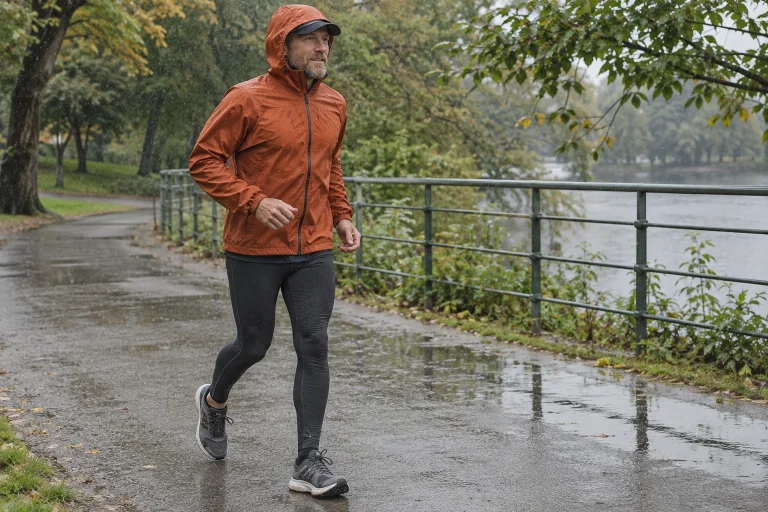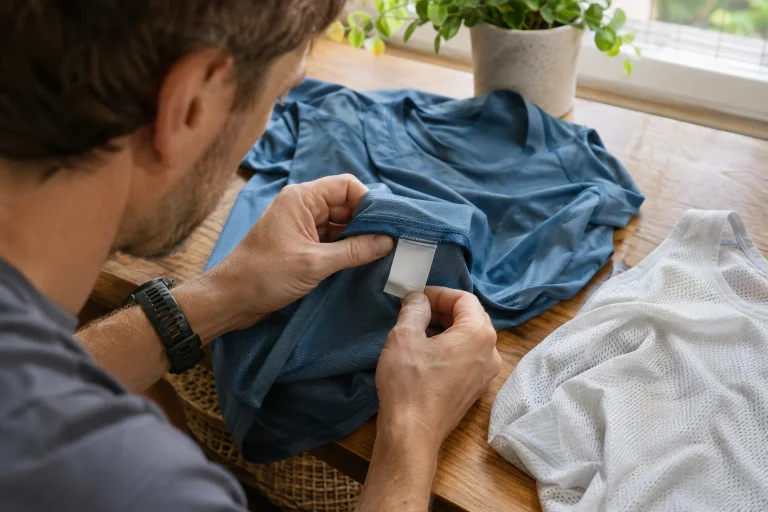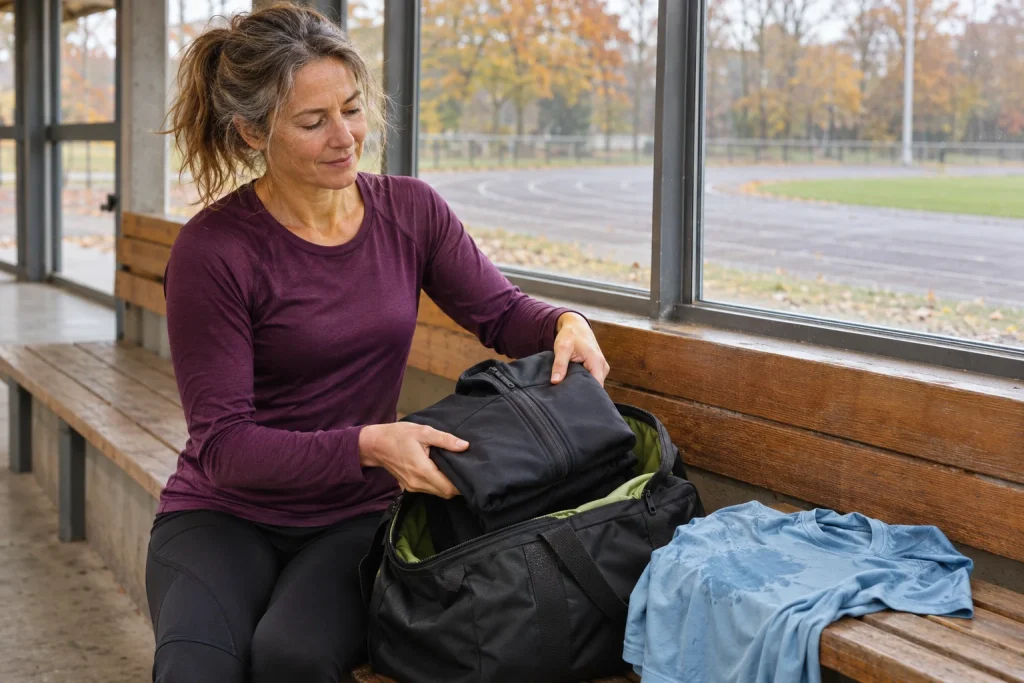
The top felt comfortable while running, yet you feel increasingly cool after stopping. Wet fabric touches you, the trackside is windier and a situation filled with movement has become waiting. One explanation is that water remaining in the garment is still present and can evaporate after activity decreases, while the balance between the body’s heat production and heat loss changes. Finishing a run is therefore a clothing transition in its own right, not simply an unchanged continuation of the final running minutes.
If you feel cold, do not remain in wet clothing for the sake of the explanation. Find a sheltered, warmer place and arrange dry clothing. Confusion, unusual clumsiness, slurred speech, marked drowsiness or suspected hypothermia require urgent help; call 112 in Hungary. Do not test shivering or worsening condition through another run. This article explains an everyday clothing transition, not a home diagnosis of why you feel cold.
The end of activity and water content of clothing do not change together
Stopping does not suddenly make clothing dry. Moisture accumulated during the previous section may remain within or near the fabric, leaving through a different process over time from the way you finish training. A wet layer close to the body is therefore still present in the new, quieter situation. This explains why comfort during running alone cannot establish whether waiting in the same top later will feel comfortable.
The introduction to the 2025 study Drying Performance of Fabrics on the Human Body also discusses the role of water accumulated in textiles in cooling after exercise. Moisture produced during activity can evaporate later, when the earlier need for cooling is different. The research itself examines fabric samples and drying arrangements, rather than timing an individual danger period. It provides background for taking garment water content and its change over time seriously.
As an original example, imagine two finishes. After one, you immediately reach a sheltered changing place; after the other, a long conversation follows beside an open track. A top that felt identical at the finish can enter different environments. Your clothing question should therefore include what happens after stopping. You do not need precise predicted heat loss to organise these two situations differently.
Evaporation is independent of the stop button
Evaporating liquid water requires energy. In wet clothing, this process is part of heat exchange between clothing, skin and environment; every quantity of evaporated water does not affect the body identically. Material contact and placement matter too. The everyday point is that stopping an activity on a watch does not automatically stop fabric drying or heat exchange associated with the wet layer.
Arrangement was precisely an important question in the drying research: one- or two-sided drying, contact with a warm surface and stretching created separate situations. Do not calculate your own degrees of cooling from it. The study illustrates why material in contact with the body should not be imagined identically to a shirt hanging freely on an empty drying rack. Different situations call for different observations and measurement interpretations.
Nor should “quick-drying” automatically be read as warmth after exercise. A statement about water leaving faster and your current comfort answer different questions. If you feel cold while waiting after the finish, a labelled benefit is no reason to wait for complete drying on your body. Appropriate surroundings and accessible dry clothing are more immediate practical tasks here.
 Enlarge image
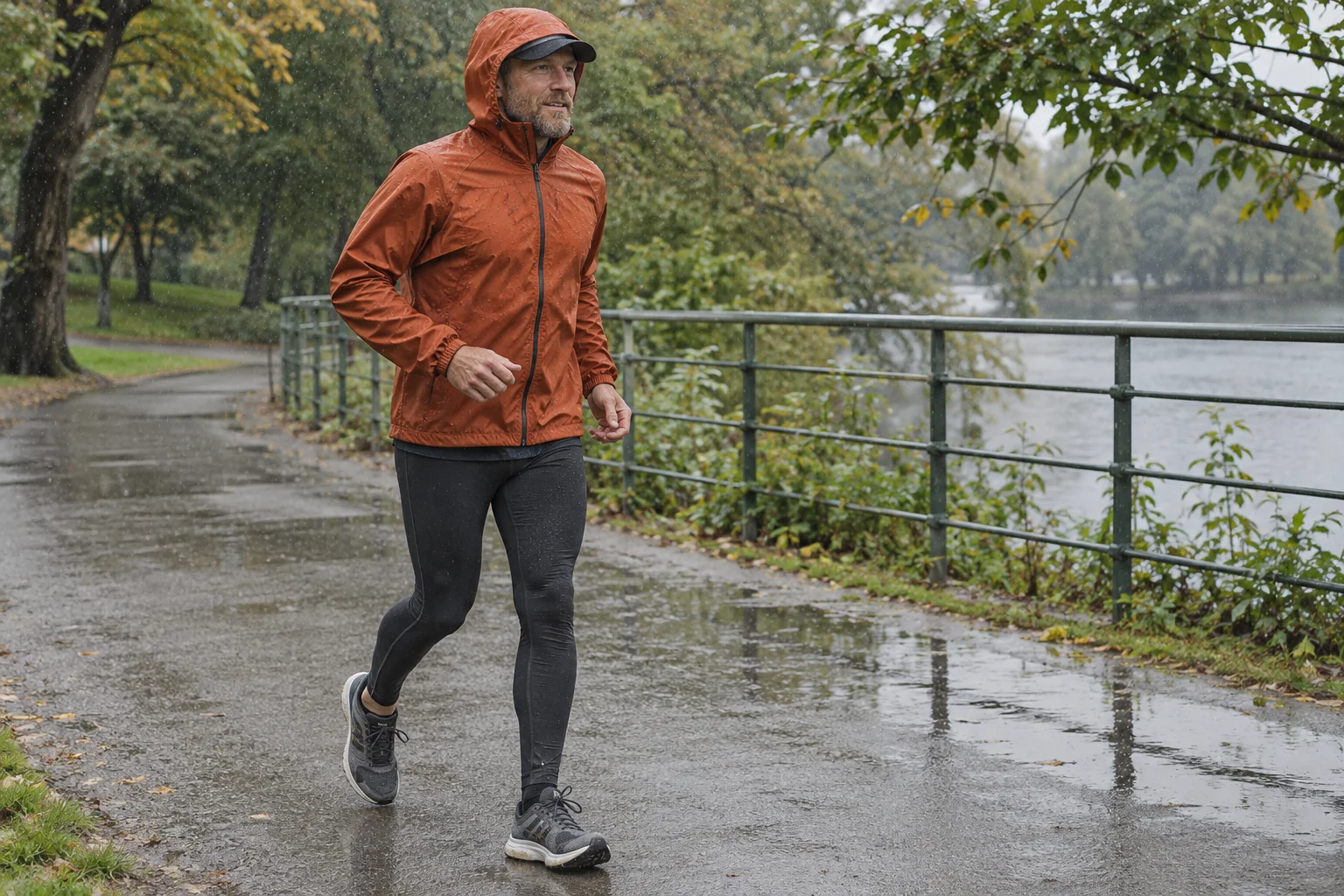
Wind and surroundings remain part of the picture after stopping
When you reach an open place from a sheltered route, more than your activity may change. Air movement and the environment around wet clothing can differ too. In its wind-chill explanation, the National Weather Service discusses wind’s contribution to increased heat loss. The associated index must not, however, be read as a direct measurement inside clothing or of core body temperature. One displayed feels-like number does not describe all your circumstances.
For practical planning, name the actual stopping place instead. Is there a more sheltered point, is an enclosed space available and can you change calmly into dry clothes? A roof and a warm interior offer different options: the former may prevent further precipitation while remaining cool. Do not replace specific conditions with a general label. What matters for your departure plan is what actually awaits when the run ends.
If you want to talk after a group run, adapt the meeting point accordingly. The social part can remain after everyone has changed, or you can move somewhere more sheltered. You do not need to stay in the same wet top for the company’s sake. A short plan stated beforehand is simpler than looking for the bag and a usable room after unpleasant cold has already developed.
What does a small clothing study show about the transition?
In Abedin and DenHartog’s study, twelve men wore long-sleeved tops made from different materials during controlled cycling and a subsequent drying phase. The environment was approximately 15 degrees Celsius with specified humidity, followed by a windier drying phase. Wool, cotton, viscose and polyester garments were examined. The question concerned clothing and physiological responses during activity and the period afterwards.
In that arrangement, the wool top was associated with higher torso skin temperature and more favourable post-exercise thermal sensation and comfort ratings. This is interesting for the transition, but does not prove every wool garment is better for every runner in every season. The study involved a small male sample, particular tops, cycling and controlled surroundings. It does not impose a compulsory material choice for your next run.
The lesson for a reader is instead to examine the post-run period separately. Liking a garment during activity and the feeling afterwards are not necessarily the same assessment. You can ask of research: which phase and which participants did it concern? This keeps an interesting result in its proper place instead of turning it into a material hierarchy for every situation.
Unpleasant cold and suspected hypothermia need different assessment
The unpleasant feeling of a wet shirt alone does not establish hypothermia. Equally, cold exposure and worsening condition must not be dismissed as mere clothing discomfort. According to the CDC, moisture can permit dangerous cooling in cool conditions that are not necessarily extremely freezing. No single outside temperature therefore allows a runner waiting in wet clothing to consider their own condition automatically safe.
Shivering, exhaustion, deteriorating coordination, confusion, slurred speech or unusual drowsiness need attention. For suspected hypothermia, seek urgent medical help without waiting for an app to confirm it. In Hungary, call 112. Meanwhile, protect the person from further cold exposure, find a warm sheltered place and dry covering. Do not leave someone with altered awareness or marked weakness alone.
In your own training, do not expect clothing to have to dry on your body. If you are cooling uncomfortably, change the situation and seek individual help for persistent or worrying symptoms. This article sets no waiting period or permissible cooling calculated from heart rate. Actual condition matters more than the clothing label, the previous run or other people still feeling fine in the same place.
Arrange the first tasks after finishing beforehand
To organise the clothing transition, first decide what follows stopping. Do you immediately reach home, go to a car, wait for public transport or remain at the track? Actual access to a dry top can differ in each case. Spare clothes in a bag help when you can reach and use them at the appropriate moment. Storage location and the changing environment therefore belong in the plan together.
As a practical sequence of your own, you can identify a sheltered point, prepare familiar dry clothing and only then begin longer tasks requiring you to stay there. This is not a mandatory minute-by-minute protocol for every running day. It is a simple way to prevent phone analysis, messages and conversation quietly postponing a necessary change. An easy step suited to your own routine is worth more than a complicated list rarely followed.
At an event, learn the current finish-area, bag-drop and exit arrangements in advance. Do not improvise a route on site without knowing whether it is passable. Options communicated by the organiser and your own bag plan help together. If someone is unwell or shows signs of hypothermia, seek the event’s medical help immediately too; normal bag-drop procedures do not take priority over urgent care.
 Enlarge image
Personal observation: give the end of the run a diary line too
You do not have to wait deliberately in the cold to assess clothing. After an otherwise suitable run, briefly note what happened on stopping. Where were you, which layer remained on, how wet did the fabric feel and when could you change? These are verifiable details of your day. If you felt cold, resolve the situation before taking notes; the diary is no reason to preserve uncomfortable conditions.
Separating impressions during and after running can be particularly useful. For example: “Comfortable while moving; felt damp and cool while waiting beside the open track.” This preserves more information than calling the top good or bad for the whole day. The note is not measured body temperature, so do not convert it into degrees of cooling. The particular personal situation is generally useful by itself for planning next time.
Notice what changed between days when comparing. Was the waiting place different, did you add a layer or reach spare clothes sooner? If several circumstances changed, an improved feeling cannot confidently be attributed to one material. The diary’s job is not a personal laboratory ranking, but recognising which clothing transition needs better organisation. A dry top stored in a better place may be the simple lesson.
A useful clothing system prepares for stopping too
Think through running clothes as part of the entire planned day. The active layer, any outer protection and later dry clothing may serve different tasks. New material is not the answer to every problem. First consider how existing items can make the transition simple and comfortable, and which actual gap might later need suitable equipment.
Textile research provides background: water location, the material’s surroundings and the post-activity phase matter separately too. In your own programme, translate this into clear questions. What stays on after I stop? Where is shelter? When and how can I reach dry clothes? Neither a quick-drying label nor one interesting laboratory result answers these for you.
You can therefore treat the end of a run as a deliberate transition. Continued evaporation from a wet top becomes more understandable, but you need not wait passively for it. Respond to feedback about comfort and condition, and seek help for worsening or worrying symptoms. The explanation aims precisely to make the situation easier to understand and the necessary practical step easier to take in time.
Sources and the scope of reported findings
Background on moisture in textiles comes from the study Drying Performance of Fabrics on the Human Body. The smaller clothing study is Clothing impact on post-exercise comfort: skin-clothing physiology in transient environment. Interpretation of wind is supported by the National Weather Service explanation, and recognition of hypothermia and basic actions by the CDC information and the CDC symptom overview. Checked: 21 November 2026. The diary and post-finish organisational examples are our own editorial suggestions; they do not replace individual medical assessment.
How Futószív articles are prepared: our editorial guidelines.