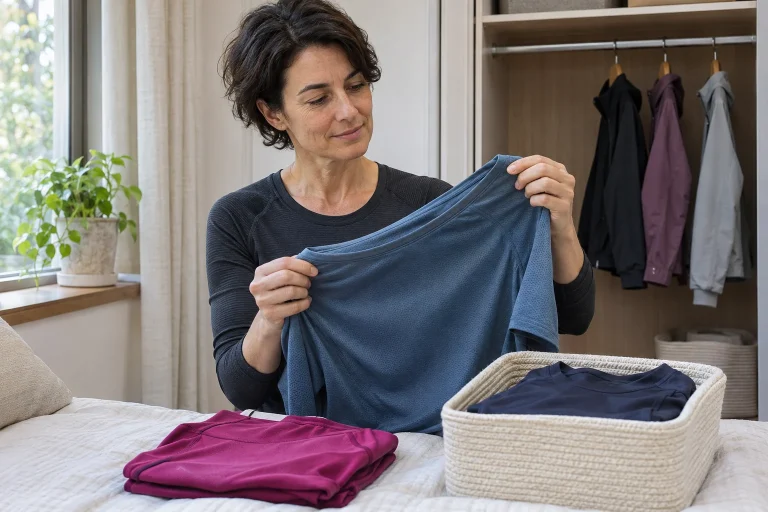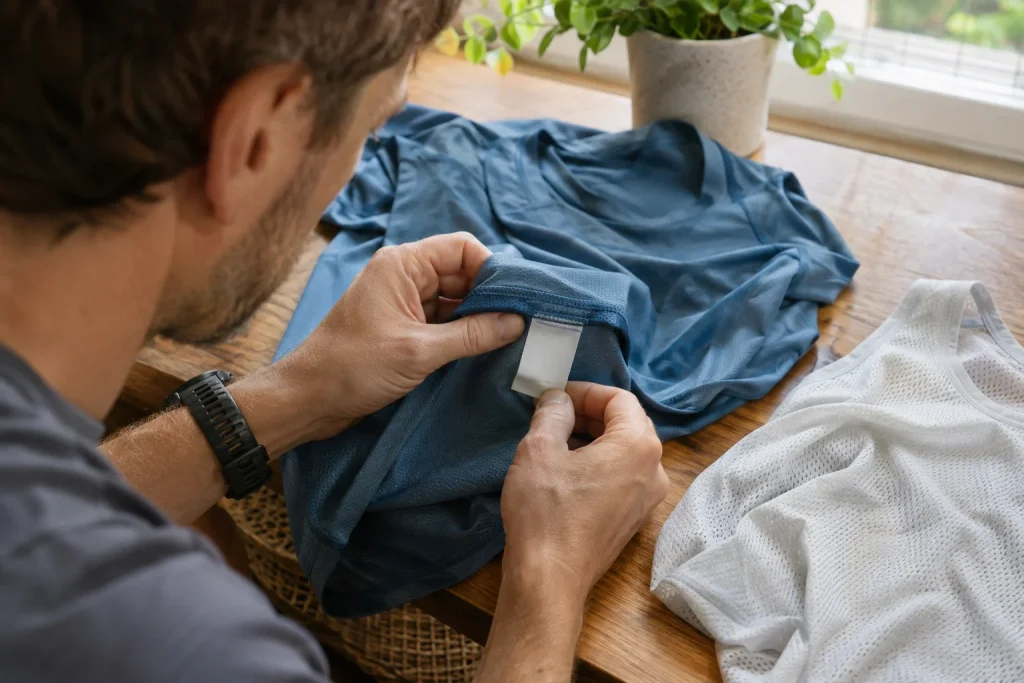
Fibre composition on a running-clothing label matters, but it is not a complete user guide. Percentages may identify fibres named by the manufacturer for a particular part; they do not automatically establish the whole garment’s warmth, drying time, comfort or durability. Fabric structure, thickness, cut and construction contribute too. This article explains reading the label alongside other product details, keeping certain conclusions as open questions and connecting material knowledge with real use.
First identify which part’s composition you are reading
A simple top may have one material list; another garment may list main fabric, inserts and lining separately. Do not automatically combine these or extend them across the whole product. Find component names, then locate those parts on the garment. A mesh back panel and denser front can differ structurally despite sharing fibre names. Several materials and accessories can form a finished product; identifying the scope of the information comes first.
The EU Your Europe textile-labelling information treats composition disclosure separately from other information such as care. For runners, these fields answer different questions. Composition identifies named fibres; care states permitted treatment of the finished product. Do not infer one from the other. The garment label and manufacturer additions together provide a useful starting point.
A fibre name is not the same as a fabric
Fibre can become yarn, then a textile with a specific structure, followed by further treatment. Clothing is also cut, sewn or assembled otherwise. The same fibre name can therefore occur in materials with many textures and purposes. A thin open-structured top and thicker brushed inner layer can both list polyester while serving different situations. Percentages cannot describe every stage shaping final performance. Examine clothing together with its construction.
The Polartec Power Grid manufacturer description , for example, discusses the grid construction’s role separately. This explains one technology, not an independent comparison of every similar textile. It illustrates construction as information distinct from composition. One fibre can create different surfaces, thicknesses and three-dimensional structures. Seek construction details when buying rather than expecting one material name to answer every use question.
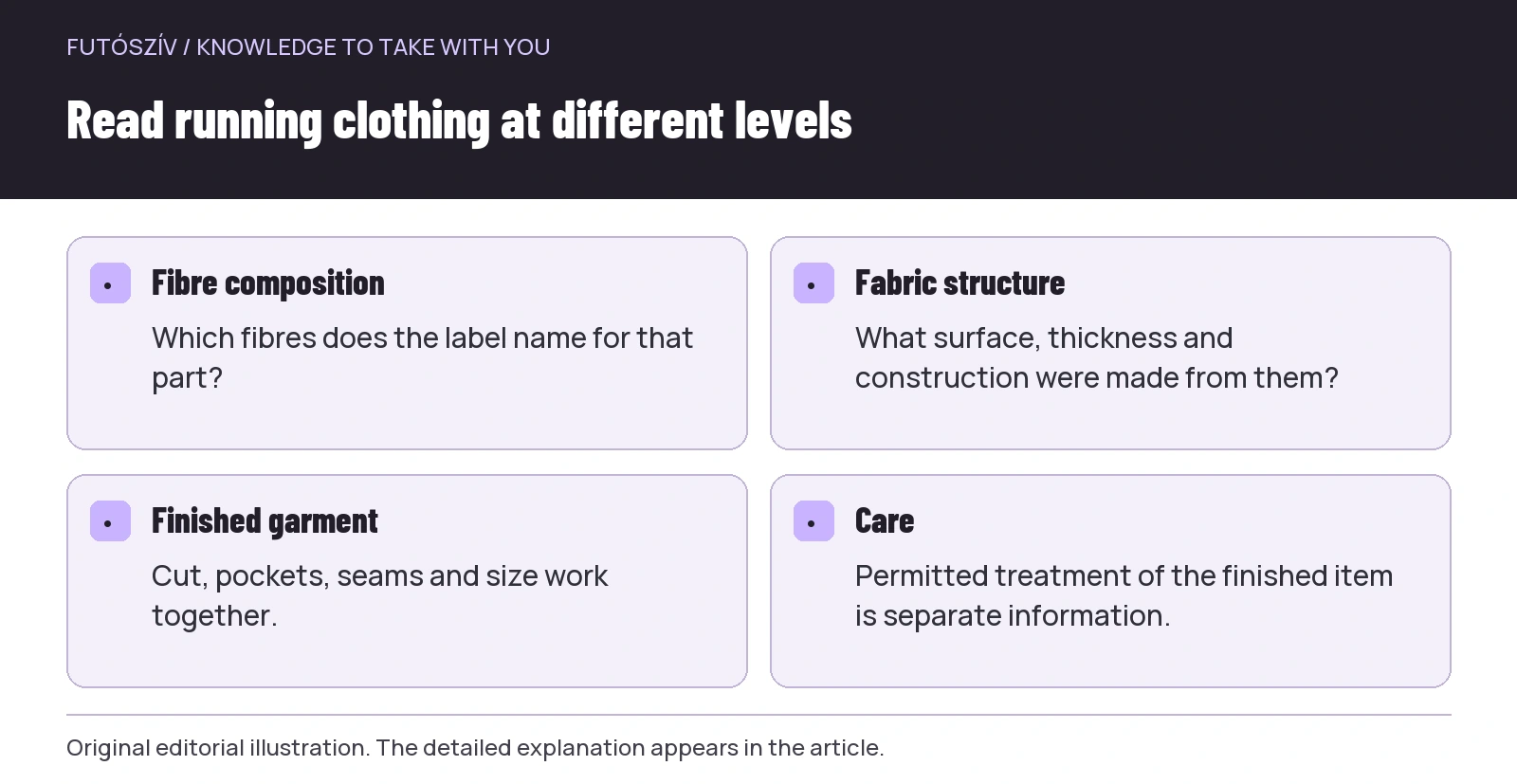 Enlarge diagram
Text version of the illustration
- Fibre composition
- Which fibres does the label name for that part?
- Fabric structure
- What surface, thickness and construction were made from them?
- Finished garment
- Cut, pockets, seams and size work together.
- Care
- Permitted treatment of the finished item is separate information.
Mass, thickness and total garment weight
A product’s fabric mass per unit area is not the complete top’s weight. A value per square metre belongs to the material; size, cut, zips, pockets and other parts contribute to the garment. Compare information only on an appropriate basis. Which size does product weight concern, are accessories included and are you comparing the same garment type? Do not fill missing detail with assumption. “Lighter” alone cannot mean better in every situation; necessary function and design matter.
A thicker-feeling material does not directly prove one fibre’s percentage either. Examine the inner surface, raised areas and garment layers. Comparing a lined outer layer with a simple T-shirt can mislead if only composition is considered. Keep separate notes for fibres, structure and finished-garment features. Instruments are not needed for everything: where data is absent, record observation and questions rather than artificially precise estimates. Clear distinctions already improve comparison.
Elastane percentage is not an independent stretch ranking
Elastane can feature in blends designed to support movement and shape recovery, but its percentage alone cannot establish the finished garment’s behaviour. The LYCRA SPORT manufacturer description , for example, assesses finished textiles’ stretch, recovery and fit characteristics separately within its system. This is a manufacturer method description, not an independent ranking of all running clothes. Examine the actual garment and its data, rather than using the percentage as a complete elasticity ranking.
During a trial, observe normal movement rather than forcefully stretching material to its limit. Raising arms, bending knees or observing the waist can say more about your needs than competing label numbers. Comfortable trousers while standing should also be checked with intended pocket contents and movement within trial arrangements. Stretch does not automatically compensate for size: too-small clothing is not suitable simply because it stretches. Good fit combines cut and size.
The word wool leaves further details open too
The Woolmark explanation of wool fibre describes fibre structure and properties. This is useful background, not a performance test of a specific running top. Finished thickness, blend, construction and care still matter. Do not infer identical feel for everyone or one exact weather boundary from wool percentage. Observe personal comfort in the actual item and your use situation, following intended use.
For blends, distinguish what the manufacturer says about the finished textile’s purpose from your own assumptions. Seek technical product details alongside material list and marketing name. Do not choose care from a general idea of wool: the finished garment’s label may differ from another top sharing fibre names. No natural or synthetic material must be called best for every runner and situation. Task, fit and known care requirements support choosing a suitable specific item.
| Information | What does it help explain? | What does it not establish alone? |
|---|---|---|
| Fibre composition | Fibres in the named part. | The whole garment’s comfort and durability. |
| Fabric structure | Type of surface and construction. | Fit for your size. |
| Mass per unit area | Mass of the stated amount of fabric. | The whole garment’s weight in every size. |
| Finished garment weight | Weight of the specified version. | That it is better for every use. |
| Care label | Permitted care operations. | The whole product’s material origin or environmental ranking. |
Break sweat-management wording into questions
“Breathable”, “moisture-wicking” and “quick-drying” may concern different properties. Find how the manufacturer uses each and whether comparable testing conditions are provided. Do not invent an exact drying time from one fibre’s presence. In use, clothing works with other layers, wind, moisture and your movement. Product data remains meaningful within the conclusions it supports. Two products described with the same term may not have been tested by the same method.
When observing differences between your clothes, note conditions too. What was worn over it, what was the weather, how hard were you moving and what happened? Call this personal observation, not a general materials-science finding. The aim is a more useful question for your next choice. Different outcomes in different situations may not be explained entirely by composition. Structure, cut and layering can contribute too.
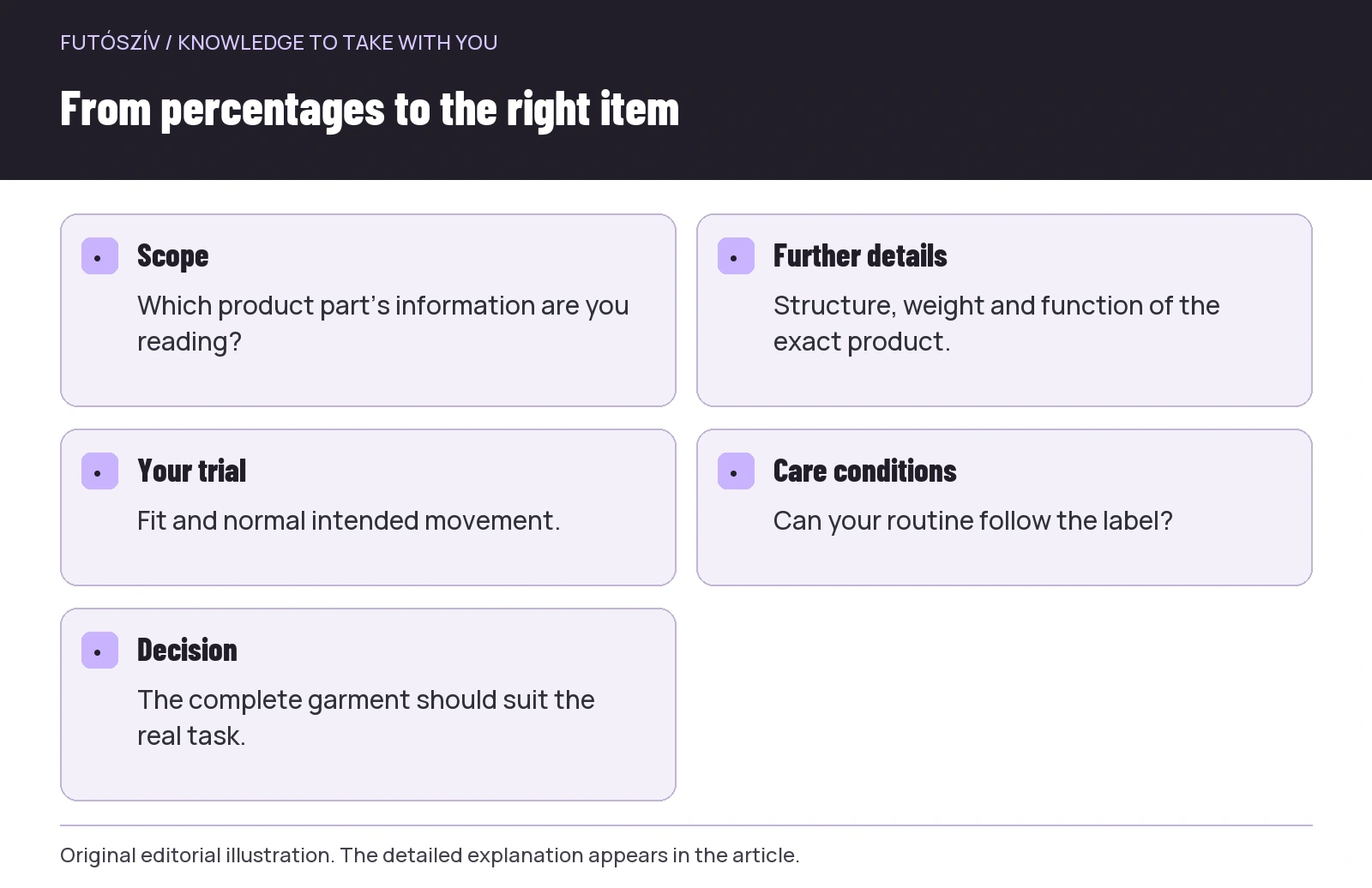 Enlarge diagram
Text version of the illustration
- Scope
- Which product part’s information are you reading?
- Further details
- Structure, weight and function of the exact product.
- Your trial
- Fit and normal intended movement.
- Care conditions
- Can your routine follow the label?
- Decision
- The complete garment should suit the real task.
Care requirements matter before deciding too
Before choosing something new, check whether your household routine can treat it properly. A garment needing a separate drying arrangement can work if you provide space and attention. If instructions would regularly be impossible to follow, recognise this before purchase. Composition does not automatically establish permitted wash temperature, tumble drying or product use. The finished label may account for prints, bonding and additions, so do not apply general fibre-care advice without checking.
Connect storage and repair questions too. Is guidance available, can a visible wearing component be replaced and will the label remain identifiable? Lasting use needs both an appropriate choice and care. One material need not make an environmental winner. A specific top or trousers fitting you, meeting a need and manageable to care for is a better starting point than an unchecked general promise linked to a material name.
Two identical labels, different questions
Imagine two tops with identical composition. One is thin with an open surface; another is denser with a brushed interior. Percentages alone do not explain when you would choose each. Examine structure, thickness, cut and purpose. In another illustration, two trousers list different elastane shares, yet your trial determines which fits and moves appropriately. The percentage cannot replace examining the finished item. These are teaching examples of label limits, not our product-test results.
For a third situation, consider a multi-panel jacket with clearly visible main-fabric information and separate lining and insert entries. Reading only the first line gives an incomplete picture. Find the whole specification rather than extending the first percentage across the garment. Labels provide useful information within their scope. Good reading preserves that boundary and adds appropriate questions instead of expecting too much from one number.
A simple comparison sheet
For two candidates, use identical fields: exact model, affected part, composition, structure, size and cut, important function, care and open questions. Copy only actual disclosed information and keep personal experience separate. Ask about missing fields or leave them blank. Missing data is not zero and does not justify borrowing the other product’s details. The aim is not an artificial total score, but seeing which choice you understand well enough for your task.
At the end, return to need. For which conditions and layer role are you seeking clothing, what must it carry and how do you want to care for it? Composition matters, but the whole garment exceeds it. Understanding this difference makes asking easier and reduces reliance on general rules tied to material names. The label then becomes precise information supporting equipment selection rather than a marketing adjective or mysterious number sequence.
Sources and further reading
- EU Your Europe: Textile Label
- Polartec: Power Grid construction
- Woolmark: What is the Wool Fibre?
- The LYCRA Company: LYCRA SPORT fabric technology
How Futószív articles are prepared: our editorial guidelines.