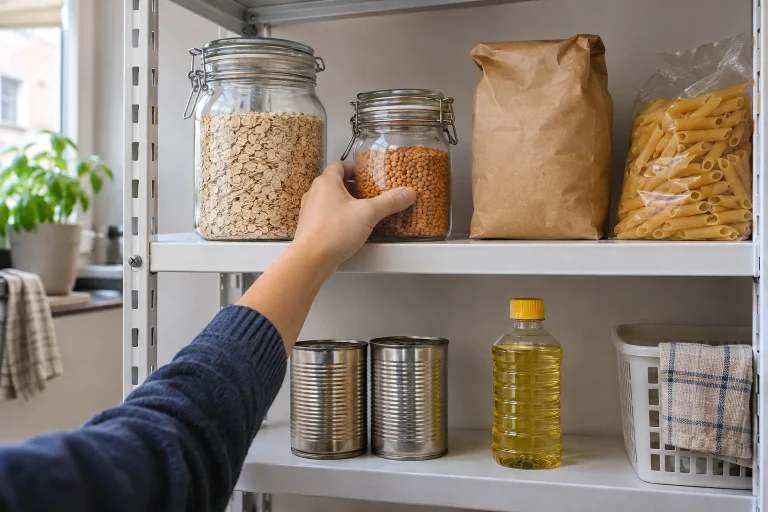
A vegetarian shopping list helps during a busy running week when its contents connect with actual meals. Listing vegetables, tins and unusual-looking ingredients is not enough on its own. A useful list also shows when each product will reach the table, what preparation it needs and what happens if there is no time for the planned dish. The aim is a stock of food from which you can make meals suited to your diet and needs, rather than copying a generic basket labelled healthy.
This article offers adult recreational runners an example of shopping organisation. It is not a personal weekly diet, a nutritionally calculated menu or a prescription of identical quantities for everyone. Even within vegetarian eating, people differ in whether they include eggs or dairy; describe your own choices precisely. If you have an allergy, illness or prescribed diet, check each product’s suitability separately. A sample containing dairy does not resolve the different planning questions of a vegan diet.
Start the list with three real situations in your week
Choose one meal eaten at home, one taken with you and one that requires little work. There is no need to write seven completely different days straight away. Start with situations in which suitable food is regularly unavailable. These might include an early working day, a late training session or cooking after a longer weekend run. Base the shopping list on the specific dish needed for that situation, rather than the general label of a running week.
For each situation, write down the food you want and the form in which you need it. For a pulse-based bowl, do you want a cooked or ready-to-eat base, or will you genuinely prepare dried ingredients? The difference affects both shopping and scheduling. If you do not specify it, a promising list can later produce unusable supplies. Words such as raw, dried, ready-to-eat and chilled can matter as much as the ingredient’s name.
Check your own vegetarian framework
The NHS guide to a vegetarian diet discusses several suitable protein sources and the role of variety. In shopping terms, this does not mean you must buy every product it mentions. Instead, have a few options that suit you and that you actually use. Do not judge the personal suitability of your whole diet from one large pack of cheese or a statement on a tin.
If you eat dairy and eggs, they can feature on your list according to your needs. If you do not, plan the necessary replacements and reliable nutrient sources separately. A similar kitchen function does not automatically mean the same composition. A plant-based spread may taste right in a sandwich while offering a different nutritional profile from the previous filling. Read the specific product information and, if needed, discuss the whole day with a dietitian.
Give a useful list a purpose and a product form
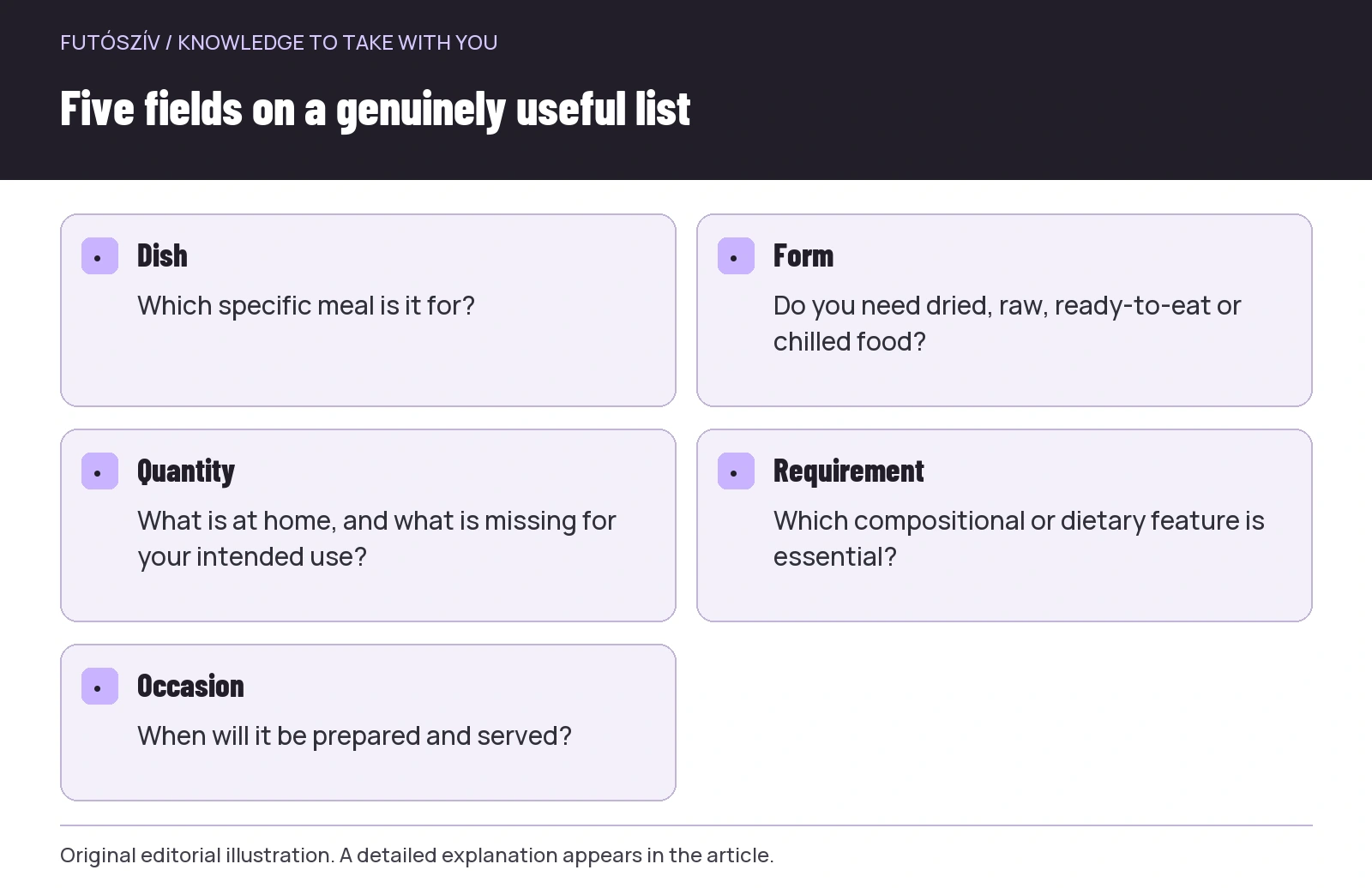
Write which dish each ingredient is for. If several dishes use it, note this too, but do not count an existing quantity twice. Use your household’s actual consumption as the basis. The quantity field deliberately has no universal figure here: household size, individual needs and the number of meals eaten at home differ. The example provides a structure, rather than a prescribed basket of food.
| List item | Planned use | Form and checks |
|---|---|---|
| Bread or another base suitable for you. | Breakfast and a familiar sandwich meal. | Ingredients, storage and the quantity actually needed. |
| Your chosen pulse-based ingredient. | A hot bowl or spread. | Dried or ready-to-eat? Know the full preparation required. |
| Suitable tofu, eggs or another main component. | A specific main meal. | Follow your dietary framework, package instructions and chilling requirements. |
| Suitable dairy or your chosen alternative. | A familiar breakfast or afternoon snack. | Specific composition and, where relevant, a check of fortification. |
| Vegetables you enjoy. | Named for two different dishes. | A plan appropriate to fresh, frozen or tinned ingredients. |
| Familiar seasonings. | For the chosen recipes. | Existing supplies, ingredients and handling after opening. |
 Enlarge diagram
Text version of the illustration
- Dish
- Which specific meal is it for?
- Form
- Do you need dried, raw, ready-to-eat or chilled food?
- Quantity
- What is at home, and what is missing for your intended use?
- Requirement
- Which compositional or dietary feature is essential?
- Occasion
- When will it be prepared and served?
Check supplies at home before going to the shop
The practical advice from Nébih’s Wasteless programme recommends checking stocks before shopping and planning around the week’s actual commitments. First cross off items already available in suitable condition and sufficient quantity. The mere presence of a package is not enough: it may contain too little, be another product or be in a form you cannot properly prepare in the available time.
Review chilled, dry and frozen supplies separately. For chilled products, appropriate storage and timing of use matter; for dried ingredients, the complete preparation; for frozen foods, preparation according to the package. If you transfer a product to another container, keep the original information identifiable. Do not base a dish on an unknown bag’s contents when exact composition or use is important.
Do not try to squeeze all existing supplies into one dish made from every leftover. Consider which items have suitable uses you enjoy. A product might work well in a sauce but less well in the planned cold meal. Stock checking aims at realistic use, rather than making every ingredient disappear at once. If something regularly remains unused, change the amount you buy next time too.
Dried and ready-to-eat pulses call for different shopping decisions
Choose dried pulses for a particular meal when the necessary preparation and proper cooking are feasible. Ready-to-eat tins, used according to their labels, may solve a different timing problem. You do not need to use the same form for every dish. Specifying the form on your list helps prevent discovering a missing preparation step when you get home. You cannot omit part of safe preparation to save time.
The NHS recipe for tofu with rice and peas also treats versions using dried and tinned beans separately. Kitchen time and the sequence of tasks change with the chosen form. This is a family recipe, rather than a quantity recommendation calculated for runners. The lesson for list-making is to match the recipe to actual ingredients in a suitable form and allow for every necessary preparation step.
Give chilled products a near-term occasion for use
Do not buy a large range of foods requiring refrigeration merely to cover every possibility. Link each to a specific meal and proper handling according to the package. If a larger pack regularly remains unfinished within the necessary limits, another size or meal plan may be more practical. Instructions after opening matter separately; remembering only the unopened package’s date is not enough.
When choosing between dairy and plant-based alternatives, specific composition matters alongside your dietary framework. If a product is part of your plan because of particular fortification, check this again in a similarly named version. A substitution in the shop should not quietly remove an important feature. Briefly state on the list any requirement a replacement must still meet.
Two shopping trips can have different jobs
A larger trip can cover suitable staples whose storage and planned use allow it. A later short trip can focus on fresh or chilled items actually needed. This is one organisational option, not a compulsory weekly rhythm. Another system may work depending on location, time and access. What matters is connecting the purchase with a real meal occasion.
If you shop once a week, let each product’s handling requirements and the planned meals determine the order of use. Frozen ingredients or suitable tinned staples may help on other days, but know in advance how you will use them. If you order deliveries, check substituted items just as you would a product taken from a shelf. A replacement does not necessarily meet your previous allergen, ingredient or preparation requirements.
 Enlarge diagram
Text version of the illustration
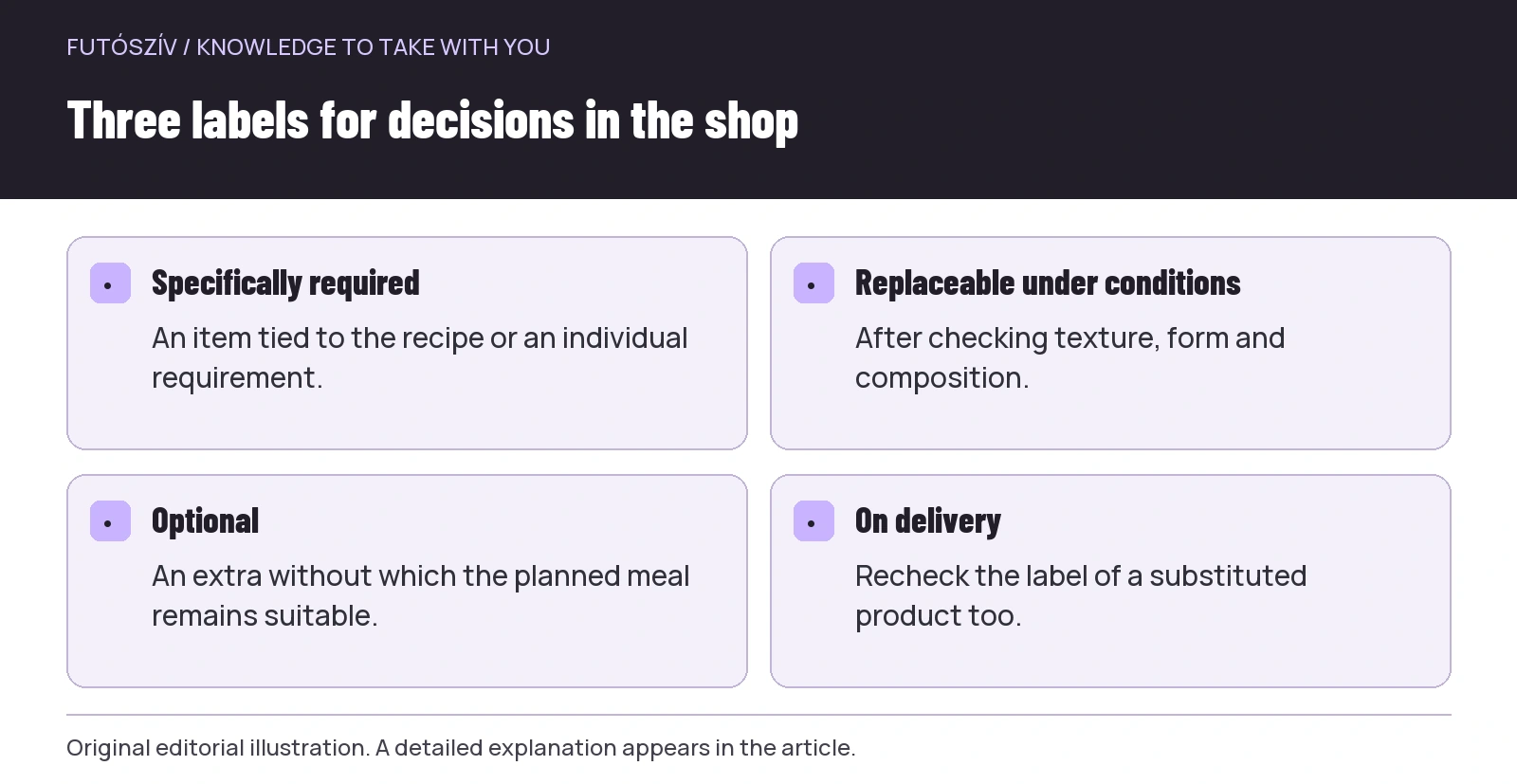
- Specifically required
- An item tied to the recipe or an individual requirement.
- Replaceable under conditions
- After checking texture, form and composition.
- Optional
- An extra without which the planned meal remains suitable.
- On delivery
- Recheck the label of a substituted product too.
Write substitution rules rather than an endless brand list
A good substitution instruction names the property needed. A texture suited to the dish, ready-to-eat form or a composition requirement may matter more than the colour of the package. A substitution can change nutritional values and cooking plans too. Do not automatically treat similarly priced or similarly named products as equivalent. If the requirement cannot be checked, another familiar meal may be a better solution.
Three labels can help: specifically required, replaceable if suitable conditions are met, and optional seasoning. They show where genuine flexibility exists while shopping. Allergen safety or the requirements of a prescribed diet, however, are not freely flexible elements. Make this clear when someone shops for you too. A shared household list works when the important restriction is understandable alongside the intended use.
Give a low-effort meal its own list
Choose a specific, familiar backup dish for an evening when the planned cooking does not fit. Keep the necessary supplies in an appropriate form and storage conditions, and know the preparation steps. Every late evening does not need a new recipe. A backup is useful when it genuinely fits your diet and is available, rather than existing only in theory on the menu plan.
Think of the backup as a complete meal suited to your needs too. An easily available vegetable or random topping alone does not necessarily fulfil the same role. Include its base and accompaniments on the shopping list. If the backup regularly replaces the main plan, it is not necessarily a matter of discipline: the original weekly menu may require more work than your available time allows.
Consider actual use alongside unit price
A larger pack may have a favourable unit price, but what you actually eat also affects the real cost. It matters whether the food is used in time, what additional ingredients it needs and whether suitable storage space is available. Vegetarian eating does not require buying every unusual new product either. A few familiar, accessible ingredients with good kitchen uses often form a clearer system than accumulated products rarely used.
At the end of the week, check which list items became meals and which remained unused. Choose one specific change: a smaller quantity, a product in another form, a simpler recipe or a more realistic meal plan. Over time, a good vegetarian shopping list adapts to your household. Its contents then become the basis of manageable, suitable meals you enjoy, rather than a separate promise.
Sources and further reading
- NHS: The vegetarian diet
- Nébih Wasteless: What you can do
- NHS: Caribbean tofu and sweet potato curry with rice and peas
How Futószív articles are prepared: our editorial guidelines.