A functioning pantry is not about having as many packages as possible, but ingredients that actually become food in your kitchen. Alongside running, work and travel, having basics for a few favourite dishes available can help avoid starting dinner with a shop search every evening. However, the pantry is not the whole diet or storage for unlimited time. This article offers a flexible stocking method for healthy adults’ everyday lives without a personalised sports diet or compulsory shopping list. Consider known allergies, conditions and special dietary requirements in every choice.
Start from your own meal list
List a few simple foods you like, can prepare and can include in your diet. Then examine which ingredients can appropriately be kept in the pantry according to product instructions. Build a foundation for proven meals first rather than an unusual recipe tried once. Your own pasta dish, pulse-based meal, cereal-based breakfast or another familiar meal may provide a starting point. The list is not a complete diet; it shows which meals you want to make easier. Appropriate fresh and refrigerated additions may still be needed.
A product without a real meal idea is not automatically a good backup. Turn “it will be healthy for something” into a concrete use. If that fails, do not necessarily begin with the larger package. Trying a new ingredient can be interesting but is separate from dependable everyday supplies. A pantry aims to reduce decisions on a tired day, not leave you searching for recipes among many unfamiliar ingredients. Your own knowledge and tastes are real parts of the system.
Organise by role, not sporty packaging
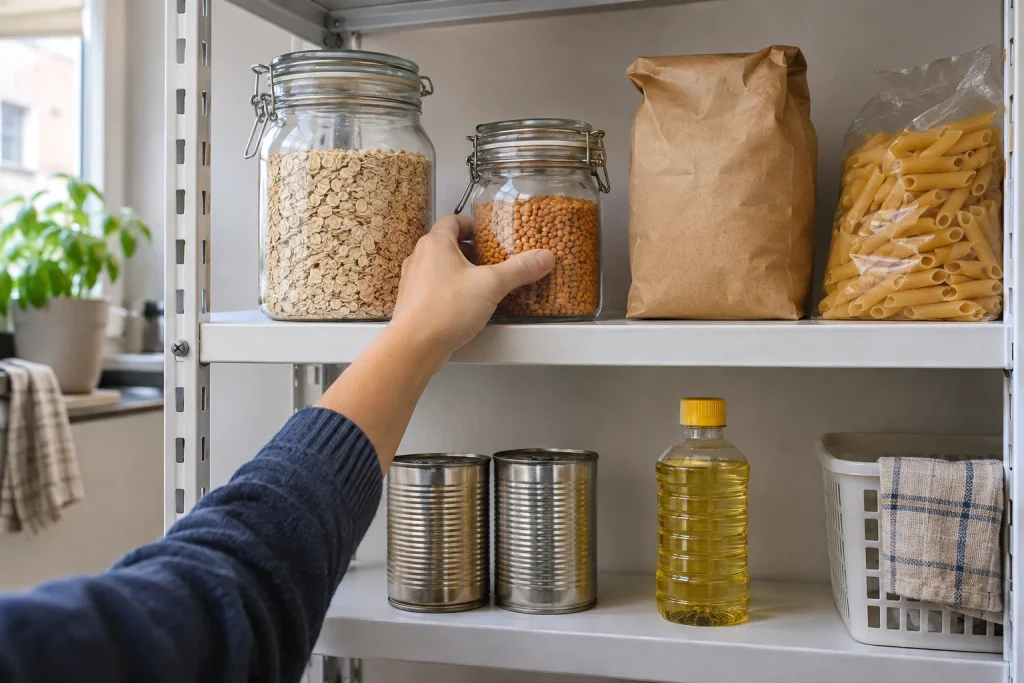
You can make simple groups: familiar side-dish and grain bases, shelf-stable protein sources fitting your diet, vegetable or other meal bases, seasonings and a few additions actually used. Choose specific products according to labels and needs. A “runner” or “fitness” label does not automatically make a product more appropriate, and building a pantry requires no compulsory sports supplement. Conventional foods can provide the basis of feasible, appropriately varied eating, with individual sports nutrition questions clarified separately.
The MDOSZ adult OKOSTÁNYÉR guide can help review general food choices as a whole. The pantry is only part of this and does not replace planning the whole diet. Having different ingredient groups does not automatically ensure appropriate quantities or individual suitability either. The organising method makes necessary, suitable meals easier to prepare in practice. If a plan needs to match particular training demands, health circumstances or dietary restrictions, personalise it with a dietitian.
 Enlarge diagram
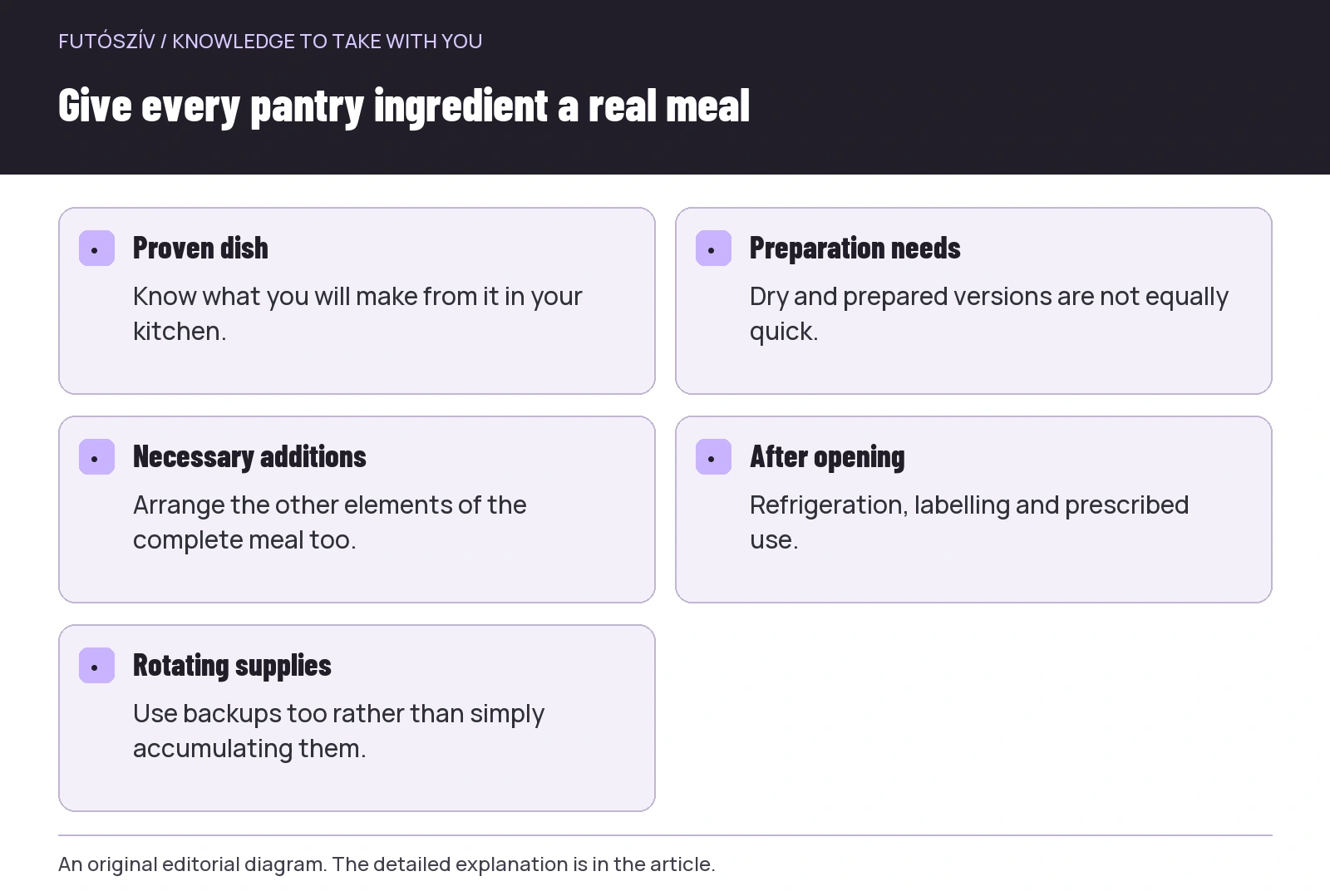
Text version of the diagram
- Proven dish
- Know what you will make from it in your kitchen.
- Preparation needs
- Dry and prepared versions are not equally quick.
- Necessary additions
- Arrange the other elements of the complete meal too.
- After opening
- Refrigeration, labelling and prescribed use.
- Rotating supplies
- Use backups too rather than simply accumulating them.
Several simple directions from the same base
Dried pasta prepared according to the package with a suitable sauce can form the base of a quick main meal; specific ingredients and additions should fit your needs. Canned pulses can go into a tomato dish made to your recipe or form part of an appropriate bowl meal on another occasion. Depending on texture and instructions, a spread may also be possible if suitable for that product and diet. These are editorial meal ideas, not automatically nutritionally identical dishes or meals sufficient for everyone. Always follow label instructions for use and handling after opening.
Familiar oats or another suitable grain base can appear in several breakfasts with a liquid fitting your diet or other additions. A tomato-based cooking ingredient can serve several recipes, but seasoning and composition may differ, so examine the product. Include nuts or seeds only if suitable for you and if you can store them appropriately. Versatile use does not make every listed product compulsory. Choose a few elements with at least two real roles in your kitchen.
Dry and precooked ingredients are not equally quick
Check what preparing a product involves. Dried pulses require preparation and proper cooking according to the particular product and recipe; they do not solve every tired evening as readily as a version prepared differently for use. Do not estimate speed solely from shelf stability. Your kitchen time and equipment matter. An ingredient you cannot or do not like to prepare may not help daily supplies even if cheap and long-lasting. Make the whole preparation path visible when choosing.
You can use two labels: a base for meals achievable quickly and an ingredient requiring advance planning. These concern your own routine, not a universal number of minutes. Do not mix the groups on a late-evening backup list. If a dish requires suitable fresh or refrigerated additions, note them too. Taking one ingredient from the pantry does not prove the whole dinner is available. Familiar food combinations help avoid an unexpected shop trip for a missing second part.
| Pantry role | Possible use | Important further question |
|---|---|---|
| Familiar grain or side-dish base | A main meal or breakfast according to your recipe. | How much preparation and cooking does it require? |
| Canned food fitting your diet | Part of a bowl, sauce or another suitable dish. | What are the instructions after opening? |
| Tomato or another meal base | A shared element of several proven recipes. | Composition and actual quantity used. |
| Seasoning | A familiar dish with a different flavour. | Allergens, storage after opening and condition. |
| Quick backup | A meal planned for a changed day. | Are all elements for the complete meal available? |
“Shelf-stable” means conditions apply
Even shelf-stable products need particular storage conditions. Check the label, necessary space and packaging condition. Food should not automatically go somewhere damp, excessively warm or otherwise unsuitable merely because you did not buy it from a fridge. The USDA FSIS information on storing canned food highlights a cool, dry place and rejecting suspiciously damaged packaging. Still follow the particular product’s label and local food-safety guidance alongside this. Damaged packaging is not simply an aesthetic question.
Do not assess bulging, leaking or otherwise suspicious cans by tasting. Appropriate food-safety guidance applies to such situations. A pantry inventory involves more than counting items: check condition and storage history too. A product on the shelf is not proven good merely because its original date has not passed. Packaging, storage and its own instructions matter together. If a condition is uncertain, do not hide it among backup supplies where someone else may later automatically regard it as suitable.
Food enters a different state after opening
One of the most important selection questions is what happens to an opened package. The Food Standards Australia New Zealand canned-food information distinguishes unopened shelf-stable food from opened food. Shelf life does not automatically remain the same after opening. Follow product instructions for refrigeration, use and other handling. A large package is therefore a good choice only when the portion remaining after opening can be handled appropriately and actually used within your eating plan.
If transferring food to another container, retain necessary product information and the opening time. The story should not continue in an unlabelled container whose fridge arrival time nobody later remembers. A label helps several household members see the same information. Transferring does not start a new storage period or correct previous storage mistakes. See the pantry system together with the fridge: an opened product has a new, specific onward path rather than simply returning to its old place.
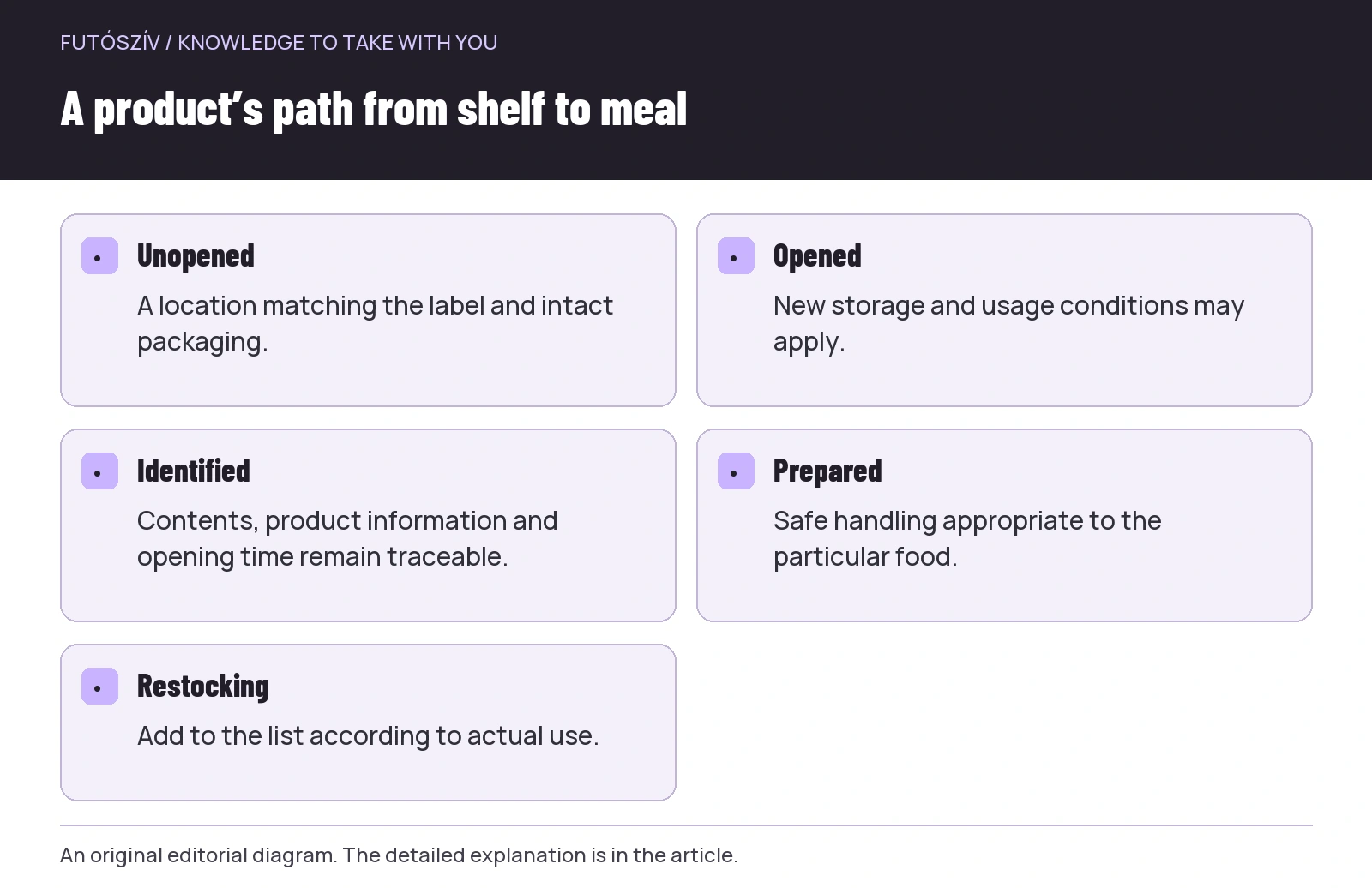 Enlarge diagram
Text version of the diagram
- Unopened
- A location matching the label and intact packaging.
- Opened
- New storage and usage conditions may apply.
- Identified
- Contents, product information and opening time remain traceable.
- Prepared
- Safe handling appropriate to the particular food.
- Restocking
- Add to the list according to actual use.
Dates: do not merge the two terms
Best-before and use-by dates provide different information. The Nébih information introducing its expiry guide offers conditional help for products labelled with best-before dates; it must not be treated as general permission to use food past a use-by date. Examine your product’s precise wording, packaging and storage. This article does not give extra months applicable to every shelf. Use official guidance appropriate to the product category together with its stated conditions.
Practically, place suitable products needing earlier use at the front and arrange newer stock so it does not hide them. Opened packages deserve separate attention because their instructions may allow less time than unopened ones. If decanting a dry ingredient, do not mix different packages’ dates and label information beyond traceability. An organised shelf does not require matching decorative jars for everything. Actual condition and identification matter more than identical appearance; original packaging can carry much useful information.
One or two backups that actually rotate
You do not need several packages of everything. Decide from your own consumption which basics are used regularly and which rarely. If keeping a standing backup of a product, arrange actual rotation: replace an appropriate used item rather than accumulating a queue behind an old one. A simple shopping-list note can signal restocking. Do not copy minimum supplies from another household’s size. Your shop access, eating rhythm and storage space provide the real framework.
If a package regularly remains untouched, ask why. Do you dislike it, does it need too much preparation, do you lack a suitable recipe or is it simply hidden? Different causes require different actions. Shelf organisation can solve visibility; another purchase cannot. Unwanted products that can appropriately be passed on may be handled according to relevant acceptance rules; food in uncertain condition is not a good donation. The review aims for usable supplies, not retaining old items at all costs or shifting them to someone else.
Keep a short fresh-food list alongside the pantry
Check which fresh or refrigerated elements each proven pantry meal needs according to your diet. The list can then have two parts: stable basics and additions for the particular week. Adapt the latter to the real routine. You do not need to buy many perishables merely because several pantry meals could use them. Ensure access to the complete meal and match quantities to use. A well-arranged shelf makes this brief weekly shop easier; it does not remove every need for fresh food.
At the end, open any shelf and try describing familiar meals possible from its ingredients in appropriate condition. If several concrete answers emerge and you know the necessary next step, the supplies work. If only many promising packages are visible, clarify your own meal list next. A useful pantry for a runner is thus not special sports equipment but organised food supplies with known roles, traceable condition and a connection to real everyday meals.
Sources and further reading
- MDOSZ: OKOSTÁNYÉR for adults
- USDA FSIS: How long can you keep canned goods?
- FSANZ: Canned foods, purchasing and storing
- Nébih: expiry guide for best-before dates
How Futószív articles are prepared: our editorial guidelines.