Sports trousers seem comfortable standing, but the waistband digs in when you first sit down. Another pair feels good seated but slips after a few steps, so you tighten the drawstring more and more. It is easy to dismiss this with one sentence: you chose the wrong size. In reality, cut, waistband, carried objects and movement position together shape how usable clothing is.
With a larger body, you need not buy today’s sportswear for future weight loss. You are seeking a comfortable, usable garment for your current body. At the same time, abdominal or breathing discomfort cannot always be explained by clothing. A matter-of-fact fitting and assessment of a health symptom are separate tasks: in one you observe equipment; in the other you seek help where needed.
Sudden severe abdominal pain, vomiting blood, substantial gastrointestinal bleeding or severe breathing difficulty requires immediate help. Chest tightness, radiating pain or sudden confusion should not be checked by loosening the waistband to see whether they pass either. The NHS information on abdominal pain and breathlessness explains that these extend beyond an everyday clothing question.
Observe clothing comfort in a specific situation
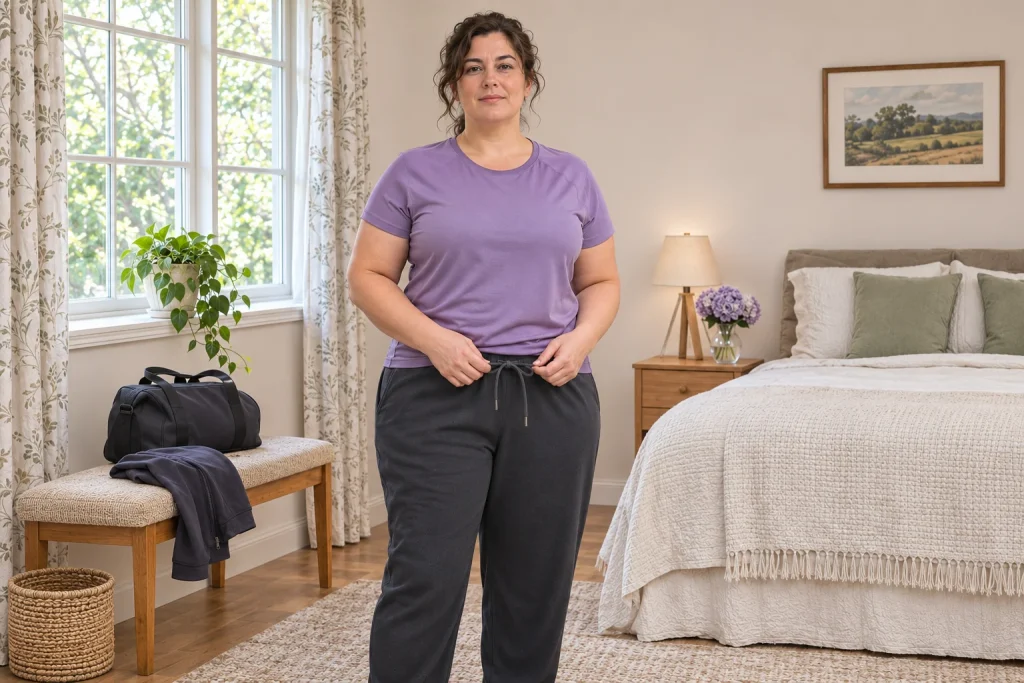
‘Tight’ can describe several experiences. A waistband edge may press along a narrow line, the drawstring knot may be uncomfortable or the whole garment may pull when you sit. Name the precise location and movement. A familiar size on the label does not establish how the cut works on your body in the particular task.
Think through the occasion’s actual situations. At home you sit to tie shoes, travel to the location, walk or do another movement appropriate for you, then sit again. Trousers comfortable only while standing stiffly may not remain usable throughout. You need not hold your stomach in or adopt an artificial posture during fitting to make clothing feel acceptable.
The NIDDK information supporting movement also highlights comfortable clothing that allows movement. This does not imply the same style or fabric for everyone. A useful fitting relates to your activity: its aim is not a general athletic appearance, but clothing that does not demand constant attention.
Sitting, standing and easy movement reveal different details
Start a fitting with simple situations appropriate in your current condition. Stand naturally, sit on a comfortable seat and notice where tension changes. You need not perform deep squats, jumps or forced stretches in a clothes shop. An ordinary sit-down can reveal pulling unnoticed while standing at the mirror.
If trousers shift downwards or upwards during an easy movement, examine exactly what happens. Does the waistband fold, does fabric pull around the hips, or does an object in the pocket tilt the garment? These are different organisational and fitting questions. Tightening harder does not always address the underlying detail and can create new discomfort.
A mirror can help show the garment’s position, but you need not continually judge your appearance. Your experience also provides information about usability. If something presses, you can take it seriously even if it looks unremarkable from outside. A fitting is not a beauty contest; a pleasing reflection does not require silence about problems during movement.
 Enlarge image
Try the waistband alongside pockets and their contents
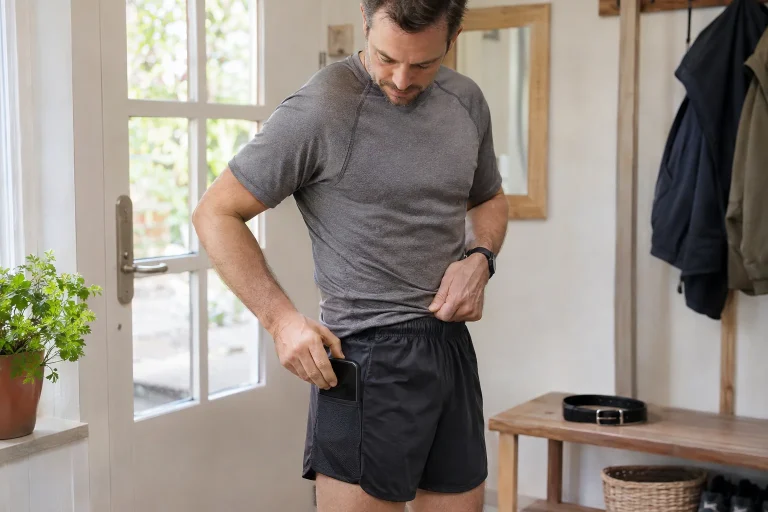
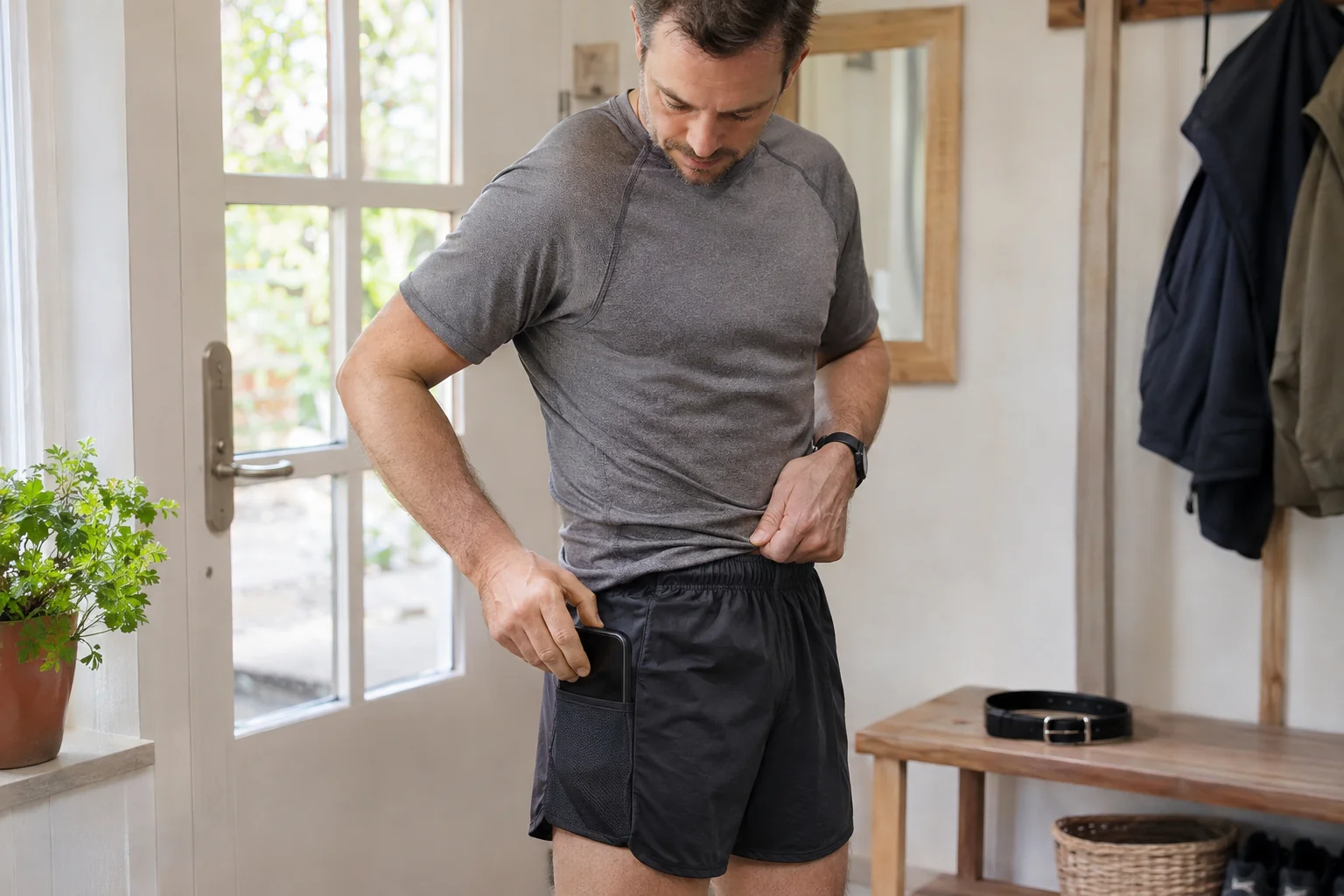
Trousers may behave differently with empty pockets than with a phone, keys or small storage item. Account for your own essential carried items within the shop’s rules. If a phone pulls the waistband, examine storage first rather than automatically tying tighter. A garment becomes usable when the whole planned arrangement works.
You need not place every object in the same pocket. Consider what is genuinely needed, what can stay somewhere safe and which items already have a proven storage solution. New trousers should not force a change that worsens another important condition, such as access to your phone. Equipment selection belongs to the whole use situation.
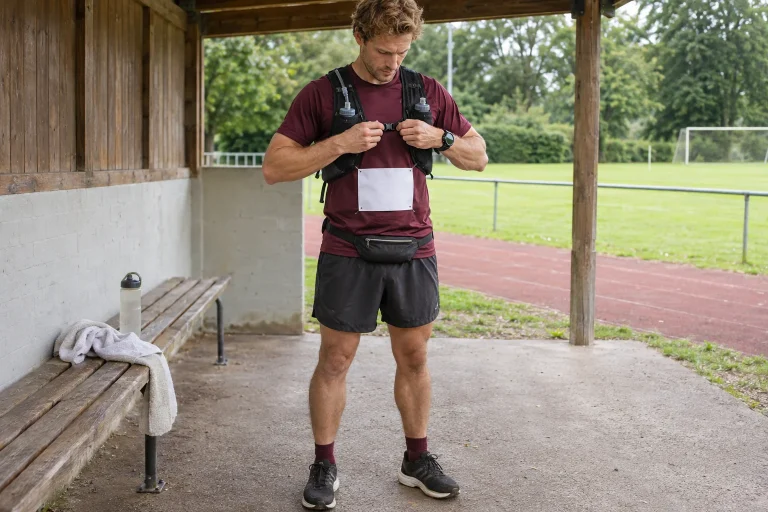
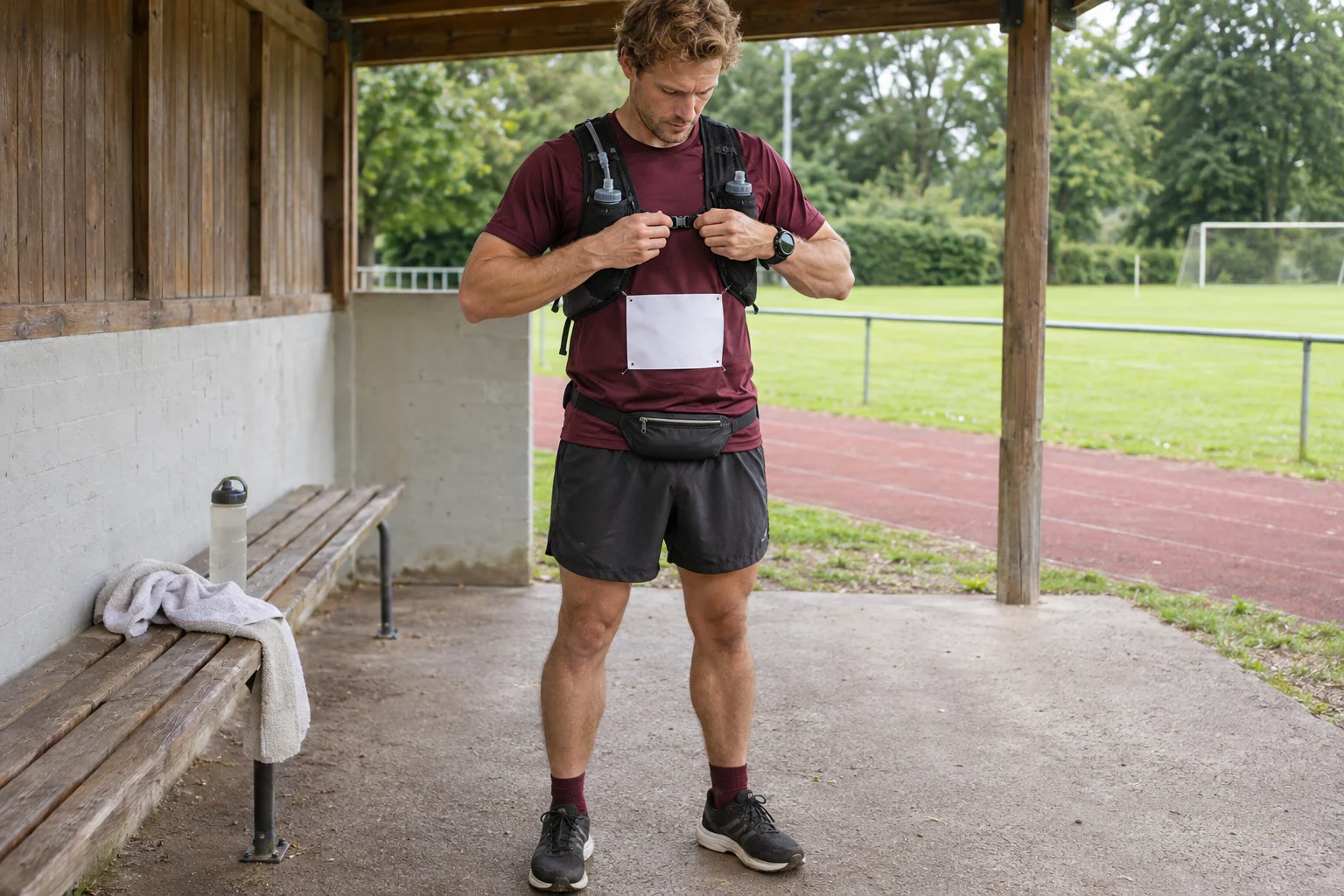
Do not forget a separate belt or waist pack if you use one. Two overlapping bands may feel different from trousers alone. The same applies where a longer top, rain layer or vest’s lower section meets them. Individually comfortable garments need checking together too. You need not buy every layer again; first identify which interaction causes trouble.
Discuss cut alongside the size label
Two pairs with the same label can differ at the waist, hips, thighs or crotch. If one area fits and another pulls, simply choosing a larger number may not answer the question. Ask about another cut, waistband arrangement or adjustable version. A label number helps searching; it does not judge your body.
A useful fitting-room sentence is: ‘The waistband edge digs in when seated, but the hips are already loose standing. Is there another cut?’ This is a specific question that the available range can answer. You need not share a weight target or weight-loss history. If the shop has no suitable style, this can be treated as a gap in its range, rather than a personal fault.
The NICE principles of care emphasise respect, consideration of the person’s own priorities and communication without stigma in weight-related discussions. This is a healthcare guideline, rather than a clothes-shop policy. Its perspective nevertheless helps express your need: present comfort and movement matter, rather than when you might fit another size.
What if discomfort at the waistband becomes pain?
The garment’s location coinciding with pain does not establish the cause with certainty. Identify what you can actually report: whether it occurred only with that item, when it began and whether it persisted after removal. You need not check the answer by repeatedly provoking pain. If symptoms are severe, worsening or recurring, another tight fitting is not the next step.
According to the NHS, persistent or recurring abdominal pain, bloating and other symptoms may require assessment. An association with sport or the presence of a waistband does not rule out other explanations. During medical discussion, describe the timing relationship with clothing without presenting it as a diagnosis. ‘It began while running, and the waistband was at this area’ is more precise than saying the trousers certainly caused it.
Do not automatically dismiss breathing difficulty as tight clothing either. New breathlessness or breathlessness stronger than usual requires separate health attention. Loosening clothing may improve comfort, but improvement alone does not establish the symptom’s cause. With severe symptoms, there is no need to wait to see the effect of changing the whole outfit.
Three everyday situations raise different questions
In the first situation, seated trousers press exactly at the drawstring knot, with no other discomfort. Here you can discuss garment design, adjustment and comfort during fitting. Seeking another waistband arrangement may be sensible. This example does not establish the same origin for every pressure around the abdomen; it only shows a specific equipment detail that can be named.
In the second, trousers work well empty but slip with a phone. The relationship between pocket and load comes to the foreground. The question is which alternative storage or cut works, rather than how to tighten the band as much as possible. Precise description means you need not always treat your body size or whole wardrobe as the factor requiring change.
In the third, abdominal pain or breathing symptoms recur in several outfits and even outside sport. Clothing comfort is no longer a sufficient explanation. Health assistance is needed according to symptom severity and nature. These three examples are not a self-diagnostic sequence: they help avoid merging an equipment observation and a health question into ‘my trousers are tight’.
 Enlarge image
A home rehearsal without rushing or a long workout
Review a new outfit before an occasion without time pressure. Put trousers, top and storage together, then check use through your own appropriate everyday movements. Consider travel and changing clothes too. You need not prove suitability through a long run, particularly if clear discomfort already appears during fitting.
Brief notes about adjustment may help more than a general five-star impression. For example: where the waistband felt comfortable, what was in the pocket, which top avoided bunching and what remained uncertain. The next occasion then avoids random readjustment. You need not establish ‘safe’ tightness through a measuring tape or homemade pressure threshold: this article provides no universal value of that kind.
After washing and drying, notice if clothing behaves differently too. Follow manufacturer care labels, and do not cut supporting elements or elastic bands at random on an expensive garment. Repair may require a skilled clothing repairer or information from the distributor. Check commercial conditions for alteration and exchange with the particular shop, preferably before intervening.
Take comfort seriously and name symptoms separately
Appropriate sportswear offers room for the chosen movement instead of demanding constant adjustment. Your current size, cut and the whole setup matter together. You need not accept discomfort because a garment is fashionable, expensive or looks athletic. Usability is not determined by how much you resemble a person in an advertisement.
When discussing symptoms with a health professional, separately describe what you observed about clothing and what you do not know. This does not diminish your experience’s value. An account precisely naming uncertain causation leaves more room for meaningful assessment than a ready-made clothing diagnosis. Body weight is not a reason to disregard every other detail of symptoms.
Two kinds of result may ultimately emerge: finding a more comfortable clothing solution or recognising that symptoms need separate help. They do not exclude one another. Well-chosen clothing is a usable condition for your movement, while assessing pain and breathing symptoms is an independent health question. Retaining the distinction makes your next decision depend less on a size label and more on the actual situation.
Sources
- NIDDK: Staying Active at Any Size
- NICE NG246: Principles of care
- NHS: Stomach ache
- NHS: Shortness of breath
How Futószív articles are prepared: our editorial guidelines.