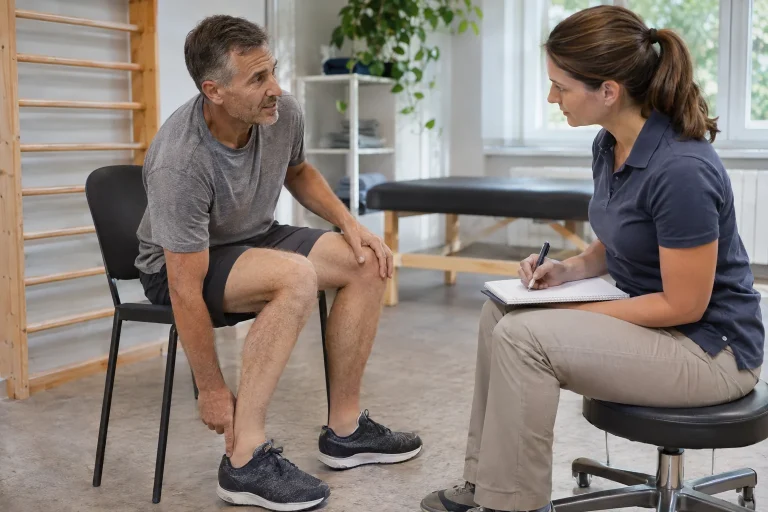
Pain above the heel along the tendon is easily gathered under one name: Achilles. The starting question is nevertheless not which online strengthening programme to begin. First clarify exactly where symptoms are, how they began and what changed in movement. Gradually developing load-related pain and new weakness after a sudden event are different stories even when you point to nearly the same place.
For a sudden snap or feeling of being struck at the back of the calf or heel, or new difficulty pushing off, seek prompt, urgent medical assessment. According to Cambridge University Hospitals information, initial pain after Achilles rupture may ease or disappear, and limited walking may remain possible. This does not reassuringly rule it out. Do not test tendon integrity through stretching, hopping or running.
Location above the heel is more than a label
The Achilles transmits calf-muscle force towards the heel bone and contributes to several everyday movements. The AAOS information distinguishes symptoms in the midportion from those around the heel-bone insertion. Location helps frame the professional question, but measuring yourself does not replace examination.
“Above the heel” may mean different distances to different people. Showing where and during which task you feel it may suffice, while reporting pain in several areas too. You need not diagnose yourself by a centimetre boundary. Pain location is information assessed alongside history and function rather than a sign immediately dictating exercises.
If earlier advice concerned the insertion but pain is now higher, or the reverse occurs, report it. The shared Achilles name does not mean the same situation repeats. An old programme is important history, but need not be followed unchanged merely because you have its video or paper. Connect current symptoms with the present question.
Gradual onset and sudden functional loss
In a gradual story, you may notice tendon-area pain more often, find starting harder or experience symptoms after particular loading. AAOS describes activity-related pain and morning stiffness too. These are orientation points rather than independent diagnostic rules. You need not confirm a pattern through painful test runs to report it in assessment.
A sudden event prioritises different information: at one moment you felt a snap, walking changed or pushing off became difficult. CUH says the initial strong sensation after rupture may later decrease. “It no longer hurts as much” therefore does not answer whether an important injury occurred. Event and new functional change together may justify prompt assessment.
The stories can overlap: someone may have old symptoms followed by a new event. Do not merge them into “it has hurt for ages”. Explain the usual feeling and what suddenly changed. You need not decide beforehand whether it is completely new or continuation of the earlier issue. The difference itself may matter to the clinician.
 Enlarge image
Tendinopathy does not precisely name the tissue process behind pain
The 2024 AOPT/APTA guideline uses tendinopathy to describe local load-related tendon pain. The term does not automatically mean everyone has the same degree of inflammation or identical tissue change. This avoids an oversimplified explanation selecting every treatment from one name.
Nor is a midportion guideline general permission to train every Achilles-area symptom. Diagnosis, possible injury and individual condition belong in assessment. Hearing only that the tendon must be loaded can omit the condition and professional framework in which the advice applies. Sensible loading is not a synonym for running through unresolved symptoms.
Understand your own function alongside the name. What works in everyday life, what became harder and which movement do you want to do again later? The answer concerns more than tendon thickness or the latest running distance. Your history helps connect care with your tasks rather than making it appear a general treatment of a tissue label.
Tendon loading can involve several forms of muscle work
The 2024 guideline discusses tendon-loading exercises involving different muscle actions. Isometric work produces force without obvious joint movement; concentric work occurs while shortening; eccentric work controls lengthening. These are conceptual distinctions rather than selection instructions. Appropriate tasks and execution must connect with individual condition rather than the most popular method name.
Loading has several variables within an exercise too. Movement type, range, tempo, resistance and fit with other daily tasks matter. Increasing everything together obscures the source of change. “Strengthen the calf” is therefore not a complete rehabilitation plan. Understand starting point, goal, conditions for modification and feedback too.
The Dutch multidisciplinary Achilles guideline treats education, loading advice and muscle-based therapy together. Load management therefore means more than rest days, and an exercise alone does not prepare for every task. Understanding and individual circumstances are part of the programme rather than incidental explanations beside repetition counts.
Why is the choice not limited to rest or unchanged running?
Agreed care may include temporary load modification, appropriately chosen movement and later progression. This differs both from independently stopping everything and continuing unchanged training. The 2024 guideline does not regard complete rest as generally necessary for midportion tendinopathy. Translate this to your day only with an assessed condition and individual guidance.
A working day can include much walking even without running. Avoiding sport completely therefore does not necessarily reveal the load experienced. Discuss travel, work tasks and leisure together. The aim is a plan accounting for actual demand rather than only running-app data, not declaring all movement dangerous.
The Dutch guideline also discusses identifying work-related provoking factors. Modifying standing work or tasks involving stairs may require different help from skipping optional training. Explain what is essential and what can change in your day. Care can then seek a usable solution for real circumstances rather than an imaginary empty week.
An imaging report is not independent sporting clearance
According to the Dutch professional guideline, further imaging is not always needed in typical clinically clarified situations; uncertain diagnosis or unexpected symptom change can raise another investigation question. This is a professional decision rather than an instruction for patients definitely to request or refuse a test. Understand the assessment’s purpose.
If you already have ultrasound or MRI findings, bring them, but do not select loading from an isolated term. “Thickened”, “irregular” or an old conclusion does not alone establish an appropriate daily task. Interpret the report with current symptoms and individual examination. Ask for a plain-language explanation if the relationship is unclear rather than matching images with internet stories.
The Dutch recommendation does not advise imaging independently to monitor treatment response or future symptom course. This distinguishes questions rather than declaring imaging worthless. Clarifying diagnosis differs from following how agreed tasks go. Improvement belongs in the story of pain and function too, rather than being sought only in report wording.
 Enlarge image
How can the consultation use your history effectively?
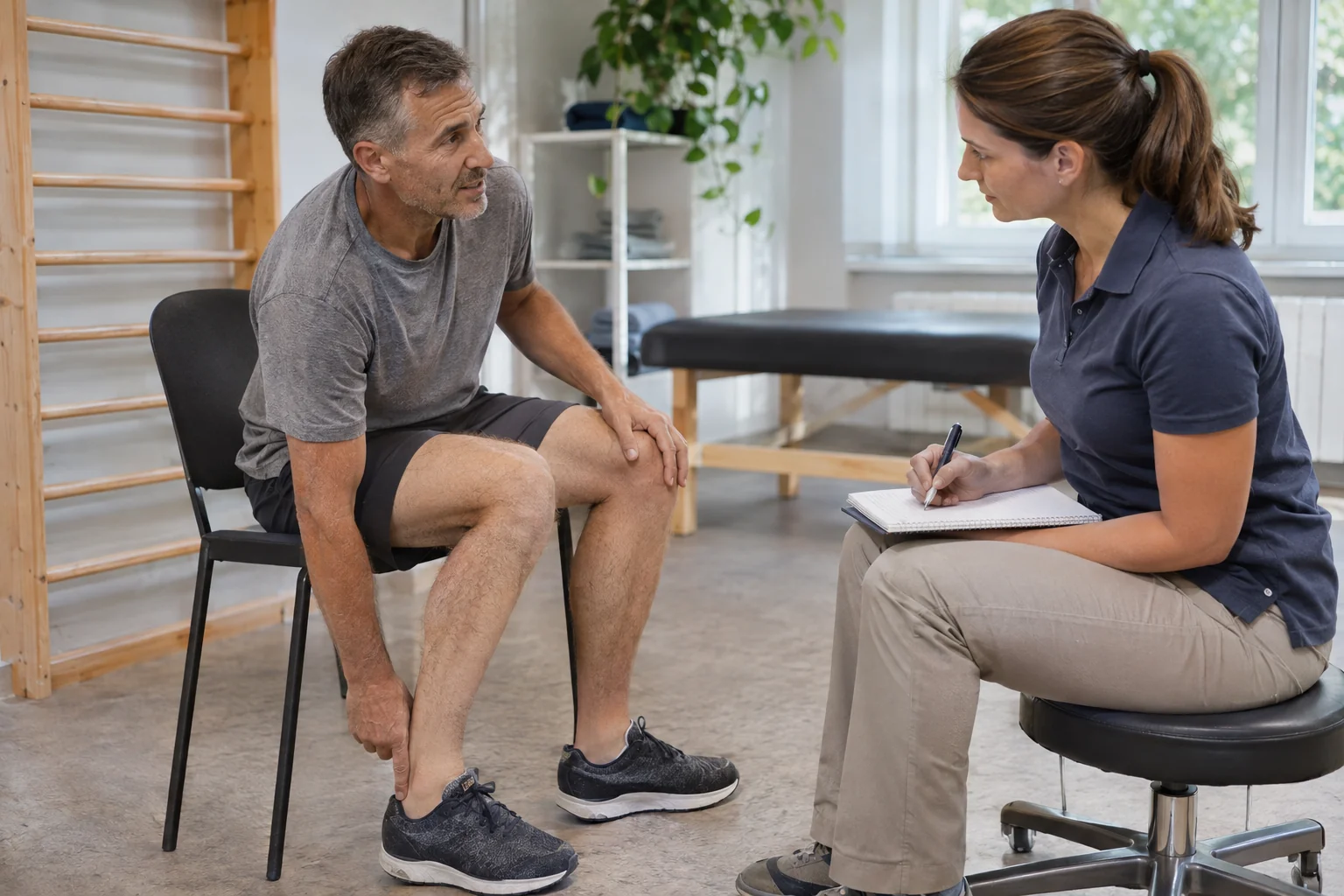
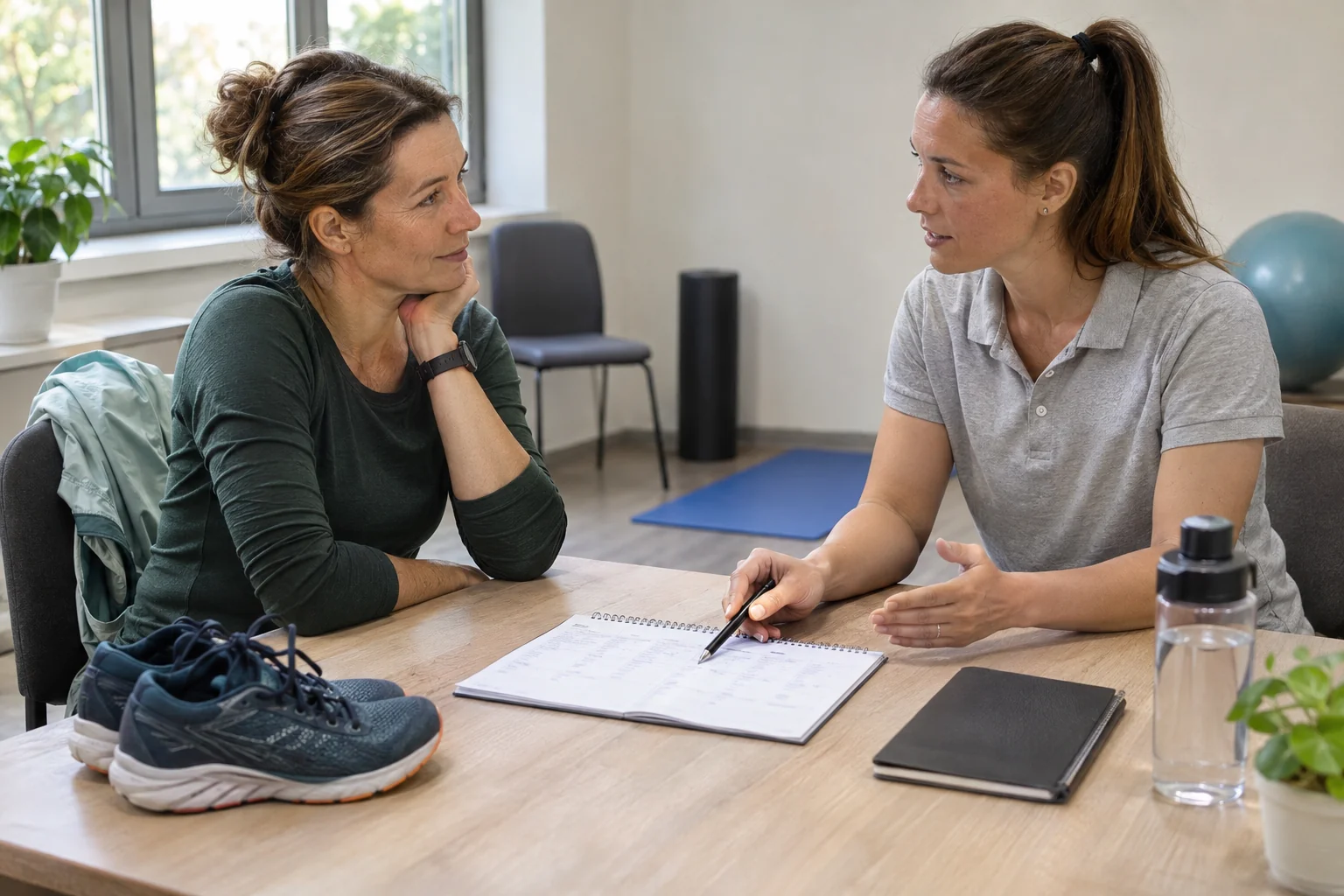
Start with what changed, then add the timeline. Did symptoms gradually appear after a certain route, or was there one sudden event? Is pain at the heel bone, above it or in several places? Explain which daily task became harder too. These are precise historical details supporting professional decisions rather than diagnostic answers.
List movement or treatment tried and what came with individual guidance. If following a video, describe actual movement and experience as well as the method name. You do not need to repeat it to pain before the appointment. An experienced symptom does not gain importance only by reproducing it with identical intensity every time.
Discuss lack of time, space or help for execution too. A plan’s usability depends on what you can learn and accomplish in your surroundings. “It does not fit” may mean a concrete task, working hours or missing assistance. Name these so the next discussion can seek solutions to the actual obstacle.
Follow-up should concern function and the plan’s meaning
Connect follow-up with one or two functional goals genuinely important to you. Starting movement, travelling to work, a particular walk or an agreed sporting task later may qualify. These direct assessment rather than serve as independent loading examinations. A plan is understandable when you know what you aim to improve and which information will inform later changes.
Know what to do with new symptoms or unexpected deterioration. Even with an earlier tendinopathy diagnosis, a new event may require separate assessment. The old programme is not treatment for every future Achilles symptom. Agreed follow-up helps preserve this distinction rather than gathering every sensation into one category.
Location and onset of pain above the heel matter because gradual load-related change and sudden loss of function raise different questions. Accurate history and appropriate assessment are needed for the next step. They can produce an individual loading plan connected with everyday function and sporting goals. Even the best online tendon-strengthening programme cannot perform this initial clarification for you.
Sources
- Chimenti and colleagues: midportion Achilles tendinopathy, 2024 clinical guideline
- AOPT/APTA: official final 2024 guideline document
- Cambridge University Hospitals: Achilles rupture, symptoms and professional care, 2026
- de Vos and colleagues: Dutch multidisciplinary Achilles tendinopathy guideline, 2021
- AAOS OrthoInfo: location and symptoms of Achilles tendon problems
How Futószív articles are prepared: our editorial guidelines.