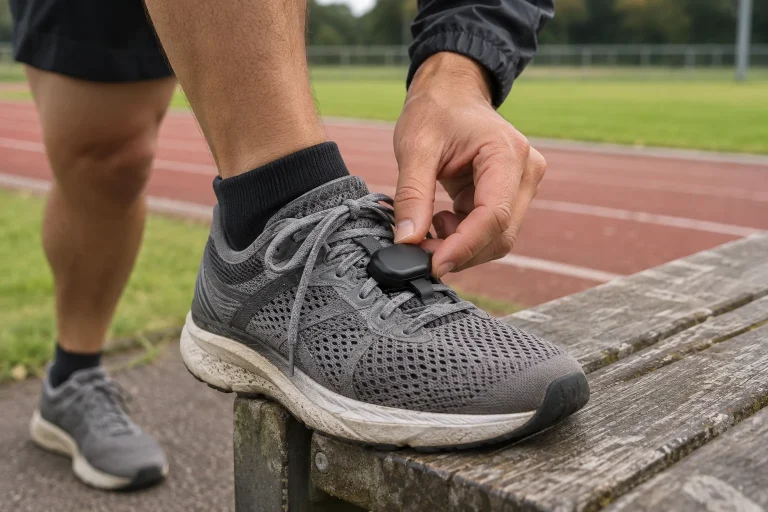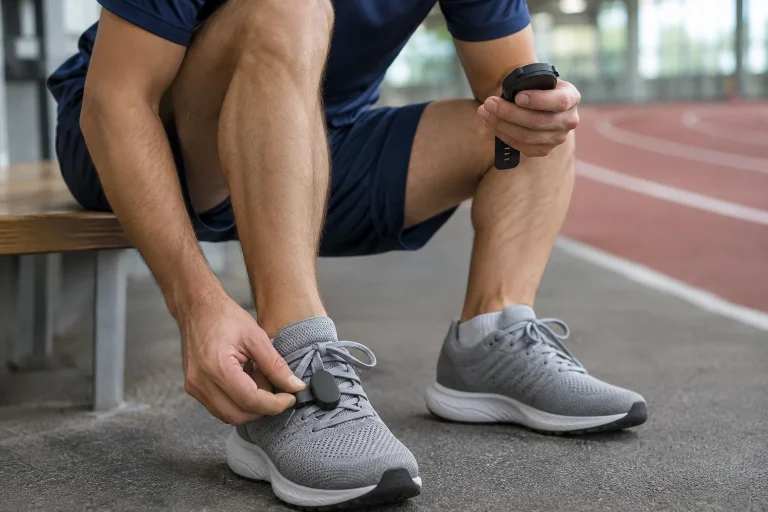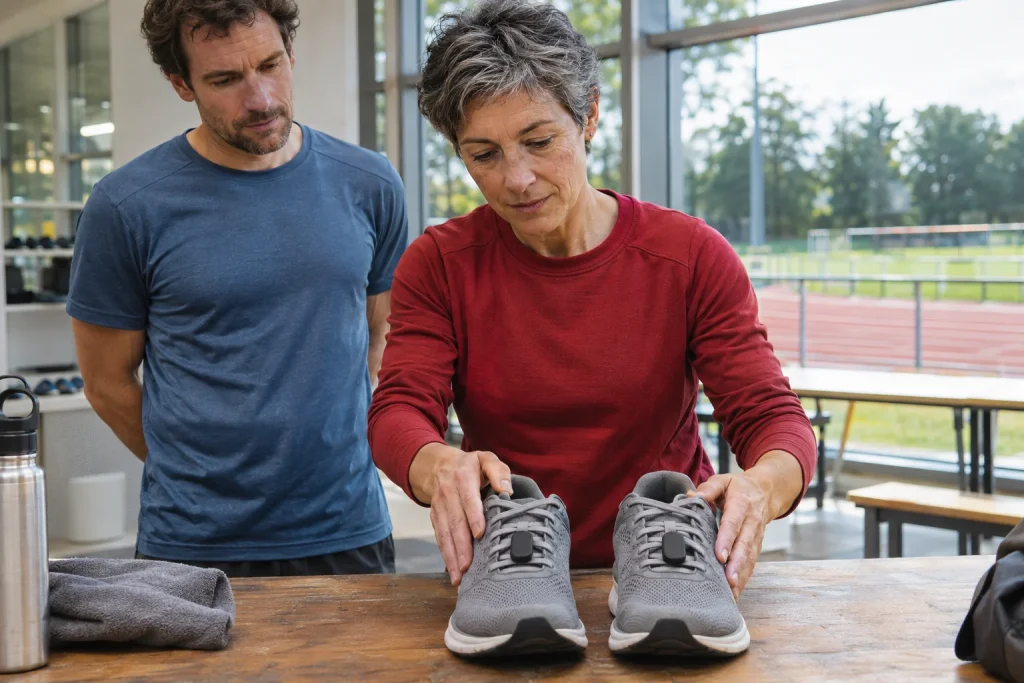
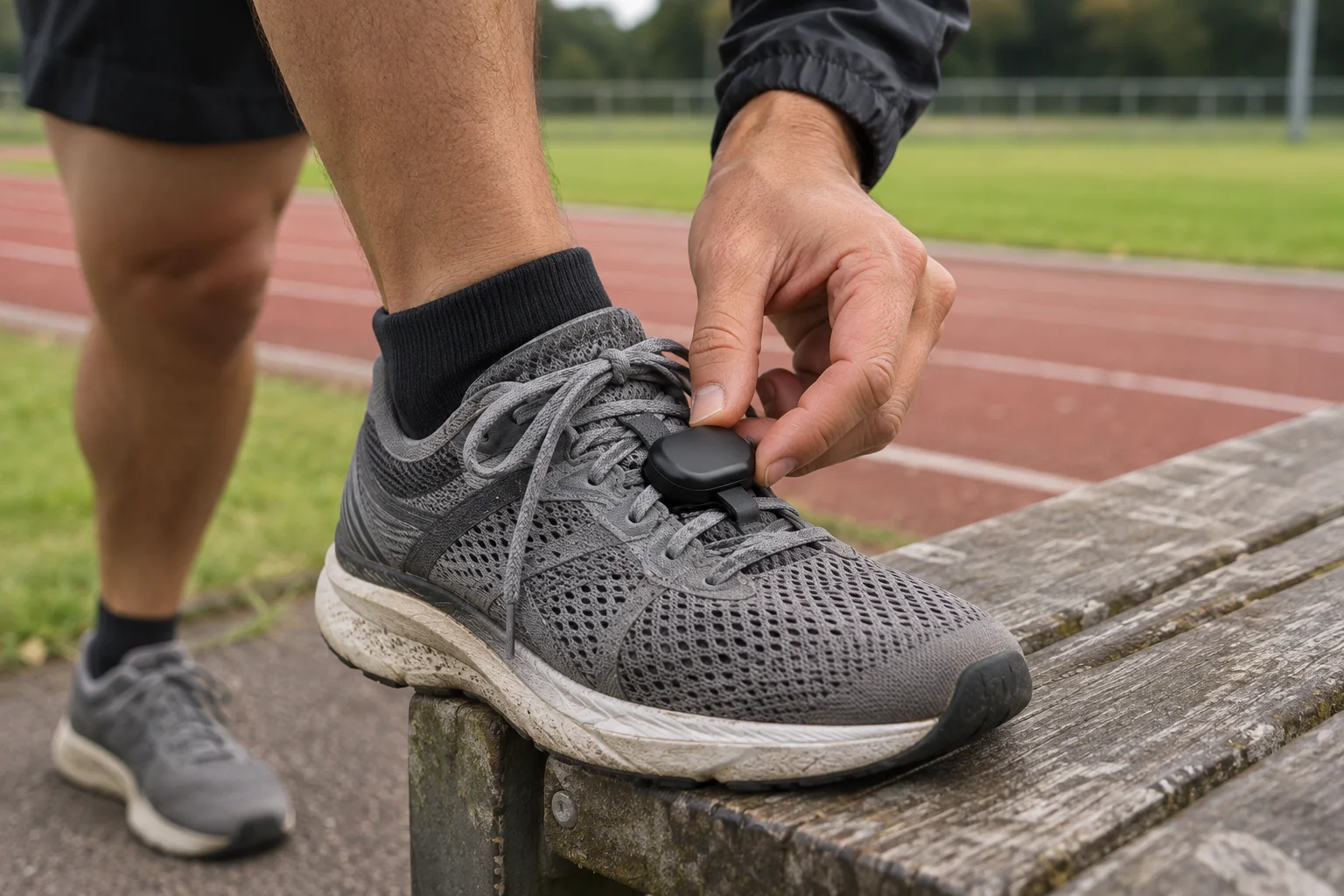
Stryd Duo 5.0 expands single-foot-sensor running tracking with two sensors mounted on shoes and paired with each other. The extra information lies primarily in data from both sides: alongside an overall running value, you can examine differences between left- and right-side movement. This can raise interesting questions about your runs, but does not automatically detect injuries or provide individual instructions to correct movement. “The two sides differ” and “Something needs correcting” are different statements.
This guide is based on official Stryd support checked on 21 November 2026 and the named primary running-biomechanics studies. It is not our own Duo test or a clinical study. We separate sensor-provided data, membership-based Footpath visualisation and healthcare conclusions. A two-sensor system can be a meaningful purchase when you have a specific question that genuinely requires data from both sides.
You need two 5.0 sensors, not any two Stryds
Stryd Duo 5.0 consists of two 5.0 sensors. The manufacturer also supports a Duo system made from two Next Gen sensors, but generations must not be mixed: one Next Gen and one 5.0 do not form a suitable pair. This matters particularly with used devices or units purchased separately. Instead of relying on an advert saying “Stryd compatible”, identify the exact hardware version of both.
If you already have one 5.0, the cost and process of expanding may differ from buying a complete Duo package. Existing clips, chargers and any membership packages matter too. Stryd’s model-specific accessory list treats the 5.0 magnetic charger separately from earlier generations’ solutions. Do not plan on automatically reusing old accessories until you have checked exact support.
As a personal buying question, write down the additional result you expect from the second sensor. If you want only live watts and pace, understand the single-sensor system’s options first. If changes in the relationship between sides or both feet’s paths through space interest you, Duo may offer more. Buying two devices does not improve preparation by itself if you cannot connect the new data to a useful question.
The pair is assembled in the app first
The official setup sequence starts by pairing the two sensors as a Duo system in the Stryd phone app. The relevant menu also handles adding the second sensor. Watch-appropriate setup follows. Randomly adding two separate devices to the watch’s sensor list does not replace creating the pair in the app. For firmware updates, wait until both units have updated.
Before pairing, make space for both sensors and keep a clubmate’s similar device away from the immediate area. This is simple editorial preparation to help avoid identifying the wrong device. The app also makes the detected sensor flash. Do not accept only a name appearing: check that the system found your own two units and actually completed pairing.
Before interpreting left/right data, use the current guide to understand your attachment setup and the meaning of the displayed sides. Do not invent a manual data swap simply because one side’s number surprises you. Include identification of devices, shoes and files in your notes. Consistent equipment handling helps avoid later comparing uncertain placement with another workout.
Watch connection is a separate, model-specific step
Duo watch setup is not one universal menu sequence across brands. Stryd supplies separate steps for Garmin, Apple Watch, COROS, Polar, Suunto and Wahoo systems. With Garmin, the Stryd Zones data field and, where applicable, an RD Pod connection also have roles, while foot pod pairing handles pace and distance. Having an appropriate heart-rate monitor establishes none of this: Duo is not a chest strap.
For some Bluetooth watches, support explicitly says to add the appropriate one of the Duo sensors, not both separately. This shows why assuming “two sensors means two identical watch pairings” is wrong. Always use the instructions for your exact watch and inspect the outcome of the full workout-recording chain. A connected device name does not prove every desired field was recorded.
Do not assume the single Stryd’s independent automatic data collection applies to Duo. The manufacturer describes a suitable watch or app connection even for recording offline data in the two-sensor system. If you would leave your watch behind, check phone-use conditions beforehand. The aim of the first trial with a new setup is not increasing exertion, but creating and retaining a recording with the intended recorder.
 Enlarge image
What do the two sides’ metrics add?
Duo’s bilateral metrics can include the relationship between sides in ground contact time, vertical movement, leg spring stiffness and impact loading rate. These describe different phenomena; they are not several names for one identical “asymmetry value”. Time on the ground, for example, is a duration, while loading rate is model-derived data about how quickly force increases. Neither automatically implies a joint diagnosis.
The name leg spring stiffness does not mean a direct material test of your knee or Achilles tendon either. Stryd uses a biomechanical model, within which the displayed value should be read. Differences between sides can be tracked, but their cause is not established by the number alone. Shoes, pace, route and recording circumstances can all form part of the context worth examining.
An original fictional illustration: you note ground contact times of 240 and 250 milliseconds on the two sides. The raw difference is ten milliseconds. You still do not know which balance formula an app would use to display a percentage, and no injury can be diagnosed. Compare percentage metrics between programmes only with identical definitions. A pleasing round 50–50 is not, by itself, an individual health goal.
Footpath: a spatial path view with separate data synchronisation
Footpath displays the foot’s path while running in PowerCenter from different views. Duo provides data for comparing both feet, and two runs can also be placed side by side. The manufacturer treats synchronisation of detailed data separately; automatic-upload settings and firmware requirements matter too. A summary activity already in the calendar does not guarantee Footpath data has also uploaded.
An important clarification: the current guide also supports single-sided Footpath recording from one 5.0 or Next Gen sensor with suitable software and membership. Duo’s advantage therefore cannot be described as “one sensor provides no path view at all”. The difference lies in having both sides together and bilateral metrics. Read older presentations alongside current software capabilities.
A spatial display is not a full-body motion-capture laboratory or joint imaging. A difference in curve shape can raise a question for a coach or movement professional, but does not independently establish which muscle “isn’t working”. Note shoes, route and the section examined alongside the graph. The actual running situation then remains identifiable behind the visual later.
Why is every asymmetry not an injury prediction?
A primary study published in 2024 following 836 healthy recreational runners analysed asymmetry in spatiotemporal and force data measured on an instrumented treadmill. Participants were followed for six months; 107 reported at least one running-related injury. Greater asymmetry in the variables examined was not associated with greater injury risk. This is a result for that sample and those variables, not a complete refutation of every possible movement difference.
The research was not a diagnostic test of Stryd Duo, so it cannot produce a threshold for every device indication. Its result warns that the simple equation “more asymmetry equals more injuries” is not a general law. An observed group association cannot reliably predict an individual runner’s condition tomorrow either. Your own symptoms and history are different information from a left/right percentage.
Another prospective study from 2013, involving 210 novice runners, likewise found substantial natural variability. Results in injured and uninjured groups during the nine-week programme did not support a simple rule that “more symmetrical means more protected”. Different studies examine different metrics and conditions. The editorial conclusion is therefore not to decide whether you are injured simply from one Duo number.
A comparison in which you know what changed
One possible use of bilateral data is following your own runs in similar conditions. As a personal observation plan, choose a familiar, usual run and record shoes, pace, surface and perceived exertion. This is not a prescribed test session or accuracy certification. It prevents a later graph being separated from every explanatory circumstance.
If shoes, surface and pace all change together, you cannot attribute bilateral differences to one factor. Equally, a changed curve late in a longer run does not prove fatigue caused it; the course section and speed may also differ. Recording times and conditions helps formulate a more meaningful question, but does not turn a home log into a controlled experiment.
Do not call a shoe change a proven technical improvement after one comparison either. The two sensors may show interesting details, while comfort, exercise tolerance and experiences in the following days also matter. When discussing an observation with a coach, bring the full recording and context, not only the most extreme screenshot. An isolated peak often says less than the entire process.
Basic bilateral data and membership services
The manufacturer’s Duo FAQ describes basic bilateral balance metrics as available without membership, while Footpath access requires active Stryd Membership. Buying two sensors and using the visualisation are therefore separate cost items. Membership may also add other planning and analysis services. Find your own intended feature in the current table before deciding to buy.
The package price and long-term cost are different. If an offer includes an initial membership period or payment commitment, check the checkout summary, renewal and original subscription platform. The manufacturer documents different conditions across regions and package types. The label “Duo package” does not automatically mean every future Footpath use remains free of additional charges.
An original fictional cost example: if a required service cost 50,000 forints annually, three years at the same price would mean 150,000 forints in service costs beyond hardware. This is not a current Stryd price. The calculation encourages thinking over the full intended usage period, not just today’s price of a second sensor. A rarely opened graph and regularly used analysis can have different value to you.
 Enlarge image
Two batteries, two attachments, one manageable routine
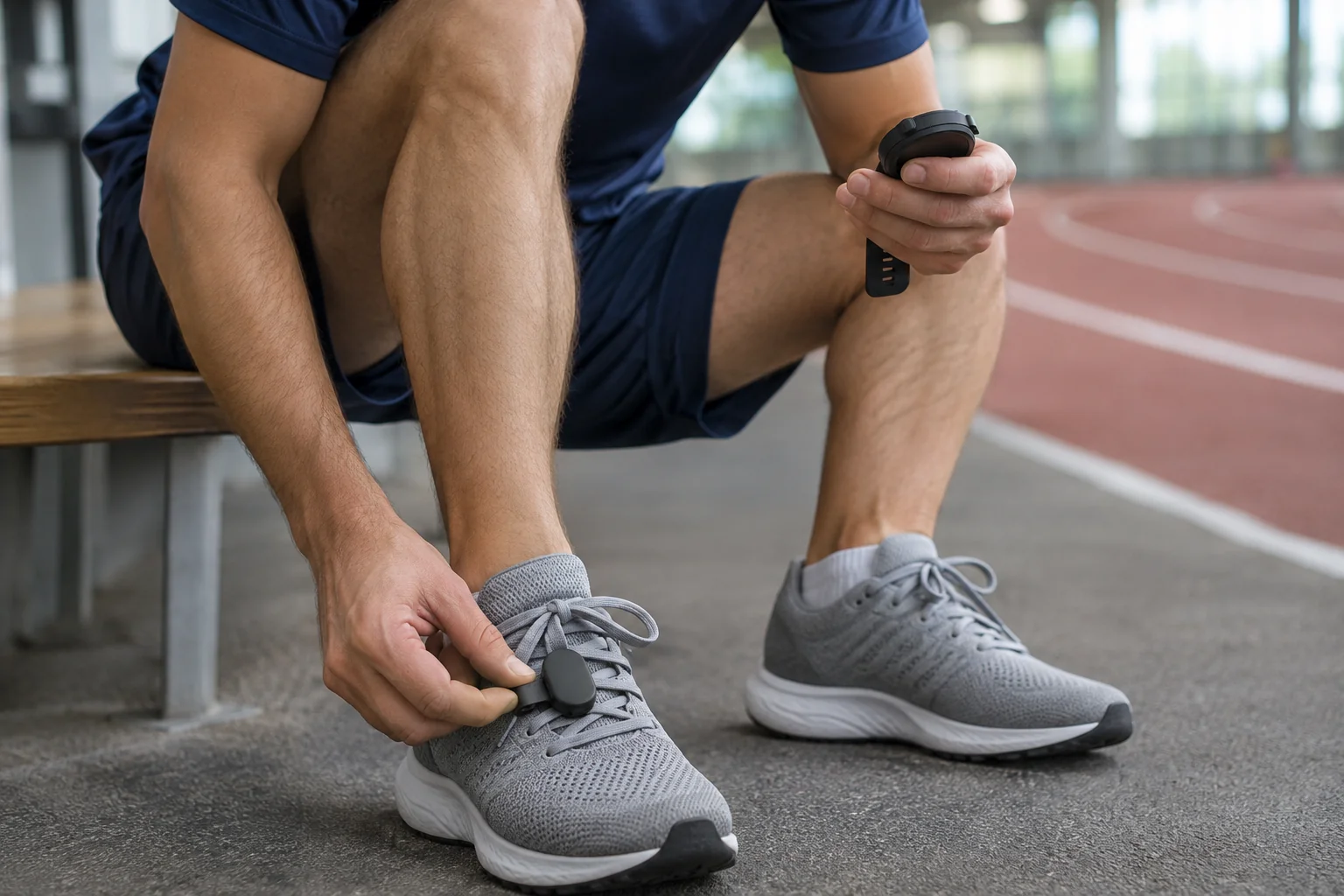
Duo requires looking after the charge and correct shoe attachment of two sensors. Stryd hardware support details app-based battery checks and updates too. Before an important occasion, do not check only one unit. Similar housings or yesterday’s successful run do not prove that both members of the pair are ready now and connected in the correct system.
An original preparation sequence might check both charge levels, both clips, the app’s Duo pair and actual watch data. At the end, confirm the activity and desired detailed data are present. If something is missing, first check which data path stopped. Factory reset can erase memory, so do not make it the first automatic step while data still awaits synchronisation.
Who might gain useful extra information?
Duo 5.0 may particularly interest someone who wants to examine their own bilateral running data consistently and is willing to learn what the metrics mean, how to record and how to synchronise. If a single sensor’s watts and pace already answer your question, a second device can also add handling tasks. You do not need the most complex system to receive useful feedback about your runs.
The best use question is specific: in which workout section and circumstances did one side’s data change, and what do you want to discuss about it? The worst conclusion is reading certain injury or certain health from a single percentage. Pain and recurring symptoms need professional attention, not pursuit of the perfect curve. Duo can be an observation tool; it does not assess the whole situation for you.
Sources and verification
- Stryd: Duo and Footpath, bilateral data and membership
- Stryd 5.0 and the limit on mixed generations
- Stryd: creating Duo in the phone app
- Stryd: watch-specific setup
- Stryd: definitions of bilateral metrics
- Stryd: single-sided and bilateral Footpath, synchronisation
- Stryd: recording differences between one sensor and Duo
- Malisoux and colleagues, 2024: asymmetry and injuries in 836 runners
- Bredeweg and colleagues, 2013: natural asymmetry in novice runners
- Stryd: membership features and management
- Stryd: packages and renewal
- Stryd: model-specific accessories
- Stryd: battery level, hardware and troubleshooting
How Futószív articles are prepared: our editorial guidelines.