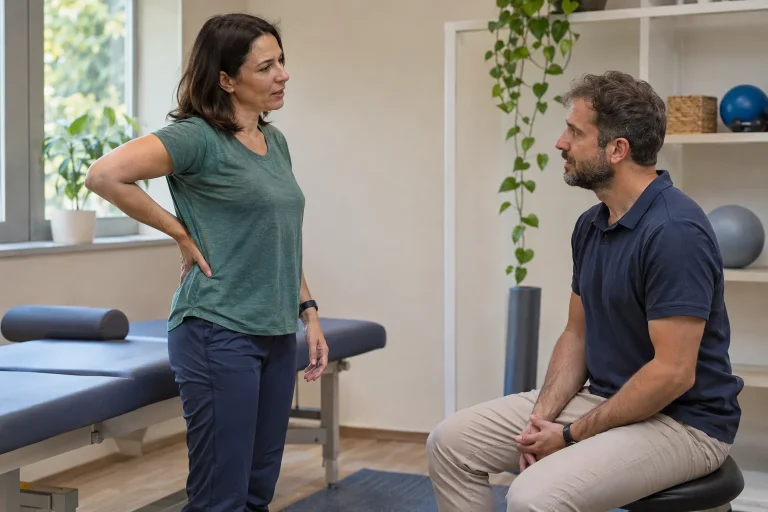
The word narrowing on a medical report can sound like a lifelong ban on movement. Sometimes the opposite conclusion follows: if someone you know runs with the same word in their report, you surely can too. Both ideas expect too much from a single term. The narrowing’s location, structures involved, symptoms and individual function together can provide a meaningful basis for discussing movement.
Changes in the cervical and lumbar spine are not interchangeable, and an imaging finding is not the whole clinical situation. This article offers ways to understand a report and describe your own symptoms. Suitability for running or the treatment needed cannot be established without individual assessment.
Stenosis means narrowing, but you also need to know where
The spine contains a central canal and openings through which nerves exit. NIAMS, the musculoskeletal institute within the US National Institutes of Health, says narrowing can affect several such areas, most often in the lumbar or cervical region. The term in the report is therefore only one piece of information. The next questions are where the change is located and how your provider considers it related to current symptoms. NIAMS: spinal stenosis overview.
You do not need to interpret abbreviations vertebra by vertebra at home. If the report’s language is unclear, ask for a plain explanation: which spinal region is involved, is the central canal or a nerve-exit space affected, and what does the finding mean for you? Bring your own document to the discussion, because a single isolated line can easily lose the wider context.
Right or left side, examination date and the symptoms at that time also belong in interpretation. If the report is old, explain what has changed since. You need not automatically connect every new sensation with the known narrowing. “I have this finding” and “this explains the current functional change” are separate statements; care should clarify their relationship.
Cervical and lumbar findings can raise different questions
Involvement of the cervical spinal cord need not present simply as more severe neck pain. In its explanation of cervical spinal-cord compression, AAOS describes changes in hand dexterity, hand and arm symptoms, balance and walking. With a cervical finding, therefore, describe changes in fastening buttons or usual walking too, even if pain originally prompted your appointment. AAOS: cervical spinal-cord compression.
For symptoms associated with the lumbar region, descriptions often emphasise pain extending into the buttocks or legs, changes in sensation and experiences related to walking. This does not mean every such symptom definitely comes from narrowing. The relationship between location and function requires examination. Do not independently select exercises for cervical and lumbar findings from the same online list.
If several body areas have changed, tell the whole story. Do not omit hand symptoms because walking feels like the main problem, or leave new uncertainty in walking out of a neck consultation. It is not your task to decide beforehand which symptom belongs to which spinal region. A detail you consider separate may still matter to assessment.
Imaging and function provide different kinds of information
NIAMS information on diagnosis explicitly states that imaging alone does not determine whether treatment is needed. Medical history and physical examination are part of assessment too. This does not make the report insignificant. It means the image must be interpreted with symptoms and individual circumstances. NIAMS: diagnosis and next steps.
A description sounding “more severe” does not require independently prohibiting all movement. Equally, new weakness alongside a finding called moderate should not be dismissed. The report’s wording and the current change are separate information. Ask how they fit together in your case and what justifies each next step.
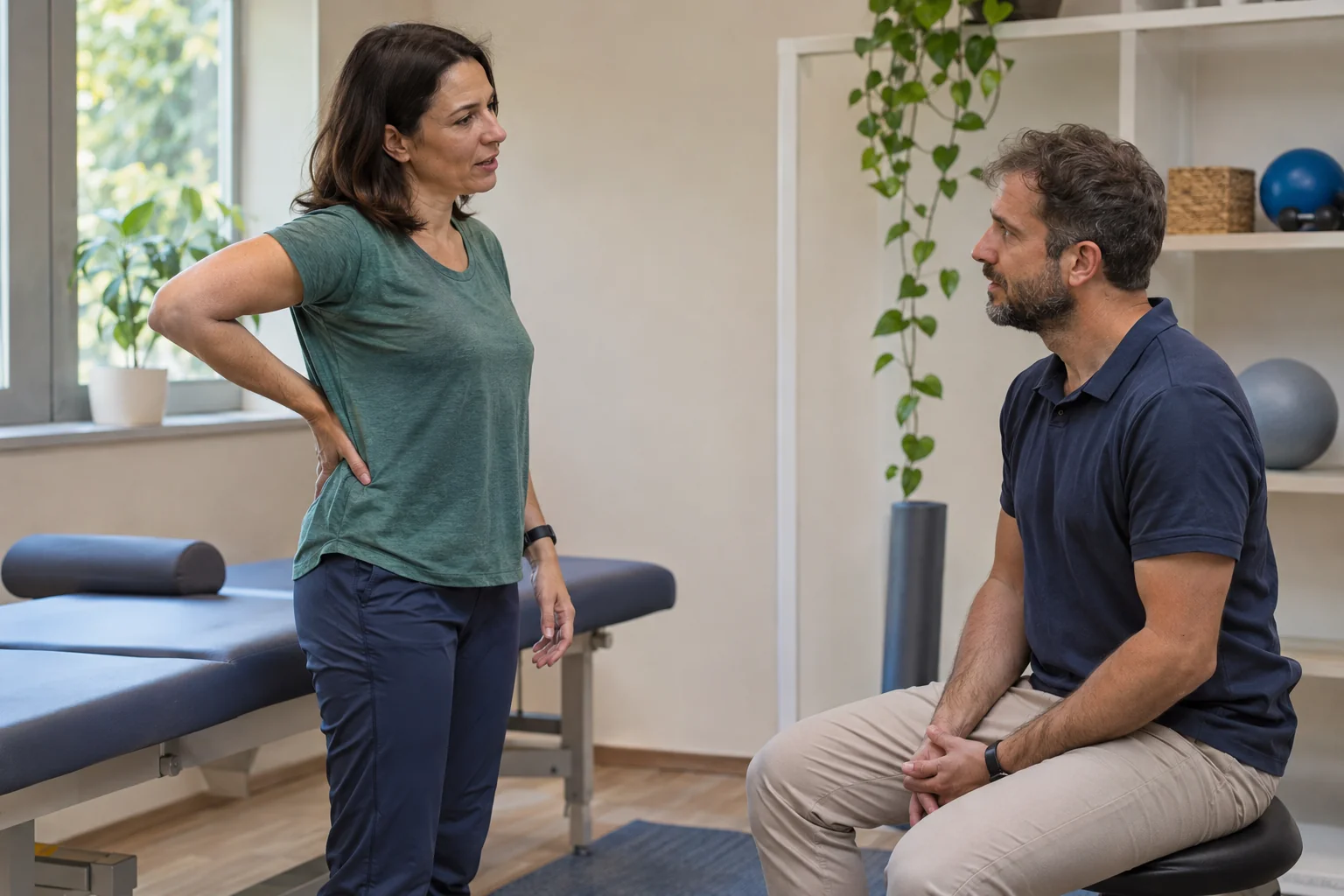
You do not need another person’s image or report as a comparison for a medical discussion. The onset, location, changes and consequences of your symptoms provide the individual information. If earlier examinations are available, discuss comparisons with your provider. Do not calculate running permission or a general prohibition from the millimetres in two documents.
 Enlarge image
Describe changes with walking and position precisely
For lumbar stenosis, NIAMS describes one possible pattern in which symptoms increase with standing or walking and ease when sitting or bending forwards. This symptom description is neither a home diagnostic test nor a posture prescription for everyone. If you have naturally noticed a similar change, describe it, but do not force the situation to prove it.
Expand “I can walk only for a while” as far as you remember from everyday life. What happens: pain appears, tingling occurs, your leg feels heavy or walking feels uncertain? Why do you stop, and what happens afterwards? You do not have to walk as far as possible to speak credibly about the question.
Add the circumstances too. Did it happen while queuing in a shop, on a familiar park path or during a longer, uneven outing? A bag, the ground and opportunities to stop form part of the particular task. They are not proof of a cause by themselves. They help ensure movement advice relates to a real situation rather than a general idea of walking.
Weakness, altered sensation and uncertainty need separate attention
Do not describe new weakness merely as being tired. Explain which familiar task has changed and whether there is new uncertainty or a need for help. Hand symptoms might affect handling small objects, while walking symptoms might affect usual journeys. You need not determine a neurological cause through a maximal strength or balance test at home.
For sensory changes, clarify whether you mean tingling or reduced sensation, and where it occurs. Less severe pain does not automatically make new numbness or functional deterioration unimportant. Report these separately, and seek medical guidance promptly for new or worsening symptoms. An old report is no reason to leave a new change unmentioned.
New loss of sensation around the perineum, bladder or bowel dysfunction, or severe or worsening weakness and numbness in both legs alongside back symptoms may require immediate emergency care. The NHS sciatica page lists these as specific warnings. In a serious emergency in Hungary, call 112; this is not the moment to plan the next exercise programme. NHS: urgent neurological symptoms.
Choosing movement involves more than the sport’s name
Asking “Can I run?” after reading a report is understandable, but an answer requires your provider to know the activity you envisage and your current condition. Do you mean a short session in a predictable place, regular long runs or varied terrain? Describe the specific sporting demand. This article chooses none of these for you.
NIAMS also discusses individually chosen movement and physiotherapy, recommending medical discussion before a new exercise programme. The aim is not for everyone with the same report term to use the same equipment or posture. Ask about an exercise’s purpose, your own technique and how it will be monitored. Discuss planned changes together with current symptoms.
Do not assume temporary relief in one posture proves full suitability for another sport. Cycling, walking and running are different situations, with different environmental and organisational requirements. When seeking alternatives, consider the entire programme: access, getting on, stopping, assistance and your own experience may all form part of the choice.
Make questions about your report specific
A short question list can prevent the consultation being spent solely explaining examination terminology. First clarify personal significance, then action and monitoring. If several professionals are involved, ask who is responsible for which question and what information to pass on at the next meeting.
| Question | What do you want to understand? |
|---|---|
| Where is the narrowing, and which structures does it affect? | The spinal region and the report’s individual significance. |
| How does it relate to current symptoms? | The connection between imaging and function. |
| What does it mean for daily travel and sport? | Movement advice translated into real situations. |
| What is the purpose of the proposed exercise or adjustment? | The meaning and execution of the individual plan. |
| Which changes should I report, when and to whom? | Follow-up and how to seek help earlier. |
Repeat the answer in your own words. For example: “Do I understand correctly that this advice concerns everyday walking now, while running will be assessed separately?” This can reveal if sporting goals and general activity became blurred in the discussion. The meaning of an individual restriction or suggestion should remain clear outside the consulting room too.
If you perceive a difference between written and spoken advice, ask for clarification. Do not create an intermediate programme of your own from the two versions or choose the more favourable online sentence. The advice may concern different times or tasks. Clarification can be a routine part of care, rather than awkward fault-finding.
 Enlarge image
Two similar report terms, two different conversations
Imagine someone whose lumbar report mentions narrowing and whose main question is why they have to stop on a usual walk. Another person with a cervical finding notices clumsier hands and less certain walking. Both read the same word in a document, but need to tell different stories and ask different questions about choosing movement.
This example is not a diagnostic pairing. It illustrates why the online statement “I have narrowing too; this is what I do for it” is insufficient. Without location, history and function, the advice lacks individual meaning. Another patient’s experience can help formulate a question or find care, but cannot determine your own activity load.
Your companion or coach need not become the report’s interpreter either. They can help articulate a concrete goal, accompany you to a discussion and adapt to individually received guidance. Support does not mean proving running safe or banning all movement. Your individual assessment provides the framework to which shared activities can adapt.
Actual change matters more in follow-up than repeating the report’s terminology
Bring what happened alongside agreed activities to your next appointment. Which daily task went differently, and did sensation, strength, walking or the need for help change? You need not generate data by walking to your limit. Observations agreed within your plan and experiences that occurred naturally may provide enough basis for discussion.
If symptoms spread to a new area, function deteriorates or a new warning sign appears, do not focus only on the previously scheduled review date. Seek earlier guidance, and immediate care for urgent symptoms. Regular follow-up aims to keep the plan connected to your present condition, rather than fit every change beneath the old explanation.
A description of spinal stenosis may be important information, but one word does not make the decision about movement. Spinal region, symptoms, individual examination and real-life goals together can offer useful direction. Clarify the next sporting step within this framework with a professional who knows your condition.
Sources
- NIAMS: Spinal Stenosis
- NIAMS: Diagnosis, Treatment, and Steps to Take
- AAOS: Cervical Spondylotic Myelopathy
- NHS: Sciatica
How Futószív articles are prepared: our editorial guidelines.