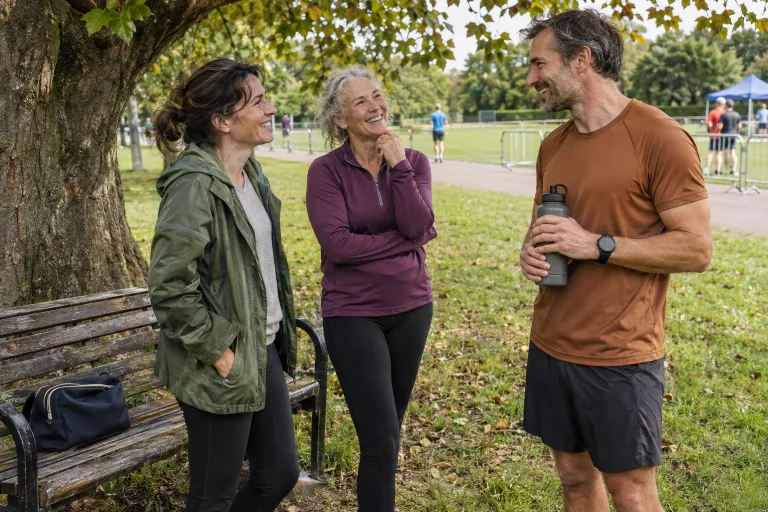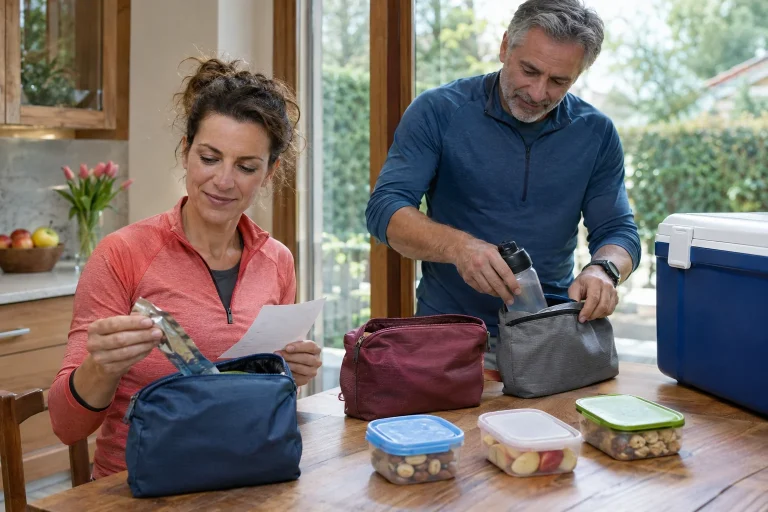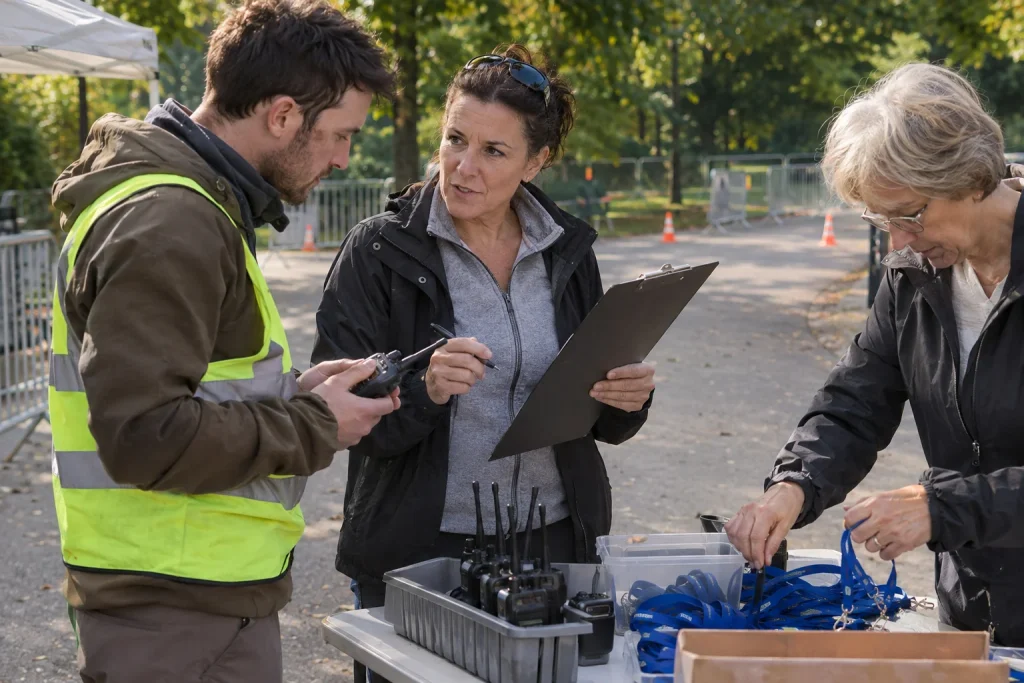
Race reports often show the start, winner and finish. People working behind the scenes get their names in a single sentence of thanks. Yet a well-written team profile is more than politeness: it shows how operations that seem obvious to participants come together. Present specific tasks, real decisions and connected roles.
This guide offers our own editorial working method for running clubs, organisers and community editors. The examples are fictional story outlines, not interviews that took place. We do not attribute invented words or experiences to real people. Your own feature needs actual conversations, verifiable information and appropriate arrangements for images and quotations used.
Begin by looking for a functioning process rather than heroes
‘Nothing would work without them’ is intended as thanks, but says little specifically. Choose a participant moment instead: finding their race number, receiving the designated information or having the site handed back in order at day’s end. Then examine how many people’s work connects to it. The story begins with a real task.
A fictional example: a participant collects a pack within a few minutes. Behind the scenes, someone prepared the entry information, another planned counter arrangements and a third person passes missing-information requests to the appropriate colleague. The feature does not become interesting by crediting all work to one person. Recognising the connections is a good story in itself.
Choosing a process also protects the feature’s scope. A short article need not cover every aspect of organisation. One well-selected detail can explain why preparation, communication and handover matter. At the end, state that this is one slice of behind-the-scenes work, not a ranking of everyone involved in the entire event.
Find quieter tasks too
An on-site helper is more likely to appear in a photo than someone who organised emails, arranged equipment or prepared background records weeks earlier. Do not ask only about the most visible roles in a team profile. Seek contributions less visible to participants that can still be named specifically.
Sport England’s volunteer-support material also emphasises recognising tasks performed behind the scenes. Here we use it to make thanks more specific: notice more than work visible on a stage or beside the course. Approach people for your own story based on their actual tasks and free choice to participate. Sport England: Support
Distinguish the nature of each role in introductions too. A paid professional, organising staff member, volunteer and service provider are not necessarily the same. Calling everyone a volunteer does not make their work more valuable. Accurate descriptions explain the team and avoid romanticising someone’s professional duties as background helping.
Before interviewing, explain the feature’s purpose
The person approached should know the platform, subject and expected format for which you request a contribution. A short team portrait, professional process feature and advertising video create different situations. Do not expect a long interview with a volunteer performing their task in the middle of the event. Ask for an appropriate time and leave room to decline.
Clarify the conversation’s framework beforehand: whether you record or take notes, how quotations will be used and which personal details are necessary at all. Specific legal and data-handling arrangements belong to the editor or organisation. The practical aim is to avoid someone learning afterwards what appearance you expected. Team membership is not automatic acceptance of a public interview.
If someone prefers discussing a task without a personal backstory, that can still make a good feature. You do not need a moving biography of every volunteer. A precisely explained workflow and a few personal decisions can be just as interesting. Someone need not share sensitive details for their contribution to become visible.
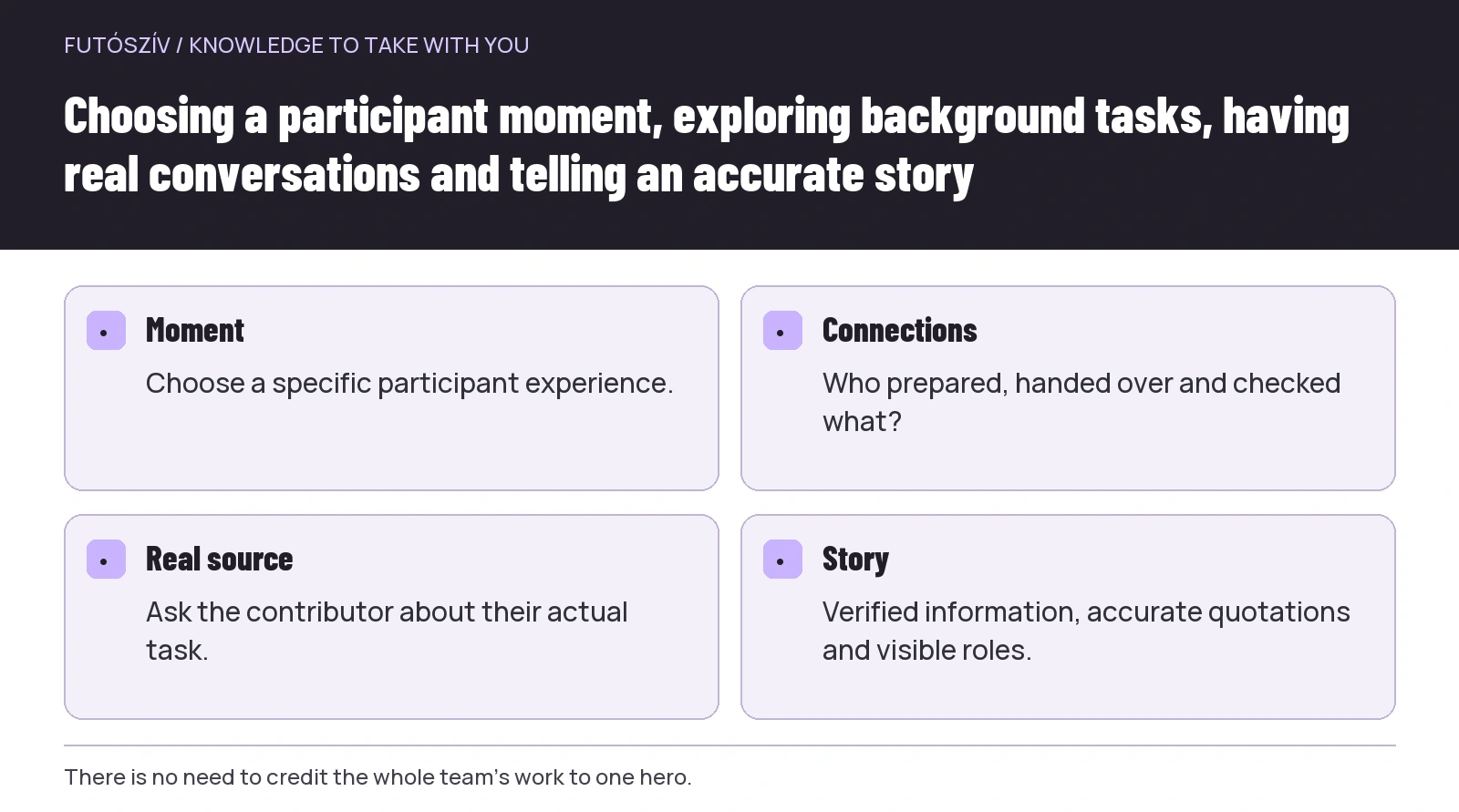 Enlarge diagram
Text version of the illustration
- Moment
- Choose a specific participant experience.
- Connections
- Who prepared, handed over and checked what?
- Real source
- Ask the contributor about their actual task.
- Story
- Verified information, accurate quotations and visible roles.
A good question opens up the actual work
‘Why do you enjoy this?’ can be a good closing question, but often produces a general answer alone. Begin with what the person actually did. When did their task start? Who supplied information? How did they know a step was complete? Which detail do runners not see? These questions can reveal both operations and a personal perspective.
| An interview question of your own | Which part of the story does it seek? |
|---|---|
| ‘What was your first specific task on this project?’ | The beginning of work before race day. |
| ‘Which information were you waiting for from another team member?’ | Connections between roles. |
| ‘Which small detail do you always check?’ | Professional or practical precision within the task. |
| ‘Was there a decision you needed to pass to the appropriate person?’ | Role boundaries and cooperation. |
| ‘How do you know your work is complete?’ | Dismantling, handover and follow-up. |
These questions are not an exam and do not assume everyone must recall an exceptional situation. Ordinary work carried out accurately can be shown too. If an answer is too general, ask for one specific example that can be shared. Do not force exploration of personal or safety-related details that cannot be published.
Keep direct quotations separate from your own summary
Do not revise a real contributor’s sentence until it conveys another claim. If the wording is unsuitable for accurate quotation, summarise the content in your own words with clear attribution. Do not merge the two forms. A smoother sentence does not justify putting a new idea in someone’s mouth.
Associated Press editorial principles treat accurate attribution and retaining a quotation’s original meaning as fundamental requirements. We cite this as a journalistic example, not to equate a community editorial team with AP. Claims from the actual conversation still need checking and understandable context. Associated Press: Telling the Story
Label fictional sample sentences separately. ‘One possible summary could be structured this way’ differs from a quotation attached to a name. This article likewise contains no invented experience attributed to a real volunteer. A credible story does not require inventing a more dramatic scene than what actually happened.
Check figures from several angles
Volunteer counts, packs distributed, stations established and work hours can convey the scale of organisation. But explain what each number means. Applicants, people actually present and shifts covered are different measures. One person can work in several roles, so the number of tasks does not automatically equal the number of people involved.
A fictional example: twelve people accepted eighteen shifts in total. This does not become eighteen volunteers. If estimating work hours, label them estimates and explain what is included. Adding preparation and on-site time makes sense only without counting the same activity twice. Traceable figures provide value rather than impressive large numbers.
Check names and role descriptions too. A team lead can help with organisational information, while the person concerned can help with their own introduction. Fact-checking and handing over approval of the whole editorial text are separate matters; clarify your editorial framework beforehand. Accuracy should extend beyond the leader named in the headline.
Make the task recognisable in the picture too
A group photograph is a good memory but does not always show what the team did. It can be supplemented by a preparation detail, orderly equipment handover or shared check of a task sheet, with appropriate usage arrangements. The caption should explain what happens and when the image was made. Last year’s archive photograph should not appear to show this year’s day.
Do not photograph an organisational document without checking it. It may contain telephone numbers, personal information, internal access details or other non-public content. Often your own flowchart without personal data is enough for explanation. Label it an illustration, not evidence from a real worksheet. Visual explanation helps when it does not create a false impression of origin.
Do not ask someone working to stage a movement that disrupts their task or misrepresents the process. If an illustrative picture is made afterwards, explain this appropriately in the text or caption. Respect for background work appears in when and how you photograph too, not only thanks in the finished post.
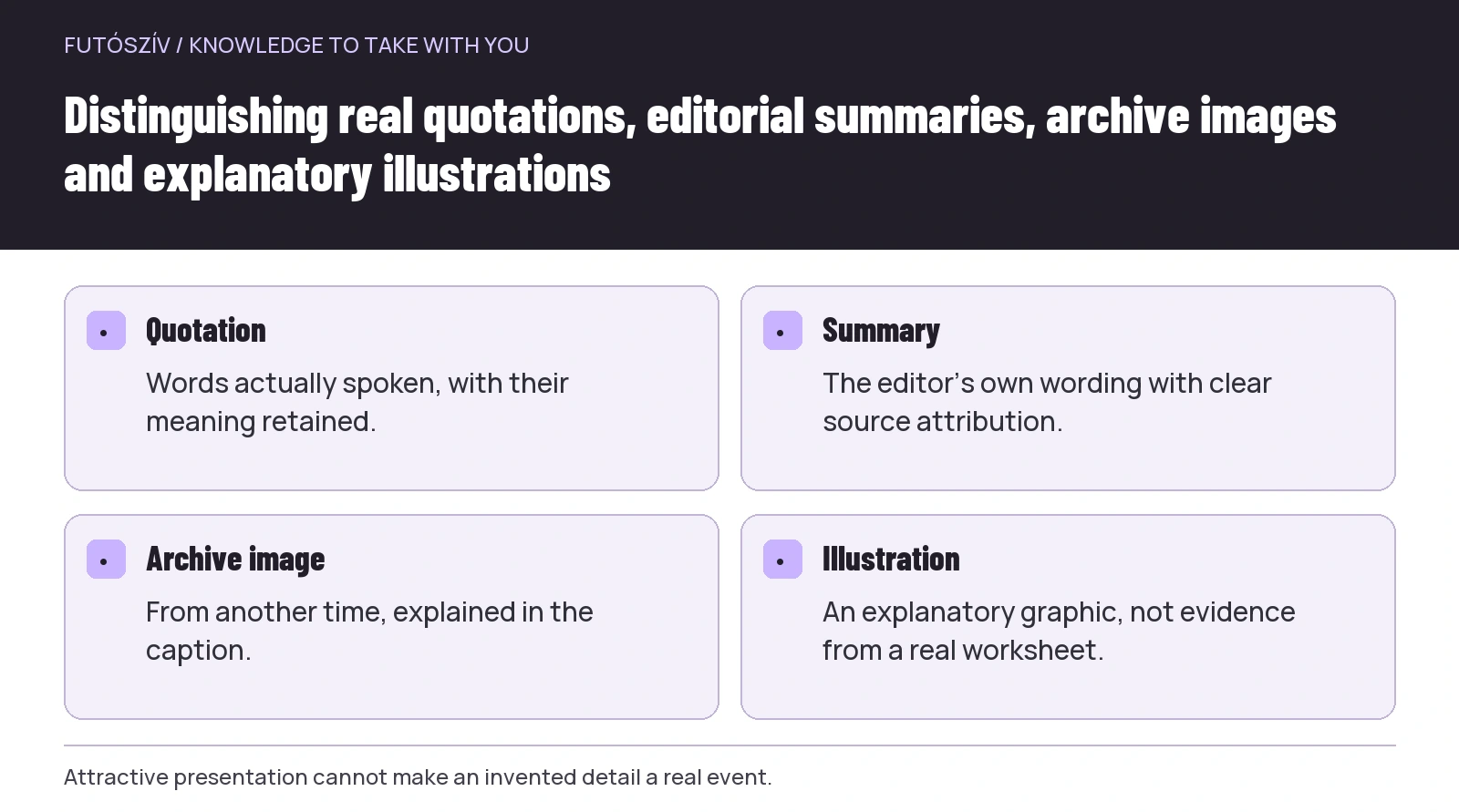 Enlarge diagram
Text version of the illustration
- Quotation
- Words actually spoken, with their meaning retained.
- Summary
- The editor’s own wording with clear source attribution.
- Archive image
- From another time, explained in the caption.
- Illustration
- An explanatory graphic, not evidence from a real worksheet.
Keep safety and personal details within the appropriate circle
A team story need not publicly disclose every access point, internal reporting procedure or other sensitive operational detail. Explain the task’s purpose using only publishable information. Clarify specific boundaries with the relevant organisational and professional contact. The audience needs to understand operations, not gain access to the entire internal system.
Do not automatically use a medical situation or participant problem as a dramatic scene either. A professional’s work can be discussed within an agreed general framework without telling an affected person’s personal story. A behind-the-scenes profile does not aim to make the hardest moment more spectacular. The publishability and professional content of a particular case need separate arrangements.
If a critical organisational matter emerges, do not hide it in celebratory thanks, but do not treat it as fact without checking either. Investigate through the appropriate editorial and organisational process. A team feature does not replace complaint handling or safety evaluation. Separate tasks may need separate processes.
Thanks should not conceal working conditions needing improvement
Long shifts or insufficient help can easily become heroic stories. A feature should not make working without breaks, in an unclear role or in constant haste an example to follow. Recognise the contribution while improving conditions for the next event. A grateful post is not a substitute for necessary organisational work.
Ask what helped the task and what would be more useful next time too. A clearer briefing, earlier information or better handover may not be spectacular topics, but are valuable story details. A team need not be portrayed as flawless for its work to deserve recognition. Showing learning may be more credible than an image of perfect machinery.
Respect how someone wants to receive thanks too. Some enjoy a public name and photo; others prefer discussing their task anonymously or not appearing. Recognition need not take the same form for everyone. Agree specific use and naming conditions beforehand, rather than discovering a disagreement after publication.
An outline for a fictional team profile
The opening scene is preparation of a morning pack-collection table. The article should not claim the writer attended if they were absent; in a real feature, name the observation or source clearly. Three roles follow: the person preparing, the on-site coordinator and the person referring requests. Each presents one specific task and connection.
The middle tells the story of a verified change: for example, how a previously misunderstood label became clearer. Contributors’ individual perspectives remain separate from organisational fact. The ending covers completion and a lesson for next time. Thanks then relate to actual work rather than general adjectives.
The outline could become a short written profile, picture story or video of a few minutes. Match the format to actual material available. Without footage from an earlier day, do not present another event as that scene. Your own flowchart or properly labelled archive detail can also explain the work. Credibility does not depend on choosing the seemingly more spectacular format.
The final check before publication
Sources for names, roles, dates and figures should be retrievable. Was a quotation actually spoken, and does it remain in its original context? Does a caption distinguish current, archive and illustrative images? Does the published information imply one person did the whole team’s work? These questions can form a short editorial checklist.
After a good profile, readers know more than that many people helped. They understand how a particular task went from preparation to completion and where roles connected. This can offer more lasting recognition than a general thank-you sentence. The team’s work becomes visible through its own precision and cooperation.
How Futószív articles are prepared: our editorial guidelines.