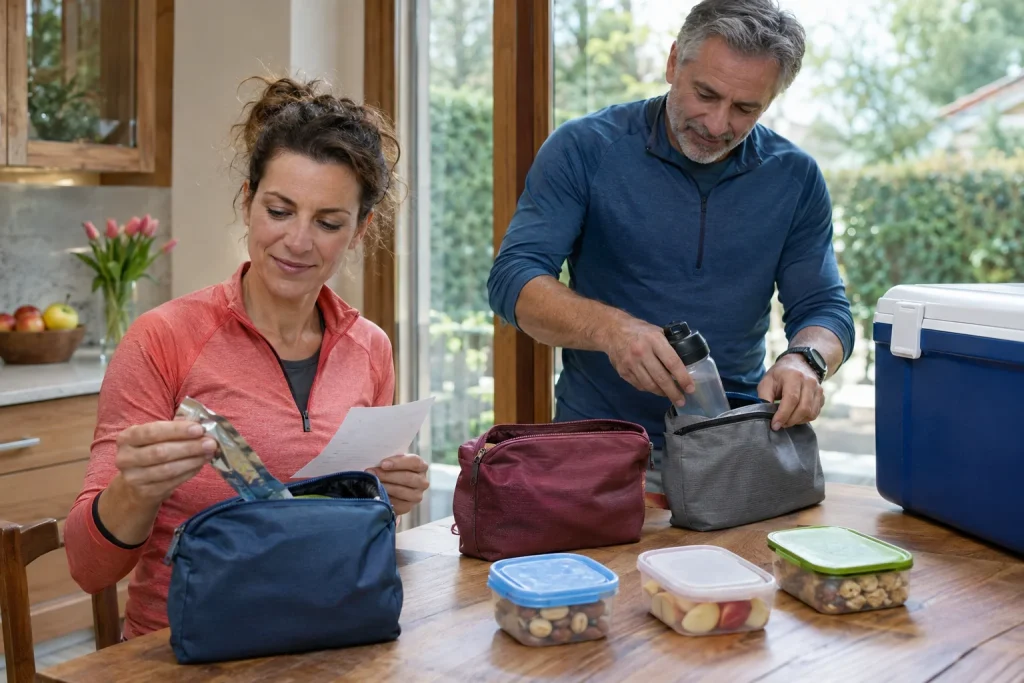
Shared refreshments for a running team can look like one large crate of drinks and food. The actual task is more complex when members use different products, plan different amounts or follow special dietary requirements. Joint purchasing and transport can be convenient, but individual decisions need to remain identifiable. A well-organised system shows whose package is whose, what can be shared and what happens if a planned item is unavailable.
This article supports practical organisation for adult recreational running teams. It does not prescribe individual fluid, carbohydrate or electrolyte amounts, or replace members’ medical and dietetic guidance. Personal health requirements apply with an allergy or prescribed diet. A team helper does not diagnose, change treatment or create an identical sports nutrition protocol for everyone. The task is to put appropriately developed individual plans into practice clearly.
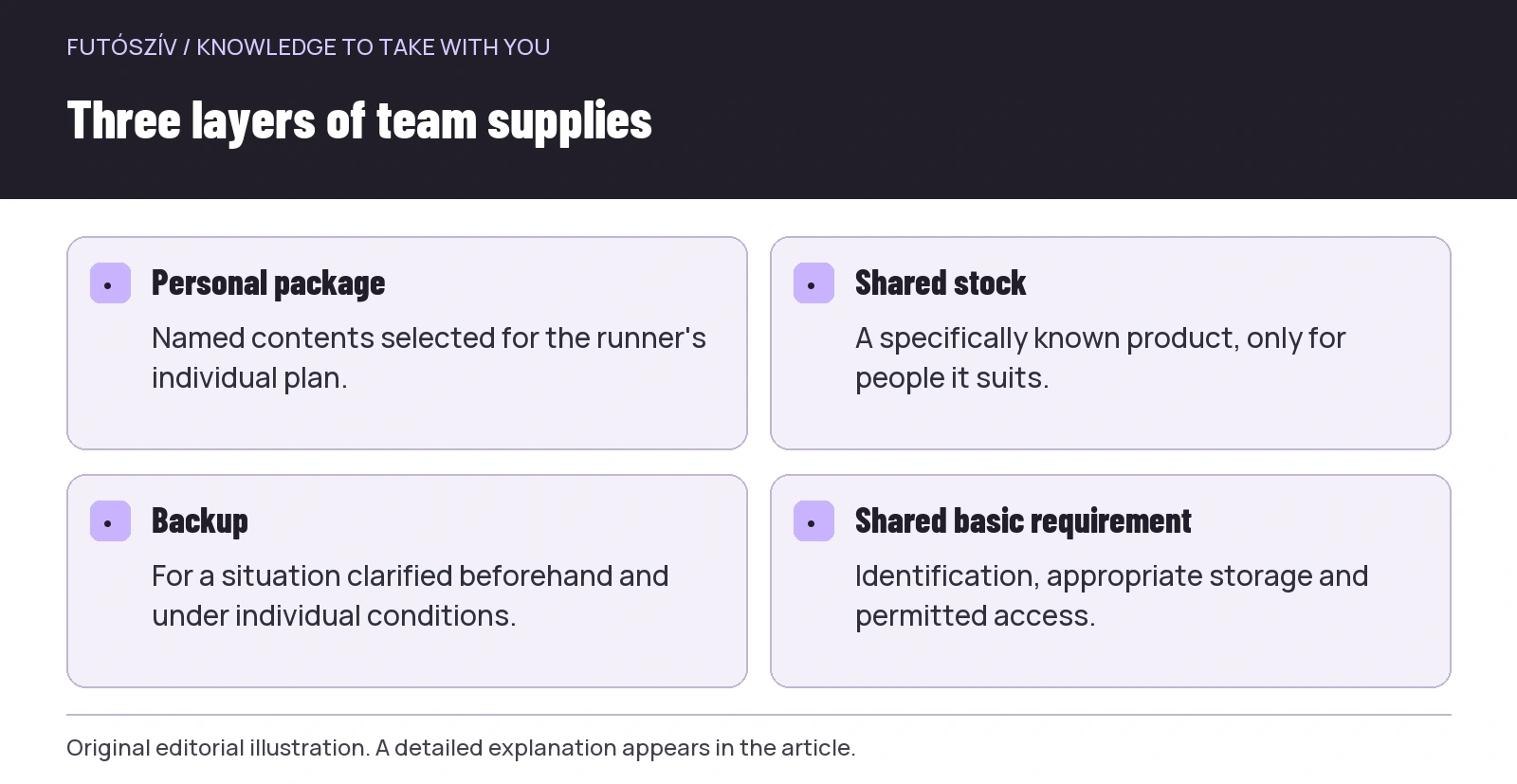
Distinguish three layers of supplies
The first layer is an individually chosen personal package labelled with a name. The second is shared stock whose composition and use are appropriately known to everyone concerned. The third is a specifically designated backup with defined conditions of use. Do not merge the three into an unlabelled box. Backup is not automatically a suitable substitute for everyone, and shared does not mean everyone must use the same thing.
A personal package’s advantage is identification, rather than a safety guarantee in itself. Product composition, appropriate storage and the individual plan still need to be suitable. For shared stock, know who checked the specific product and which variant it is. A different wholesale or discounted pack size may require another label check too. An identical brand name does not establish a complete match.
Only put necessary personal-plan information on the shared sheet
Each participant should state which product or food they rely on, where they want access and under which conditions they can accept a replacement. The shared sheet need not become a detailed medical record. With an allergy or another special situation, appropriate helpers should know necessary safety information, but sharing the full medical history is not part of packing. Personal and logistical data serve different purposes.
Keep the sheet short and actionable. A name, package identifier, handover place and important handling condition can clarify many situations. Clearly mark any item that cannot be replaced without the runner’s prior approval and appropriate checks. Helpers should not need to guess on site which other flavour might be equivalent. A good plan reduces decision demands where time is limited and many things are moving.
| Supply layer | What should the label contain? | Who decides on its use? |
|---|---|---|
| Personal package. | Name, identifiable contents, necessary handling and handover. | The runner, consistently with their plan and instructions. |
| Shared stock. | Exact product and variant, with an accessible label. | Only people for whom it is suitable and fits their plan. |
| Backup. | For which situation and person is it a checked alternative? | According to individual requirements clarified in advance. |
Do not confuse dietary preference with a health requirement
A plant-based choice, taste preference and confirmed allergy are different questions. Each can receive attention without being treated as the same risk or requiring the same solution. A vegan product, for example, is not automatically suitable for every allergen requirement. Lactose-free also differs from dairy-free. Communicate your requirement precisely and check the product’s full composition.
The European Commission allergen information discusses unintended-presence information alongside labelling allergens used as ingredients. Both original labels and handling processes therefore matter in a team package. Foods combined in one bowl may lose their identity and come into contact with other ingredients. The team system needs to retain requirements from each person’s guidance too.
 Enlarge diagram
Text version of the illustration
- Personal package
- Named contents selected for the runner’s individual plan.
- Shared stock
- A specifically known product, only for people it suits.
- Backup
- For a situation clarified beforehand and under individual conditions.
- Shared basic requirement
- Identification, appropriate storage and permitted access.
Keep the choice of familiar products individual
The Australian Institute of Sport practical information on sports gels emphasises individual tolerance and trying products during training beforehand. A discounted team purchase should therefore not automatically become compulsory at an important event. Individuals need to become familiar with new shared supplies under appropriate conditions and consistently with their professional plan.
Do not replace a product’s own use information with a general team rule. Different products can have different compositions and handling requirements. One member’s experience does not guarantee another’s tolerance. Joint organisation aims to provide access, rather than erase personal differences. A member uncertain about their plan can seek sports dietetic support instead of merely copying others’ amounts.
Keep original information available when packing
Similar sachets and small bags make mistaken handovers easy. Use readable names or familiar identifiers and keep contents recognisable. Colour alone is insufficient, especially in darkness or during a quick handover. If the original label is on outer packaging, retain access to the necessary information. Do not mix several products in one personal package if they cannot later be distinguished.
For homemade food, know the recipe and important ingredients. Homemade is not automatic confirmation of allergen safety, just as a shop package does not resolve every on-site handling question. Appropriate separation and clean utensil use matter in shared storage too. A separate bag’s label helps only when it actually identifies the contents and appropriately handled food the runner expects.
Refrigeration and transport conditions belong to the package
The Nébih Wasteless programme advice also emphasises maintaining the necessary cold chain. Know in advance which team foods require refrigeration and whether this can be provided during transport and waiting. A shared crate in a car is not automatically suitable storage. Follow the specific products’ instructions and plan more than the final minute of handover.
If the conditions cannot be provided, choose another option fitting individual plans before purchasing. Even a product that seems longer-lasting can have storage instructions. Weather, longer waits and access to the handover place affect arrangements too. Assign responsibility for storage rather than assuming somebody will surely have the right equipment or space.
Match handover points to the rules
Outside assistance and personal refreshments differ between races. Plan handovers according to official rules and organiser information. Discuss personal dietary needs beforehand if a special arrangement is required. Do not automatically treat the nearest place accessible by car as an authorised aid point. Permitted access and personal suitability are both necessary.
Choose a place for shared training handovers that allows calm, safe exchange too. Traffic and other participants’ movements matter. Runners should not rush to read labels or swap packages on a busy road. Names, points and contents clarified beforehand reduce guesswork on site. If something differs, stop somewhere appropriate to clarify it.
 Enlarge diagram
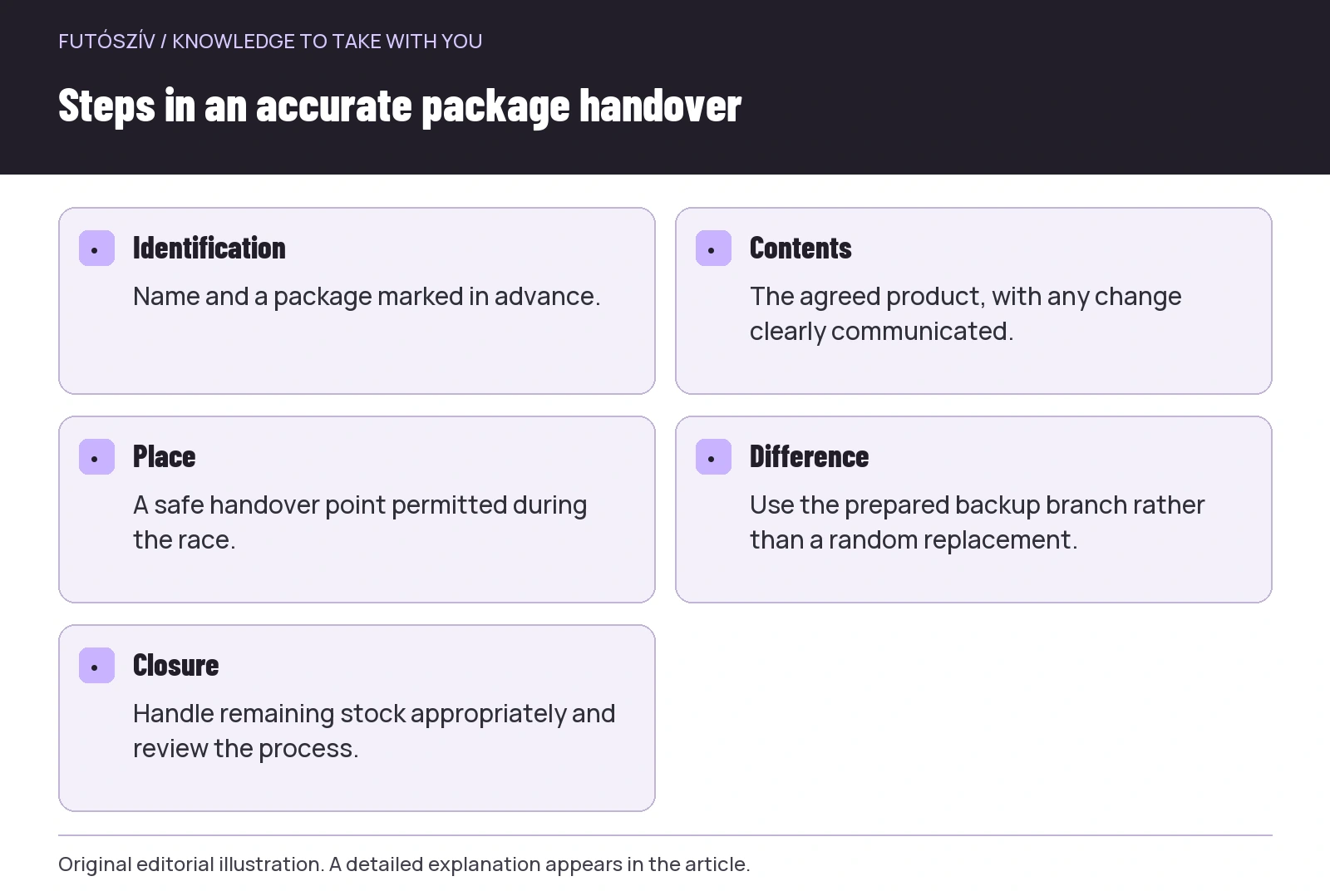
Text version of the illustration
- Identification
- Name and a package marked in advance.
- Contents
- The agreed product, with any change clearly communicated.
- Place
- A safe handover point permitted during the race.
- Difference
- Use the prepared backup branch rather than a random replacement.
- Closure
- Handle remaining stock appropriately and review the process.
Three sentences may be enough for an accurate handover
The first identifies runner and package. The second confirms planned contents or communicates a change. The third clarifies handling after the handover if relevant. A long conversation is unnecessary at every point, but do not conceal important differences to save time. A runner can only decide appropriately about a replacement they know about.
If the package cannot be found or its contents cannot be identified, do not hand over a randomly chosen similar product. Use the backup arrangement agreed beforehand. Another suitable package may be available, but clarify its individual and permitted use. Backup exists to resolve uncertainty, rather than encourage everyone to experiment with unfamiliar foods on site.
Check deliveries from shared purchases
Give the person buying supplies an exact list and identify items that cannot automatically be substituted. Alternatives supplied in online orders or during shop shortages may differ from the original. Check actual packages and important requirements on receipt. Shared financial accounting and individual dietary checking are separate tasks; matching prices do not establish product suitability.
Create a simple packing list from the checked stock. You do not need a full inventory system, but show what is set aside for whom and which handover. Shared backup should not quietly run out while waiting before the start. Anyone changing their plan should report it before packing. Helpers then avoid trying to interpret an old and a new list on race day.
Ensure the right people know important healthcare plans
With a known severe allergy or another condition, the necessary helper should know the actions agreed with the runner’s provider. A distant team crate does not replace access to personal emergency equipment. This article does not teach medication use or assign healthcare duties without appropriate training. Find out beforehand how to request help at the event and implement your personal plan.
Keep team communication factual and respectful. Different food choices or a personal package are not matters of sporting discipline. Members do not need to discuss each other’s medical details to hand over the right box correctly. Necessary information-sharing and privacy can coexist. Organisation aims to let each participant follow their own appropriate plan.
Review the process after the event
Check whether labels were readable, suitable stock accessible and substitution rules clear. Use leftover food only according to its handling requirements. Fix one specific logistical issue for next time, such as identifying stations or names. Team refreshments work well when shared effort simplifies access while preserving individual needs and verifiable information throughout.
Sources and further reading
- European Commission: Allergies
- Australian Institute of Sport: Sports gels — concerns and considerations
- Nébih Wasteless: What you can do
How Futószív articles are prepared: our editorial guidelines.