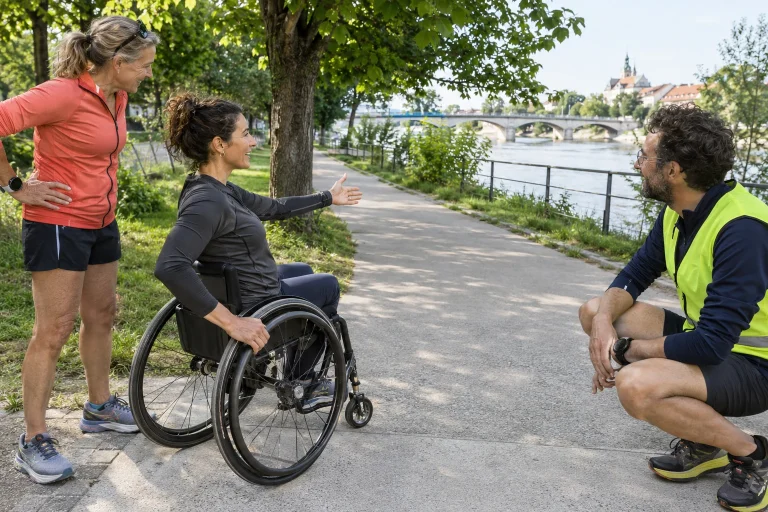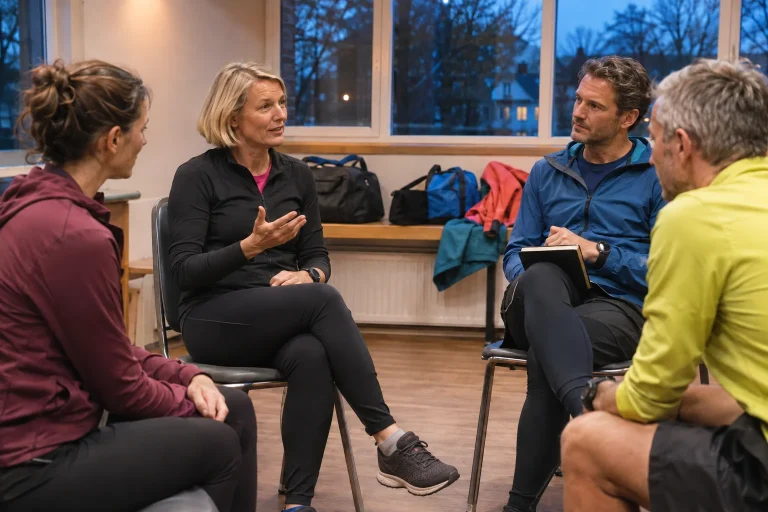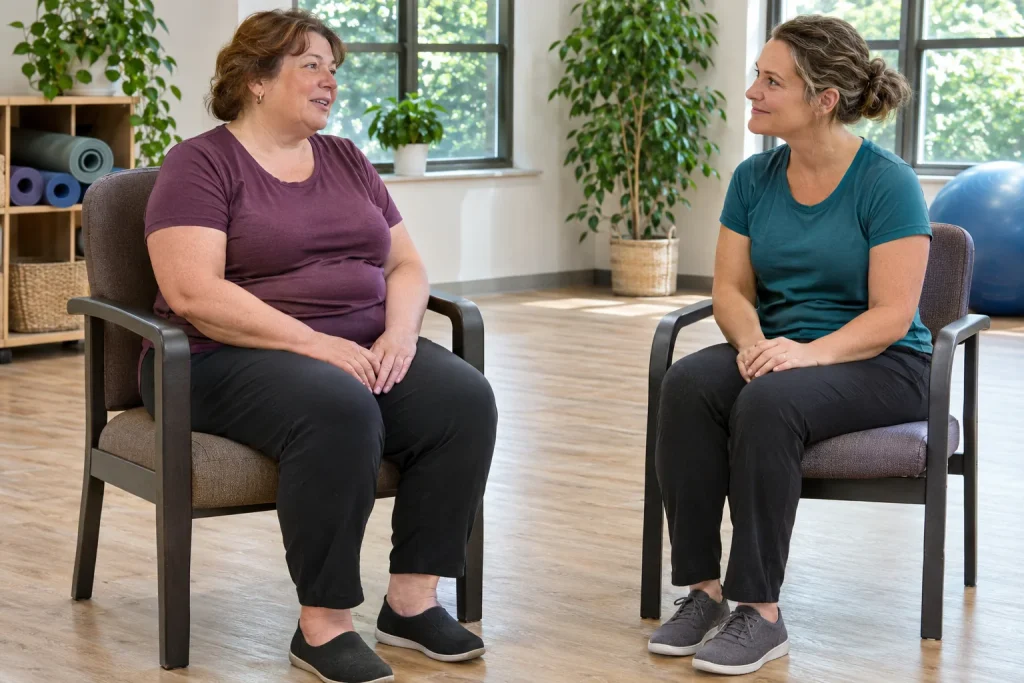
We often discuss sporting goals as though they must begin with standing, steps and distance. Someone who currently moves more comfortably while seated may feel they have reached only the waiting room for the real programme. Yet shared play, learning movements, regular participation or developing a personally important ability can be goals in their own right. Their value is not determined by whether they eventually lead to running.
Being seated can relate to many circumstances: a temporary condition, a long-term mobility impairment or difficulty standing for long periods. It does not automatically imply the same movement possibilities or tell us whether you use a wheelchair. The shared question is how to find an activity fitting your actual abilities and condition while keeping your interests in the plan.
A seated position and inactivity are not the same
The explanation of the WHO guidelines on physical activity and sedentary behaviour specifically notes that people with mobility impairments can be physically active while seated or lying down. Sitting is a posture; the nature and energy demands of movement are another question. This does not mean every seated exercise suits everyone, but the presence of a chair alone cannot determine a programme’s value.
A quiet conversation in a chair and an individually adapted seated activity programme are not the same activity. The latter might involve learning a movement, a social game or effort within an individual plan. Connecting the goal with the task matters more than appearances. A video may not let you judge a movement’s difficulty or the participant’s health, and you do not need to compare yourself with such images.
Sudden one-sided weakness, facial drooping or speech difficulties require immediate medical help, even if the symptoms disappear. Medical assessment of other new weakness or walking difficulty also comes before sports planning. Restrictions for an existing condition must remain in place too. Comfortable sitting does not itself provide general exercise clearance. Choosing a suitable opportunity starts from the individual condition, not a label saying a task can also be done seated.
Separate out what interests you in sport
Perhaps you used to enjoy running for company, your own rhythm, fresh air or learning a new task. Several of these can have a place in other activities. When formulating a sporting goal, first ask about the experience: what would you like to experience more often? You do not need to translate the answer immediately into calories, steps or a future standing task.
The NHS page on becoming more active also emphasises enjoyable activities and organisation fitting everyday life. This idea can apply to seated movement while its standing or stair-climbing examples are not compulsory tasks for you. Your interests can provide the starting point; individual suitability and necessary adaptations are separate questions to clarify.
A goal might be finding a permitted activity set to music. Someone else may value participating independently in a club or learning to use suitably adjusted equipment. A goal becomes specific when you name what you want to try and under which conditions. You do not have to promise future running.
 Enlarge image
Ask about actual details rather than the task’s name
Seated exercise, chair dance and adapted training are broad categories. A session may contain arm, trunk or leg movements, resistance, equipment and differing balance demands. The label does not reveal what happens in the room. If a movement or position is unsuitable for you, the instructor needs details that allow meaningful adaptation.
The CDC guidance on activity among adults with disabilities highlights opportunities matched to individual abilities, necessary adaptations and appropriate professional help. Not everyone performs the same sequence or necessarily uses the same equipment. Modification can be part of the session; seeking another version of a demonstrated movement need not feel like a separate failure.
Ask the organiser whether there are standing sections or floor work, whether transfers between seats are needed and which equipment is used. Also ask what happens if you cannot or do not want to perform a task. ‘Everyone at their own pace’ alone does not explain who will demonstrate an individually suitable alternative. Good information makes expectations and available help clear.
The chair, support and space should work together
The NHS page demonstrating sitting exercises describes a stable, non-wheeled chair and a sitting position suited to the tasks. This information applies to the exercise sequence shown; it does not override your own support needs. If you need armrests, back support or another personal aid, do not abandon it simply to look like a video. Seek appropriate help matching the seating and task.
In a larger body, it can be particularly frustrating when a venue merely says chairs are available, but they are uncomfortable, unsuitable in size or have unknown capacity. You can ask about this beforehand. Seat width, support positions and space for sitting down are specific material conditions. You do not have to justify wanting precise information through a public trial.
If you use a wheelchair, its setup and suitability for the sporting task are separate questions. Do not remove supports yourself, improvise restraints or assume everyday equipment suits every sports movement. Likewise, a stable household chair is not sports equipment for every purpose. The task, seating and surrounding space need to work together; an appropriate professional can provide practical help.
You want to participate from entrance to toilet too
A venue’s suitability does not begin inside the exercise room. What are the journey, entrance, changing and waiting arrangements? Must you stand for a long time or wait in a narrow corridor beforehand? Is a toilet accessible, and can you manage the journey home? A seated programme becomes a real opportunity when the route to it does not contain barriers omitted from the advertised session.
The NIDDK overview of activity at different body sizes also treats access to clothing, equipment and venues as practical questions. This is useful even if your particular barrier is unrelated to weight. Do not settle for an inclusive-sounding session name: check how participation works throughout the outing.
| Part of participation | A question to clarify beforehand |
|---|---|
| Getting there | Are there stairs, prolonged standing waits or a difficult door? |
| Preparation | Are a toilet and suitable seat accessible? |
| Movement task | Who helps match equipment and the task to you individually? |
| Finishing | How can you leave at your own time and get home? |
The table is an organisational aid, not an accessibility certificate. One yes does not resolve every other point. If you need a companion to reach the session, discuss what help you want and what you wish to do independently. Support is respectful when it assists your choices rather than automatically replacing your decisions.
Track progress in something that matters to you
A step-based app can easily make a seated activity invisible. If your watch records little, that does not mean the session lacked substance. You can choose another way to track it: whether you understood the task, comfortably accessed necessary equipment, independently requested an adaptation or found a social situation you enjoy joining.
Assessment of healthcare or rehabilitation goals needs coordination with the appropriate professional. Do not invent a fitness score from movement counts, heart-rate readings or how tired you felt. A specific experience can be enough in an activity diary. An uncertain movement can be learned or replaced rather than making the entire session a failure.
Do not use new pain or feeling unwell as a measure of progress. Sitting does not make continuing an uncomfortable task compulsory. Explain what happened and ask for a change or healthcare help where needed. Enjoyment of movement and following a personal plan do not require exhaustion at the end of every session. A clearer, better-organised programme can also be progress.
 Enlarge image
One type of movement is not an admission ticket to a community
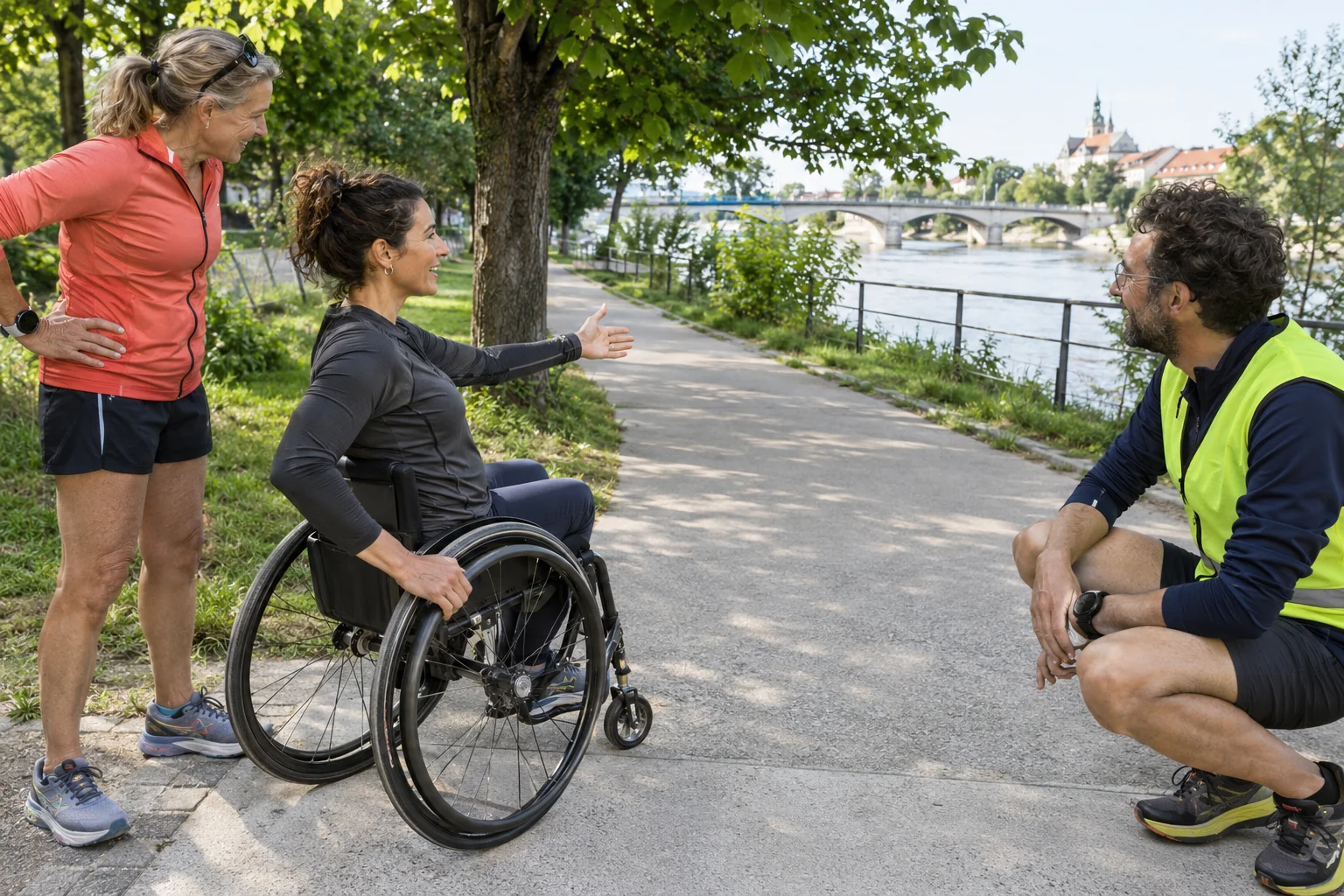
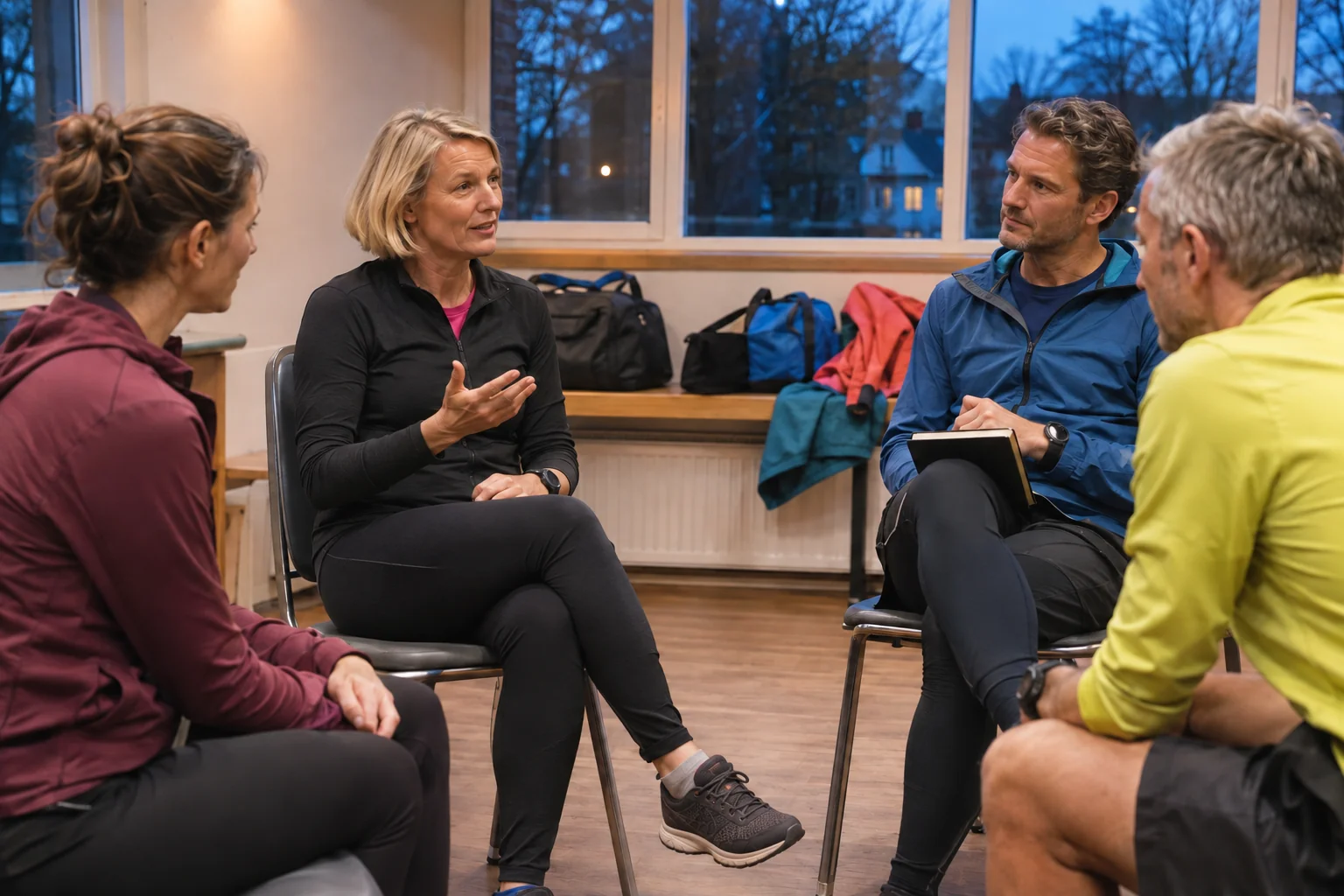
In a running friendship group, someone choosing seated movement can easily become a helper or spectator, even if they want to exercise themselves. If another form of participation matters to you, say so. Would you prefer your own suitable programme instead of a shared warm-up, meeting later or a separate adapted session? Your connection to the running community and the movement you actually do are not necessarily the same, but neither needs to erase the other.
A fictional example clarifies the distinction. A group member can currently move comfortably while seated and does not want to guard everyone else’s bags every time. They agree with the group to attend their own class at another time and join the shared meeting as a participant. This is not lower-value membership. Another person might genuinely enjoy volunteering. The difference is whether the role is their choice.
You do not owe everyone an explanation of why you sit or do not run. Necessary practical information can be shared without making your full health history public. Community recognition should not require a dramatic moment of standing or a future start line. A more supportive question is which programme interests you and what you need to participate.
Future running can be a question, but is not a compulsory endpoint
If you would like to run one day, you can name that in individual planning too. Possibility and conditions need clarification based on your health; time spent in seated activity alone does not establish readiness to run. Equally, hope of future running need not be the only meaning of today’s activity. The current programme can have a complete purpose of its own.
The next step could be calling a venue, an agreed trial with an appropriate professional or learning about equipment fitting you. Begin with the question that removes the most uncertainty now. You do not need to choose a sport, equipment, membership and year-long plan simultaneously. A smaller precise decision helps make the opportunity work in your actual life.
The essence of a personal sporting goal is that you help shape why and how you want to move. Appropriate professional guidance and an accessible environment can support that. A chair does not choose your goal, and running is not compulsory proof that you take movement seriously. Participation becomes fuller when you can not only be present but connect through your own interests.
Sources
- NIDDK: Staying Active at Any Size
- NHS: How to be more active
- NHS: Sitting exercises
- CDC: Increasing Physical Activity among Adults with Disabilities
- WHO: Guidelines on Physical Activity and Sedentary Behaviour – recommendations
- NHS: Symptoms of a stroke
How Futószív articles are prepared: our editorial guidelines.