A runner living with type 1 diabetes does more than add a few measurements to a general training plan. Exercise, insulin treatment, eating and their own glucose response together shape the situation. A good plan makes room for sport while arranging both expected and unexpected decisions in advance.
This article offers points to help adults prepare for a consultation. It does not specify an insulin dose, individual glucose target or personal carbohydrate intake. These need coordinating with your care team. Planning activity for children and adolescents requires separate professional and family support appropriate to their age.
Activity can be a goal; a personal framework is its foundation
The 2026 ADA/EASD consensus on type 1 diabetes in adults discusses physical activity as an important part of care. An individual approach does not mean rejecting running; it means fitting the plan to the particular treatment and life circumstances.
At the consultation, explain what you want: a short easy run, a regular training week or a longer race. Duration, effort and time of day are more useful details than saying “I would like to exercise more”. Describe your current sporting background too.
If you work with a coach, clarify which health-related framework you will share with them. A coach can help with the size and sequence of running tasks but does not replace diabetes care. The boundaries of cooperation between these two areas should be clear.
Different runs do not produce the same glucose response
Sustained lighter activity, intense intervals and strength training may create different situations. The T1DEXI study investigated glucose responses to different structured forms of exercise in real-world settings. A group-level result is not a prediction valid for every individual run you do.
So do not create an identical rule for every session from one previous experience. Time of day, preceding food intake, active treatment and the current situation all matter together. Personal observation aims to recognise patterns, not promise complete predictability.
Introduce a new running task within the framework agreed with your care team. If duration, intensity and care all change at once, interpreting the experience is harder. One change you can follow may provide more usable information.
What should you take to your first discussion about sport?
Prepare a brief description of your current running, planned goal and diabetes devices used. Show relevant data or experiences during exercise if you have them. You need not print every previous measurement; ask beforehand what format will make the information most useful.
Describe previous low-glucose episodes and any uncertainty about recognising symptoms. The NIDDK information page specifically discusses how warning signs of low glucose are not reliably noticeable for everyone.
Also mention any complications, other conditions and regular medicines. These may mean the suitable type or level of activity requires separate discussion. A good running plan does not bypass current health questions.
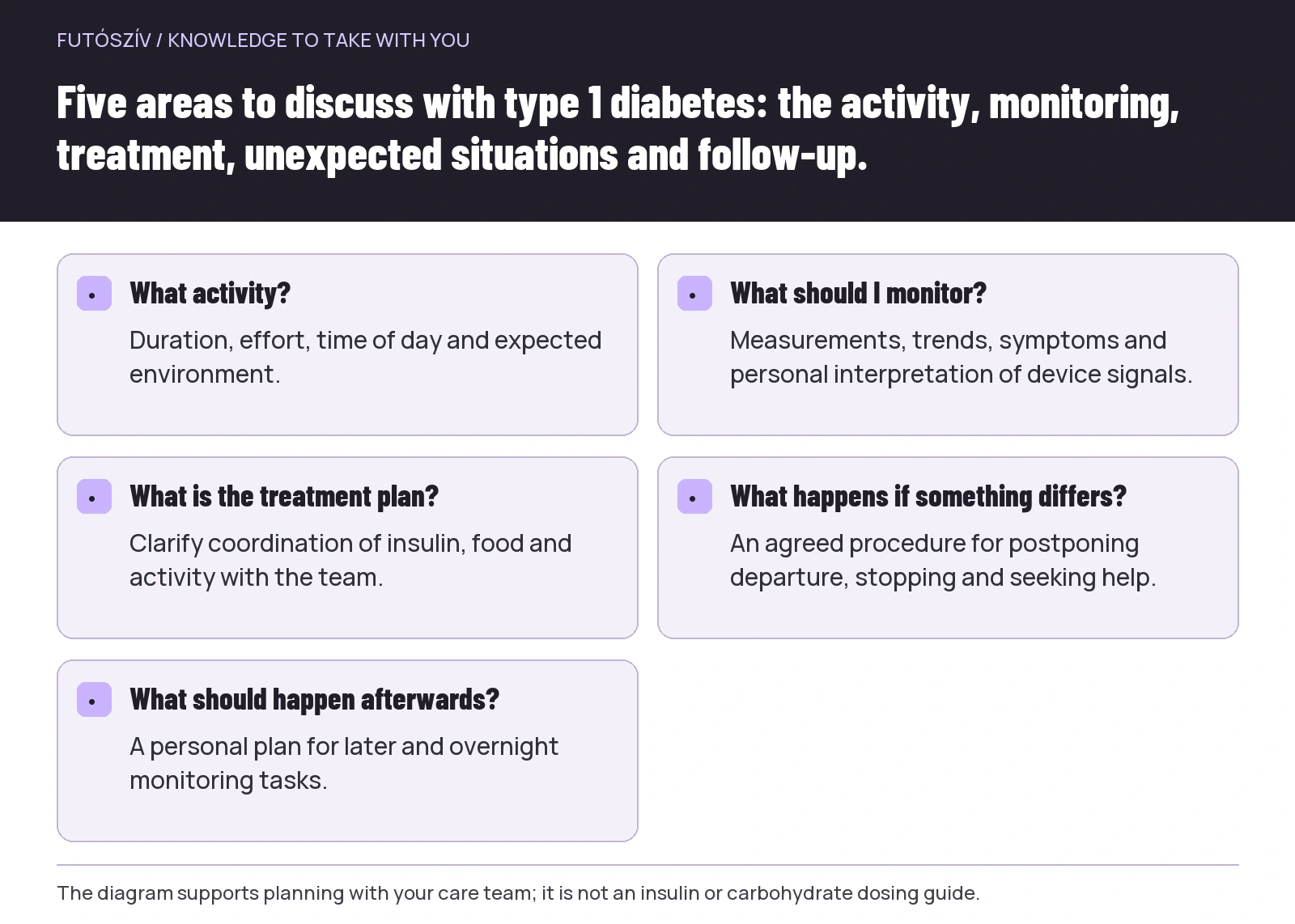 Enlarge diagram
Text version of the diagram
- What activity?
- Duration, effort, time of day and expected environment.
- What should I monitor?
- Measurements, trends, symptoms and personal interpretation of device signals.
- What is the treatment plan?
- Clarify coordination of insulin, food and activity with the team.
- What happens if something differs?
- An agreed procedure for postponing departure, stopping and seeking help.
- What should happen afterwards?
- A personal plan for later and overnight monitoring tasks.
You need personal rules for the decision before departure
Ask which measurements and assessment are necessary before departure in your circumstances. What should you do with a low or elevated reading, a rapid change, or symptoms that do not match the display? The answer should suit your treatment and device.
The ADA information on exercise stresses coordinating insulin, food and activity. It also addresses high glucose and ketones separately. Do not regard running as an automatic way to correct an unfavourable reading quickly.
Your personal plan should specify when to postpone departure, when to check ketones and when to seek help. Do not borrow these instructions from another runner’s online chart. Clarifying uncertainty matters more than the kilometres written into the day’s schedule.
Do not invent insulin adjustments at the start
Discuss treatment decisions around running with your care team in advance. Choosing an individual reduction percentage, correction or timing from a general article is unsafe. The appropriate solution can differ even with the same sporting goal.
Planned and spontaneous activity may pose separate questions. Explain how predictable your exercise time is and what happens if a session suddenly becomes shorter or longer. The plan should include manageable responses to these situations too, not just the ideal scenario.
If a decision did not unfold as discussed, record and report that too. Honest information helps the next consultation. You do not need to retrospectively present a day with several unexpected factors as flawless.
Automated systems still require planning
The EASD/ISPAD position statement on automated insulin delivery systems specifically discusses exercise and the characteristics of individual systems. Automation does not mean identical functioning can be expected in every sporting situation without preparation.
For your own device, ask when and how to signal exercise in advance or use the appropriate function if that forms part of your personal plan. Do not automatically apply advice intended for another system. The device’s name and current settings are important details.
Think through practical failures too: a flat battery, lost connection, device problem or a run differing from the plan. Agree backup arrangements with your care team and the device’s official instructions. The first search for what to do in such situations should not happen out on the trail.
Interpret CGM data together with symptoms and context
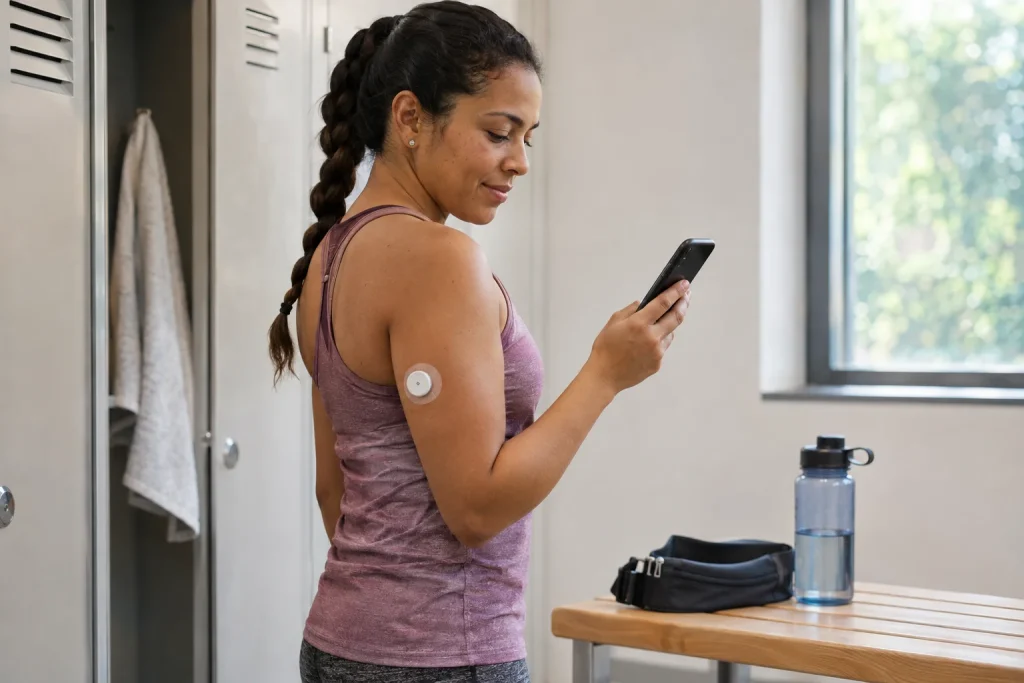
Continuous glucose monitoring can provide useful data and trends, but interpretation requires the particular device’s usage instructions. Clarify when to check by another method and what to do if the display does not fit how you feel.
Do not wait for a device to confirm a worrying episode of feeling unwell. Stop somewhere safe and follow your personal action plan; seek help if necessary. Continuing the run must not take precedence over clarifying a warning sign.
Practise responding to alerts beforehand in a calm environment too. Can you hear them, reach the device and check it after stopping safely? Technology is most helpful when using it is manageable in the actual running situation.
Have a simple, accessible personal kit
Carry the monitoring and care supplies required by your agreed plan in working, accessible form. The supplies your personal plan calls for should be quickly reachable, not in distant luggage or a locked car. Choose the exact kit with your care team.
Think through identification and communication too: information indicating diabetes, necessary contacts and a charged phone. Unexpected situations can happen even on a short, familiar route. The kit need not be complicated, but it must fulfil its purpose.
Try any new carrier, pocket or attachment in advance. Can you find what you need, does it interfere with movement and is the device appropriately protected? These are small practical questions that can prevent a great deal of scrambling at a race.
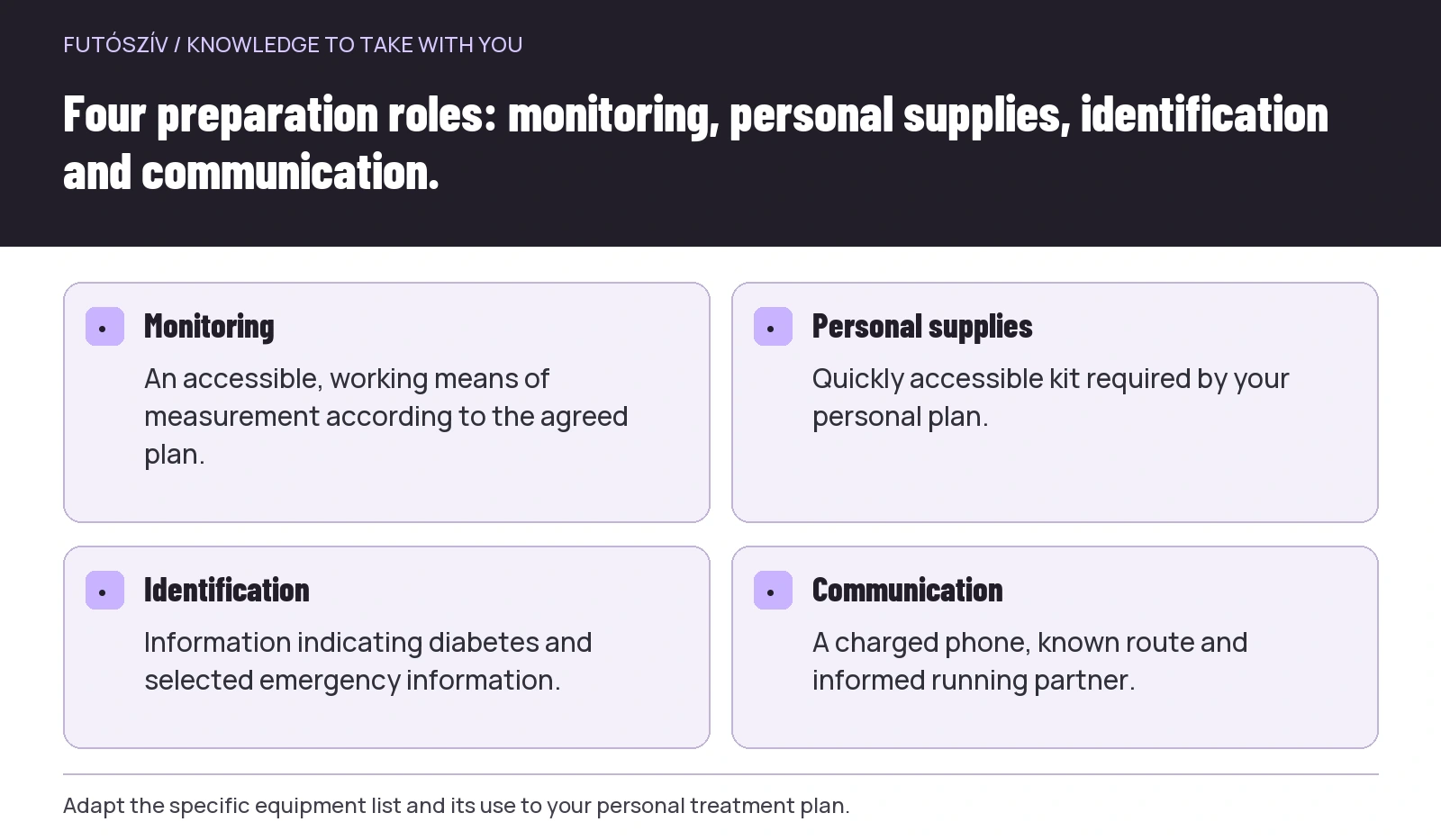 Enlarge diagram
Text version of the diagram
- Monitoring
- An accessible, working means of measurement according to the agreed plan.
- Personal supplies
- Quickly accessible kit required by your personal plan.
- Identification
- Information indicating diabetes and selected emergency information.
- Communication
- A charged phone, known route and informed running partner.
Your running partner should know how to help
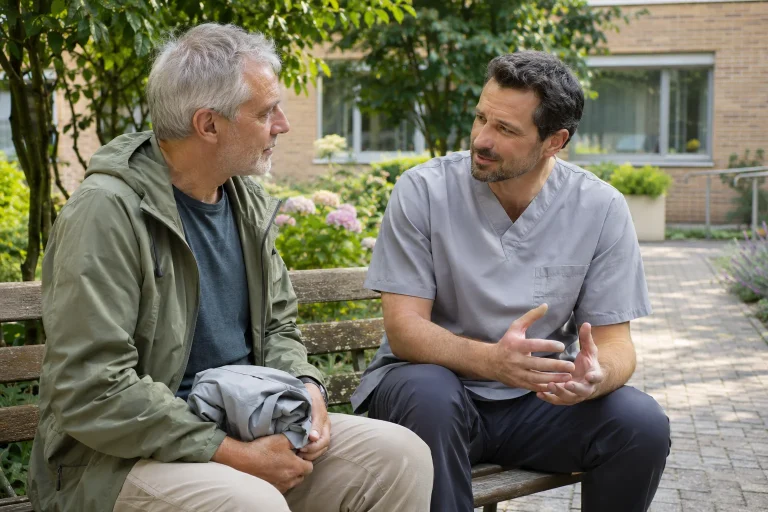
Discuss with a trusted companion which signs to notice, where your personal supplies are and when to call for help. Share only as much health information as you wish and as is needed for safe cooperation.
Severe confusion, unconsciousness or inability to swallow safely requires urgent help. According to the NHS guidance , an unconscious person must not be given food or drink by mouth. Any emergency device prescribed for the individual should be used only by someone trained to do so, in the way they have learned.
In Hungary, in a life-threatening situation, the 112 emergency number can be called. The person helping should follow the emergency dispatcher’s instructions. Target times or continuing the event are not considerations in this situation.
The end of a run is not the end of every effect
Low glucose after exercise may occur later; the NIDDK lifestyle information specifically highlights this. Discuss later monitoring and, where necessary, overnight monitoring with your care team as well, rather than only the reading before departure.
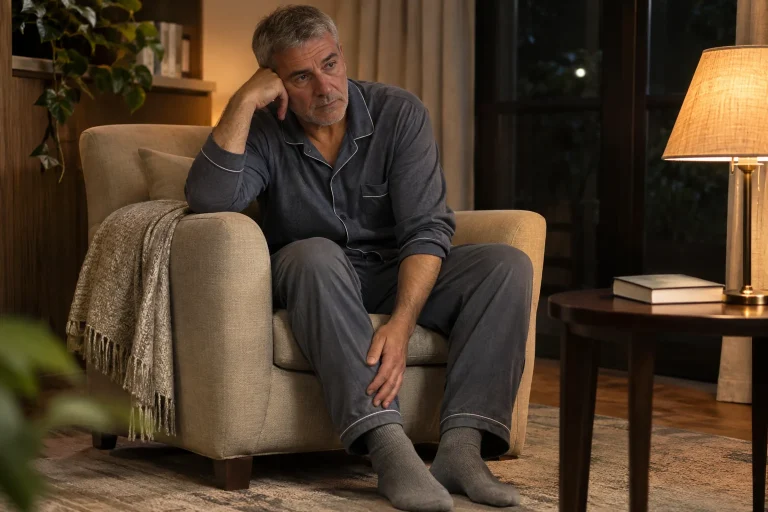
Explain when you usually train and what follows: work, travel, driving or bedtime? The personal plan needs to fit this real daily routine. The situation after an evening run may differ from a free morning.
Record later experiences too if agreed with the team. Your running log then extends beyond stopping the watch. The aim is a manageable whole day, not merely a training graph that looks good.
Look for a small amount of important information in the log
Write down the type of run, duration, time of day and important preceding circumstances. Add the agreed glucose information, care, treatment changes and subsequent effects. Choose the recording method with your care team so it will be usable at the next consultation.
Do not create a general rule from a single difficult session. Look for similar situations and recurring patterns. However, do not delay addressing a new symptom or dangerous event for the sake of prolonged data collection.
The log should not become a self-blaming scorecard. An unexpected reading is not a moral failure, and a sporting experience does not depend on every curve being perfect to count. Treatment decisions need interpreting within the appropriate professional relationship.
Discuss unexpected scenarios separately before a race
The start may be delayed, the course may take longer and supplies may work differently from training. Ask how your personal plan can be applied in these situations. Before entering, also check the organiser’s supply and assistance arrangements.
Do not try a new device, supply or treatment solution on race morning. If conditions or your current state differ from what was discussed, the goal can change or the start can be postponed. Previously invested work does not make continuing compulsory.
The enjoyment of running and forward planning can coexist. A framework developed with your care team does not remove every uncertainty, but it can help ensure the next decision is not made through guesswork alone.
Official and primary sources
- ADA/EASD 2026 consensus on type 1 diabetes in adults.
- EASD/ISPAD position statement on coordinating automated insulin delivery and exercise.
- T1DEXI: research on glucose responses to different forms of exercise.
- ADA: exercise with type 1 diabetes; NIDDK: lifestyle and diabetes.
- NIDDK: hypoglycaemia; NHS: low blood sugar; OMSZ: urgent help.
How Futószív articles are prepared: our editorial guidelines.