Fertility treatment is not one unchanging condition
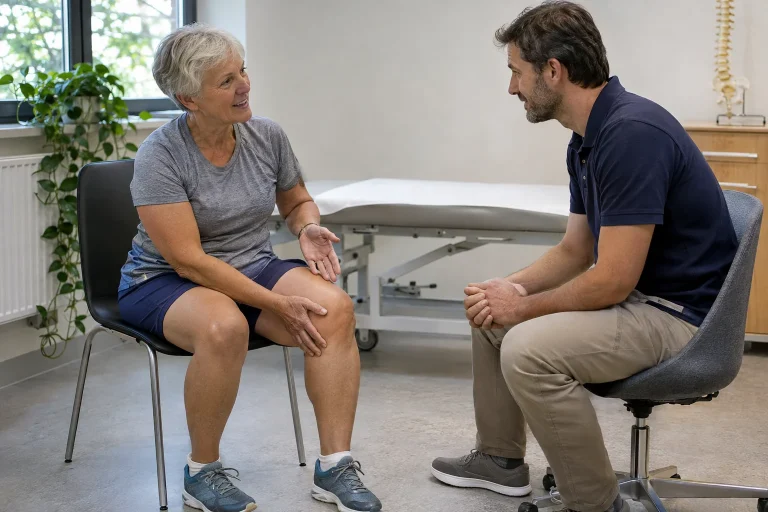
Investigation, ovarian stimulation, egg collection, embryo transfer and the waiting period may each raise different running questions. Your usual training before treatment does not automatically establish what is appropriate at a particular stage. Instead of a general can I exercise, ask the treating team a more precise question.
This article mainly concerns IVF and ovarian stimulation. Other fertility treatments, frozen-embryo cycles or egg freezing may differ in detail. Individual guidance rests on the specific protocol and your health condition, not another runner’s success story.
The aim is not to turn exercise into another task supposedly determining treatment outcome. Develop a followable movement and help-seeking plan that accounts for treatment safety and emotional wellbeing. Your runner identity remains even if different exercise demands fit temporarily.
Why might reduction be requested during stimulation?
The University College London Hospitals fertility unit information recommends gentle movement, such as walking, because ovaries enlarge during stimulation. This recommendation concerns a specific treatment situation. It is not simply about general endurance and cannot be overridden by previously having run a marathon.
Absence of symptoms alone does not reveal how ovaries responded to treatment either. Follow-up checks and treating-team information therefore matter. A watch’s high training-readiness score or a pace that feels easy does not measure the organ’s current condition.
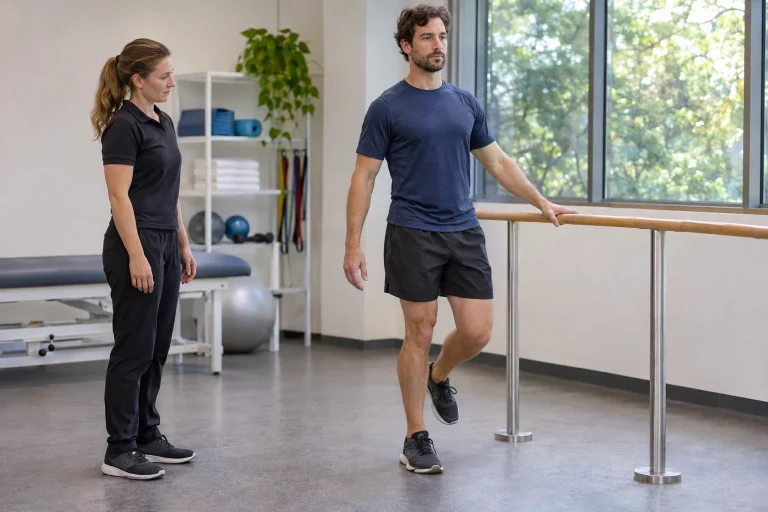
Clarify restrictions: which movement forms, intensities and durations are appropriate, from when and until which review? If running is not recommended, ask which everyday activities can remain. Do not independently replace running with similarly demanding training merely because it has a different name.
A separate plan is needed after egg collection
Post-procedure condition may depend on treatment performed, anaesthesia or sedation and ovarian response. Follow discharge instructions and ask separately about movement, travel and returning to work. Being allowed home does not automatically authorise previous training demands.
If personal guidance specifies rest or gentle activity, do not freely interpret it as a little running. A short intense session may still represent substantial exercise demands. Ask the treatment centre for clarification because they know procedure and follow-up details.
Involve your companion in practical planning too: how you get home, who helps with bags and who is available if you worsen. You need not manage everything alone to prove you tolerate treatment well. Prepared help can relieve part of the decision burden.
 Enlarge diagram
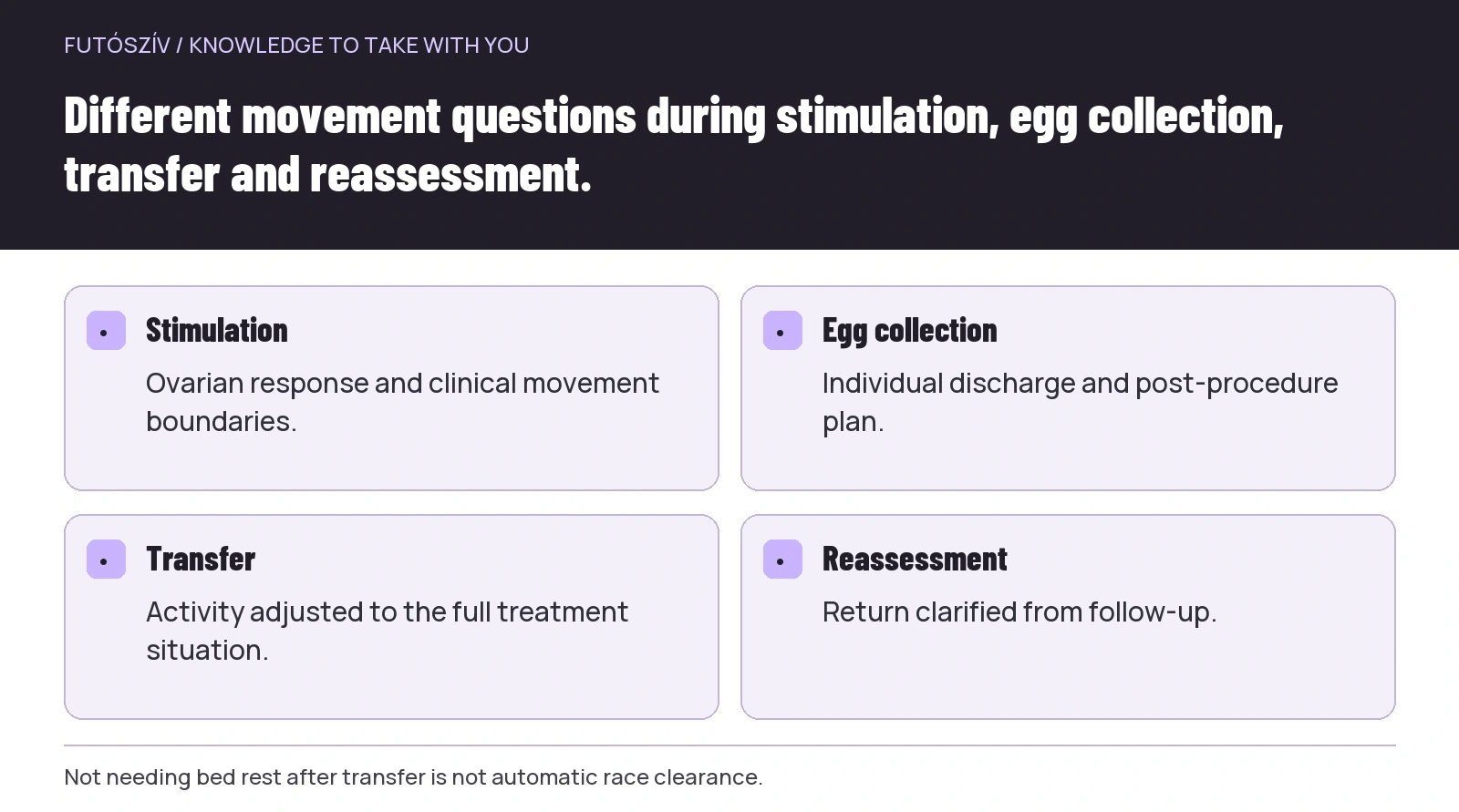
Text version of the diagram
- Stimulation
- Ovarian response and clinical movement boundaries.
- Egg collection
- Individual discharge and post-procedure plan.
- Transfer
- Activity adjusted to the full treatment situation.
- Reassessment
- Return clarified from follow-up.
OHSS: which signs should not be called simple training fatigue?
The Royal College of Obstetricians and Gynaecologists describes ovarian hyperstimulation syndrome, OHSS, as a potentially serious fertility-treatment complication. Forms range from mild to more severe. Contact the treatment centre for new or increasing symptoms rather than expecting reduced training alone to resolve them.
The University Hospitals Sussex information lists worsening abdominal bloating and pain, reduced urine, breathing difficulty, chest pain and other general symptoms. Symptom assessment is a medical task. You need not wait until every sign on an online list can be ticked.
Severe difficulty breathing, chest pain, fainting, collapse or another severe illness requires emergency help. Report sudden severe abdominal pain, persistent vomiting or rapidly worsening condition promptly too. Explain that you are receiving fertility treatment and which stage you are at; this is important care information.
Why does contact availability matter from the beginning?
RCOG states that the clinic should provide written information and a continuously available help number for treatment carrying OHSS risk. Ask your Hungarian treatment centre whom you can call and during which periods, and where to turn if the unit is unreachable. Clarify the precise local pathway beforehand.
Save the number and give it to anyone helping if needed. Keep the treatment summary and medicine list accessible. Important information should not remain deep in an email thread difficult to open when you are unwell.
Before travel or a distant race, consider compatibility with checks and access to necessary care. Treatment appointments may change, so flexible accommodation and cancellable sports activities can be practical choices. Organisation aims to preserve options, not control every possibility perfectly.
After embryo transfer: bed rest and racing are different questions
The American Society for Reproductive Medicine embryo-transfer guideline does not recommend routine bed rest after transfer, based on good evidence. This matters because you need not ensure embryo retention through immobility. The statement does not mean everyone can immediately resume any hard sport, however.
Interpret advice about movement around transfer in the full treatment context. Was there recent stimulation and egg collection? What is your current condition? Is there OHSS risk or another symptom? The treating team can connect these to your personal plan.
If told to live normally, ask specifically about the running normal for you. For one person that means a short walk; for another, intense intervals or long mountain training. Differences in everyday language make precise examples useful, rather than trying to reconcile instructions with different meanings.
Do not make movement explain every outcome
Treatment outcomes depend on many factors. A walk taken, run omitted or session completed on a given day cannot retrospectively establish success or failure’s cause. Following the clinic-agreed plan matters but does not provide unlimited control over outcomes.
If you assign meaning to every bodily sensation during waiting, movement data may become another anxiety source. You can simplify: the provider’s recommended test date, stated symptom thresholds and a few followable daily habits may suffice. You need not infer treatment success from heart rate.
You can tell people around you that you do not want stories about how much someone ran during a successful cycle. These are not personal evidence. Specific help, flexible shared plans and not repeatedly having to report treatment results offer more useful support.
How can movement retain a place in your day?
If the treating team permits gentle movement, choose a predictable form that is easy to stop. A nearby walk, shared outing or easy activity fitting your plan differs from long walking intended to compensate for lost training as an achievement. Permitted movement should stay within the given boundaries too.
If less sport temporarily fits, some time can go towards other activities you find calming. Every freed minute need not be filled with a health-improvement task. Treatment can itself require considerable organisation and attention.
You can connect with the running community through a meeting, supporting others or a brief shared walk if wanted. If hearing others’ race accounts is difficult, boundaries are possible too. There is no single compulsory form of maintaining connection.
 Enlarge diagram
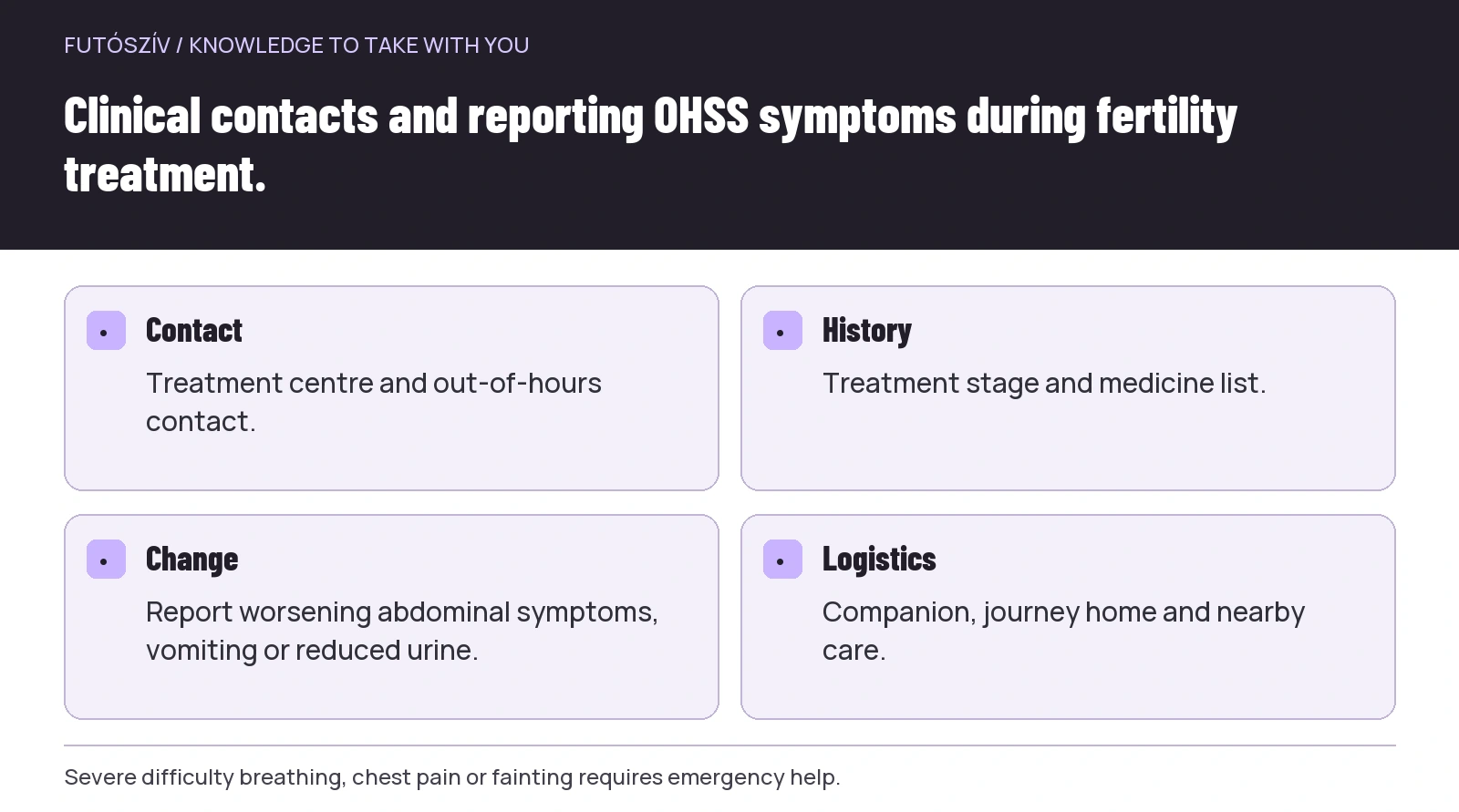
Text version of the diagram
- Contact
- Treatment centre and out-of-hours contact.
- History
- Treatment stage and medicine list.
- Change
- Report worsening abdominal symptoms, vomiting or reduced urine.
- Logistics
- Companion, journey home and nearby care.
Medicines, supplements and training times
Follow the clinic’s instructions for treatment medicines and timing. Do not independently change them for training or a race. Report clashes with work, travel or important activities beforehand; the treatment centre can advise on possibilities.
Explain non-prescription preparations and supplements too. The name natural fertility booster does not establish safety or benefit, and a sports product may contain several ingredients. Do not add a new preparation solely on a group recommendation.
Individual instructions also govern eating and fluid intake, especially with symptoms or suspected OHSS. Do not try to override treatment with a sports-hydration formula. A general running article cannot determine appropriate intake for that clinical situation.
Give emotional support its own place alongside sport
The HFEA material on emotional support during fertility treatment also highlights opportunities for help. Running is an important anchor for many people but need not handle every emotional coping task alone. It can be particularly difficult when usual sporting demands must temporarily decrease.
Ask about psychological or counselling support available at the treatment centre. Seeking help does not mean you are coping badly. It can help even when uncertainty, waiting or missing sport is the main difficulty.
You can choose how much information to share with coaches and running companions. You can simply say that medical treatment temporarily changes your programme. A detailed reproductive history is not a prerequisite for support and flexibility.
Seven precise questions for the next consultation
- Which treatment stage am I at, and what does it mean for running now?
- Which movement forms and intensities fit, and what is not recommended?
- On what basis and when will restrictions be reassessed?
- What should I do for abdominal symptoms, vomiting, reduced urine or breathlessness?
- Whom can I call out of hours, and where should I seek urgent help?
- After the procedure or transfer, what counts as permitted everyday activity for me?
- When and under what conditions can I return to previous sporting demands?
Write answers briefly and repeat them in your own words. This may reveal differing meanings of easy movement. No complex document is needed: clear individual guidance and contact information may help more than numerous general online prohibitions.
Plan restarting after treatment from current condition too
The return may differ after successful treatment, a break, a complication or before another cycle. The NHS IVF information also emphasises contact with the treatment centre about symptoms and further steps. Previous mileage is not an automatic starting dose in changed health circumstances.
The temporary running plan can allow time to observe exercise tolerance again and choose a new goal. Every previous session need not be regained immediately. Movement during fertility treatment becomes followable when the clinical plan, actual wellbeing and personal emotional needs all have a place.
Sources and further reading
- UCLH Reproductive Medicine Unit: Frequently Asked Questions
- RCOG: Ovarian hyperstimulation syndrome
- ASRM: Performing the embryo transfer, guideline
- NHS: In vitro fertilisation
- HFEA: Getting emotional support
- University Hospitals Sussex: Ovarian hyperstimulation syndrome
How Futószív articles are prepared: our editorial guidelines.