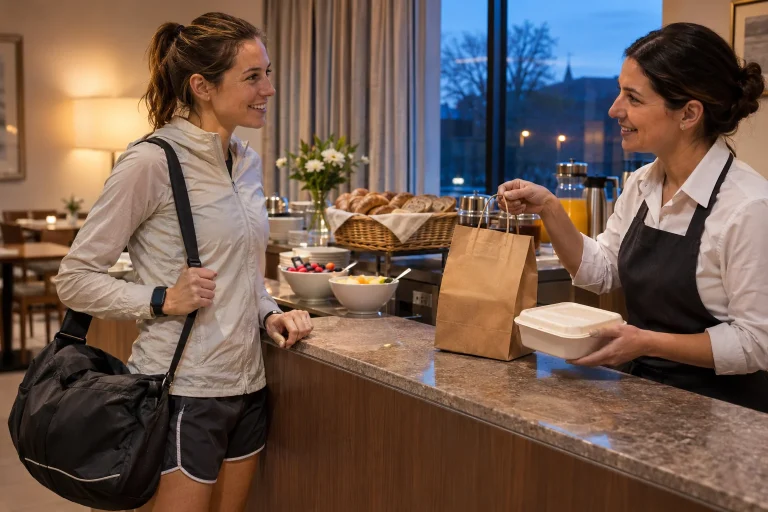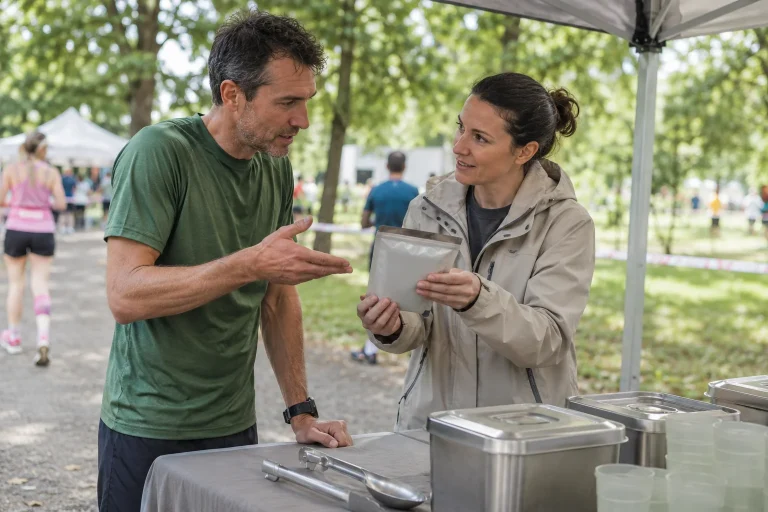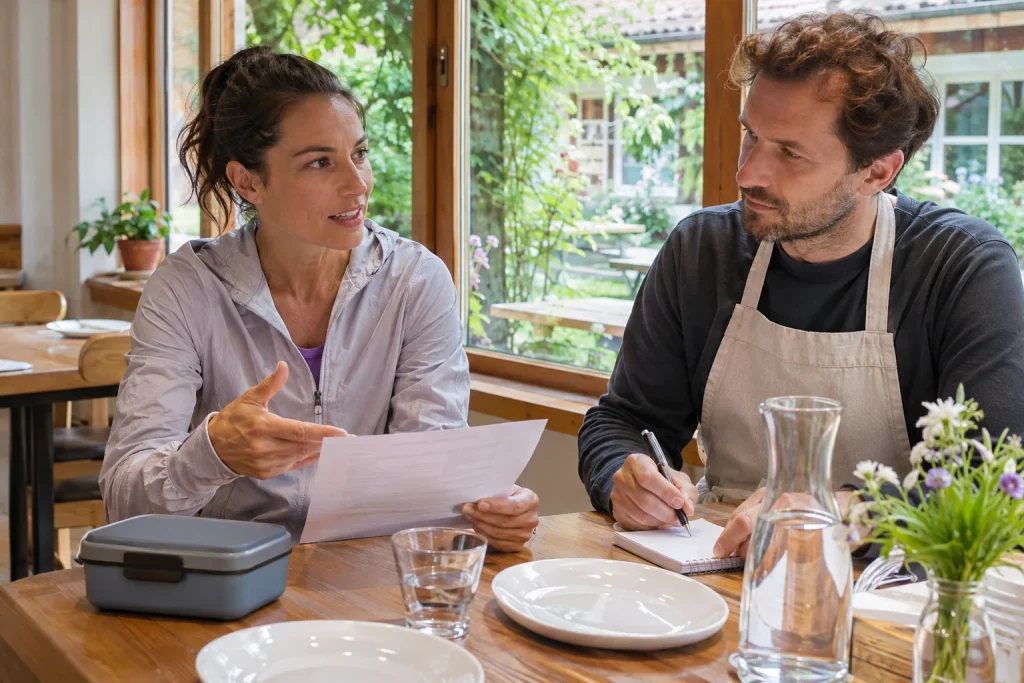
At a running camp, you use the same food arrangements across several days. If you have special dietary needs, advance discussion therefore needs to go beyond the organiser merely knowing about them. The specific menu, serving, early departures and daytime access together determine whether the solution works. A written plan linked to individuals and meals helps leave fewer uncertain questions between running and rest on site.
This article gives participants and organisers of adult recreational running camps a practical framework for discussion. It does not create a personal diet, diagnose allergy or intolerance, or prescribe treatment. Clarify medically necessary requirements and sports nutrition quantities with your own appropriate professional. Children’s and youth camps involve different responsibilities and care; do not transfer this adult example unchanged.
Special needs begin with precise descriptions
Do not fill in only a generic special-diet field. Describe the requirement meals need to meet and which question needs confirmation. A chosen plant-based diet, taste preference, lactose intolerance and established food allergy may need different information. Several requirements can coexist; name them separately. Accommodation or kitchens should not have to infer individual healthcare needs from a short label.
Provide necessary health information to the appropriate responsible person with the detail required for the purpose. There is no need to share a full history in a group spreadsheet. The person serving, however, needs to know which food belongs to whom and which condition must be retained. Privacy and useful kitchen information can coexist if it is clear beforehand who receives what.
Agree the whole dish rather than the menu label
A vegetarian, gluten-free or otherwise suitable menu label does not establish what reaches the plate. Request specific dishes or the planned menu for the whole camp. What will breakfast, main meals, necessary daytime food and any packed option contain? A special version should not merely be an old dish with one component removed. Clarify whether a complete meal meeting individual needs is feasible.
If the kitchen cannot provide nutritionally personalised menus, state that beforehand too. Appropriate special composition and individual sports nutrition portions may be separate tasks. Your professional plan can establish necessary additions or another solution. Honest uncertainty is a better starting point than promising a perfect menu for every runner without specific food and timing behind it.
Create a meal matrix across the days
Use a simple table matching days with eating occasions. Each important cell should identify the location, time window and suitable arrangement. You need not list every ingredient in administration visible to the whole group. Within individual discussion, however, clarify which meals are provided, which requirements remain open and where you plan personal additions. A missing cell can become a recurring problem across several days.
| Camp occasion | What to clarify beforehand | Who confirms it? |
|---|---|---|
| Arrival day. | Will suitable food be available at the actual arrival time? | The organiser and food provider. |
| Early breakfast. | Time, specific contents and appropriate preparation. | The person responsible for breakfast. |
| A longer outdoor programme. | Packed food, storage and actual access. | The programme leader and food coordinator. |
| Main meal after training. | A suitable version and the actual serving time. | The kitchen or catering provider. |
| Departure. | The last provided meal and necessary personal plan. | The participant and organiser. |
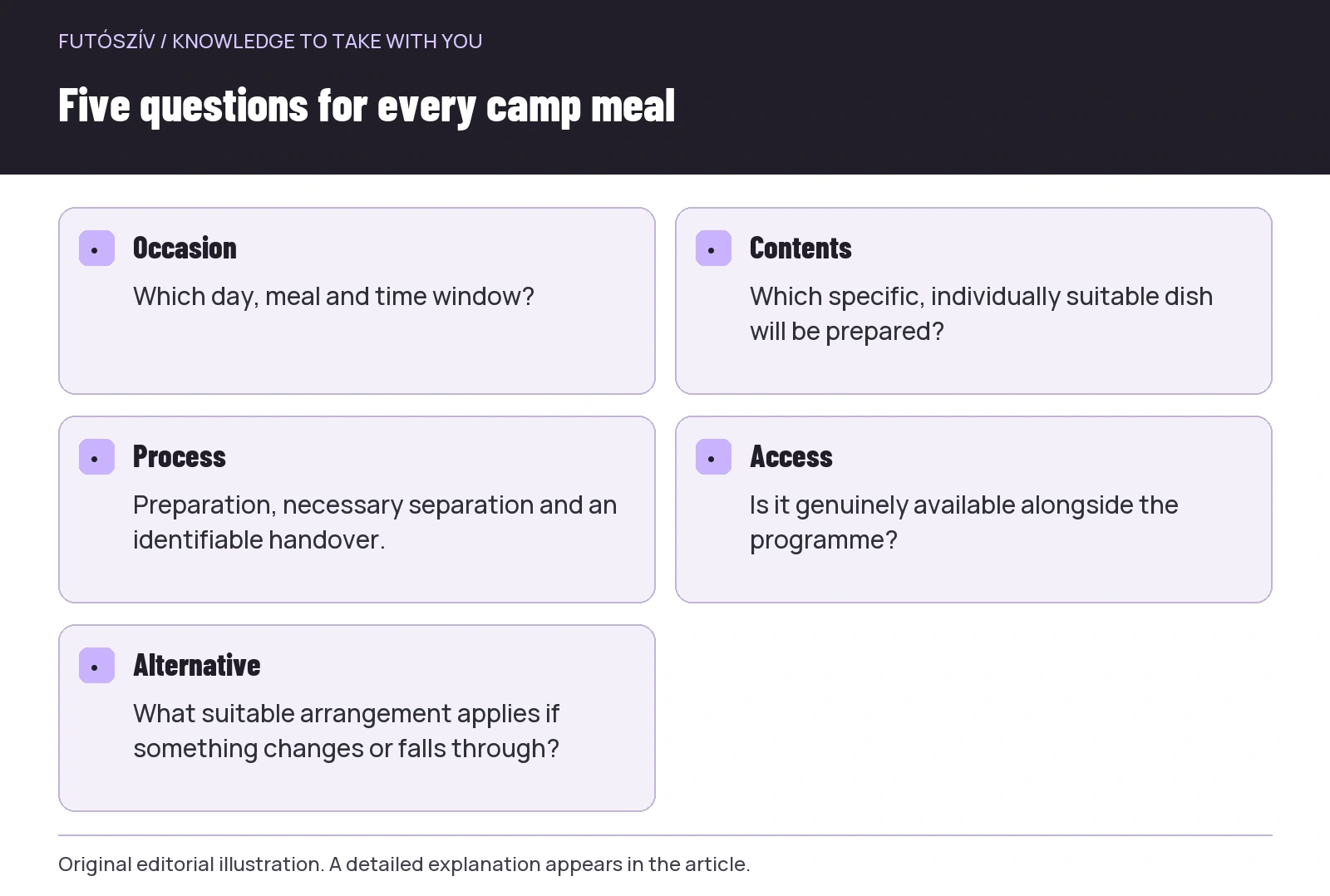 Enlarge diagram
Text version of the illustration
- Occasion
- Which day, meal and time window?
- Contents
- Which specific, individually suitable dish will be prepared?
- Process
- Preparation, necessary separation and an identifiable handover.
- Access
- Is it genuinely available alongside the programme?
- Alternative
- What suitable arrangement applies if something changes or falls through?
Match the training schedule with meal availability
Compare departure and return windows with meal times. Breakfast can have suitable ingredients but still be unusable if the group leaves earlier. The kitchen closing after a long run is another real access issue. The coach or programme leader and food provider can clarify a solution together. Participants should not have to reconcile two separate timetables only after arrival.
A 2026 Australian Institute of Sport cooking session for athletes also targeted practical solutions for limited kitchen access while travelling. This is not itself a recipe recommendation for your camp, but an example of implementation needing specific skills and planning. At your accommodation, use equipment only as permitted by its manufacturer, together with dietary and food-safety requirements.
With allergies, know both the information and the process
The Food Standards Agency practical guidance for non-prepacked food emphasises written information together with conversation and the importance of current ingredients. This is UK best practice, rather than a legal opinion tailored to Hungarian camps. A useful question is which specific dish you will receive, with which ingredients and under which preparation conditions.
Ask about shared utensils, serving and the separation you need. An allergen-free recipe’s ingredient list alone does not describe the entire kitchen process. Assess the promised arrangement according to your healthcare guidance. If the kitchen cannot provide a necessary condition, know this before camp. It is meaningful decision information, rather than a minor comfort detail.
With prescribed gluten-free eating, shared serving matters too
The Coeliac UK travel guidance recommends confirming advance requests on arrival and checking appropriate serving conditions. At camp, discuss handling of shared buffets, bread baskets and serving utensils too. An individually packaged suitable product and the same product served communally later create different checking situations.
Keep your own package identifiable and retain necessary information. If the kitchen prepares food separately, clarify how it is identified at handover. A participant name or another agreed mark can help, but the label must match the actual dish. Colour coding alone is insufficient when several people have different needs. Precise identification and the necessary individual requirement should be readable at handover.
A packed lunch needs the full sequence planned
For longer outdoor activities, clarify when the package is prepared, what it contains, who collects it and how suitable storage is maintained until eating. Food supplied by accommodation in the morning is not automatically suitable for every afternoon use in heat. Ingredient storage instructions and the actual journey conditions need to be addressed together. If this is impossible, choose another suitable food or access plan.
Adapt contents to your individual needs as well as dietary conditions, using the appropriate professional plan. The number of items in a shared box does not represent identical quantity needs for everyone. The group should not swap food randomly during the outing, particularly with differing allergen requirements. Clarify the roles of personal backup and shared stock beforehand so contents remain traceable outdoors too.
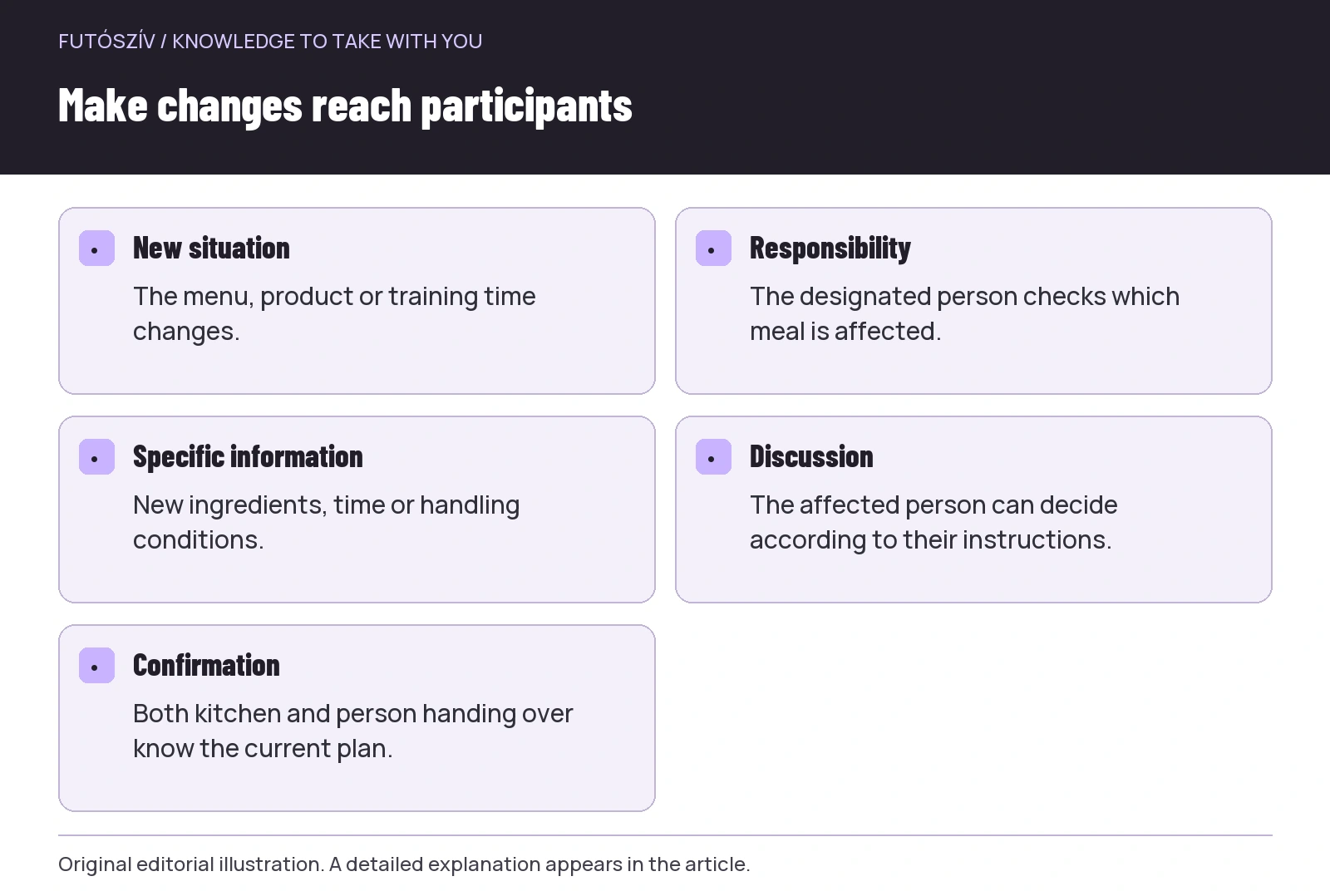 Enlarge diagram
Text version of the illustration
- New situation
- The menu, product or training time changes.
- Responsibility
- The designated person checks which meal is affected.
- Specific information
- New ingredients, time or handling conditions.
- Discussion
- The affected person can decide according to their instructions.
- Confirmation
- Both kitchen and person handing over know the current plan.
Make personal backup genuinely accessible
Agree which foods you may bring, where they can be stored and when you can access them. Shared fridge or kitchen access is not always unlimited, so know the place and time. Identification and appropriate separation of your container matter too. If a necessary condition is missing, adapt the arrangement according to professional guidance before leaving. Backup is real only when accessible in suitable condition.
Personal backup should not automatically conceal gaps in the whole camp’s food provision. If meals are included, clarify which occasions and conditions. Your package may bridge a gap or supplement individual needs, but you should not discover afterwards that you were actually expected to provide every meal. Responsibilities and the scope of the service should be understandable beforehand.
Assign responsibility for communicating changes
Menus, supplied products or training schedules can change during a multi-day camp. Who tells affected participants, and when? A food substitution should not first become apparent at the serving table. Check new ingredients and personal suitability. Similar names or equal prices do not necessarily mean identical conditions. Do not leave substitution decisions to assumptions.
Make changes clear on the participant side too. If your needs or instructions change after registration, notify the appropriate contact in time. Old and new information should not remain unresolved in parallel. Discussion is not meant to create unnecessary administration, but to deliver the current plan to the people actually preparing and serving food.
A short sample message before camp
I would like to clarify camp meals in advance because of my special dietary requirement. The exact requirement is: insert your description. Please explain which meals and specific versions will be provided, how necessary preparation and identifiable serving will work, and which early breakfasts or packed meals can fit the programme. With whom can I confirm this on arrival, and how will menu or product changes be communicated?
Adapt the sample to your situation and replace the placeholder with actual information. You can add a brief meal matrix showing open questions. Do not send unnecessary detailed health information to a group address. Discuss food requirements and emergency or other healthcare plans with the appropriate responsible people, within the necessary scope. These conversations may relate but are not identical tasks.
Check actual arrangements on arrival
Find the designated contact and briefly confirm the plan. Is the suitable version available, the time known and identification working? Where will your personal package be kept, if you bring one? Confirmation connects the advance agreement with on-site processes rather than restarting all correspondence. Resolve differences before the first affected meal.
At the end, evaluate practical processes: which information helped, where handovers went wrong and which time windows were unrealistic. Discuss individual dietary-plan questions with the appropriate professional. A more precise question list or better labelling can be a meaningful improvement for the next camp. Well-agreed provision means known, suitable and genuinely accessible food across several days.
Sources and further reading
- Australian Institute of Sport: Para Jackaroos turn hotel room appliances into performance fuel
- Food Standards Agency: Allergen information for non-prepacked foods, best practice
- Coeliac UK: Travelling with coeliac disease
How Futószív articles are prepared: our editorial guidelines.