With a food allergy, a race aid station can raise more questions than whether bananas or sports drinks will be available. The specific product, ingredients, preparation, serving arrangements and access to information all matter. An organiser’s goodwill is valuable, but your own decisions require details you can verify. Discussing this in advance helps establish what can fit your personal plan, where uncertainty remains and what suitable alternative you need to arrange.
This guide supports practical preparation for adult runners with a known food allergy. It does not diagnose allergies, classify risk or change medical treatment. Your own allergy guidance and emergency plan should also cover the sporting situation. Clarify access to prescribed medication and its use with your healthcare provider. An organiser’s reply or aid-station menu does not replace that personal plan.
Describe your own needs precisely
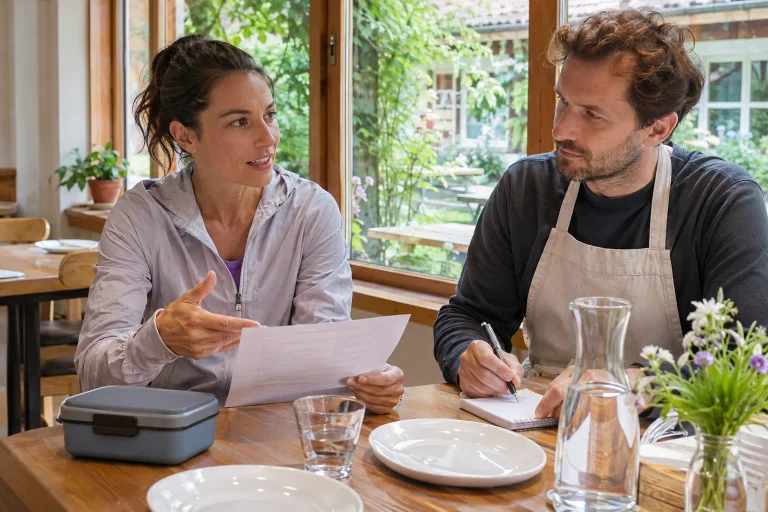
Do not simply say you need a special diet. Name your medically established allergen or allergens and the information you need. Dietary preferences, intolerances and allergies can represent different situations. The organiser needs to understand your question, but you do not need to send unnecessary health details. Provide the information needed for the event’s food and safety arrangements rather than your entire medical history.
State which provision your question concerns: refreshments on the course, a product in the race pack, finish-line food or shared catering afterwards. Different providers may handle these. An answer about a race pack does not necessarily apply to every point on the course. If there are several distances or different aid stations, identify your distance and the relevant stations clearly. A precise question leaves fewer misunderstandings to resolve on site.
First ask about the specific products
The European Commission information on allergens explains the role of allergens used as ingredients that require labelling and highlighting in ingredient lists. Your checks therefore require a product name, variant and preferably current packaging information. The terms sports drink or energy bar alone do not give a complete composition. Different flavours and pack sizes are not necessarily the same product either.
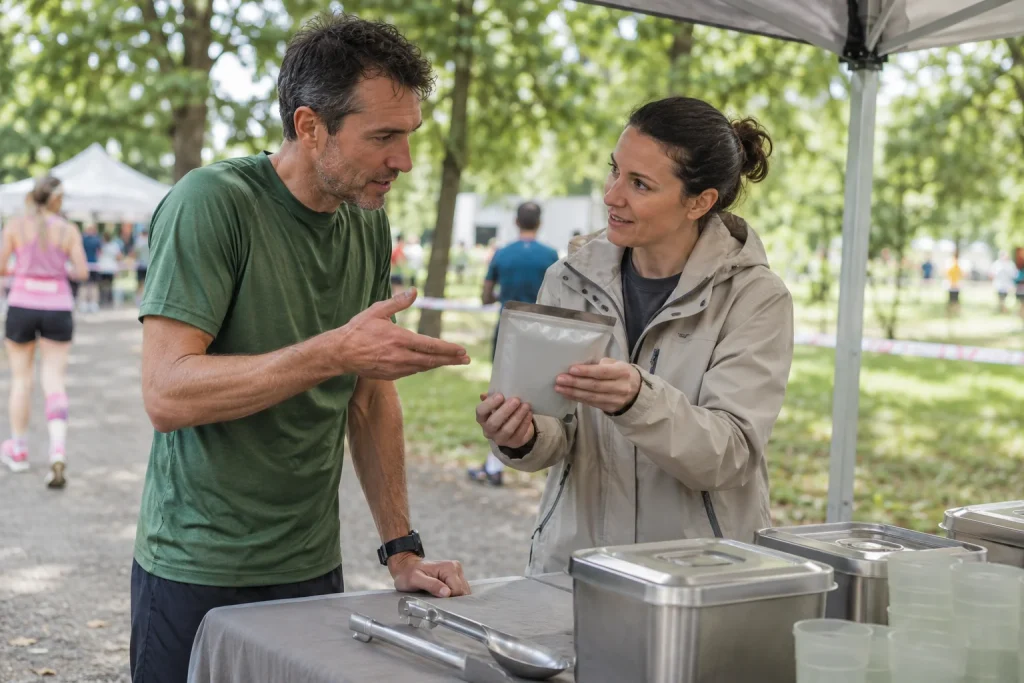
Ask whether the organiser has the original label or manufacturer information sheet and which exact package it describes. A sponsor’s previous product or a general brand page may not show what will actually be served at the race. Evaluate the information according to your medical guidance. Do not decide that the current version is suitable from the package colour or your memory of the previous year.
The product and the way it is served are separate levels
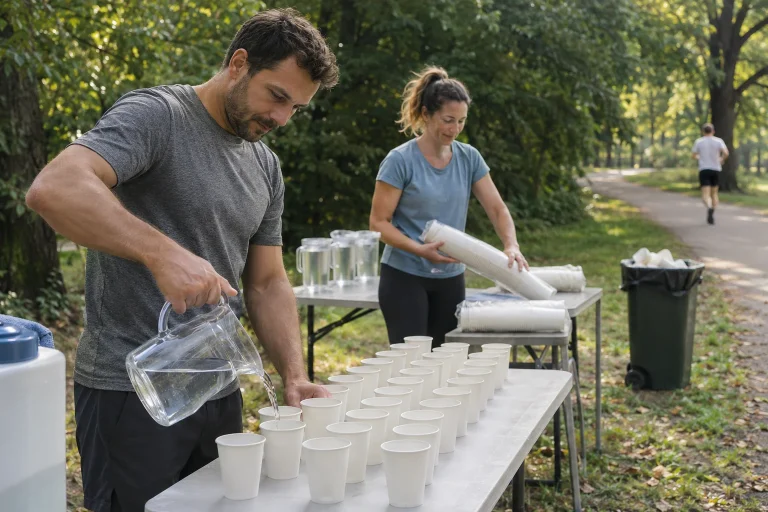
A packaged product that was originally suitable may come into contact with other foods or utensils during preparation on site. Ask how it will be opened, cut and offered. Are there separate utensils, a shared bowl, shared handling or the same cutting surface? The original label alone cannot establish how an aid station actually operates. Ingredients and possible unintended allergen contact are separate information.
The Food Standards Agency practical guidance recommends written allergen information alongside a personal conversation and also discusses considering cross-contact during preparation. This is information on UK best practice, rather than a legal opinion about Hungarian races. The useful question nevertheless remains the same: through what actual process does this food reach you?
| Discussion topic | Specific question | Why is this a separate question? |
|---|---|---|
| Product. | Which brand, variant and current label apply? | A general product category is not a complete ingredient list. |
| Preparation. | Where and with which utensils is it opened or cut? | The original package does not describe handling on site. |
| Serving. | Will I receive it from a shared bowl, an individual pack or a refilled container? | These involve different contact and identification situations. |
| Information. | Who can show me the current information on site? | An emailed answer is not always available at the station. |
| Changes. | How will a replacement product be communicated? | An earlier check does not necessarily answer questions about another variant. |
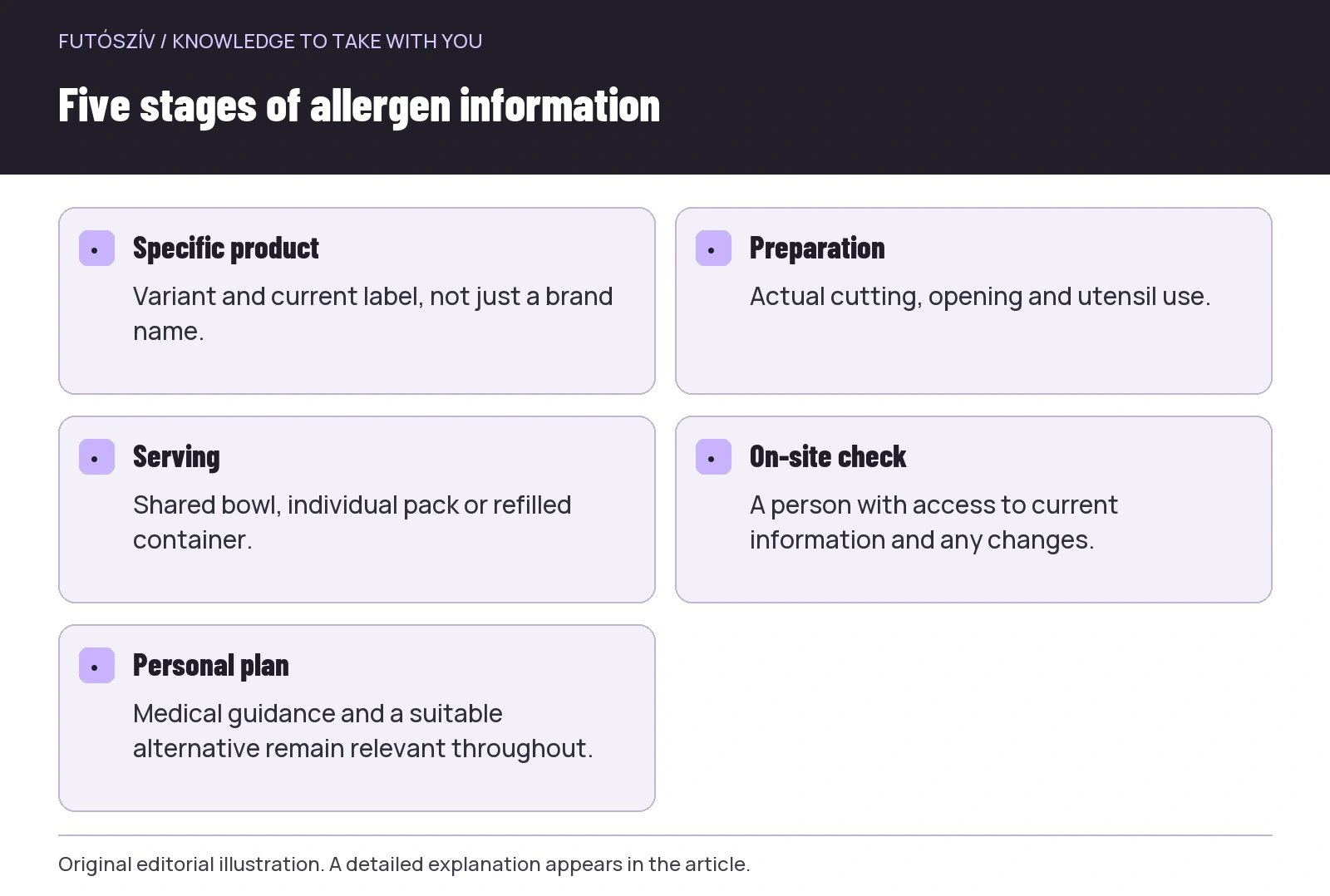 Enlarge diagram
Text version of the illustration
- Specific product
- Variant and current label, not just a brand name.
- Preparation
- Actual cutting, opening and utensil use.
- Serving
- Shared bowl, individual pack or refilled container.
- On-site check
- A person with access to current information and any changes.
- Personal plan
- Medical guidance and a suitable alternative remain relevant throughout.
The information also needs to reach the person serving
Ask whom you can contact about allergens on race day. Not every volunteer holds the same information, and it is unwise to seek quick reassurance from an unknown person at a busy refreshment table. Naming the person responsible or a contact with access to the data can help. The aim is a verifiable source on site, rather than everyone trying to guess ingredients from memory.
If an answer is uncertain, do not fill the gaps with assumptions. ‘I don’t think it contains it’ is not the same as reliable knowledge of the current product and preparation. The uncertainty itself is useful information when planning your alternative. A station can work very well for general refreshments while being unable to confirm your individual allergen-safety requirement. Clarify this before setting off.
Ask about the rules for your own refreshments
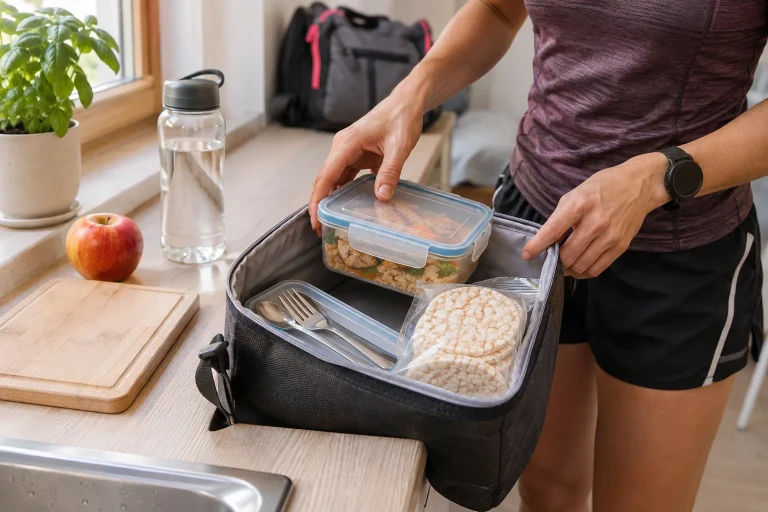
If your personal plan requires your own food or drink, read the race rules and ask the organiser for precise information. What can you carry? Is there an official personal-refreshment drop-off? Where and how can it be collected? Who can access it, how is it identified and what storage conditions can be provided? Your own package is a workable plan only if access and appropriate handling are genuinely possible.
Outside assistance, bag drop-off and a personal handover beside a station are not permitted in the same way at every event. Do not assume that an allergy automatically changes every race rule. Agree any necessary solution with the organiser in advance. A plan that follows the rules must also be medically appropriate. If this cannot be clarified, consider the suitability of participating and of the chosen distance alongside your professional guidance.
An emergency plan is a separate part of preparation
The Anaphylaxis UK information on exercise-induced anaphylaxis explains that exercise together with certain foods or other factors can contribute to a severe reaction. Allergic symptoms during or after running require specialist assessment. Do not try to establish a safe time window through your own food-and-exercise experiments. Clarify individual restrictions and actions with your healthcare provider.
Keep your prescribed emergency equipment accessible according to your medical plan, rather than in a bag that may be difficult to reach later. Anyone running with or assisting you should know what your personal plan requires them to know. Find out about the event’s medical point and how to request help too. If a severe reaction is suspected, do not continue racing: your emergency plan and immediate medical assistance take priority.
Breathing difficulty, swelling of the throat or tongue, fainting or collapse can indicate a severe reaction. Urgent help is needed, and prescribed personal actions must be followed without delay. This article is not medication-use training or a substitute for practical instruction. Prepare with your own healthcare provider before the race, rather than trying to understand your emergency plan for the first time at the refreshment table.
A sample enquiry you can send
I am preparing for the specified distance and, because of a confirmed food allergy, would like to clarify the composition and handling of refreshments in advance. My allergen is: insert your own precise description. Please let me know which specific products and variants will be offered on the course, whether current labels are available, and how preparation and serving will be handled. Who can confirm this on race day? If suitable provision for me cannot be confirmed, what permitted options exist for bringing my own refreshments or dropping off a package?
Adapt the sample to your circumstances and do not send it unchanged with its placeholder wording. Give the event’s name, distance and the provision you are asking about. A short, focused email is easier to answer than many general dietary questions in one message. Share personal details of your medical plan only where needed. Discussion with the organiser clarifies food-handling processes; it does not replace a healthcare consultation.
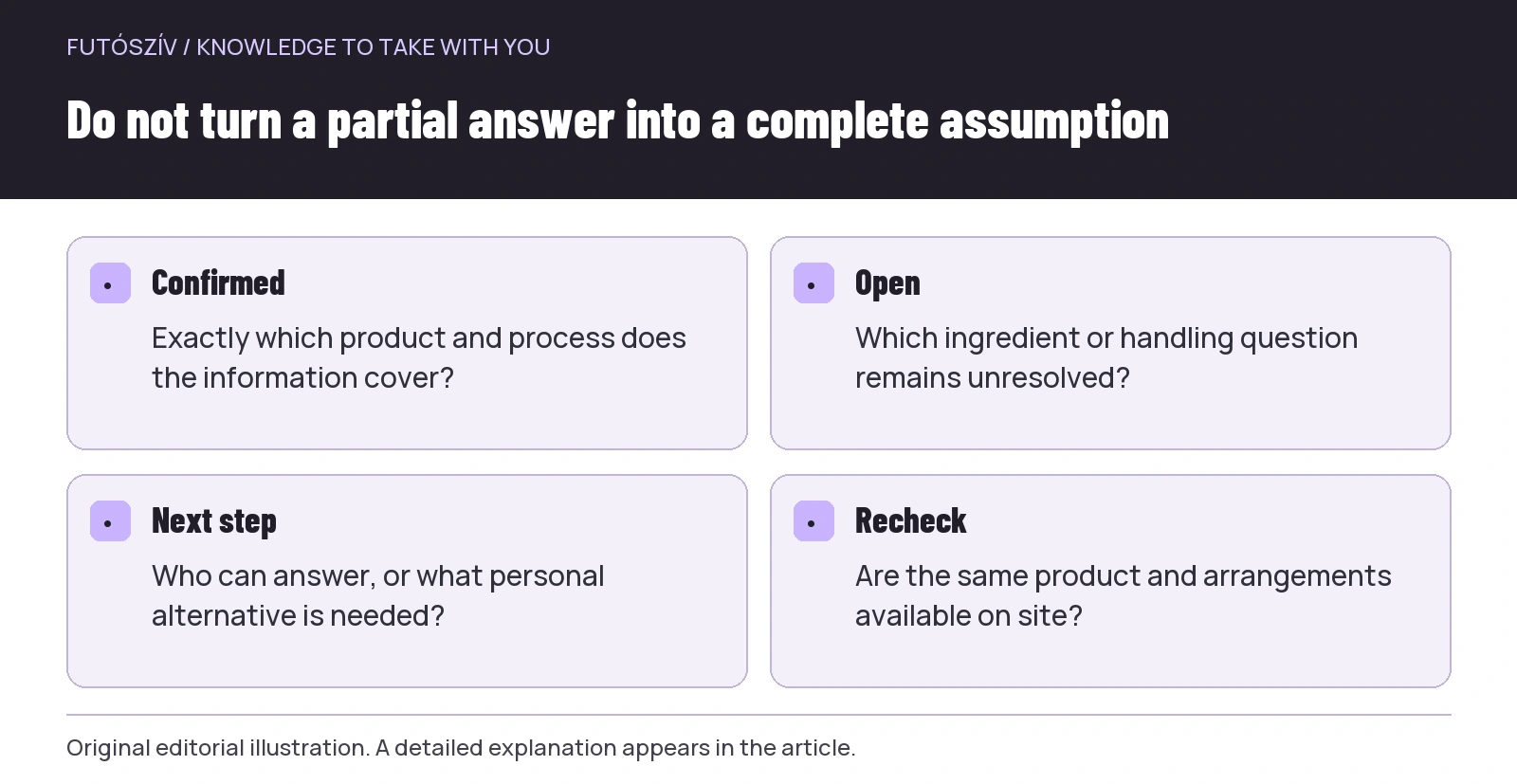 Enlarge diagram
Text version of the illustration
- Confirmed
- Exactly which product and process does the information cover?
- Open
- Which ingredient or handling question remains unresolved?
- Next step
- Who can answer, or what personal alternative is needed?
- Recheck
- Are the same product and arrangements available on site?
Arrange the answers on a decision sheet
Create three columns: confirmed information, open question and your next step. For example, the exact unopened product may be confirmed while serving at the station remains unclear; the next step is then to contact the person responsible. These fields help prevent treating a positive partial answer as confirmation of the entire system. Make your decision using your medical guidance together with all relevant information.
Keep the date of the reply and the product variant concerned. If the supplier or menu later changes, earlier information may no longer apply. Check before the race and on site that the agreed arrangement is actually available. Rechecking is not distrust; it recognises that an event’s catering details can change during delivery.
Avoid rushed substitutions at the station
Know beforehand which items you will rely on and your suitable alternative if something is unavailable. An empty shelf or a familiar product running out should not automatically lead to trying an unknown food. Your refreshment plan also needs to fit the race’s duration and conditions, with individual professional help if necessary. Allergen safety and sufficient suitable refreshments both matter; neither replaces the other.
If the on-site answer differs from the earlier one, stop and clarify it before consuming anything. Crowds, time pressure or a race goal do not make guesswork more reliable. A volunteer serving the station can also answer a focused question more easily: discuss the particular package, allergen and serving step. If the necessary information cannot be obtained, follow the safe plan you prepared in advance.
What should you take forward to your next entry?
After the race, record which parts of the discussion helped and where gaps remained. This is your own experience of that event’s process, rather than a general safety rating. A different year, supplier or product may require new checks. A useful lesson might be a more precise email, earlier contact or a better-planned personal package. Preparing to race with a food allergy can thus be built from clear, specific decisions while retaining your own healthcare plan.
Sources and further reading
- European Commission: Allergies
- Food Standards Agency: Allergen information for non-prepacked foods, best practice
- Anaphylaxis UK: Exercise-induced anaphylaxis
How Futószív articles are prepared: our editorial guidelines.