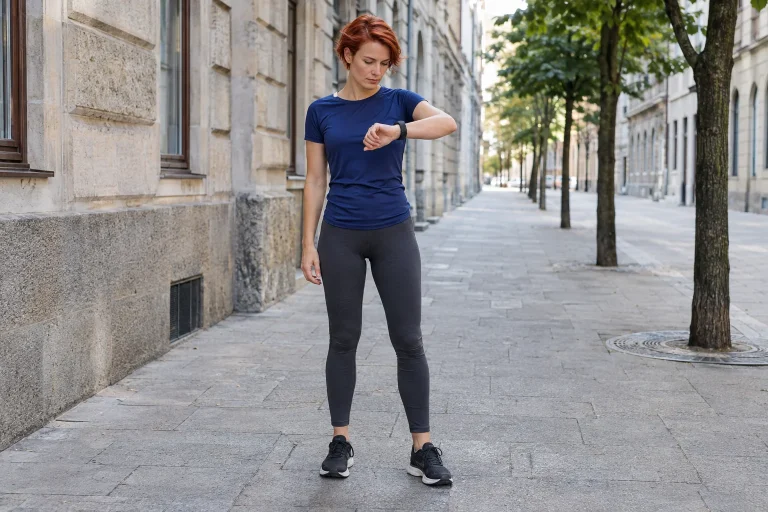
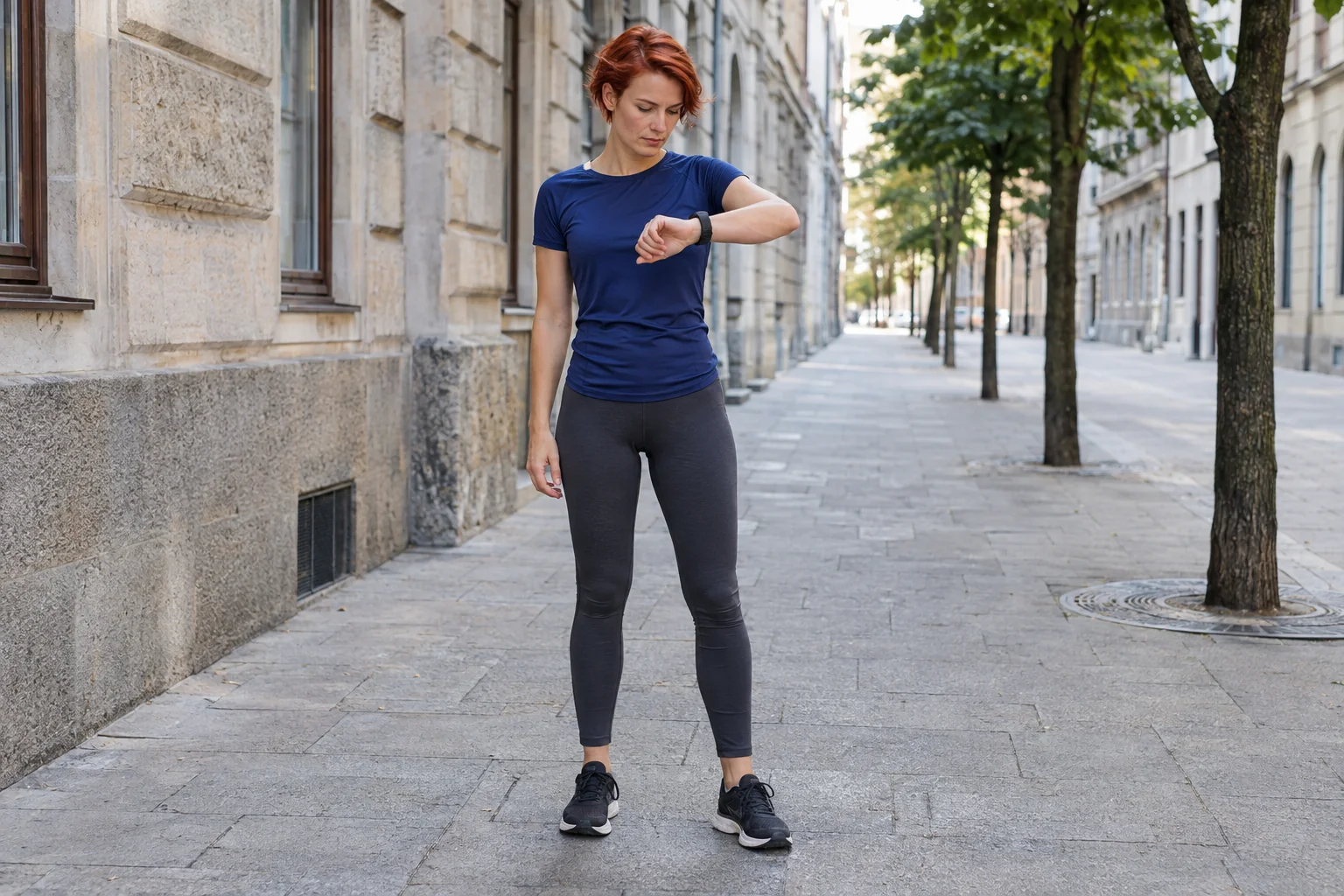
After running, you answer a message faster, think of a new idea or find it easier to start work. We might call all three experiences mental refreshment, but a researcher would design different tasks to study them. For a quick response, they might measure reaction time; for an idea, they might assess originality and usefulness; starting work raises another question again. Saying the brain works better conceals too many different things at once.
One useful lesson from research on exercise and thinking is that it teaches us to talk more precisely about our goals. Speed is not the most important factor in every task, and different kinds of thinking are needed for different kinds of idea generation. As a runner, look at which findings actually came from running, which from cycling or walking, and what participants had to do afterwards. Research can then become part of your day as well-understood examples, rather than a general productivity promise.
Name the task first
Mental performance is an umbrella term. Reaction time may mean the interval between a stimulus and a defined response. Accuracy may show how many appropriate answers were given. Memory may concern what remains from an earlier encounter. Idea generation, however, need not have a single correct answer defined beforehand. Before talking about better function, identify which requirement was fulfilled more successfully.
Imagine an editorial working day. In the morning, you seek names for new sections; later, you check the numbers in a table; in the afternoon, you explain a complex topic. The number of ideas may be interesting for the first task. For the table, however, an error made quickly is not a success. For the explanation, understanding and accurate relationships matter. This is our own illustrative scenario, rather than a workplace exercise experiment. It shows why applying a single laboratory result to your entire day is difficult.
Read study endpoints as specific questions. How quickly did the correct button press occur? How many new words were learned? How original was an idea for using something? Retaining those terms makes exercise findings more comparable. Everyday language about refreshing the brain can remain part of your experience, but the name of the measurement should also be visible in a research summary.
Reacting faster and deciding well are separate requirements
One experiment within Ando and colleagues’ 2024 multi-experiment human research combined supine cycling, PET imaging and a Go/No-Go task. In sixteen participants, change in the targeted dopaminergic measurement was associated with improved reaction time. Further experiments examined other exercise and muscle-stimulation conditions. The original paper explored a possible mechanism for a defined response task. The PET experiment did not involve running or measure creativity.
The logic of a Go/No-Go task requires responding to certain signals and withholding a response to others. This explanatory description helps show why a quick button press alone is insufficient. Someone immediately responding to every signal might seem fast without fulfilling the rule. Interpreting reaction time therefore also requires the task’s demands and the pattern of errors. Speed and an appropriate response are separate pieces of information that should be described together.
This is easy to recognise in everyday work too. A quick reply may be useful for an urgent, simple question. When checking a contract or budget, rushing is different from performing well. This does not imply that exercise causes rushing; the example merely illustrates different measurement goals. Shorter reaction time in research is not a general instruction to perform every mental task faster.
 Enlarge image
Attentional control tests the response differently
In a Stroop-type task, information relevant to the response may conflict with distracting information. In 2010, Yanagisawa and colleagues examined this kind of interference after cycling exercise in twenty healthy adults. Using fNIRS, they also linked improvement on the task with a particular prefrontal circulatory signal. The human research therefore provides data for a different question from a general idea-generation task: how well can someone respond according to the prescribed rule despite distracting information?
In everyday life, attention can mean even more than this. You might say you noticed more details around you, your mind wandered less or you found it easier to stay with one document. These do not necessarily correspond to the same laboratory task. An informative article identifies the sense in which it uses attention. After a claim that concentration improved, look for the task and the outcome actually analysed.
Mentioning different functions together does not imply that they are entirely isolated. Several demands may meet in a real task. Researchers nevertheless isolate particular operations to make a question testable. A good reading strategy is to understand the narrower finding first, then consider its possible everyday significance. That order prevents you from searching retrospectively for any brain data to support a broad promise.
Freely collecting ideas and seeking a single solution
In 2014, Oppezzo and Schwartz studied walking and creative thinking in four human experiments. One task required inventing alternative uses for everyday objects; another required finding an appropriate connection for related words. Walking produced better idea-generation outcomes, while the task converging on a single solution did not respond in the same way. The experiments included indoor treadmill walking and outdoor conditions. The original study examined particular creativity tasks, rather than running.
Divergent thinking opens up several possible directions; convergent thinking narrows towards an appropriate solution. Both may be needed at work. You might first collect many ideas for an event’s name, then choose on the basis of purpose, clarity and usability. Variety is valuable in the first stage; consistent application of criteria matters in the second. The two should not be described with the same score.
Originality is not simply a competition in strangeness either. The research described used defined rules for assessing ideas. In your own work, you also need to say what an idea would be suitable for. A section title that occurs to you during a run can be an exciting beginning, but the final text still needs checking, editing and decisions. Distinguishing the appearance of a thought from completed performance does not diminish the idea’s value; it makes visible how it becomes useful.
| Function | Example task | What should be considered separately? |
|---|---|---|
| Reaction | An appropriate button press in response to a signal | Time and errors |
| Attentional control | Responding despite distracting information | The task’s rule and interference |
| Idea generation | Collecting several possible uses | Variety, originality and relevance |
| Solution selection | Seeking an appropriate connection or answer | The requirement for a correct solution |
| Learning | Acquiring new words and recalling them later | Speed and retention at separate times |
Where does learning fit into this map?
Winter and colleagues’ 2007 running experiment examined acquisition of new vocabulary in twenty-seven healthy participants. It compared intense running, more moderate running and resting conditions, finding faster vocabulary learning after the intense session. The researchers also analysed later memory outcomes and peripheral biological markers. This research genuinely included running, but its endpoint differs from that of the cycling reaction-time experiment or the walking idea-generation task.
If all three findings are cited under the same heading of better brain performance, the most interesting part is lost: different operations changed under different circumstances. We cannot therefore transfer a numerical difference from one study to another’s endpoint. The percentage for faster vocabulary learning is not a creativity bonus, and shorter reaction time is not a longer retention interval. Measurement units and the task name together give a result its meaning.
You can name your own goal in the same way. Collecting ideas for a presentation involves a different task from practising technical terms or checking finished slides for accuracy. These can occupy separate work stages in a day organised around exercise. This is an organisational possibility, rather than a compulsory order derived from the studies. Research helps you describe the hoped-for benefit with more than one vague word.
The group average and your own working day
A study’s group result does not mean every participant changed identically. To judge transfer to your work, we would also need to know how similar the person, exercise, timing and task are. A short response task in a controlled laboratory differs from a meeting with interruptions. That difference does not make the research useless. It identifies what was learned directly and where another question begins.
As a personal observation, you can record that starting an outline felt easier after a familiar run or that two useful ideas occurred to you. You need not immediately assume a laboratory finding to explain it. Task completion, factual accuracy and your own experience can remain separate information. If you later compare days, recall the task’s difficulty and circumstances too; a single successful afternoon is not a personal causal experiment.
Running need not serve every workplace objective to have a place in your life. You can run because you enjoy movement, the route or the company. If you also experience mental refreshment, describe it precisely. Scientific interest does not require a productivity balance sheet after every workout. Experience and performance research represent two kinds of curiosity that can comfortably coexist.
 Enlarge image
Three sentences that say much more than refreshing the brain
The first sentence should name the condition: a specified kind of cycling, running or walking took place with particular participants. The second should identify the endpoint: shorter time to an appropriate response, faster vocabulary learning or more original, relevant ideas. The third should preserve timing and the comparison. The knowledge communicated then avoids becoming a general promise, and readers can decide how the question resembles their own situation.
Perhaps the most interesting insight is that thinking cannot be tracked on a single speedometer. Sometimes you need to respond, sometimes withhold a response, and at other times invent a new possibility or recall accurately. Exercise studies make these separately investigable. Preserving that variety offers a richer picture of the relationship between running and mental work than any promise of a refreshing effect that solves everything.
Sources
- Ando and colleagues, 2024: dopaminergic signal and reaction time during acute exercise
- Yanagisawa and colleagues, 2010: Stroop task after exercise
- Oppezzo and Schwartz, 2014: walking and creative thinking
- Winter and colleagues, 2007: running and vocabulary learning
How Futószív articles are prepared: our editorial guidelines.