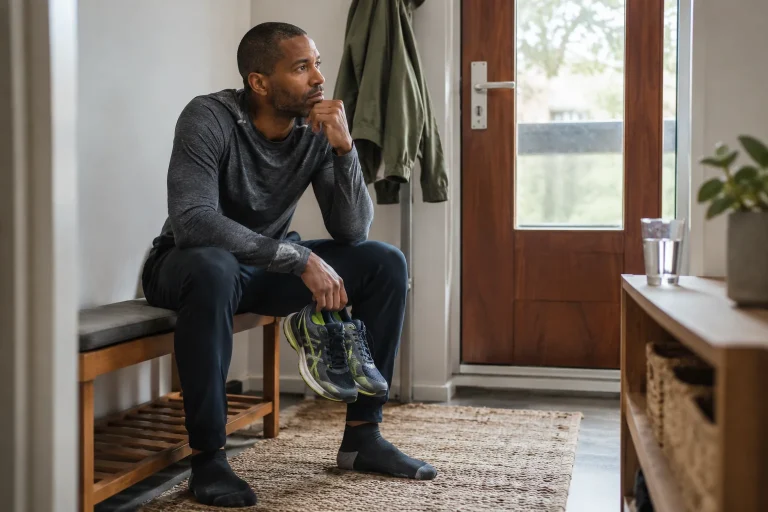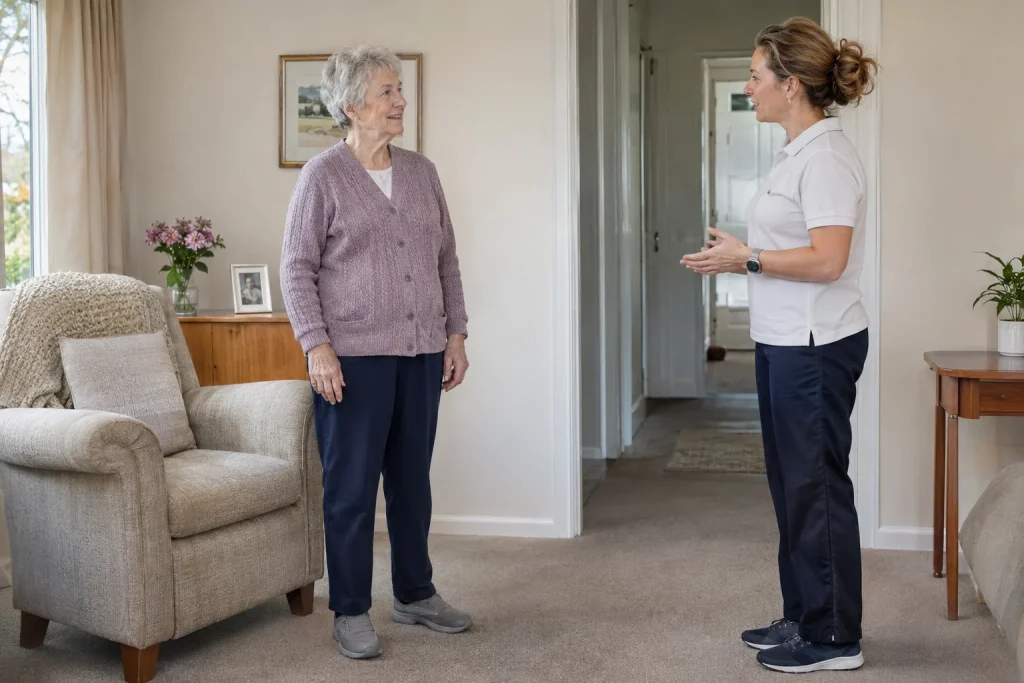
After a prolonged illness or bed rest, your old running shoes may be familiar while getting up in the morning feels unusually difficult. Your sporting past has not disappeared, but the next step must be understood through how you function now. The first question is often how you currently manage sitting up, dressing, moving around your home and essential daily tasks.
If bed rest was prescribed for a particular condition, do not override a current restriction with general advice to be active. Clarify with your clinician the conditions for starting movement. Instead of reaching for an old training plan, make sure you understand the present task, the help needed and whom to notify if a new symptom or deterioration appears.
Enforced inactivity can affect several aspects of functioning
An original study of ten days of bed rest examined strength, power and aerobic capacity in a small group of healthy older people. Several measured capabilities decreased, while not all of the physical performance tests used showed significant change. This distinction is a reminder that functioning cannot be described completely by a single piece of data.
The controlled conditions and healthy participants in that research are not equivalent to every illness or hospital stay. The study does not establish how much ability you have lost over a particular number of days or when you can return to running. Such work can provide explanatory background. Your own situation also requires consideration of the illness, treatment and daily functions.
It is therefore not enough to explain exhaustion automatically as “you have just got out of the habit of moving”. The background may be more complex, and a new symptom needs separate assessment. Precise observation shows which activity has changed. Establishing the cause and an individual rehabilitation plan remain part of healthcare.
Getting up and dressing are real movement tasks
As a runner, it is easy to see everyday activity as insignificant compared with a former long loop. Yet sitting up, managing clothing and reaching the bathroom have their own requirements. Movements follow one another, and support or help may be needed along the way. An old race distance does not determine how these tasks are going.
The Hull University Teaching Hospitals information on activity also regards daily activity appropriate to the person’s condition and professional guidance as part of recovery. It specifically mentions asking for the help needed. However, a specific task cannot be copied unchanged from a general patient leaflet into every home situation.
When you come home, for instance, the height of the bed, access to the bathroom and available handholds differ from those on a ward. Managing a task there with help does not mean you will manage it independently in the same way in a different environment at home. It is worth making these differences visible when planning discharge and home support.
Assess how usable the home is through the routes you actually take
Think through where a normal daily task begins and ends. The route from bed to bathroom, chair to table or entrance to resting place gives the question a specific environment. You do not need to complete it against the clock or turn it into a sports course. The question is under what conditions you can use it in your current state.
| Daily situation | A circumstance you can name | An aspect to clarify in the plan |
|---|---|---|
| Getting up and ready | Reaching the bed, a seat and necessary clothing | What help or individual guidance is needed? |
| Getting to the bathroom | Width of the route, door and lighting | Under what conditions can it be used without rushing? |
| Meals | A seat and access to objects | Who helps with preparation or carrying things? |
| Leaving the home | Threshold, stairs, lift and entrance | What support will a later outdoor goal require? |
Review the environment with a professional when necessary. The list does not imply that moving one piece of furniture solves every difficulty. It can make the direction of help specific. Instead of “I am not managing well at home”, you can identify which route and which part of a task is causing trouble.
Putting frequently used objects within reach can be an organisational help. If reaching something has regularly required climbing or bending a long way, reconsider this in the circumstances of coming home. The aim is not to turn the whole home into a hospital. You are looking for workable conditions for your own daily tasks.
 Enlarge image
Name the help needed precisely
“The family will help” may express good intentions, but does not always explain who is available, when and for what. Preparing food, arranging transport and providing hands-on help with a movement task are different forms of support. They should not be covered by one general promise. The appropriate form should match your current needs.
Helping someone move may also require training. A relative should not invent a new lifting or supporting technique from an internet picture. If you have been given equipment, using it belongs within your own instructions. The aim of assistance is not to complete the task as quickly as possible, but to provide appropriate conditions.
Independence does not mean immediately giving up every form of support. Appropriately chosen help can support important daily activities. At the same time, a relative need not automatically take over every action. Your individual plan should make clear where you participate actively and where another person needs to be present.
If help is unavailable where the plan assumes it will be present, this needs to be reported. You do not have to compensate for the gap alone with risky attempts. Your actual home situation is important information when care or support is organised. An option existing on paper may differ from help that is genuinely there.
The LIFE study’s mobility finding is not a running prescription
The randomised study called LIFE examined a combined activity programme in less active people aged seventy to eighty-nine with functional limitations. Participants could walk four hundred metres at entry. In that particular group, the programme reduced the development of major mobility disability compared with the comparison condition studied.
The study did not prescribe an immediate start to running for people coming directly out of bed rest. It concerned a programme combining different tasks with organised support. Its result cannot therefore be translated into a requirement that every older person immediately do the same amount of walking, strengthening or running. The research conditions also define the limits of the conclusion.
The useful perspective is that mobility can be an important goal in its own right. Preserving everyday walking and participation is more than an intermediate stop on the way to running training. Individual rehabilitation can also be built around these tasks. Designing the specific programme, however, relates to your present abilities, condition and care situation.
An old training diary can hold memories and background information
Your earlier runs can show what mattered to you and which activity you would like to return to later. You do not need to erase those memories. The current step, however, should not begin by replacing a missing percentage of an old weekly volume. The task now may differ from simply continuing after a break in training.
Alongside old data, a description of your present daily functioning provides a more useful comparison. For example, what help you need to dress, in which situation a symptom occurs and what has changed over recent days. These are not age-group competition events. They are experiences that can be interpreted in individual care and used to look for an appropriate next step.
Nor do you need to decide the timescale of a sporting goal immediately. Running later can matter to you while you are currently clarifying the conditions for leaving the home. Both goals can be named alongside each other. The larger one need not become a declaration of giving up, or the first smaller task an insignificant achievement.
Current guidance should remain understandable at home
At discharge or the next check-up, clarify which activities are permitted, which restrictions apply and what the next assessment is intended to address. Coordination is especially important if several illnesses or treatments are involved. The NICE guideline on care for people with multiple long-term conditions emphasises the importance of a coordinated plan suited to individual goals.
Instructions should not remain a single general sentence to “move more”. If necessary, ask for an example of the task and help currently meant by that. You can also check your understanding in your own words. If something could not be carried out in the home environment, report it specifically at the next contact.
- What is my current individual movement task?
- What equipment or help goes with it?
- Which change means I should contact the care team again?
- When will the next assessment take place, and for what purpose?
These questions do not replace the full treatment plan. They make the functioning needed for returning home easier to understand. A new or severe symptom need not be put aside until the next planned review. Severe difficulty breathing or chest pressure, for example, may require urgent care according to the NHS information. Keeping a diary must not delay seeking appropriate help.
 Enlarge image
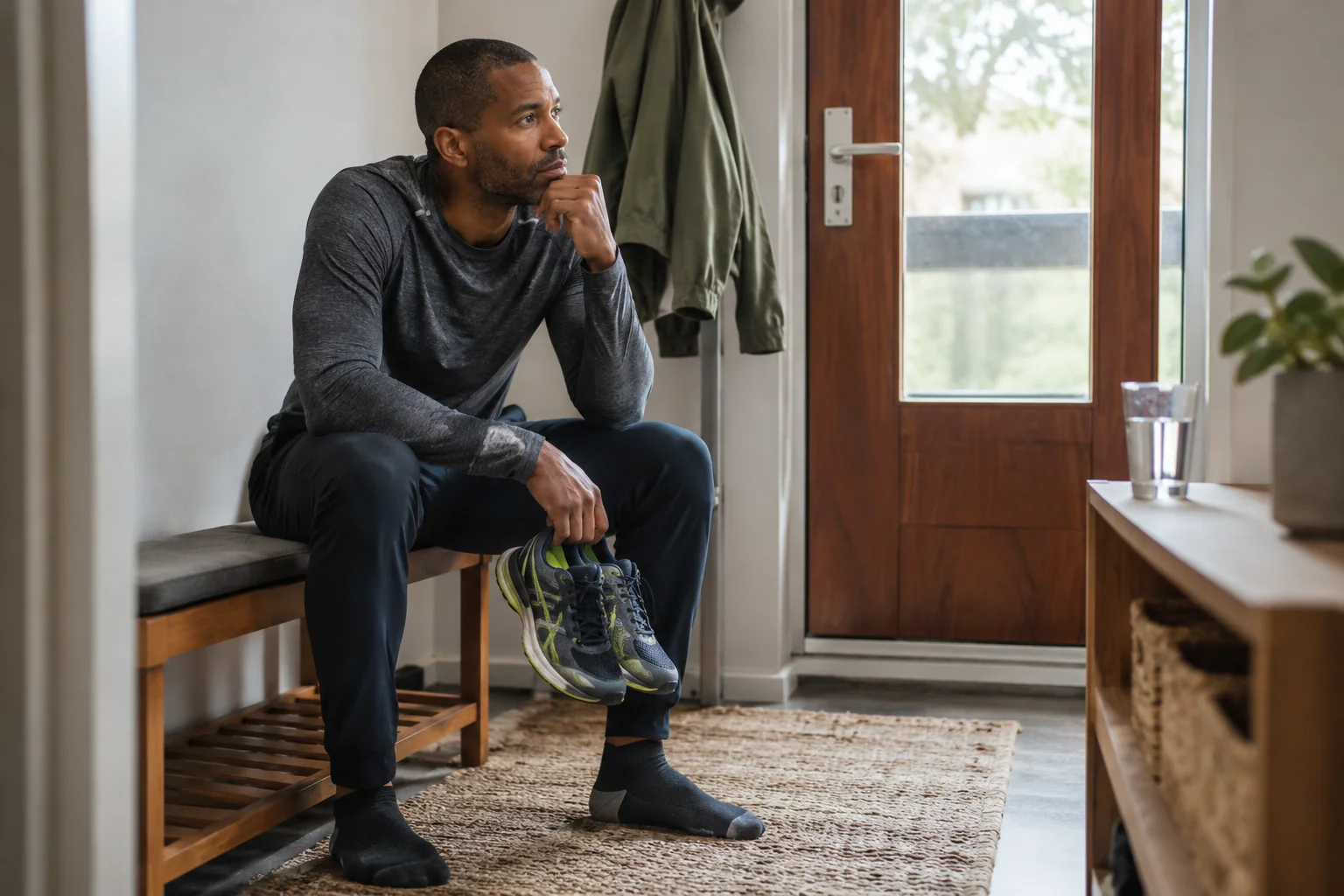
A homecoming situation without counting steps
In this fictional example, someone who previously ran regularly returns home after illness. Their old watch immediately draws attention to lower activity than usual. The actual daily task, however, is to manage getting ready in the morning and necessary movement around the home according to the individual guidance received. The display’s target may not yet fit that task.
Together with the family, they review accessible objects, the timing of support and transport for the check-up. The first experience is not defined by whether a previous step count was reached. More important are which task went as planned, where the environment differed and what remained unclear. Adapting the programme is then connected to specific information.
The example contains no universal sequence for getting up or prescribed activity dose. The shared idea is that everyday functioning is a real subject of rehabilitation. Even a seemingly small organisational detail can determine whether a personally chosen goal is accessible. The question of running can find its appropriate place later within this broader plan.
Present functioning reveals the next question
The experience of recovery is not necessarily the same every day. You do not have to explain every variation yourself, but important changes are worth reporting. A brief observation tied to a task is easier to interpret than the general judgement “I was worse today.” You can name which activity changed and under what circumstances.
Another important goal may be less rushing around an essential daily task, or having help reliably available. These changes affect how usable your own life is. They do not have to be turned into sporting results to matter. They can have a place in individual follow-up too.
After prolonged bed rest, regaining everyday movement is therefore a genuine first question. Your running past can be preserved while present tasks, the home environment and professional guidance provide the basis for the next step. The aim is not to write old training loads back into the calendar quickly, but an understandable way forward suited to workable daily functioning.
Sources
Kortebein and colleagues: functional effects of ten days of bed rest; Pahor and colleagues: the LIFE mobility study; Hull University Teaching Hospitals: daily activity and necessary help; NICE NG56: coordinated individual care; NHS: severe breathing symptoms. Checked: 21 November 2026. The homecoming example is fictional; this article is not a rehabilitation exercise programme.
How Futószív articles are prepared: our editorial guidelines.