Not every loss of motivation needs a new goal
Sometimes the next race inspires you. At other times, the same entry seems only another deadline. A weekend becomes a compulsory long run rather than free time, and club conversation comparison rather than connection. Ask what changed in running’s role before automatically choosing an even larger goal.
Experiences described as burnout in recreational sport can cover different difficulties. The aim here is reviewing burdens and beginning discussion, not diagnosing a disease. Prolonged exhaustion, sleep or mood symptoms and performance changes may also need healthcare assessment. An organisational idea cannot replace that assessment.
Do not confuse the concepts
WHO describes burn-out in ICD-11 specifically as an occupational phenomenon, not a medical condition. This definition cannot simply be applied to every recreational runner’s difficulty. Athlete burnout in research and everyday language belongs to another context, so the label alone does not identify what is happening to you.
AIS discusses mental fatigue separately, considering mental demands both within and outside sport. A tiring period, suspected overtraining, depression and temporarily reduced interest in running are different concepts. Precise description is a better start than immediately choosing a name supposedly explaining everything.
Map obligations around running
List what currently belongs to sport beyond actual movement. Travel, planning, entries, group messages, equipment choices, analysis, club tasks and weekend logistics can all appear. You need not time every item. The list makes invisible organisational work nameable.
Then mark what you would still choose today and what continues through habit or others’ expectations. The shared Tuesday run may remain important while weekly administration around it is excessive. Treating both as one package can make complete continuation and complete withdrawal seem the only choices.
Your own goal and an inherited goal are different questions
An old race plan can survive several life stages while work, family or health changes. Ask whether you are still preparing for the original reason. The answer obliges neither starting nor withdrawing. It allows a decision from current circumstances rather than solely a promise to your former self.
Tell a coach similarly: the goal mattered before, but preparation now creates more burden than I can manage; I want to review options and consequences. Specific wording helps avoid every difficulty receiving automatic motivational slogans. Sometimes changing the task or setting is the question for discussion.
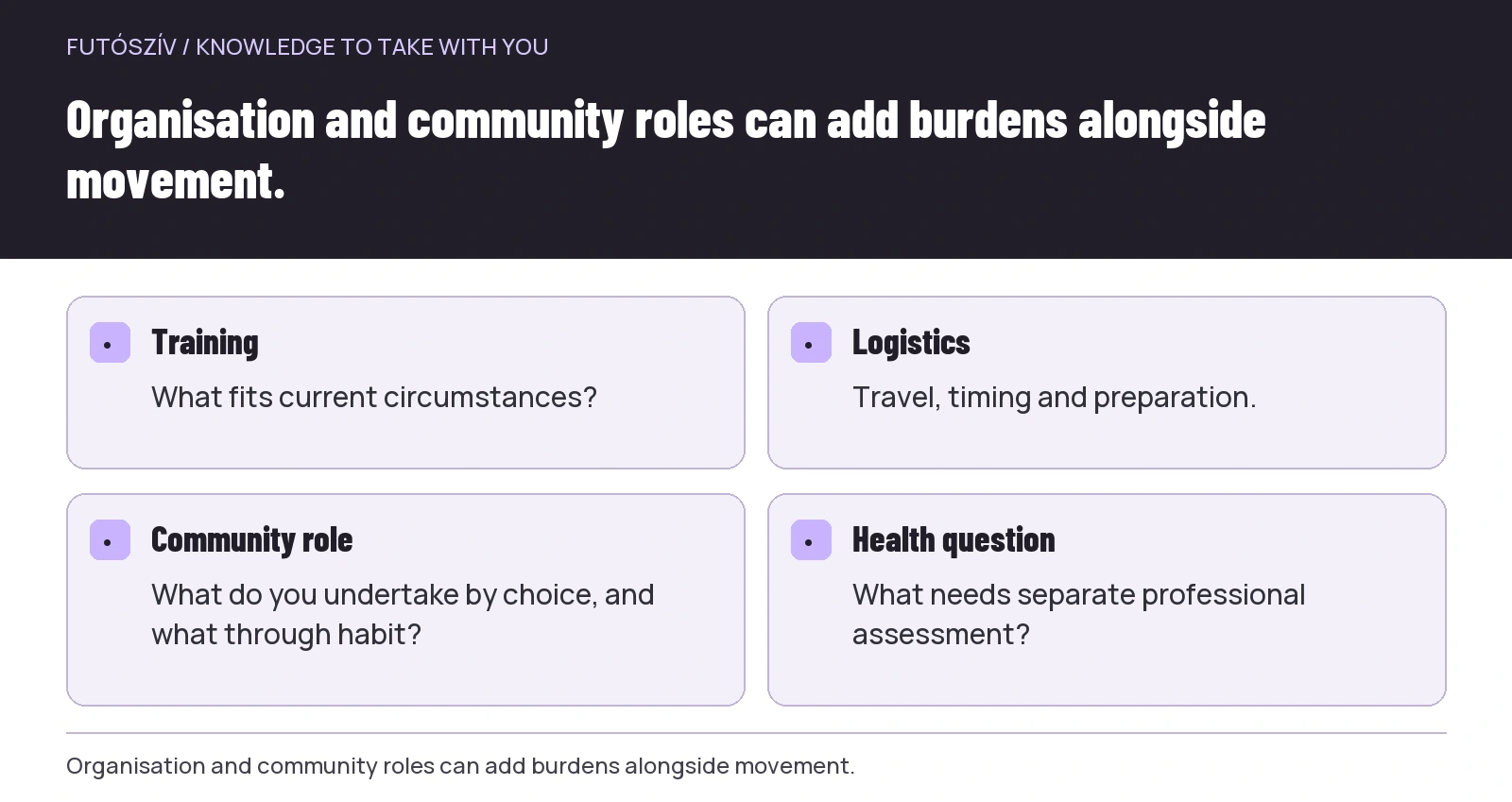 Enlarge diagram
Text version of the diagram
- Training
- What fits current circumstances?
- Logistics
- Travel, timing and preparation.
- Community role
- What do you undertake by choice, and what through habit?
- Health question
- What needs separate professional assessment?
An announced race is not a permanent identity
When many people know a goal, reconsidering it may feel especially difficult. You may feel you must protect not only the race but others’ image of you. The decision does not need every acquaintance’s agreement. A brief statement about adapting plans to current circumstances may suffice, with details discussed with people genuinely helping.
Entry conditions and financial consequences are real questions, checked through current organiser rules. Money already paid cannot determine healthcare decisions, however. A symptom or care need requiring change has professional significance separate from unpleasant feelings about losing entry fees.
Community roles can be reduced too
Many recreational runners are also route planners, photographers, group managers and occasional organisers. Their own running can begin feeling like work. List roles separately: which can remain, which need handing over and which can stop. Every task need not immediately gain a new volunteer if the programme itself can simplify.
Make handover specific. Someone else announces meeting points next month; uploading photographs is optional. Vague everyone will help can return work to the same person. Clear roles support the tired organiser and make the group’s functioning clearer.
Do not make rest another optimisation project
Temporarily reducing tasks may bring an urge to do this perfectly too. New recovery devices, detailed scores and daily checks can replace former training demands. These are not automatically harmful, but ask whether they help the agreed aim or merely create further expectations.
Appropriate rest and activity boundaries may require professional discussion in individual health circumstances. Organisationally, leaving some free minutes without a running task is already meaningful. A calendar can contain periods without sporting performance measures. These need no public challenge or new streak either.
Make programme changes genuinely achievable
If a week is already overfilled, another compulsory cross-training session may not reduce burden. Count travel, separate changes of clothes and arrangements in the modified plan. A simpler programme can matter beyond physical demands through fewer decisions and less organisation. Review details with your training-support professional.
Choose a review appointment with a clear aim. Enthusiasm need not be reassessed daily. Discuss which tasks became easier, what remains oppressive and whether symptoms need medical or mental healthcare. The programme is not a contract to improve by a guaranteed deadline.
Running enjoyment can involve several different things
If answering whether you still like running is difficult, divide the question. Do you miss time outdoors, company, a familiar route or discovering places? Or does none feel good now? Naming differences helps shape opportunities without one general like-or-dislike decision.
Do not make rediscovering enjoyment compulsory. A new setting or playful occasion can be an invitation without proving recovery. If formerly enjoyed activities lose value more broadly or persistent mood difficulties arise, discuss this professionally. Every feeling does not need a new running programme.
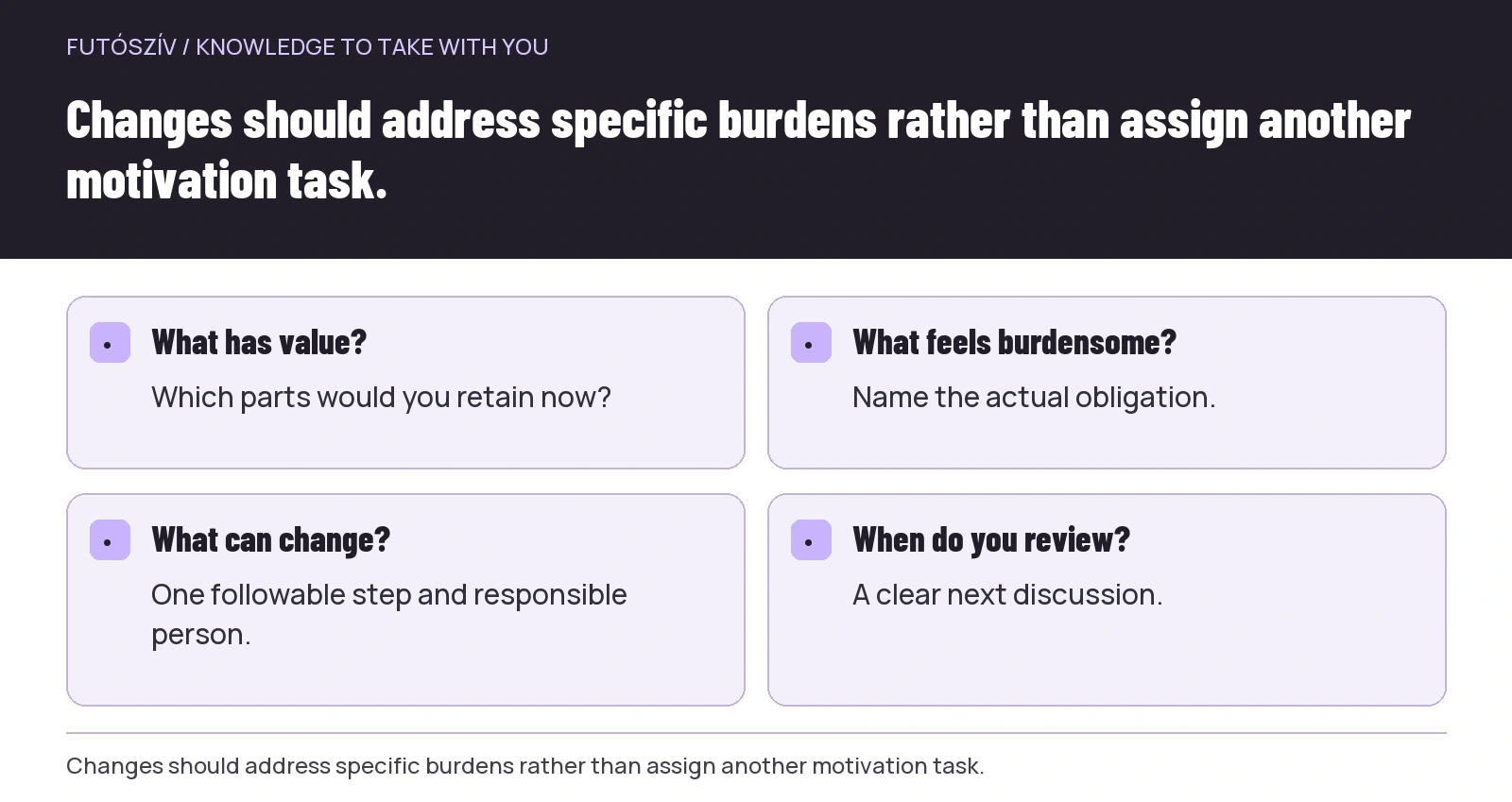 Enlarge diagram
Text version of the diagram
- What has value?
- Which parts would you retain now?
- What feels burdensome?
- Name the actual obligation.
- What can change?
- One followable step and responsible person.
- When do you review?
- A clear next discussion.
Do not let motivation labels conceal health symptoms
Prolonged exhaustion, unusual performance changes or recurring physical symptoms may need medical assessment. I must be burned out does not rule out other causes. A good watch recovery score is insufficient reassurance too. Describe what you experience, since when and its everyday impact.
If difficulties extend to work, relationships, sleep or overall mood, mental healthcare involvement may be appropriate too. Seek urgent help for immediate danger or severe illness. Reviewing your sporting relationship and healthcare can be necessary together; neither makes the other redundant.
The club can have a role in change too
The IOC 2026 mental-health statement highlights sports environments and reducing barriers to help-seeking in elite sport. This does not automatically provide a clinical protocol for a recreational club. As an organisational question, examine how burdens can be discussed openly and personal boundaries respected.
Accept fewer tasks, withdrawal from challenges and attending only social activities for a while. Feedback need not celebrate only records and uninterrupted streaks. Community value also shows in retaining space for people whose lives currently suit another kind of participation.
Four questions for a discussion revealing burdens
What still gives value in running? What continues mainly through obligation? Which specific change can actually happen in the coming period? Which difficulty needs other professional help? These fit one conversation without requiring an entire life story or perfect explanation.
Turn answers into a followable agreement: hand over a task, reconsider a race goal, book a medical appointment or place the next conversation in the calendar. The aim is not regaining a former image of yourself at any cost. Seek functioning suited to current circumstances in which running has an appropriate place alongside the whole of life.
Example: the same club, different participation
A runner previously planned every Wednesday route, travelled to weekend races and wrote reports on Sundays. When the entire system became burdensome, they initially thought they must leave the community completely. Separating tasks revealed that company still mattered, while organisation and constant travel no longer fitted.
This example is neither a treatment success story nor a recipe for everyone. It shows participation in sport has several elements which can be decided separately while continuing physical or emotional symptoms receive appropriate attention. A change has value when it addresses the actual burden rather than merely renaming old expectations.
Sources and further reading
- WHO: Burn-out as an occupational phenomenon
- Australian Institute of Sport: Mental Activity, Fatigue, and Recovery
- IOC: 2026 athlete mental health consensus announcement
How Futószív articles are prepared: our editorial guidelines.