Go for a run is not always usable help
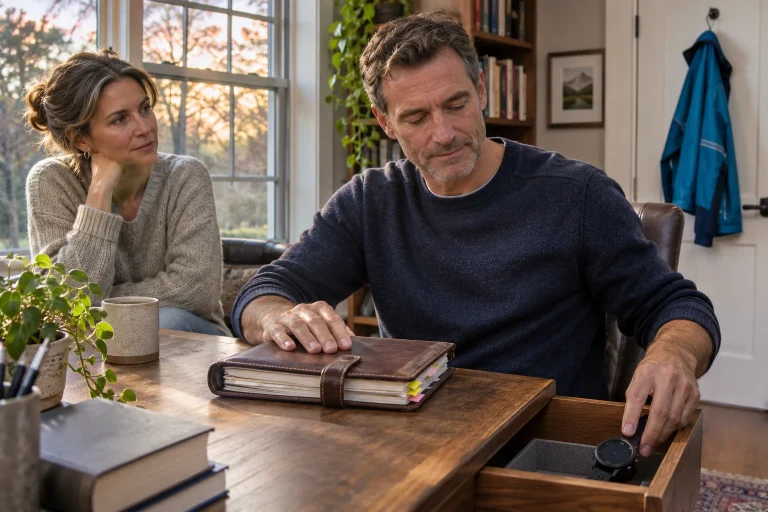
Running brings enjoyment, social connection and predictable habits to many lives. With depression, even the steps needed to set off can become difficult. Choosing clothes, arranging a meeting or replying to a message may each be a task. Advice simple from outside does not thereby become easy to follow.
Discuss opportunities for movement rather than making another certificate of achievement. This article offers considerations for organising more accessible running and walking activities. It is neither a diagnostic test nor a treatment prescription and does not promise regular running resolves every depression. Individual care and safety need discussion with an appropriate healthcare professional.
Depression is not a lack of sporting willpower
NIMH explains that depression can affect feelings, thinking and daily activities; loss of interest in usual things and low energy may occur. Running history or a previous marathon does not exclude it. Fitness and mental health are different questions.
Not maintaining former training does not mean movement is unimportant to someone. Instead of recalling race goals or demanding earlier results, ask what is accessible now. The answer may be a brief shared walk, another meeting or first practical help beginning professional care.
What does movement as possible support mean?
The NHS page on exercise and depression presents regular appropriately chosen activity as a useful option, especially for less severe depression. Professionally led group exercise appears among its options too. This does not make any running club or independent training plan personalised treatment.
Treatment decisions consider symptoms, health condition, needs and accessible care together. NIMH discusses options including psychotherapy and medication. Do not independently change prescribed care because of running. Bring questions about movement’s role into treatment discussions.
Consider the steps before setting off too
A running occasion includes more than time on the course. Reaching the location, finding appropriate clothing, knowing where to put belongings and getting home matter. If access is difficult, review these details first. Reducing complex organisation is more concrete help than general encouragement.
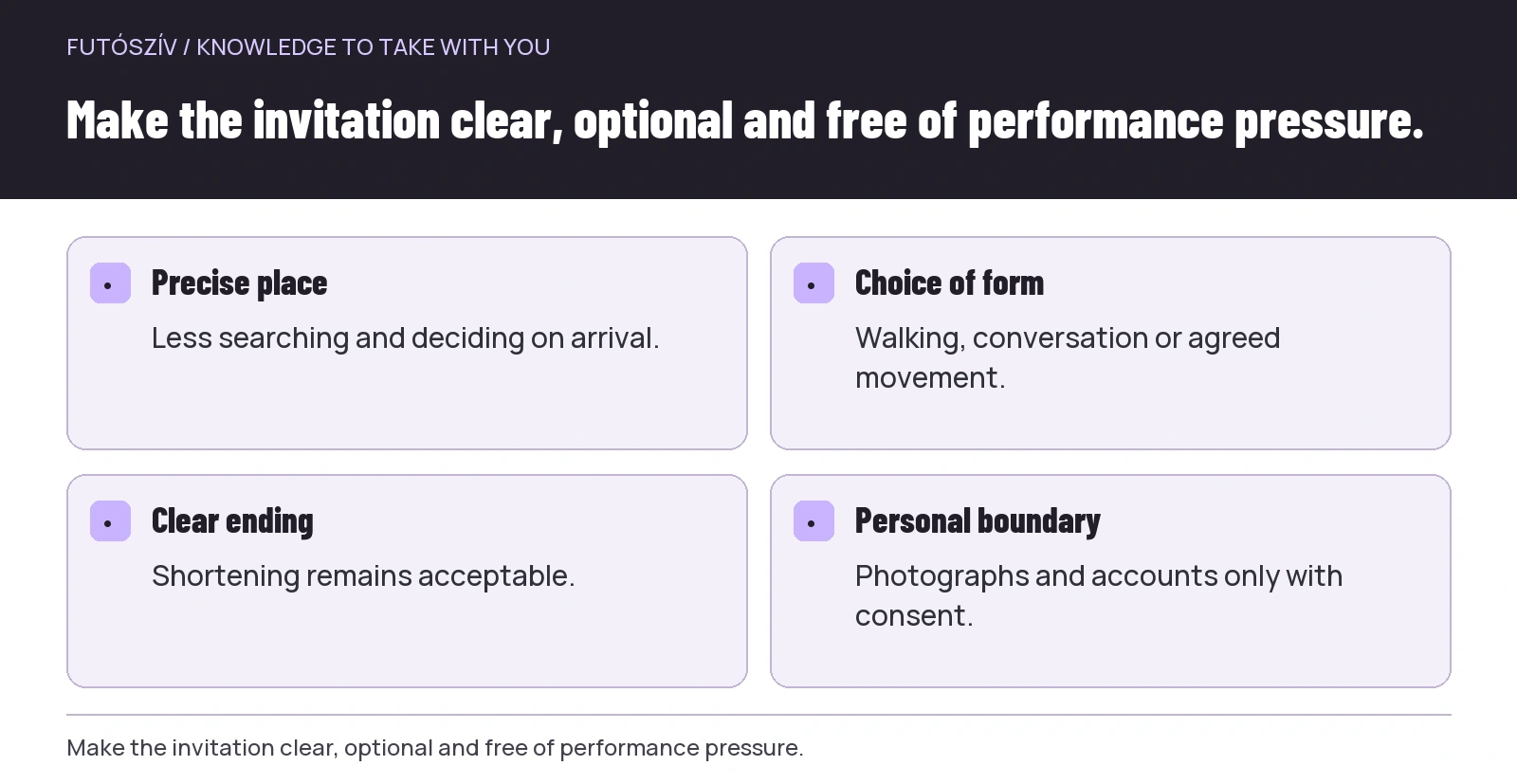
Agree beforehand who waits at an identifiable meeting point, which short route is available and what happens if someone wants to finish earlier. Known arrangements reduce decisions on arrival. Participation should remain an invitation rather than a task requiring explanations before the group when missed.
 Enlarge diagram
Text version of the diagram
- Precise place
- Less searching and deciding on arrival.
- Choice of form
- Walking, conversation or agreed movement.
- Clear ending
- Shortening remains acceptable.
- Personal boundary
- Photographs and accounts only with consent.
Do not let running identity determine movement form
If previously running regularly, a walk or shorter outdoor outing may seem insignificant. Current choices need not be measured against your best former condition. Ask what fits your situation and professionally agreed boundaries now. Sporting history remains when a different form temporarily has a place.
Programme names can matter too. Recovery session may carry old pace and distance expectations, while shared walk in the park describes the occasion more clearly. Every movement need not be called training or recorded publicly. A format works when it conceals no expectation undiscussed in the invitation.
A companion should ask beforehand, not examine midway
As a running companion, ask what is needed during shared time. Conversation, quiet presence, arranging the meeting or walking someone home? Answers can change by situation. You need not create a good mood at all costs during running or request personal details to be attentive.
Avoid ending with the exam question surely you feel much better now? The meeting may have mattered without an immediate improvement someone can describe. Ask concrete questions instead: did route, pace and meeting point work, and would they like it again? Answers can support actual organisational decisions.
One missed occasion should not end the connection
If someone cancels movement, agree beforehand what response they would appreciate. Perhaps a short pressure-free message, or a new invitation later. Predictable communication may help more than repeated urging. Missing an activity does not automatically mean wanting to lose the relationship too.
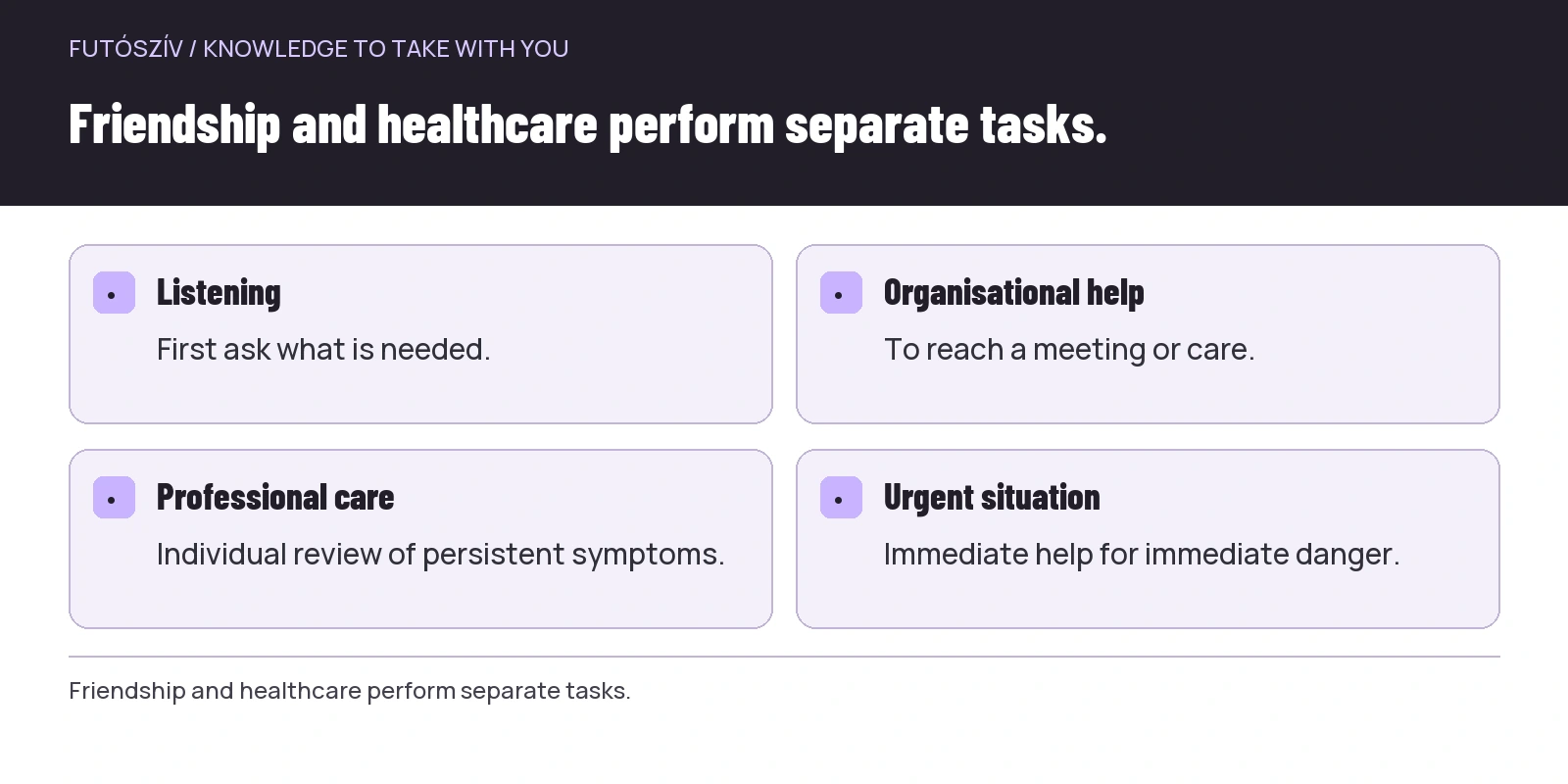
Friendship support has limits, however. One person need not provide continuous availability or professional care. If worried about someone’s condition, express specific observations calmly and help access appropriate care. A shared walk can belong to an important relationship without replacing every support task.
Discuss programme language with a coach too
Public rankings, compulsory training reports or comparative club challenges may temporarily be omitted. Request clear brief communication about options and which need healthcare discussion. A coach can shape sport and feedback methods; clinical symptom assessment requires an appropriate professional.
It may also help not to centre discussion solely on the next race. Making occasions easier to understand or maintaining community connection can be current goals. They need no performance promise. Former ambitions can be reassessed later; for now, avoid adding to existing burdens.
Feedback should concern more than kilometres
If logging is considered useful within care, briefly record how accessible an occasion was. What helped setting off? What was unnecessarily complex? How was the social setting? These are not diagnostic scores and need not be answered daily. The task is revealing recurring organisational obstacles.
Feelings after one occasion matter as experience, not as a measure of the whole treatment’s effectiveness. A meeting may help while symptoms still require professional attention. If it felt unpleasant, that does not automatically make every activity pointless. Interpret experience within your circumstances with a professional if needed.
 Enlarge diagram
Text version of the diagram
- Listening
- First ask what is needed.
- Organisational help
- To reach a meeting or care.
- Professional care
- Individual review of persistent symptoms.
- Urgent situation
- Immediate help for immediate danger.
When should help go beyond programme planning?
The NHS explains that low mood lasting more than two weeks, difficulty coping or self-help attempts that do not work can justify medical discussion. You need not wait for another race or prove enough running attempts. A GP or appropriate mental healthcare professional can review symptoms and further care options.
Immediate danger, risk of harming yourself or a mental health emergency requires immediate urgent help. Safety and reaching care come first; do not remain alone with resolving the situation or try handling it solely through movement. This article’s general running-organisation ideas are not an emergency care plan.
A consultation does not need a perfect account
A few everyday sentences may suffice: I used to enjoy shared running, but now cannot set off for many activities; sleep and concentration at work are harder; I want to understand appropriate help. A professional may ask about progression, other symptoms and health history. You need not decide beforehand which detail explains everything.
Explain what you want to retain from movement and what became burdensome too. You may miss company but not training numbers. Time outdoors alone may matter while group events currently demand too much organisation. These distinctions can support a plan linked to real needs rather than general encouragement alone.
Details of an invitation without pressure
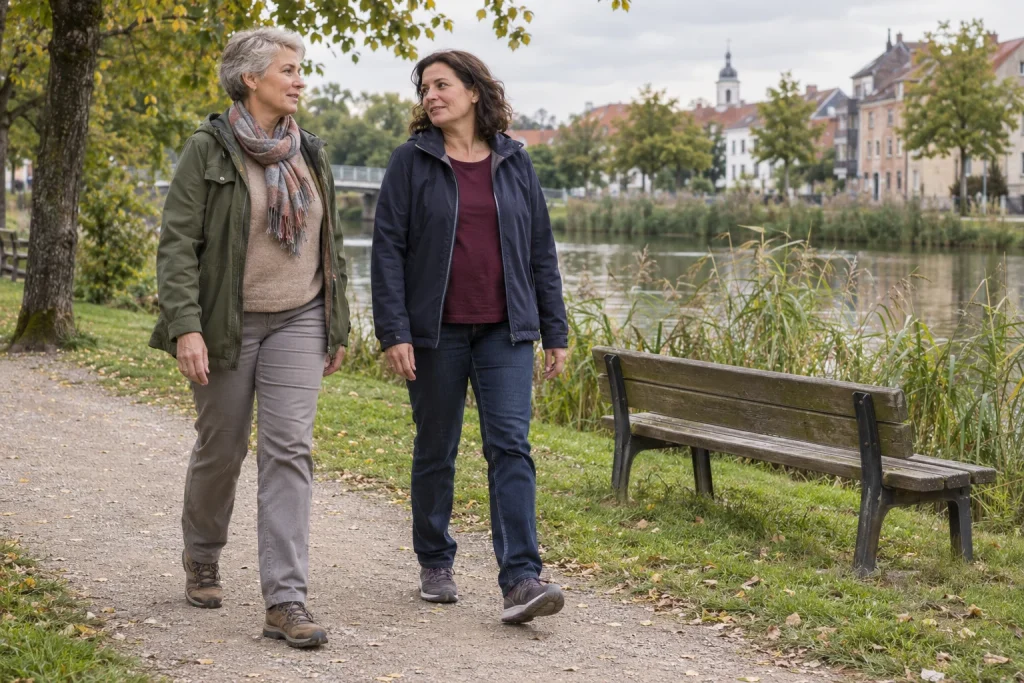
A usable invitation could say: we could meet at the park entrance on Wednesday, choose a short walk, and I also have time if you prefer just talking. We need not record training or take photographs. This names choices precisely without promising immediate relief. The other person’s freedom remains.
If the meeting happens, keep agreed boundaries. Do not unexpectedly turn the walk into training or publish an account of someone’s condition. Predictability and respecting personal boundaries themselves belong to attentive support. Intending to help does not authorise choosing publicity or new goals for someone else.
Keep life beyond running in view too
Alongside movement planning, daily care, relationships and access to professional help matter. If booking or reaching appointments is a barrier, an agreed companion or shared review of options may help concretely. You need not be a coach or therapist, but need the other person’s consent and clarity about your own limits.
Running can find an appropriate place when it need not solve every difficulty alone. It can be a chosen activity among several supports, with personal pace and changing form. Distance does not determine your day’s worth, and missed training does not remove your right to help. Choose the next step from present needs.
Sources and further reading
How Futószív articles are prepared: our editorial guidelines.