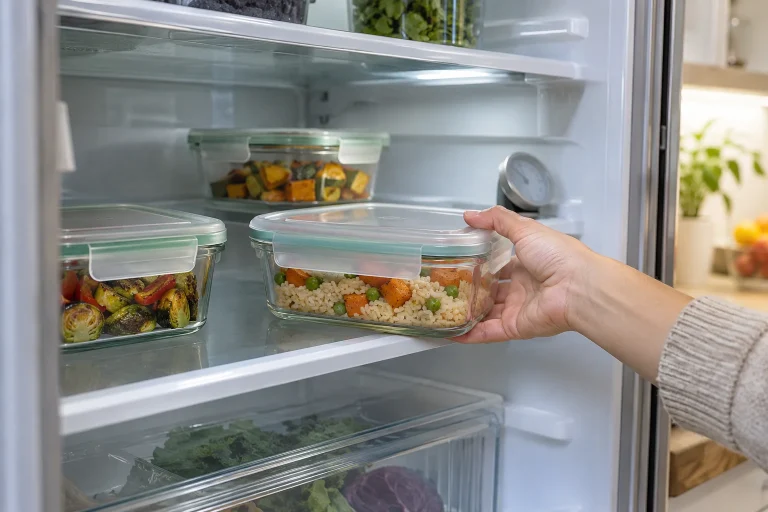
When arriving home late in the evening, the missing element is often not a meal idea but the energy to restart the whole kitchen task. After running, you may not want to choose a recipe, find ingredients and begin major cooking. Having a few genuinely achievable options you enjoy at home can help create a meal suited to your needs. This article provides that organisational foundation for healthy adults. It does not prescribe an identical portion, time or sports nutrition product for everyone; follow special health and dietary requirements in every example.
The evening meal is not the day’s only nutritional task
Arranging a late dinner makes sense alongside the day’s other meals. The NSW Institute of Sport guide to training conflicting with meal times also draws attention to organising the whole day beforehand. In your situation, review when food was available, where running fitted and what you need on arrival. Automatically pushing every missing meal and decision into the late evening is not a useful starting point. Personal quantities and timing can also be clarified with a dietitian if regularly difficult to arrange.
The evening hour alone is no reason to ignore hunger or needs. Equally, a general article cannot establish exactly which food and how much you need after a particular run. Workload, the rest of the day, the next programme and personal comfort all matter. The kitchen system’s task is to provide a suitable choice. Do not let an empty fridge or complicated recipe decide whether you eat and what you can prepare. Resolving access can itself be a meaningful everyday improvement.
Why think in several meal elements?
The British Dietetic Association sports nutrition guide particularly highlights rapid recovery when exercise bouts recur within a short period and adapts needs to individual training schedules. This does not imply one compulsory shake or an identical minute-based deadline for everyone. In your home supplies, seek familiar foods from which a suitable meal can be assembled. Planning carbohydrate- and protein-providing elements, fluid and additions fitting the whole diet relates to individual needs.
There is no need to buy unusual new food simply because running finished late. A favourite dish can also become a suitable meal. If your personal sports nutrition plan sets a specific goal, choose an achievable food option for it. Without such a plan, do not invent rigid portions from an online example. This article’s ideas concern ease of preparation. Adequacy and individual suitability depend not on how many ingredients you ticked off but on your whole situation. Appropriate professional help can be requested for a specific question too.
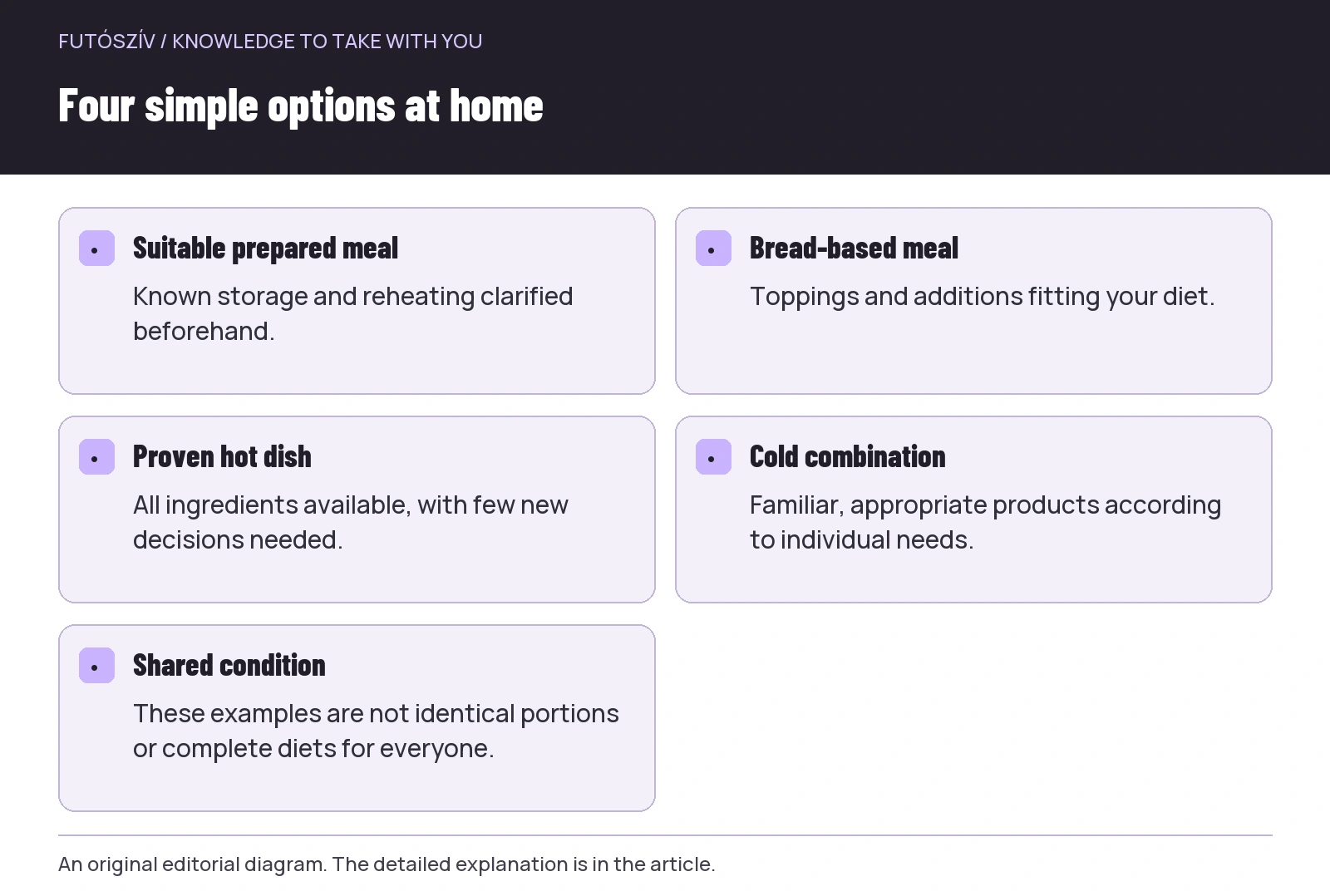 Enlarge diagram
Text version of the diagram
- Suitable prepared meal
- Known storage and reheating clarified beforehand.
- Bread-based meal
- Toppings and additions fitting your diet.
- Proven hot dish
- All ingredients available, with few new decisions needed.
- Cold combination
- Familiar, appropriate products according to individual needs.
- Shared condition
- These examples are not identical portions or complete diets for everyone.
First option: a familiar main meal stored appropriately
If food made to your own recipe and handled safely awaits you at home, evening work can shrink considerably. Clarify use and reheating conditions in advance, with traceable contents and dates on the food. You should not have to decide on entering the door whether the container is fresh, frozen or has stood open for days. An appropriately prepared main meal may be convenient, but only within safe arrangements for that particular food. Unidentifiable leftovers are not a good evening backup, even if they look familiar.
The Nébih menu-planning and leftovers guide makes storage suitability conditional on appropriate refrigeration and handling. A late arrival does not change these. If relying on frozen food, plan appropriate thawing and further preparation too; a dish in the freezer is not always an immediate dinner. Assess the backup by its whole path. It removes work when it awaits you in suitable condition with a known next step.
Second option: a simple bread-based meal
With bread or another suitable base fitting your diet, choose favourite toppings and additions. Examples might include appropriately handled egg, dairy, pulse-based or other options suitable for you. Every one need not be available. Two proven combinations are usually easier to manage than a long sandwich list. Toppings differ in composition, so different elements should not automatically be considered identical portions or nutritional exchanges. Complement the meal according to personal needs while following products’ own storage instructions.
Simplicity includes the necessary base actually being available in appropriate condition. If bread awaits in the freezer, know how to use that particular product too. Refrigerated toppings need a known opening time and suitable storage. Prepare vegetables or other additions safely, not on the same contaminated surface used to unpack a running bag. A bread-based meal is not second-rate because it is quick. Suitability depends on the particular combination and your needs, not use of the cooker.
Third option: hot food with few steps
A familiar pasta dish with an appropriate sauce and additions fitting your diet can be a simple evening meal. Follow package preparation and ingredient-handling instructions here too. Another option is an appropriately prepared egg dish with the necessary basics and additions if suitable for you. The point is not to learn a new recipe while tired. Choose a dish whose first step and necessary equipment you know and whose ingredients are all available. Judge “quick” in your own kitchen without promising a universal preparation time.
The sequence can be simplified: first check which element needs longer preparation according to the package, then use that time only for tasks that can safely happen alongside it. Do not overload kitchen organisation and attention with too many simultaneous actions. If even this is unrealistic that day, prepared food or another combination may be a better organising choice. The method is not about proving you cook every day. A useful option is one you can actually prepare appropriately, not one that sounds good within an ideal routine.
Fourth option: a cold bowl or cereal-based meal fitting your needs
A familiar cereal base, yoghurt or another appropriately chosen product, fruit and necessary additions may together provide one of your evening options. Examine alternatives’ compositions separately; not every drink or yoghurt-style product offers the same things. Dietary restrictions and personal needs inform your choice. A cold meal is not compulsory if you want something hot or tolerate something else better. The example illustrates assembly in few steps rather than claiming a complete recovery recipe suitable for every runner.
If you prefer a more liquid or different texture, consider your own appropriate dietary choices according to product and food-safety instructions. A smoothie is not automatically a complete or sufficient meal in every situation and need not become a compulsory sports product. Individual comfort matters, but persistent difficulty eating or recurring symptoms need not be addressed solely through kitchen ideas. Appropriate healthcare or dietetic help is justified in that situation. Alongside practical supplies, allow actual assessment of the personal problem too.
| Home option | What should you prepare? | What needs separate attention? |
|---|---|---|
| Stored main meal | Known contents and an appropriate storage path. | Actual conditions for thawing or reheating. |
| Bread-based meal | A suitable base and a favourite appropriate topping. | Storage after opening and necessary additions. |
| Simple hot dish | All ingredients for a proven recipe. | Safe preparation, not speed alone. |
| Cold or cereal-based combination | Known elements fitting your needs. | Differing product composition and individual adequacy. |
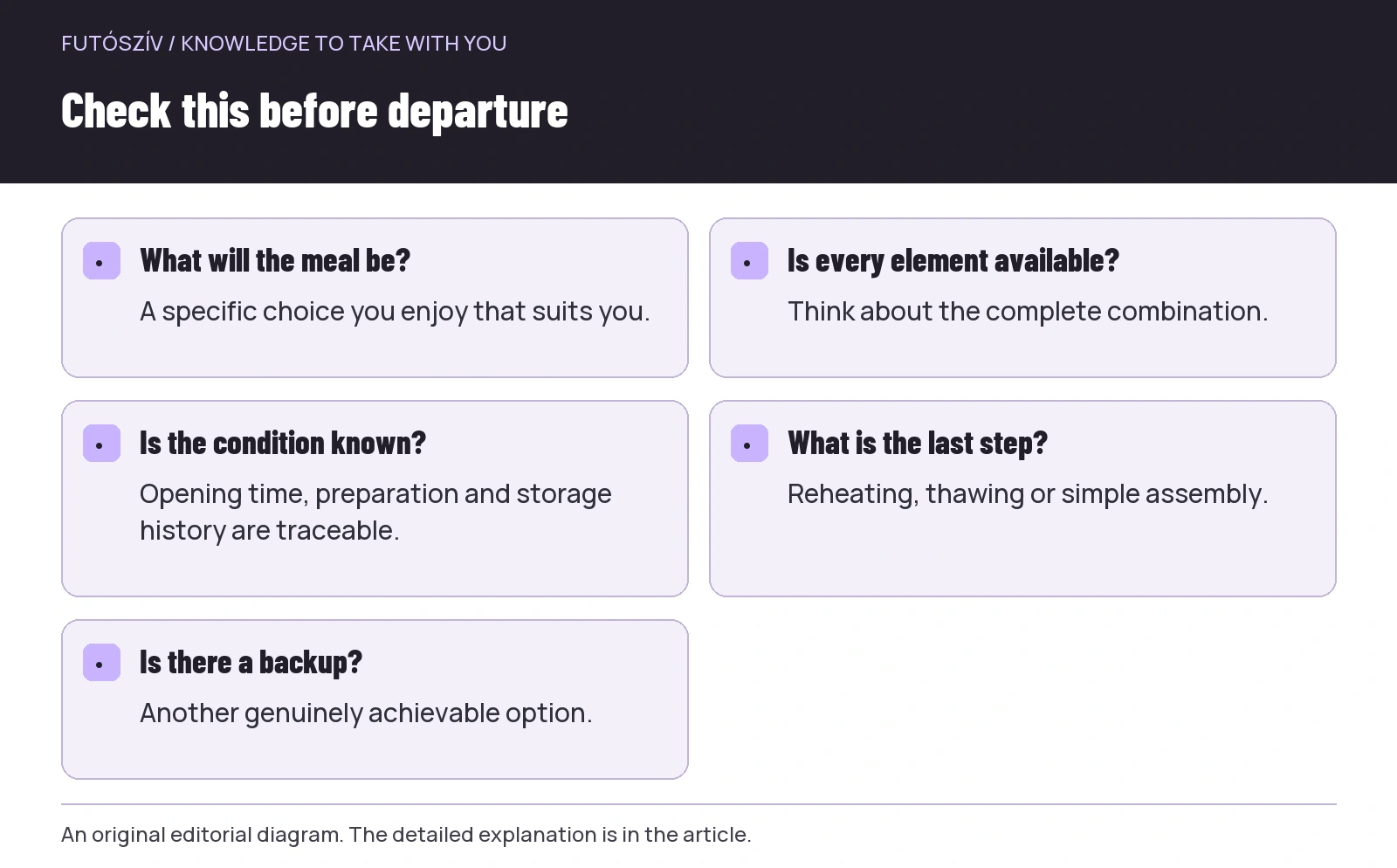 Enlarge diagram
Text version of the diagram
- What will the meal be?
- A specific choice you enjoy that suits you.
- Is every element available?
- Think about the complete combination.
- Is the condition known?
- Opening time, preparation and storage history are traceable.
- What is the last step?
- Reheating, thawing or simple assembly.
- Is there a backup?
- Another genuinely achievable option.
Keep fluids accessible without a quantity contest
Access to appropriate fluid should also be arranged on arriving home. Fluid replacement for your exertion, circumstances and health needs individual assessment; this article does not prescribe the same litres after every run. The cited Sports Dietitians Australia material also links post-exercise needs to circumstances. In kitchen organisation, the simple task is a clean glass, an appropriately handled drink and a real opportunity to drink, not one compulsory product. Excessive rapid drinking does not improve the system.
Do not try to calculate the entire day’s intake through a rigid rule for one late-evening occasion. If fluid replacement is regularly uncertain, you have a known condition or are preparing for particular sporting demands, seek professional help for a personal plan. Access and individual quantity are two separate tasks. Home preparation resolves the first; the latter cannot be derived simply from the volume of a bottle always set out. A comfortable, manageable evening routine can make room for appropriate eating and rest rather than setting another performance goal.
Checking before departure takes a few minutes
Before leaving, check which evening meal option will actually be available. Look beyond whether something exists in the fridge to whether you know what it is and how it can be used. Necessary ingredients should be in suitable condition, prepared food labelled and equipment accessible. If a condition is missing, you can still choose another solution clearly. This leaves fewer decisions for arriving late. Coordinate shared family supplies too, because dinner present when you leave may be eaten meanwhile under someone else’s plan.
Your own meal card can contain two basic versions and a flexible backup. For example, an appropriately stored dish, an easily assembled meal and a known source of food if something fails. The card supports implementation rather than restricting portions. If supplies are regularly insufficient or evening eating repeatedly becomes difficult, examine the whole day’s organisation and needs. A kitchen backup does not automatically correct every earlier shortfall, but helps avoid another organising barrier.
Your own evening routine works when you use it
Choose a few meals you genuinely enjoy and try on a calm day how much work preparing them involves. This creates a realistic late-evening list. Record regular experience simply: what felt good, what was too complicated and what was missing. Meals need not receive good or bad scores. The aim is appropriate, accessible food within your circumstances. After a late run, a familiar selection can then await you at home, adaptable to individual needs, with safe handling considered earlier in the day.
Sources and further reading
- NSWIS: What should I do if I train during meal times?
- British Dietetic Association: Sport and exercise
- Nébih: Menu planning without leftovers
How Futószív articles are prepared: our editorial guidelines.