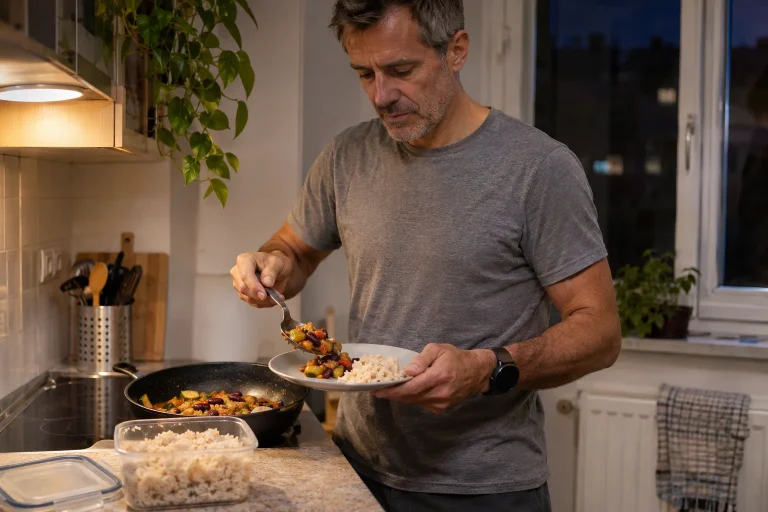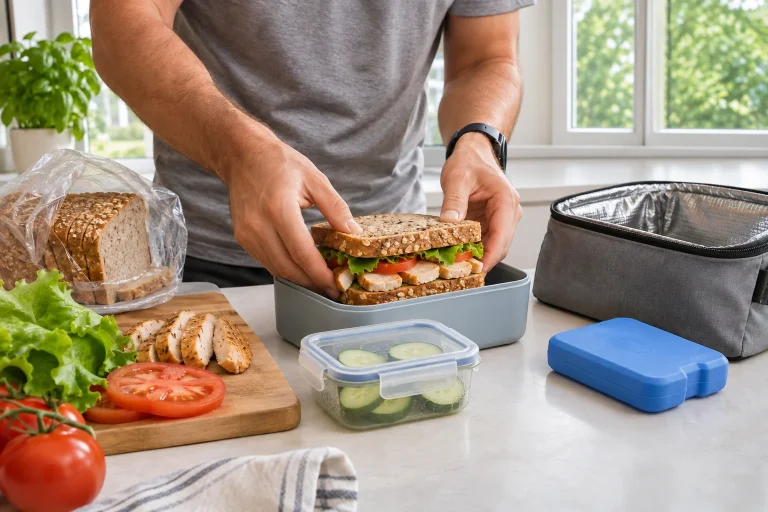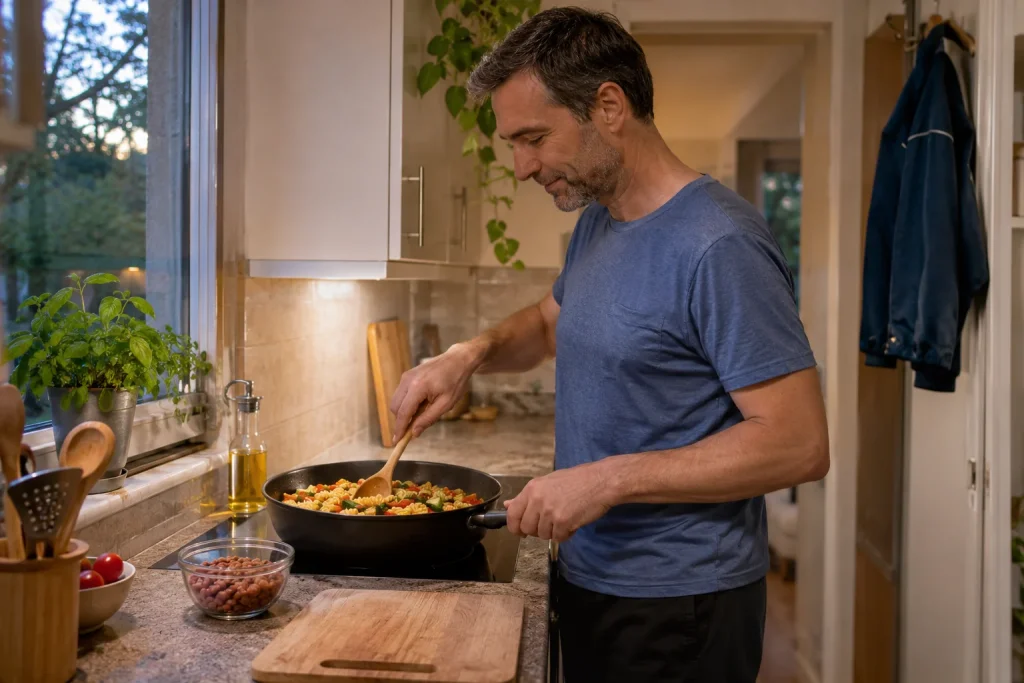
Preparing dinner after running is easier when arriving home does not leave you facing the fridge with an unanswered question. The next step is known: take out the necessary base, prepare the chosen elements and assemble a meal suited to your needs. Saving time involves more than a short minute count beside a recipe, however. Chopping, finding equipment, preheating the oven and what can happen in parallel all matter. A considered sequence can help greatly in an everyday kitchen.
This guide gives adult recreational runners ideas for assembling dinner and organising cooking. It is not a personal recovery portion recommendation or a menu to follow after every session. Adjust quantities and composition to your needs, diet and exercise demands. With an allergy, illness or prescribed diet, every ingredient must be appropriate for you. Kitchen simplicity aims to make suitable eating readily available, not automatically replace earlier meals with one evening recipe.
Separate active work from waiting
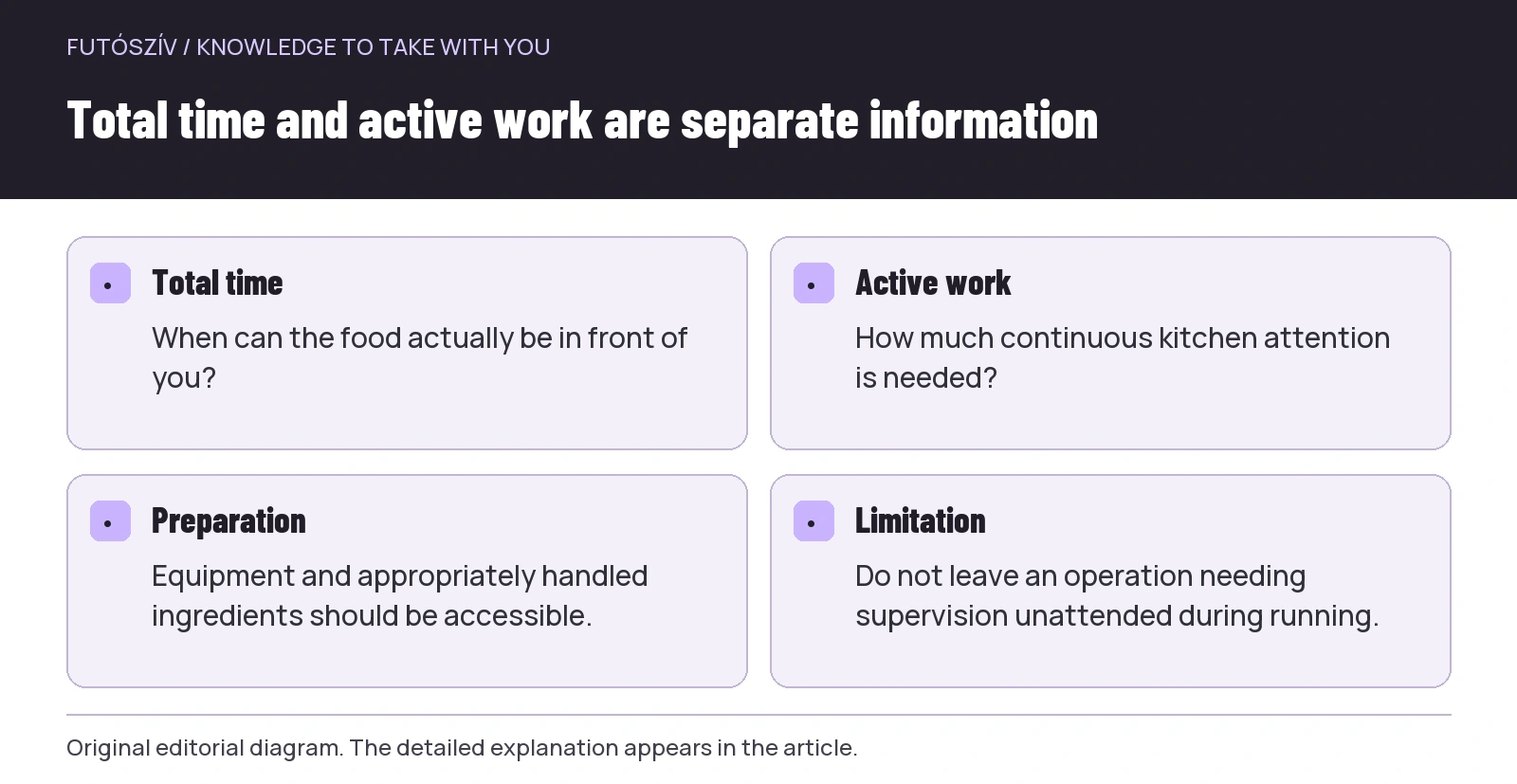
An oven dish may have a longer total time while requiring little continuous attention. A brief pan-cooked dish, meanwhile, needs every ingredient within reach. In dinner planning, consider two things: when you want to eat and how much active kitchen work you can manage. They differ. Starting a long bake immediately on arriving home is a different evening from finishing a meal with a properly prepared element.
Add your kitchen’s actual details to the recipe time. Is the clean pan available? Are vegetables prepared? What instructions apply to the frozen ingredient? Necessary equipment need not come from a specialist collection, but must be accessible and suitable. If finding utensils regularly consumes the evening, simplify organisation and workflow before automatically seeking another quick recipe.
Do not leave cooking requiring supervision or another kitchen operation not designed for unattended use alone while running. Preparation can mean arranging ingredients and equipment, choosing a recipe or having an appropriately stored ready element. Safe workflow matters more than a few theoretical minutes gained. After arriving home, continue from a point you can handle calmly and according to appliance instructions. A short dinner is not a competition in risky multitasking.
Three basic formats may suffice for your own variations
The first is a dish finished fresh in a pan, with suitable bread or another base fitting your diet. The second is a quickly assembled warm bowl with separately handled elements. The third is a properly prepared dish safely used later. These are workflows, not identical nutrient ratios for everyone. Choose what genuinely has ingredients and appropriate storage conditions available that day.
In this system, you adapt a familiar format rather than choose a new recipe daily. Changing vegetables, seasoning, the main element or serving can create a different experience. Continue checking ingredients and preparation requirements while making changes. Another product may not cook in the same time, and a different ingredient may require a new food-safety step. The kitchen format helps but does not erase a specific recipe’s details.
If several people eat together, a shared base with separately served additions can reduce parallel cooking. Portions and flavours may still differ. Other people’s plates do not determine a runner’s needs, and others need not automatically eat the same thing. For allergies, preparation and shared utensils matter too. Make serving arrangements easy to understand so everyone knows each part’s contents.
 Enlarge diagram
Text version of the diagram
- Total time
- When can the food actually be in front of you?
- Active work
- How much continuous kitchen attention is needed?
- Preparation
- Equipment and appropriately handled ingredients should be accessible.
- Limitation
- Do not leave an operation needing supervision unattended during running.
First format: a vegetable egg dish with a suitable accompaniment
Before making the egg dish, prepare vegetables and other ingredients. Do not search hurriedly for bread or seasoning while cooking in the pan. Cook the eggs appropriately, accounting for thorough cooking of the dish and safe ingredient handling. Choose an accompaniment for your own complete meal. The name egg dish alone does not specify the appropriate dinner’s size or composition for you.
The NHS vegetable omelette recipe shows vegetable preparation and fresh omelette cooking in successive steps, with the option to serve bread. This is a family recipe, not a personal running diet in its stated portions. The useful workflow is arranging ingredients first, then completing the shorter fresh-cooking operation. Always use the particular appliance and recipe instructions appropriately.
Adjust seasoning to your preferred version. Different vegetables or herbs can accompany it on another occasion, but many new elements need not be added at once. If the dish became too wet or hard to handle, modify one preparation detail next time. Do not treat the egg dish as compulsory for every evening after running. It can be one format within your own varied selection if appropriate for you.
Second format: a warm pulse base with bread and vegetables
When using canned or otherwise prepared pulses, read the specific product instructions. Dried beans and a ready can do not reach the plate through the same workflow. Prepare vegetables and seasoning for your recipe, then serve with chosen bread or another suitable accompaniment. Handle remaining opened canned food according to the manufacturer. Quick preparation does not mean unlimited keeping time.
The NHS beans on toast recipe provides an example of an everyday combination with vegetables. Within our selection system, its format offers guidance: prepared pulses become a warm component, with a separate bread base alongside. We do not regard the recipe’s family portions as individual sports-nutrition instructions. Allergens and composition can change with selected products, so check your own labels.
Preserve bread texture by putting the warm component beside or on it only at serving. For a shared table, offer the parts separately too. One person may like them mixed, another separate, and quantities can differ. Kitchen flexibility does not require another full recipe. Serving familiar elements differently often provides enough variety and comfortable eating.
Third format: a personal warm bowl with separately finishable elements
Choose a base you can prepare according to its product instructions, then a main element and vegetables fitting your diet. Make pre-meal operations clear. If preparing the base fresh, the accompanying part should be preparable in time. If using a properly cooked earlier element, follow its storage and reheating arrangements too. A bowl format does not exempt ingredients from differing handling conditions.
You can serve the sauce separately to adjust texture to your preferences. Quantities and composition belong to personal needs. You need not fill equally sized compartments with each element merely because the bowl or box has that design. The kitchen system simplifies implementation. Appropriate meals require awareness of the whole day and exercise demands too, particularly if you are uncertain.
If an ingredient is new to you, familiarise yourself with it in a calmer everyday meal first. A tired evening after running is not necessarily suitable for a first attempt at a complex technique or unfamiliar appliance. A preselected, familiar format then needs less attention. New ideas can have space on other days, while busier evenings have a few tried solutions of your own.
| Dinner format | What should be prepared? | What happens fresh? |
|---|---|---|
| Vegetable egg dish | Equipment and appropriately prepared ingredients | Safe, complete cooking of the dish |
| Warm pulse base | Specific product and known recipe | Handling and serving according to instructions |
| Warm bowl with separate elements | Clarified cooking and storage arrangements | The finishing operation needed at that time |
| Previously cooked dish | An appropriately handled and labelled personal portion | Safe reheating if necessary |
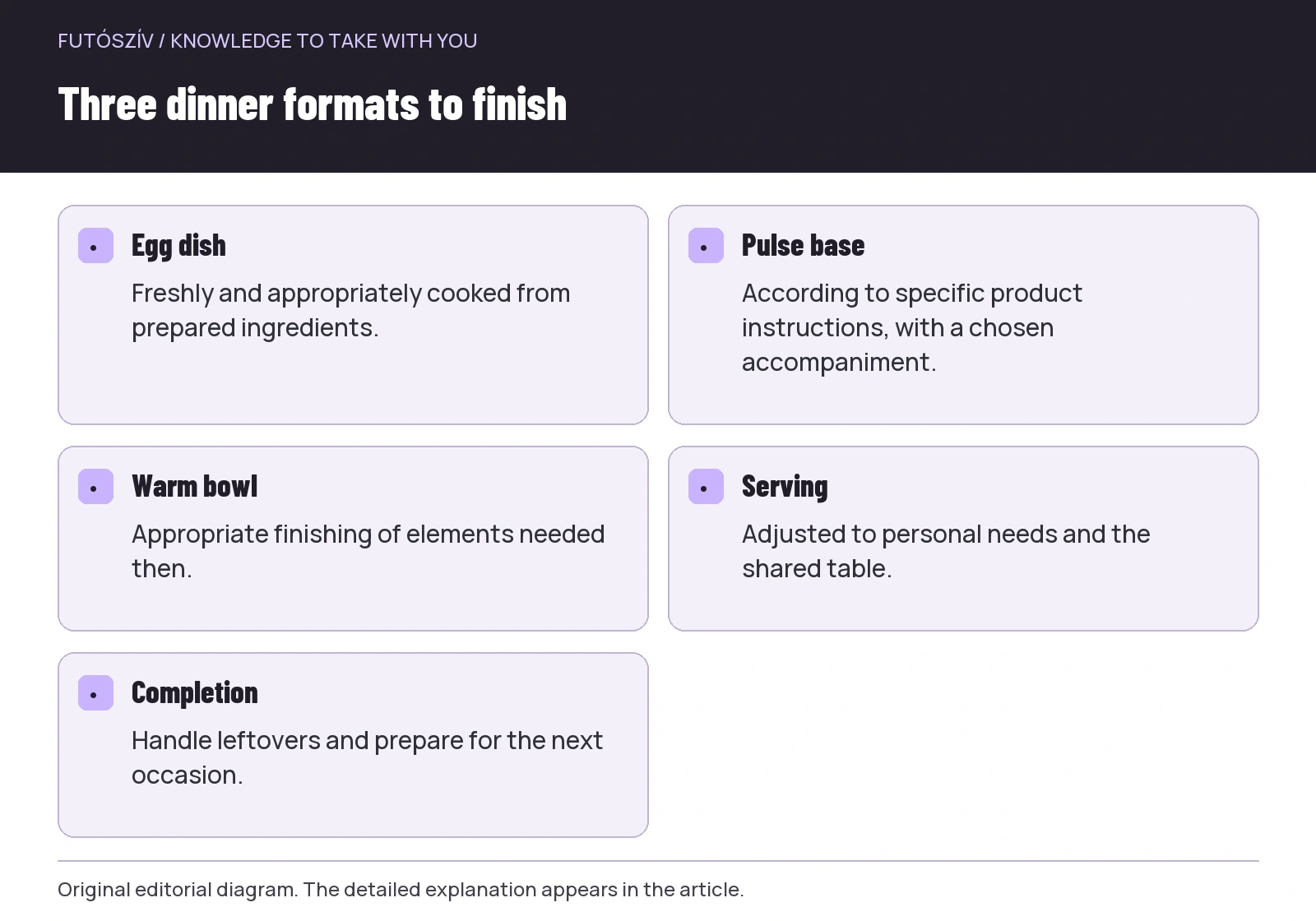 Enlarge diagram
Text version of the diagram
- Egg dish
- Freshly and appropriately cooked from prepared ingredients.
- Pulse base
- According to specific product instructions, with a chosen accompaniment.
- Warm bowl
- Appropriate finishing of elements needed then.
- Serving
- Adjusted to personal needs and the shared table.
- Completion
- Handle leftovers and prepare for the next occasion.
Do not postpone handling cooked food beyond the recipe’s end
The Food Standards Agency cooking guidance discusses appropriate cooking and careful leftover handling together. Reheat only the portion needed and to be eaten then, with the inside thoroughly hot too. The source specifies reheating only once. Later heating does not automatically make improperly stored food safe. A dish’s history matters as much as its evening finishing step.
If part of the food is intended for later, have a suitable container and fridge space before cooking. Follow official guidance for appropriate rapid cooling and use conditions. Do not automatically handle rice or another base needing particular attention identically to every other leftover. Give the container an identifiable name and preparation label so the next dinner does not begin with uncertain memory.
Tidying the counter is part of the task too. Handle utensils for raw and ready-to-eat foods appropriately and clean used containers and cutlery. Preparation’s benefit lasts when the next occasion does not face unwashed equipment and unlabelled leftovers. A brief dinner workflow does not necessarily mean using the fewest objects, but an easily completed safe sequence.
Reduce the evening decision with three preselected bases
Make dinner cards for three formats you enjoy and can manage. Each should list the base, suitable main element, vegetables or other additions, necessary equipment and first kitchen step. Set quantities according to your personal plan. The card means you need not invent the entire recipe on a more tired arrival home. One recognisable starting action can simplify an evening greatly.
When shopping, replenish actual supplies rather than buying every ingredient for every possible dinner at once. Match differing use conditions to the planned day. If an ingredient regularly remains, give the appropriately usable portion a specific role in the next menu. An economical kitchen system builds on foods eaten and willingly used, not having every imaginable base in the fridge.
What should happen on an evening that completely falls apart?
Have a familiar backup fitting your diet, with known handling and preparation. This may be a meal requiring little fresh work or an appropriately handled, preplanned cooked dish. A backup does not mean forcing yourself to eat leftovers of uncertain condition. If the original dinner is unachievable, choose a safe alternative and later examine which organisational detail slipped.
Every late arrival need not imply an entire dietary reform. Change the specific obstacle if it recurs: preparing equipment, choosing a more realistic recipe or sharing household work may help. If daily eating regularly fails to match exercise demands, review the whole day with a sports dietitian. Kitchen routine is a useful tool, but one quick dinner format does not replace personal needs.
Everyday dinner after running becomes simpler when you can see time, equipment and the next operation beforehand. Familiar bases can produce different meals while retaining individual quantities and flavours. Appropriate storage and cooking conditions remain part of the system throughout. A good outcome is an enjoyable, genuinely accessible meal that does not require reinventing the entire kitchen workflow after every session.
Sources and further reading
How Futószív articles are prepared: our editorial guidelines.