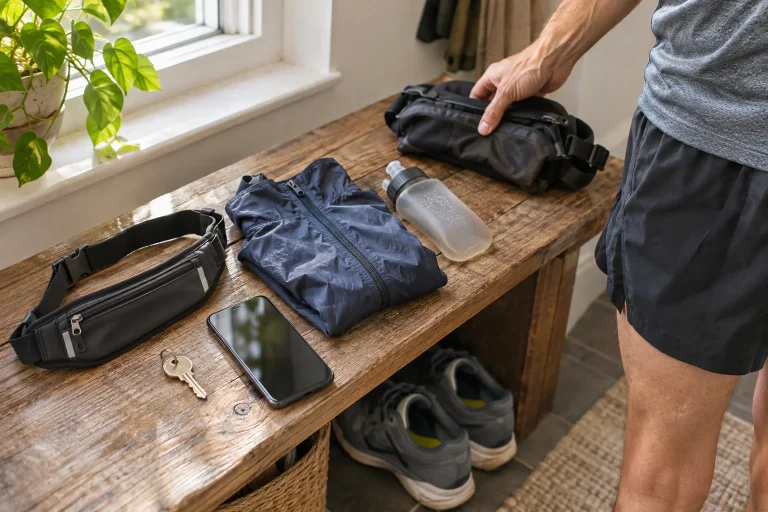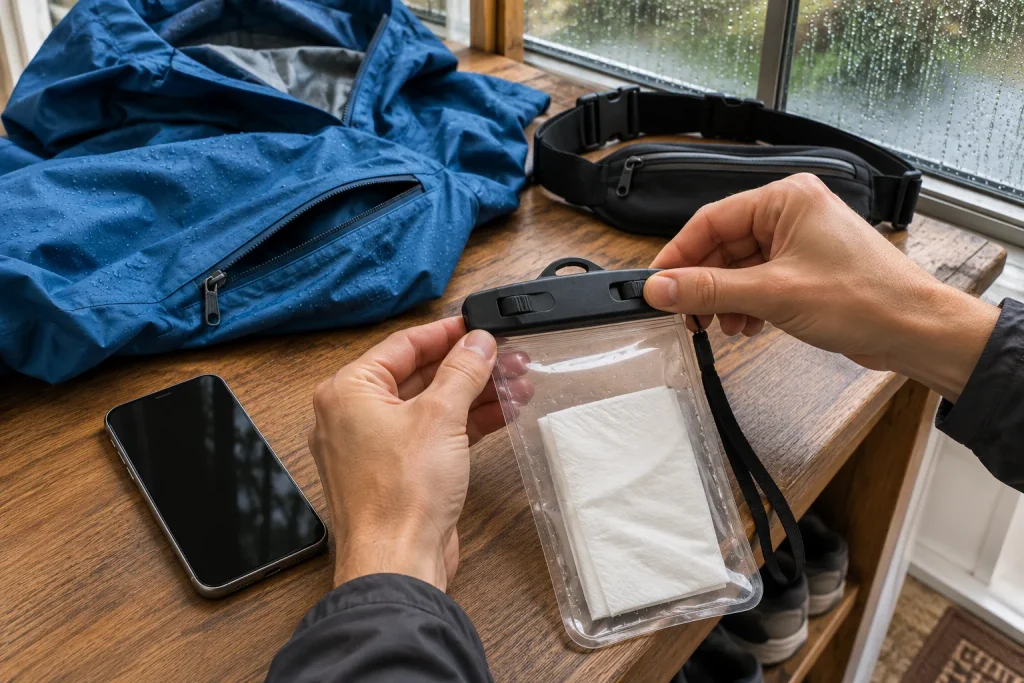
On a rainy run, your phone can be a route plan, a means of contact and a training log at the same time. Yet we often dismiss protection in a single sentence: “the device is waterproof” or “it will be in my jacket pocket”. In reality, the device’s condition, case, pocket, openings and handling all matter together. Rain-protective packaging is usable when it closes properly, the phone genuinely fits inside and you can access it safely when necessary. The purpose of a home trial is not to manufacture a homemade certification, but to find obvious faults before departure without putting valuable electronics at risk.
Three layers of protection with different claims
The first is the phone’s own design and current condition. The second is a separate case or pouch, and the third is its carrying location, such as a belt, vest or jacket pocket. Each has different tasks and limitations. A rating in the phone’s technical specification is not the same as protection provided by a running pocket, and a case does not necessarily make a device usable without limits in every environment. The Apple information on water and dust resistance also emphasises that protection is not permanent and can change with use. Find the current description for your own model.
Other manufacturers also specify conditions for the particular device. The Google Pixel guide to preventing water damage , for example, separately discusses changes resulting from use. Do not copy these from one phone to another. Do not treat a cracked, repaired or worn device as if it still embodied the specification of the new product unchanged. A realistic starting point therefore matters when choosing a case: exact model, actual condition and its own manufacturer’s requirements. An advertising photograph does not supply that information.
A rain-resistant pocket and a waterproof case are different
A jacket’s fabric may be waterproof while the pocket opening, zip or design provides different protection. Likewise, a stretchy running belt is not necessarily a water-protection system. Read the specific product’s claim rather than inferring from its sporty appearance. If choosing a separate case, check whether it is intended for rain and splashes or another precisely defined use. Different ratings can have associated conditions. You do not need to memorise every marking, but you need to understand the manufacturer’s stated use and handling instructions to set off with appropriate expectations.
The instructions page from waterproof-case manufacturer Aquapac gives separate instructions for each product group. This is a good example of why a brand name does not mean a single shared procedure for every case. Clips, roll closures and other designs may require different handling. Find the exact version of your own case and check size limits, closure, permitted use and condition inspection. A product without understandable instructions is itself less predictable to use. The aim is not as many layers as possible, but a system with known capabilities.
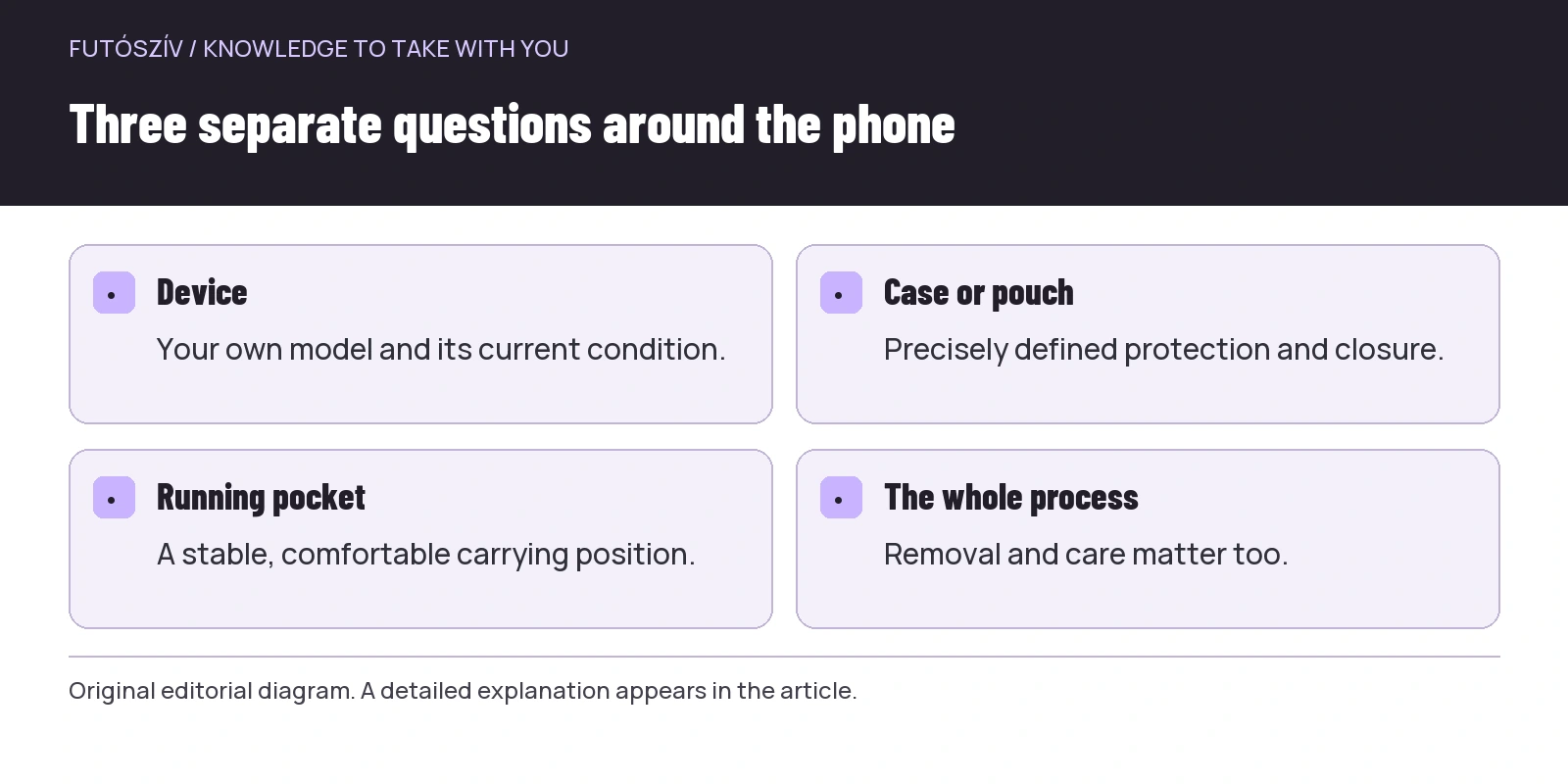 Enlarge diagram
Text version of the diagram
- Device
- Your own model and its current condition.
- Case or pouch
- Precisely defined protection and closure.
- Running pocket
- A stable, comfortable carrying position.
- The whole process
- Removal and care matter too.
Sizing: include the phone’s own case
Check size using the setup you actually use. The phone’s own protective case, camera bump and any accessories left attached can change the space required. The packaging should not merely just close; it should close as instructed, without force. No phone edge or other material should be trapped in the closure. If it is too tight, removal will also be harder, particularly with wet hands. A larger pouch, however, may occupy more room in your running pocket. The sizing trial therefore has two parts: device inside the case, then the complete case inside the carrying location.
The pouch closure is often more rigid than the rest. Check where it sits relative to your body. It can press on different points in a chest pocket, running belt or trouser pocket. The wider phone package may make a previously comfortable pocket bounce or feel too tight. First test carrying with an empty substitute or in a safe manner consistent with the product instructions. You do not need to risk the device to identify a problem with shape and size. Protection is only useful if it remains manageable while running.
Learn the closing action
At home, in calm surroundings, open and close the case a few times according to the instructions. Check where each element should sit, what indicates correct closure and where material, dirt or a cord could become trapped. The cleanliness and condition specified by the manufacturer are part of its operation. Do not force a jammed closure or regard a half-closed part as almost right. If the system is uncertain or damaged, seek help from the retailer or manufacturer. A case does not become reliable by overcoming the clip’s resistance with ever greater force.
Some products require a specific check before use. Carry it out according to the instructions supplied for that exact product, using contents of no value as a substitute if directed. The trial does not replace condition inspection or extend the case’s intended use. Do not conclude that it is now suitable for every water situation. For runners, the point is to use packaging in suitable condition, correctly closed for a known task. A home test aims to discover faults, not override manufacturer limitations.
Do you want to operate the phone or just carry it dry?
A case designed to let you use the device through it differs from a simple storage pouch. Touchscreen, button, camera and audio operation may depend on both product and phone. The manufacturer’s own product and sizing information also distinguishes designs that enable operation from those intended for storage. Check what is claimed for your own model. A pouch that provides appropriate water protection is not necessarily a good interface for navigation while running. Screen access and readability are separate usability questions.
In dry surroundings, try the actions you may actually need: waking the display, handling a call and viewing the route. Do not create unnecessarily long screen use just for the case. During a run, stop somewhere safe when an important situation requires attention to the device. If you wear gloves, check operation with those too. A phone in a pouch does not automatically become easy to control with every hand and in every wet situation. In a usable system, you know beforehand what works while sealed and what requires another solution.
Opening the case is part of water protection too
Water remaining on the outside can reach the device when you open it. Follow your case’s instructions for handling external moisture and the opening’s position. Watching the sealed pouch throughout the run is not enough if you open it hurriedly at the end with wet hands on a wet surface. Find a suitable place, arrange the items and only then open it. You can learn good practice at home instead of inventing it in heavy rain. Protection is a process from closing to safe removal, not merely a property of the minutes in between.
If you only need occasional phone access, it may be simpler to carry it sealed and use it at planned stops. On another route, quick but still safe access may matter more. Choose according to the task. Do not buy a more complicated system than you need on the assumption that every function must be operated while running. The route, navigation needs and contact requirements are individual. The case serves them rather than imposing new habits. Your own trial can help find a balance between convenient access and appropriate protection.
| Trial | What are you checking? | A meaningful result |
|---|---|---|
| Size | Phone with its own case and accessories | Closure as instructed without force |
| Carrying location | The whole package in the running pocket | No uncomfortable pressure or distracting bounce |
| Closure | A clean, intact sealing surface and correct action | A clearly appropriate condition |
| Operation | The actions genuinely needed | Known functions accessible while sealed |
| Removal | Handling outside moisture and the opening | A safe, unhurried process |
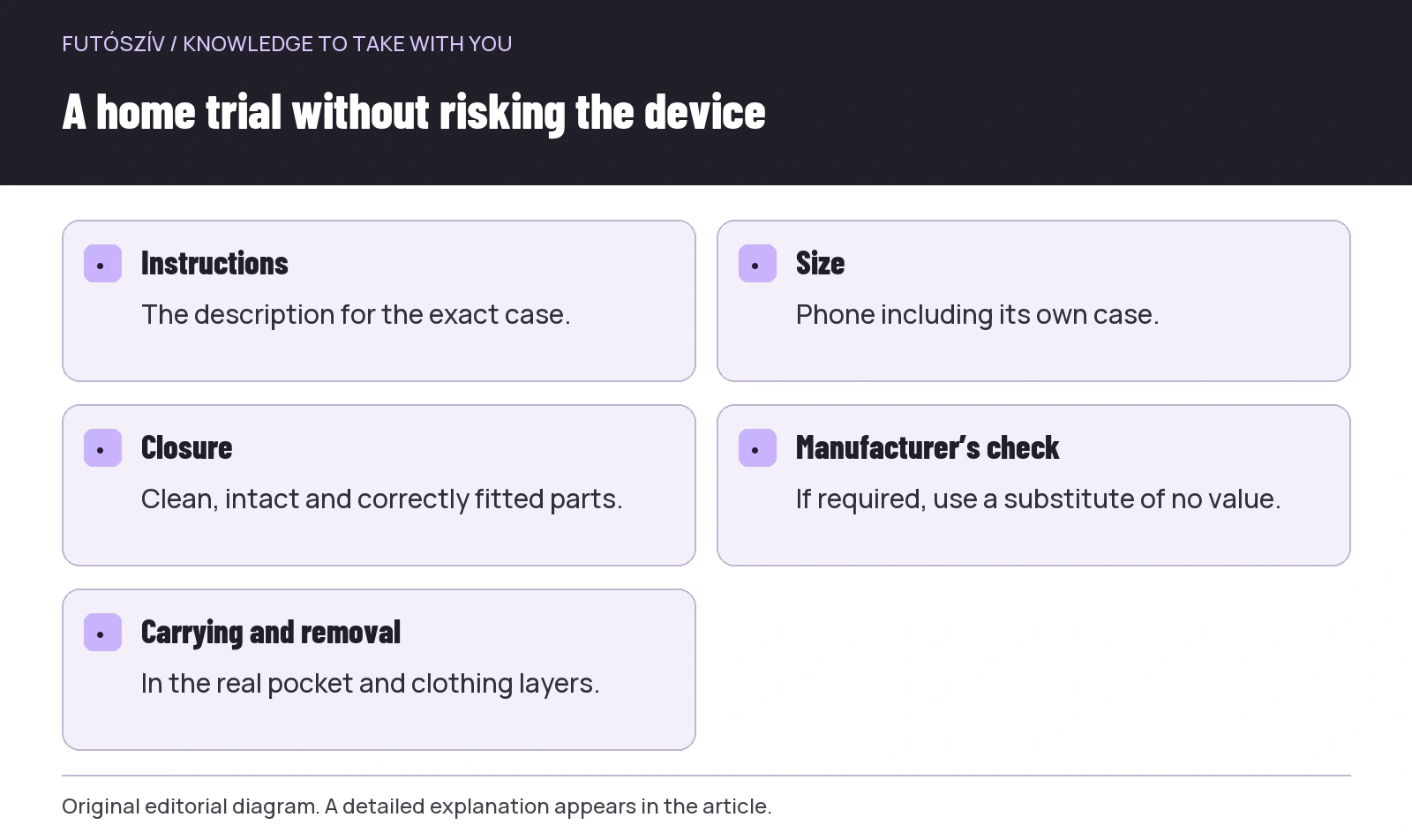 Enlarge diagram
Text version of the diagram
- Instructions
- The description for the exact case.
- Size
- Phone including its own case.
- Closure
- Clean, intact and correctly fitted parts.
- Manufacturer’s check
- If required, use a substitute of no value.
- Carrying and removal
- In the real pocket and clothing layers.
Sweat, rain and the complete setup
Moisture does not only come from outside. A package worn next to the body is in a different environment from the inside of a dry bag. Put an already dry device and accessories in suitable condition into the case according to the manufacturer’s requirements. Do not deliberately seal a damp phone inside in the hope that the outer waterproof layer will dry it. The material and position of the running pocket also affect use. The phone’s surface condition and the case’s interior require separate attention, so inspect the whole system at the end of the run, not just the outside of the jacket.
On a longer route, battery level and a navigation backup are also part of the plan. Water protection does not mean unlimited operating time or guaranteed signal. If the phone is an important navigation or contact tool, have an alternative suited to the situation in case it stops working. This does not necessarily mean buying more electronics: route familiarity, an agreed plan and a sensible option to stop can also help. Choosing a case solves a specific problem. It is unwise to base the predictability of the entire run on the condition of one accessory.
Do not treat every fault with a home drying trick
If the phone reports moisture, malfunctions or has actually become soaked, follow its own manufacturer’s instructions. Rules on charging, cleaning and drying may be model-specific. Do not replace those instructions with general internet tricks involving rice, heat treatment or solvents. The device handling guides separately discuss suitable care and limitations. This article is not a repair manual, but a preventive equipment trial. For a real fault, appropriate support or servicing is the targeted next step.
Distinguish damage to the case from a device fault too. A scratched window, damaged closure or stretched connection may affect usability. Do not repair a water-protective function with an unknown adhesive and then assume its original capabilities. The manufacturer or an appropriate repairer can say whether a supported repair exists. If the case’s proper working condition is uncertain, do not test the hoped-for result on an important phone. Sometimes the right decision is replacement or another carrying method, rather than continuing to use a faulty system at all costs.
Separate the system after running
In suitable surroundings, remove the phone, inspect the case, and clean and dry it according to the instructions. A pouch sealed while damp will not automatically be ready next time. Check dirt remaining in sealing surfaces and the condition of the rigid section too. Store it so that keys or other sharp items cannot damage it and its appropriate components remain together. A small preparation routine may be quicker than hurriedly searching before the next rain for packaging that has long been crumpled in a bag and is in uncertain condition.
A suitable rain-protective phone system makes three things clear: what the device can do, what the case can do and how it works in the carrying location. Size, correct closure, operation and removal together determine usability. A home trial examines these while respecting manufacturer limits and avoiding risk to valuable electronics. Every run does not need the same solution. A known system selected for your own route and access needs is worth more than a pocket assumed to be generally waterproof. Protection helps when you understand the whole process beforehand.
Sources and further reading
- Apple: conditions of water and dust resistance
- Google Pixel: preventing water damage
- Aquapac: instructions by product group
- Aquapac: products and sizing information
- Apple: important device handling information
How Futószív articles are prepared: our editorial guidelines.