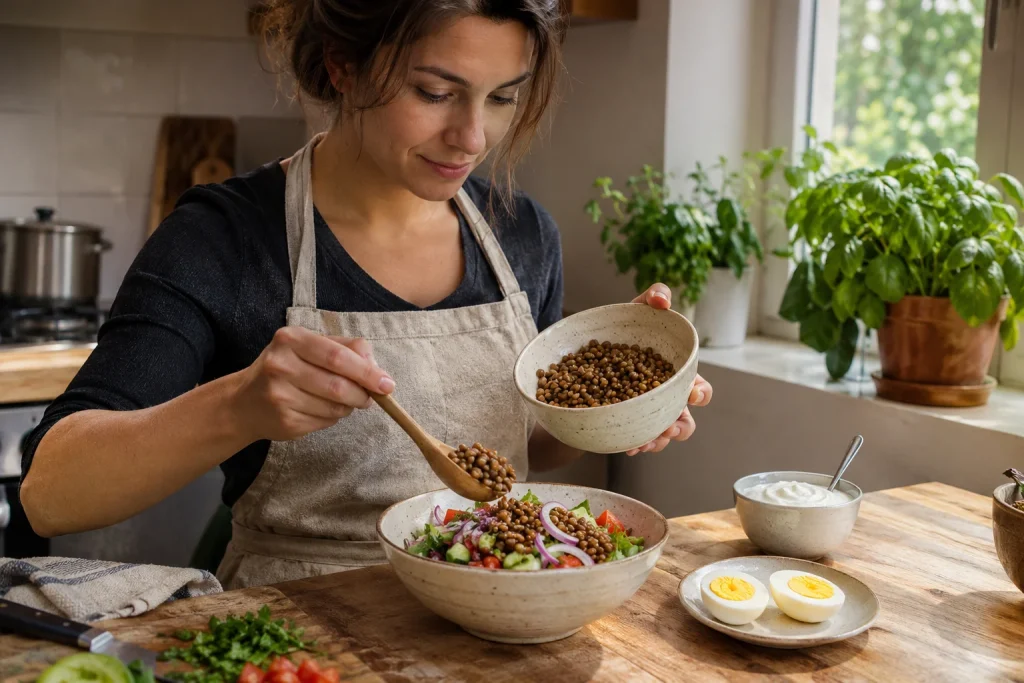
Running conversations about protein can easily turn into comparisons of product names and powder tubs. Everyday kitchens offer more options. Egg dishes, pulses, appropriate dairy products, tofu, fish or meat can belong to a diet according to individual choices and needs. The useful question is not merely which packet displays a large protein number. Also clarify how the product becomes a suitable meal you can actually prepare.
This guide supports kitchen understanding for adult recreational runners. It prescribes no personal daily protein target and treats no illness or deficiency. Interpret individual needs alongside the whole diet and exercise demands; follow professional guidance for a prescribed diet. Examples below illustrate assembly and calculation, not measured sports menus. They involve neither our own product tests nor a brand ranking recommended to everyone.
Protein is one aspect of a complete meal
The British Dietetic Association sports nutrition information discusses protein in adaptation to sport while also emphasising sufficient energy and a balanced diet. Do not therefore reduce personal eating to maximising a single nutrient. A high-protein ingredient alone does not establish whether dinner as a whole has appropriate quantity and composition for you.
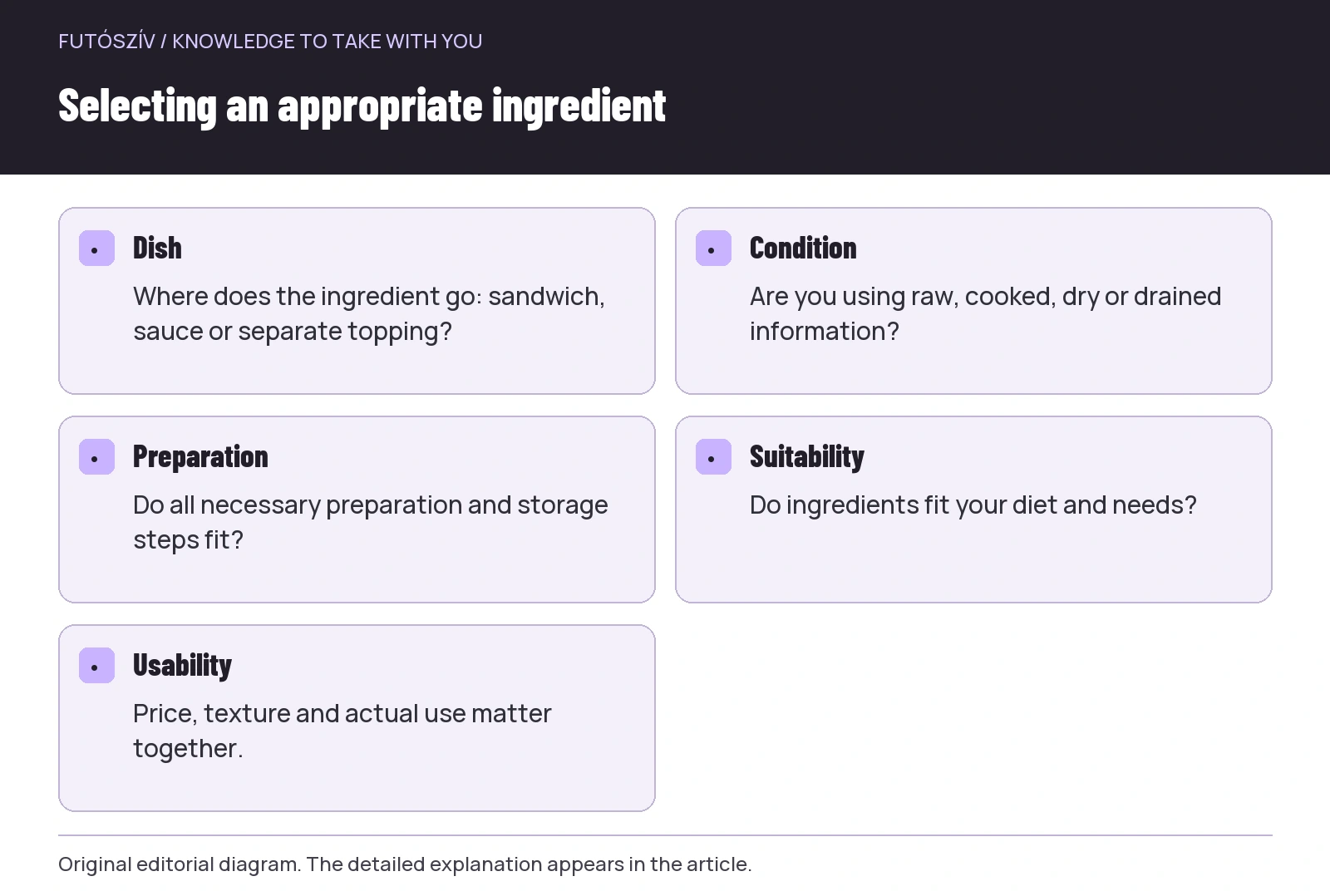
In the kitchen, first name the dish you want to make. A sandwich, thick vegetable stew, pasta dish, rice bowl or breakfast? Then find a suitable protein source. The ingredient gains a real role: filling the sandwich, joining the sauce or becoming a separate topping. Reversing the order may force the entire meal to be reorganised around a selected product. A usable choice fits your cooking habits too.
Do not identify the whole meal with its main protein source. Side dishes, vegetables and other ingredients matter in a chicken bowl, just as a pulse dish’s outcome is not determined solely by the name beans. Appropriate quantity cannot be established from the appearance of the item at the plate’s centre. To evaluate your whole day’s eating, all foods and your exercise demands together provide the usable picture.
Build your own kitchen selection
The NHS vegetarian diet guide mentions pulses, eggs, tofu and other appropriate alternatives while highlighting variety. This does not mean every listed food can replace another in an identical portion. It shows that different ingredients can form a diet. Personal dietary boundaries and the whole dish’s composition should govern choice.
List a few options you genuinely know, enjoy eating and can prepare appropriately. Mark ready-to-eat versions, quick-cooking options and those requiring more preparation separately. Your list is not a permanent ranking but a kitchen map from which to choose according to available time and equipment that evening. A rarely used ingredient difficult to obtain may be interesting without making a good everyday backup.
| Kitchen situation | Possible ingredient group | The next decision question |
|---|---|---|
| Cold sandwich or separately served topping. | Appropriate ready-to-eat spread, dairy product or other topping. | What does the label say about composition and storage after opening? |
| A freshly cooked warm dish. | Eggs, tofu, appropriate pulses or another chosen base. | What preparation and cooking does it require? |
| More preparation time is available. | Dried pulses or a raw main ingredient fitting your diet. | Does the whole sequence fit, not merely the final cooking step? |
| A shared family meal. | Separately prepared toppings chosen individually. | How will the elements remain appropriately separated? |
 Enlarge diagram
Text version of the diagram
- Product A
- 8 g / 100 g; 150 g used in the example.
- A calculation
- 8 × 1.5 = 12 g protein.
- Product B
- 12 g / 100 g; 100 g used in the example.
- B calculation
- 12 × 1 = 12 g protein.
- Limitation
- Educational example: not actual product data or a personal portion recommendation.
Look at the specific label rather than the product name
Similarly named products may differ in composition. Yoghurt, a plant-based dessert, a seasoned tofu preparation and pulse spread do not each mean one fixed nutritional value. For comparison, read the particular package. Do not automatically transfer another brand’s or earlier recipe’s number to a new product. Differences can matter in cooking too: thinner, softer or more strongly seasoned versions fit the same dish differently.
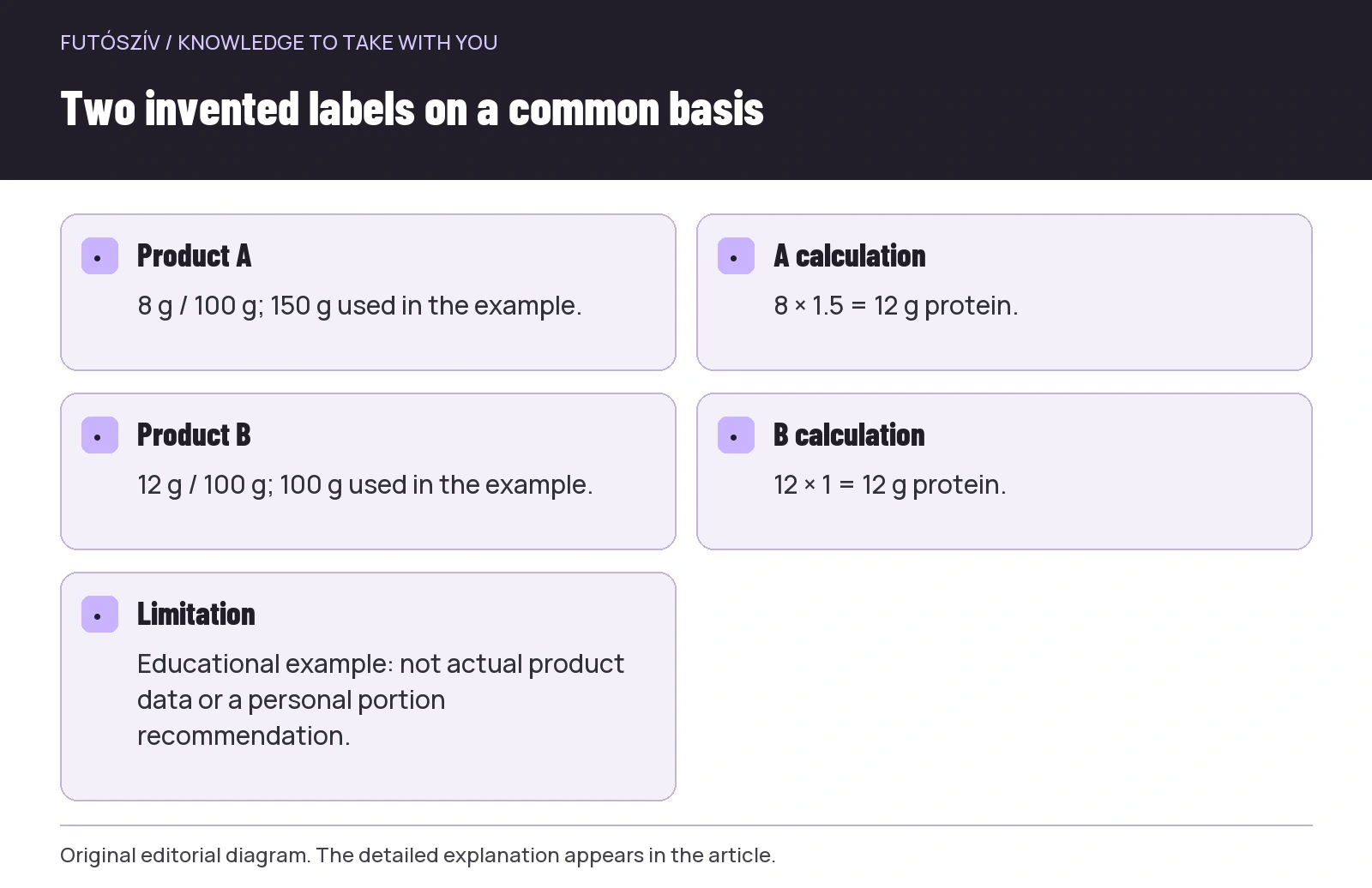
First bring comparison figures onto the same basis. Do not directly compare per-hundred-gram data with a value calculated for a whole pot or larger package. Then examine the amount actually used. Different foods may have different practical portions in a meal appropriate for you. Common-basis calculation supports label understanding but does not require eating equal amounts of everything.
Suppose invented product A contains eight grams of protein per hundred grams and invented product B twelve grams per hundred grams. Using a hundred and fifty grams of A or a hundred grams of B gives twelve grams in either case. The example teaches proportions only, not actual product values or recommended meal portions. The foods may still differ in every other ingredient, flavour, price and kitchen usability.
Raw and cooked weights are not interchangeable
When calculating, write the condition beside the quantity. Is the product dry, raw, cooked or drained? Water may enter or leave food during cooking, so finished dish weight cannot automatically be multiplied by information for a hundred grams of raw ingredient. Account for packaging values given for a particular prepared state too. Omitting condition can create apparently precise but inconsistent results.
For a personal recipe, consistently starting with ingredients actually used is simplest. The whole dish and your portion are separate questions. If several people share it, total recipe information does not automatically become one plate’s value. Homemade portions are not always identical, and ingredients may not distribute evenly. If professional reasons require more precise records, clarify the method with a dietitian rather than treating an uncertain home estimate as a laboratory result.
A comparison note may need only three fields: product and condition, the label’s data basis and your use. This already reveals where raw and cooked quantities became mixed. Every everyday meal need not become a detailed spreadsheet. The method helps answer a particular question, such as why two package declarations appear so different.
Texture belongs to everyday usability
Soft and firmer tofu may suit different kitchen roles, with the specific product’s instructions mattering too. Chunky, creamy or sauced pulse dishes also behave differently. A topping suitable for a sandwich needs different properties from a spoonable bowl. Choosing appropriate texture often matters more to dinner’s success than comparing highlighted numbers on packaging fronts.
Try changing one element of a familiar dish. With a new protein source, keep side dishes and seasoning familiar if ingredients and preparation suit you. This makes it easier to notice whether the new element’s flavour, texture and preparation work are successful. This is a kitchen trial, not a nutrition-science intervention study. Enjoying a food does not establish that its ingredient is equally good for every runner.
Calculate cost for usable food
A cheaper packet does not necessarily mean a cheaper dinner actually eaten. Consider how much edible food reaches the plate, whether further ingredients are needed and whether some remains unused. A large pack helps only if appropriately stored and actually used. Compare price from your real cooking habits rather than a theoretical portion you never make.
Price per gram of protein is a narrow perspective. It does not show a whole meal’s value, other nutrients, preparation required or whether you enjoy it. Total dish cost and the number of suitable meals it produces can offer a usable comparison. Include work and storage needs alongside calculation. Choice then becomes more than a price contest for one nutrient.
 Enlarge diagram
Text version of the diagram
- Dish
- Where does the ingredient go: sandwich, sauce or separate topping?
- Condition
- Are you using raw, cooked, dry or drained information?
- Preparation
- Do all necessary preparation and storage steps fit?
- Suitability
- Do ingredients fit your diet and needs?
- Usability
- Price, texture and actual use matter together.
Quick cooking includes safe handling
The NHS guide to meat discusses separate sealed storage of raw meat, following labels and appropriate cooking. If selecting such an ingredient, include the whole sequence in dinner planning. Handling utensils for raw and ready-to-eat ingredients is not an optional side step. Simpler dishes are not quick because food-safety work is omitted.
Check the difference between ready-to-eat and cooking-required products for every ingredient. Canned and dried beans, prepared toppings and raw meat need different sequences. Plant origin does not automatically make a product edible without preparation either. The safest starting point is the specific label and official handling guidance for that ingredient. Adapt your routine to these.
What should you ask when considering a supplement?
First clarify the actual problem you want to solve. Is an appropriate meal unavailable where needed? Does daily eating not fit exercise demands? Are quantities uncertain? These are different questions. A new product does not necessarily solve kitchen organisation or whole-diet problems. Stating the aim helps seek necessary support or change instead of starting from a general product promise.
Discuss suitability and use of sports supplements with an appropriate professional. This article selects no personal preparation and establishes no usage protocol. Learning everyday foods’ possibilities need not mean adopting the opposite extreme: no single ingredient becomes a complete solution for every circumstance. Your diet, life circumstances and exercise demands together determine the real question.
A short personal kitchen sheet
Choose three suitable options with differing preparation methods. Beside each, note a favourite dish, preparation state and storage conditions. Include, for example, a cold-assembly option, a fresh-cooking one and a planned-ahead version if these fit your diet. Collect more than product names. The sheet helps when it shows what meal you can actually make from them on an ordinary evening.
If the selection fails, identify why first: flavour, texture, access, storage or too much work? Replacing an ingredient is often a smaller, more precise change than redesigning the whole diet. Seek individual professional help if personal nutrient needs are the question. Knowing kitchen protein sources helps choose between more meaningful options and see actual meal preparation alongside the numbers.
Sources and further reading
How Futószív articles are prepared: our editorial guidelines.