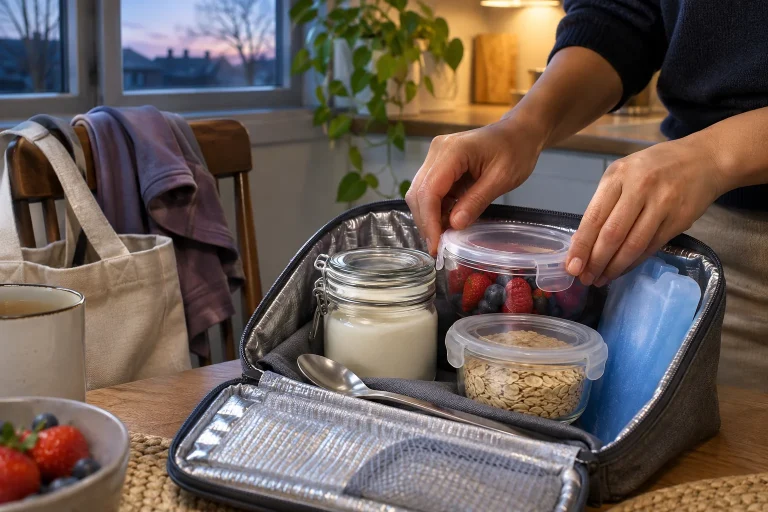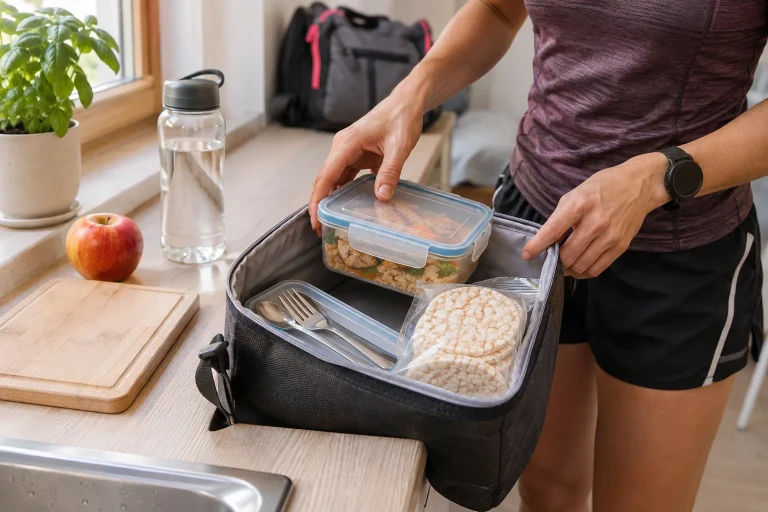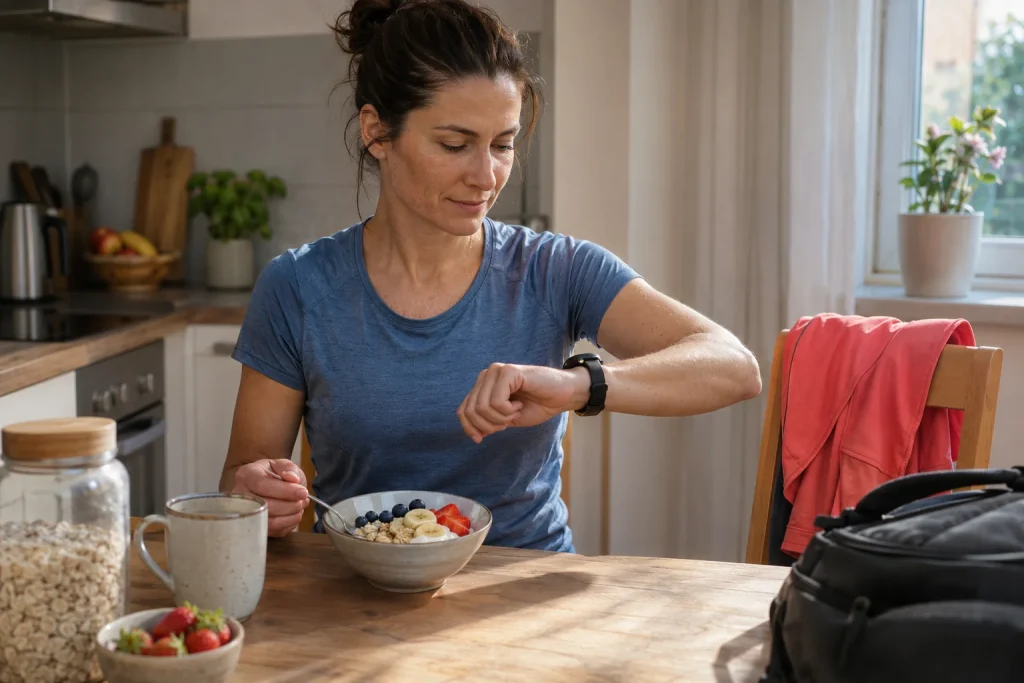
Many reduce the food question around morning running to one choice: breakfast before or after? The actual situation is more detailed. Available time, the kind of run, the previous day, eating opportunities throughout the morning and personal comfort and needs all matter. A good routine is a plan for your own morning, not another runner’s timetable copied. This article offers a method for healthy adults’ everyday organisation without personal portion guidance or compulsory timing. Follow appropriate professional guidance for known conditions, allergies and individual sports nutrition goals.
Work backwards from leaving for work first
Note when you actually need to leave home or log on for work. Then place changing, washing, meal preparation and running before it. Time between waking and walking out the door is not all freely available for eating. If every action occupies the same few minutes on the plan, that is not a matter of nutritional willpower. Redraw the routine or prepare ahead. Thinking backwards immediately shows which task would regularly disappear in the rush.
Do not give every step unrealistically little time merely to fit the run on paper. Use your familiar morning workflow and mark uncertain parts. Childcare, transport or preparation running late are real circumstances. The plan works when access to morning food and fluids fits too, not only the workout start. The goal is not getting up earlier at all costs but knowing your options and developing a personal solution that fits.
Early training and usual breakfast are different situations
The NSWIS information on breakfast distinguishes eating around early training from breakfast before work or study. The main lesson is planning for the individual task: eating immediately before activity and beginning a calmer morning without training do not necessarily need the same solution. This article therefore offers no breakfast valid for everyone. Examine your own workload, time available and comfort together.
The type and amount of food do not follow solely from the morning hour either. A shorter everyday run, a longer session and an important event can raise different planning questions. Later eating opportunities matter too: will you return home, run to work or travel farther afterwards? The morning routine does not end when the session stops. See access to food and fluids through the rest of the morning too. If coordinating personal needs is difficult, a sports dietitian can help build a plan for the actual routine.
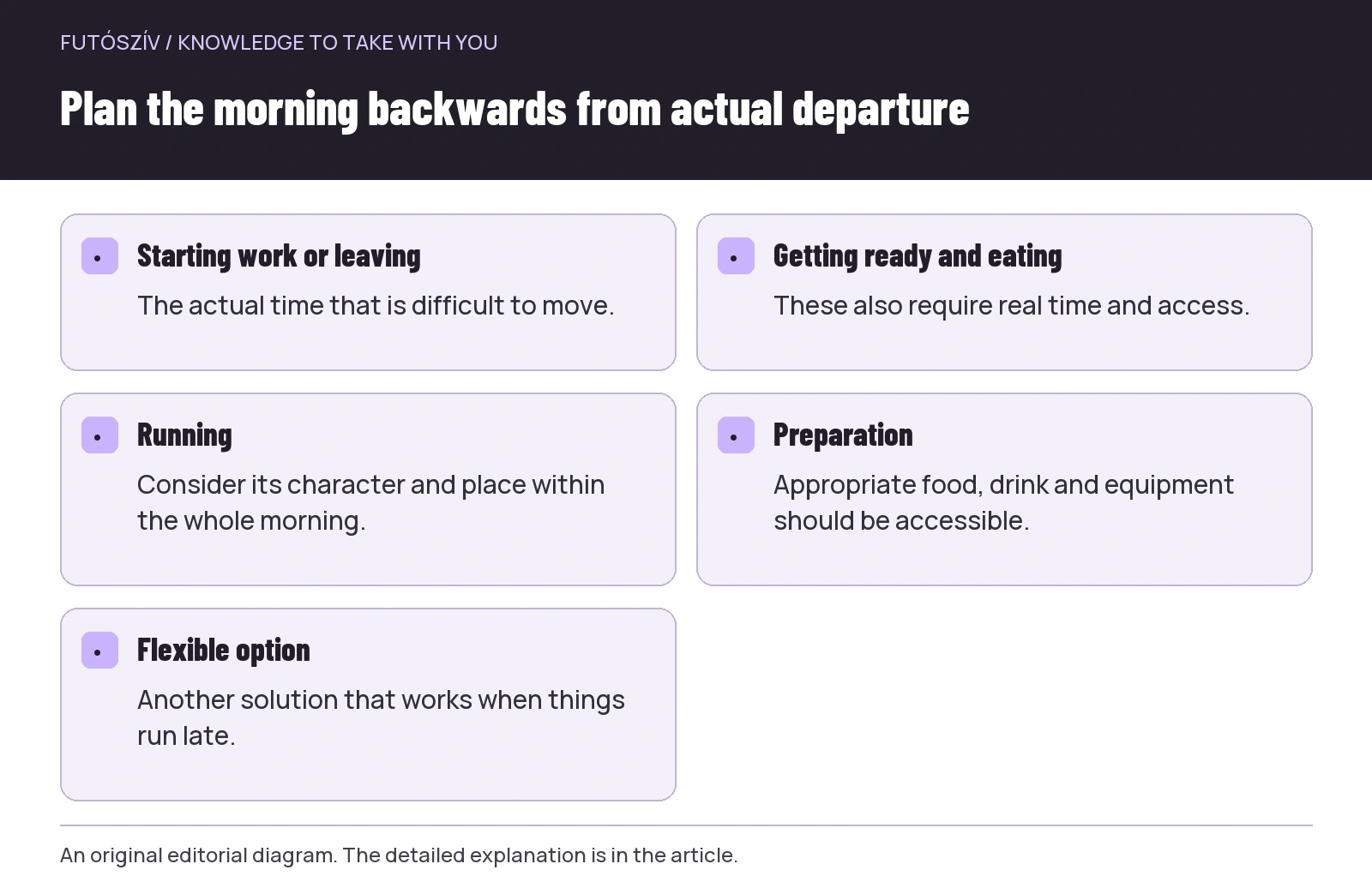 Enlarge diagram
Text version of the diagram
- Starting work or leaving
- The actual time that is difficult to move.
- Getting ready and eating
- These also require real time and access.
- Running
- Consider its character and place within the whole morning.
- Preparation
- Appropriate food, drink and equipment should be accessible.
- Flexible option
- Another solution that works when things run late.
Familiarity and comfort matter with pre-exercise food
According to the Sports Dietitians Australia pre-exercise nutrition guide , there is no single best food for everyone; choice and timing depend on individual circumstances. An appropriate, familiar, easily eaten option and your own digestive comfort matter. The guide’s general principles do not override a special diet or health instructions. On the morning timeline, ask which suitable food fits your routine and how it connects with the whole day.
If you have no experience with a particular food, do not schedule its first trial for an important running event’s morning. An everyday situation easier to modify is better for observing preparation and comfort. This is not allergy testing or investigating symptoms at home; known restrictions must not be set aside through experimentation. Briefly recording personal experience may help: what the food was, under which circumstances you ate it and what you observed. Do not create a rule for everyone or a certain ingredient diagnosis from one occasion.
Three morning situations needing different plans
In the first situation, you leave home and return before daily work begins. The kitchen is accessible, but getting ready and eating after running need time too. In the second, you go directly to work or elsewhere, where refrigeration, reheating and eating space may differ. Access and packing are separate tasks here. In the third, running begins later in the morning, leaving more time between usual eating and movement. Assess personal food choices and timing separately in all three.
These are not prescribed schedules. They help reveal which environment-specific question needs resolving. A breakfast plan for home may not work in an office changing room, and food suited to a later departure is not automatically appropriate immediately after waking. Begin with your own routine. Everyday eating and specific needs around sport meet when food is actually accessible, appropriately handled and adaptable to personal needs. Put workable steps behind the choice, not only good intentions.
| Morning situation | First organising question | Preparation the previous evening |
|---|---|---|
| Returning home after running | When and how will food be accessible? | Arrange familiar basics and necessary equipment. |
| Going directly to work | Are appropriate storage and eating opportunities available? | A suitable packed meal and transport conditions. |
| Running later in the morning | How does your eating fit with departure? | Familiar food and a realistic timeline. |
| Variable departure | Which other solution works if the day runs late? | An actually accessible, appropriate backup. |
What you can arrange the evening before without making food
Choose an appropriate meal option, check ingredients and prepare equipment. Dry ingredients can be organised in suitable storage if appropriate to the product and your recipe. Chilled ingredients should remain properly refrigerated rather than on the counter overnight for a quicker breakfast. If packing is needed, have a clean, suitable container and necessary transport solution. Searching and decision-making are often easiest to remove from morning work; the entire meal does not necessarily need preparing ahead.
Make clear which ingredients belong to your breakfast if several people share household supplies. Every package need not be reserved, but a brief agreement helps avoid a missing important element at departure. The backup should genuinely suit you, not be an unknown product chosen only for speed. Ease of preparation and personal food suitability matter together. The previous evening’s organisation aims for fewer morning decisions while preserving label and safe-handling requirements.
For packed breakfast, see its entire journey
If eating breakfast elsewhere, food requiring refrigeration needs appropriate transport and storage. A car, running pack or locker is not automatically such a place. The Nébih shopping and transport publication also highlights appropriate separation and keeping necessary products cold. The same practical principle applies to breakfast: its safe journey should not break because running happens along the way. A container having a lid is not itself a cooling solution.
Consider cutlery, handwashing facilities and later handling of the used package too. Even appropriately prepared food is not convenient if the actual location lacks somewhere or something to eat with. Choose packaging for the situation and do not eat while moving or attending to something where inappropriate. If suitable transport is unavailable, find another option fitting your diet or arrange obtaining food on site. The plan aims to resolve access, not insist on home-packed food at all costs.
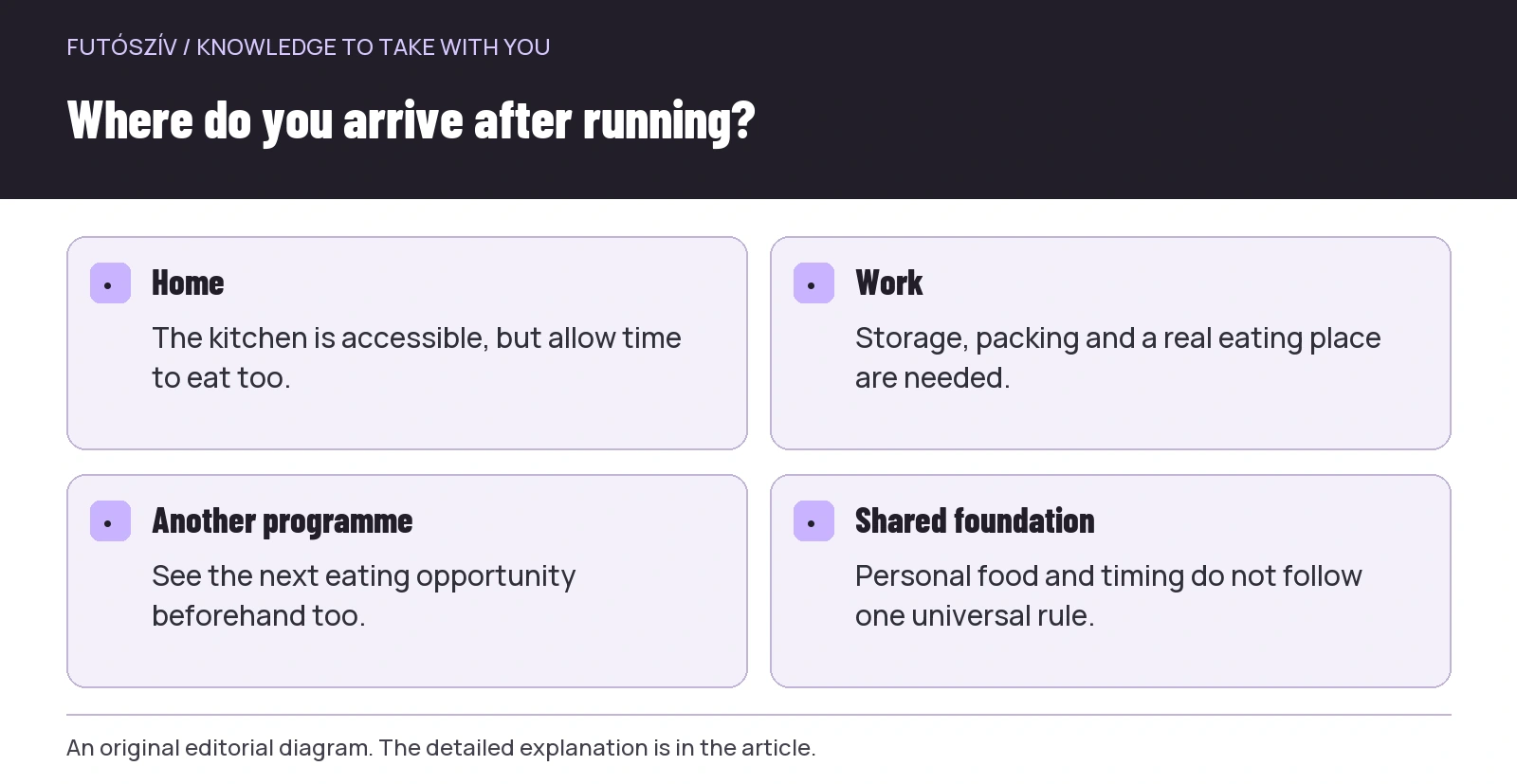 Enlarge diagram
Text version of the diagram
- Home
- The kitchen is accessible, but allow time to eat too.
- Work
- Storage, packing and a real eating place are needed.
- Another programme
- See the next eating opportunity beforehand too.
- Shared foundation
- Personal food and timing do not follow one universal rule.
Do not let the rush decide fluids either
Morning opportunities to drink should be accessible and match personal fluid-replacement needs. The cited Sports Dietitians Australia guide also treats pre-exercise fluids as part of preparation rather than consuming a large amount suddenly. This does not yield an identical litre target for every morning run. Health, environment and exertion matter. The organising part is simple: a clean glass or appropriate bottle, a suitable drink and access arranged in time. Fluids do not automatically replace the other tasks of eating.
Coffee and other familiar drinks can belong to the morning routine, but personal caffeine tolerance and suitability are separate questions. Do not start from general sporting promises or automatically increase amounts because of early training. Clarify particular health restrictions or medication questions with an appropriate professional. Within the everyday timeline, examine which drink you consume, when and under which conditions. Observing habits may help consultation but is not personalised caffeine or fluid dosing.
If waking runs late, have a sensible alternative
Prepare a flexible option B for less time. This may be another familiar meal solution, an appropriately transportable packed meal or changing how the day’s run is arranged according to your circumstances. Every morning task need not be squeezed into the same narrow period. Change should not automatically mean disregarding eating and comfort. Considering personal priorities and options beforehand makes decisions easier than improvising breakfast, travel and training all at the door.
In an illustrative case, the original plan allows a calm breakfast at home, but unexpected family tasks leave no room for it. With a known, appropriate packable option and a real place to eat later, the day can adapt more flexibly. Elsewhere, packing conditions may be missing, requiring another solution. These are not personal dietary prescriptions; they show planning logic. A backup helps when its entire path works rather than being only a name on the calendar’s edge.
After trying, improve the specific obstacle
After a few usual mornings, examine what worked. Was choosing suitable food difficult, did preparation take too long or did leaving for work after running squeeze out eating? Improving one point is often enough: preparing equipment, a proven meal card, appropriate packing or rearranging the entire timeline. Observe personal comfort factually and have persistent symptoms assessed by an appropriate professional. Every morning need not become a new nutrition experiment.
In a good morning running routine, eating has a real place, food is accessible and adaptable to personal needs. Waking, running, getting ready and starting work together make the morning; the plan needs to see the whole. Rather than simply before or after, more precise decisions can follow: under which circumstances, with which suitable option and which flexible backup will you set out? A system fitting your morning helps more than a memorised timetable from another runner.
Sources and further reading
- NSWIS: This is why athletes should eat breakfast
- Sports Dietitians Australia: Pre-exercise fuelling
- Nébih: Shop wisely
How Futószív articles are prepared: our editorial guidelines.