Seven precisely fixed dinners may not be the best plan for a changing working week. If finishing times, travel and running regularly shift, a system offering real opportunities to eat in several situations can help. The aim is not complete control over the routine but fewer rushed decisions and accessible food. The following method is for healthy adults’ everyday organisation. Food examples are not personalised portions or diets prescribed for training; appropriate professional guidance takes priority with allergies, illness, special diets and individual sports nutrition goals.
Plan the opportunity rather than fixing an uncertain time
First separate fixed and moving parts. You may know when work starts but have a variable journey home. There may be a guaranteed lunch break without always having reheating facilities. Describe these simply: fridge available, microwave uncertain, no calm eating place en route. The plan then does not belong to an invented ideal day. Beside an uncertain line, choose a solution that works within known conditions or allows a switch to another option at a point identified beforehand.
A switching point might be when it becomes apparent you will not get home for the planned meal, so you choose the previously known option at work or along the way. This is not a rigid clock rule or a requirement to wait out hunger. It helps avoid having to invent a new place, meal and access all at once at the last minute. Actual eating needs to fit your own needs, comfort and circumstances. A flexible plan works well when it treats change as an expected situation rather than evidence of the day’s failure.
Three levels of preparation, with equal care
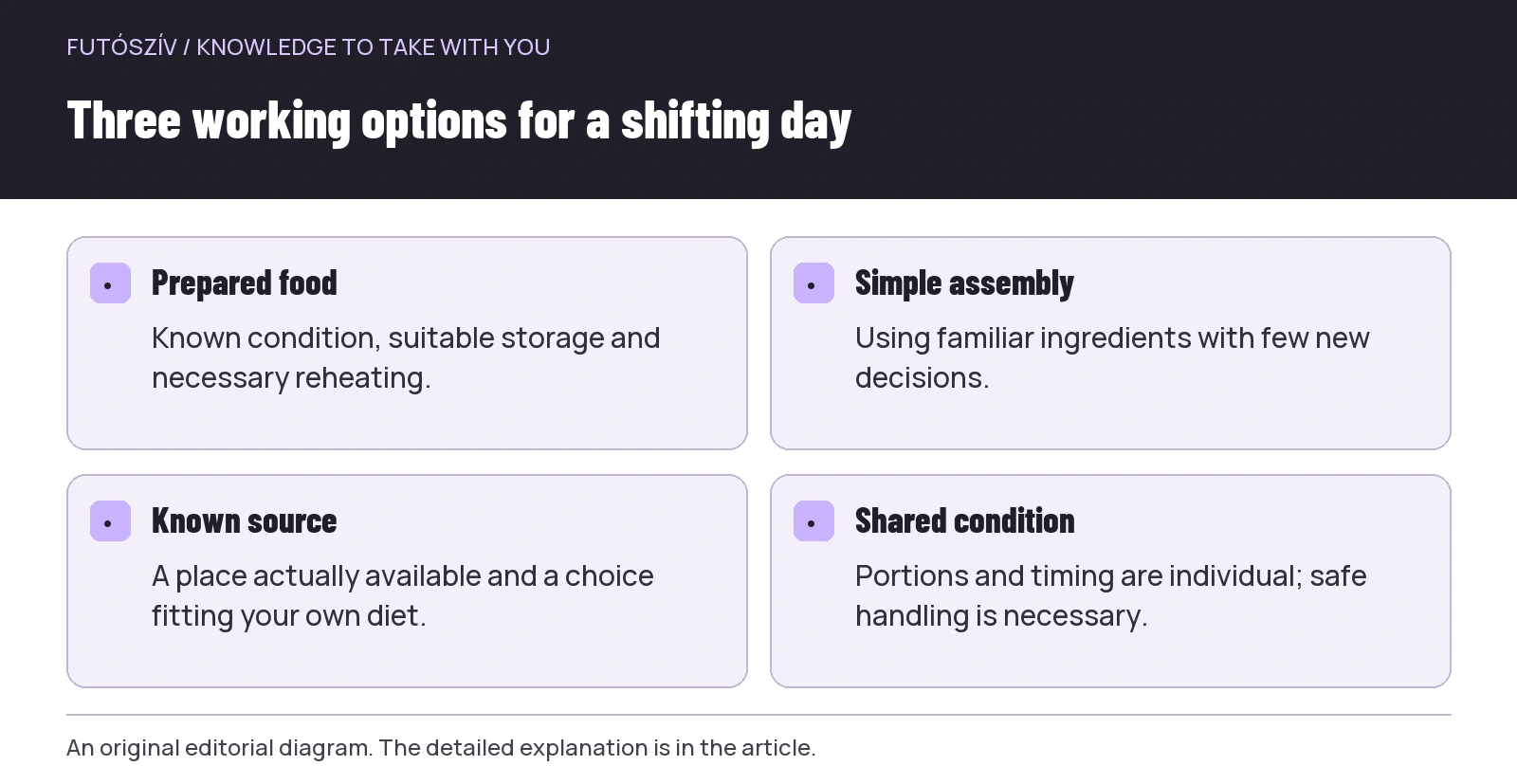
The first level is food prepared earlier and stored appropriately. The second is a dish assembled in a few steps. The third is a known source of food. None is morally superior to the others. Cooked food in a container can be stored badly, and a purchased meal can be appropriate for your needs. The levels describe preparation and access work. If the day offers fewer opportunities, you can switch levels without simply removing eating from the plan.
Have one or two genuinely usable examples for each level. Do not collect a long, untried list. A meal you like, a known source and suitable storage are worth more than many ideas requiring new ingredients to be bought that day. The Australian Institute of Sport nutrition education modules treat planning and adequate energy intake as important sports nutrition questions. Everyday organisation helps make these achievable; the three-level system does not itself determine personal amounts or how they fit training demands.
 Enlarge diagram
Text version of the diagram
- Prepared food
- Known condition, suitable storage and necessary reheating.
- Simple assembly
- Using familiar ingredients with few new decisions.
- Known source
- A place actually available and a choice fitting your own diet.
- Shared condition
- Portions and timing are individual; safe handling is necessary.
First level: prepared, but not indefinitely storable
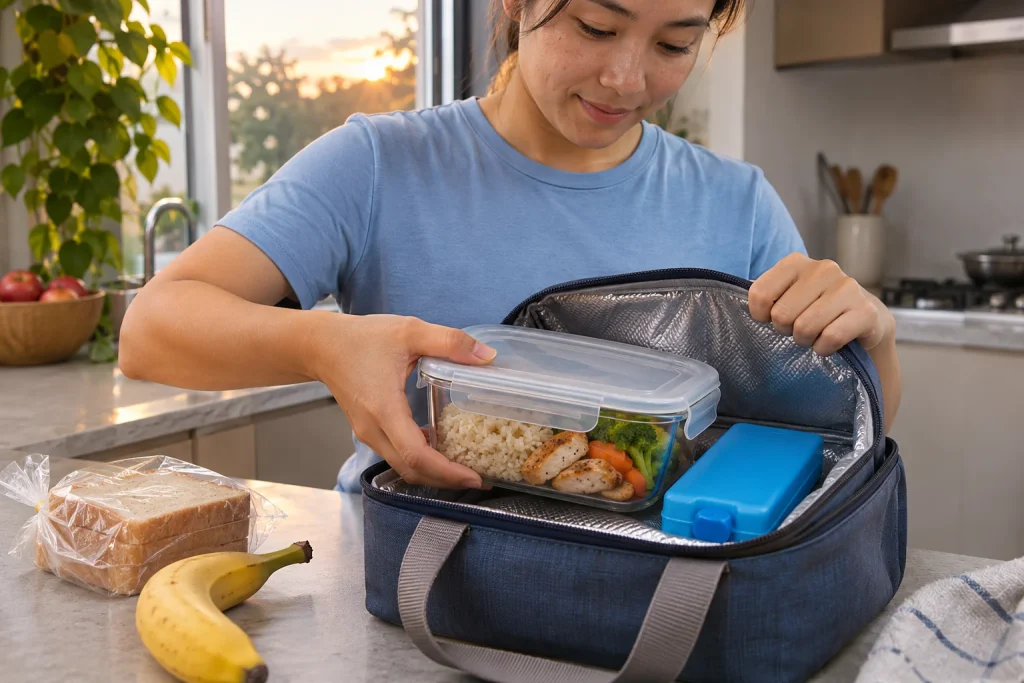
A backup at home may be a main meal made to your own recipe and portioned safely if you follow chilling or freezing arrangements appropriate to the food and circumstances. Label the container with contents and preparation or storage date. Plan necessary thawing and reheating too. A frozen meal is not instantly usable merely because you know where it is; suitable thawing and preparation facilities are needed. If taking it to work, safe transport and storage there matter just as much as preparation at home.
The Nébih Menu Planning Without Leftovers publication links storage suitability to the type of food, appropriate temperature and timely chilling. Do not therefore base the system on keeping any Sunday-cooked food in the fridge all week without checking. Follow the particular food’s safe path. Freezing does not correct previously unsuitable storage either. A backup counts in the plan only as food in a known condition that can be handled appropriately, not as uncertain leftovers.
Second level: meals assembled in few steps
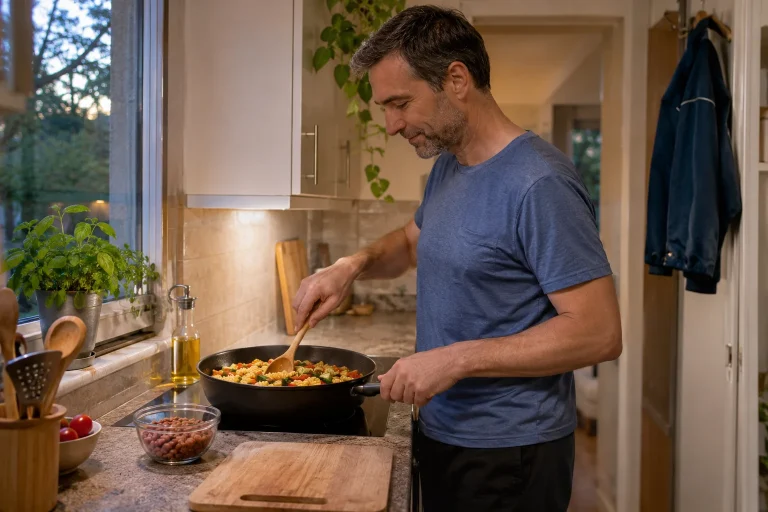
A simple hot meal might be pasta prepared according to the package with a tomato and vegetable sauce and a protein source fitting your diet. If using canned pulses, follow the label and instructions after opening. For a bread-based meal, choose suitable toppings, prepared vegetables and other accompaniments you need. These are ideas, not nutritionally identical portions or amounts sufficient for everyone. Simplicity here comes from familiar ingredients and few decisions, not a compulsory reduction in food quantity or complexity.
Another option at home is an appropriately cooked egg dish with bread and vegetables, if it fits your diet. A no-cook version might be yoghurt or a suitably chosen alternative with a familiar cereal base and fruit; different products’ compositions need examining separately. If you want a hot meal instead of a cold one, the convenience system need not make you stick with it. Try your own favourite options beforehand on a calm day so the busy week does not require executing an unfamiliar recipe.
A small meal card may help more than a whole recipe book
Write down a few proven dishes so the ingredients and first action are immediately visible. For example, pasta dish: prepare water, cook according to the package and meanwhile prepare the familiar sauce appropriately. Or bread-based meal: suitable bread, a topping fitting your diet and cleaned accompaniments. Do not promise an exact preparation time for every kitchen if you do not know it. The card supports your own routine: what to get out and in what order. It does not shorten or omit food-safety and package instructions.
Cards can note which dishes need chilled ingredients and which require cooking or prior thawing. This prevents choosing a meal at your most tired moment that is not actually ready for preparation. Keep the menu small and functional. Too many choices may create a new decision burden, whereas three different favourites can be enough to start. Complement the meal according to your own appetite and needs; the card does not control the portion. Organising arrangements and personal nutritional needs work together.
| Situation | Possible level | Condition to clarify beforehand |
|---|---|---|
| Little time at home | Simple assembly or suitable prepared food. | Actually accessible ingredients and necessary preparation. |
| Workplace fridge and reheating facilities | Prepared food transported safely. | Storage, reheating and an opportunity to eat. |
| Travel without refrigeration | Food or a source suitable for those conditions. | Not every packed meal can be kept in a bag. |
| Changed training time | An option coordinated with the day’s other meals. | Individual comfort and needs. |
| Late-night arrival | A familiar option requiring few decisions. | Do not begin the entire ingredient search then. |
Third level: a known place to obtain food
Look at where suitable food is available on your usual route and at which actual times. The aim is not to create a restaurant ranking but to know an option working within your routine. Check current opening hours, selection and information required for your diet. A place remembered long ago may no longer offer the same range. With a special diet or allergy, clarifying ingredients and appropriate handling is particularly important and cannot be left to the memory of a usual order. Interpret the specific choice alongside your needs.
Taking purchased food home and storing it are tasks too. A takeaway container alone does not solve appropriate handling of hot or cold food. If a longer activity follows en route, consider that before choosing. Do not plan a day in which food waits for hours under uncontrolled conditions. Buying food is a genuine option B only when the entire path to eating is arranged. Convenience and food safety both determine whether a particular choice is usable on a changing working day.
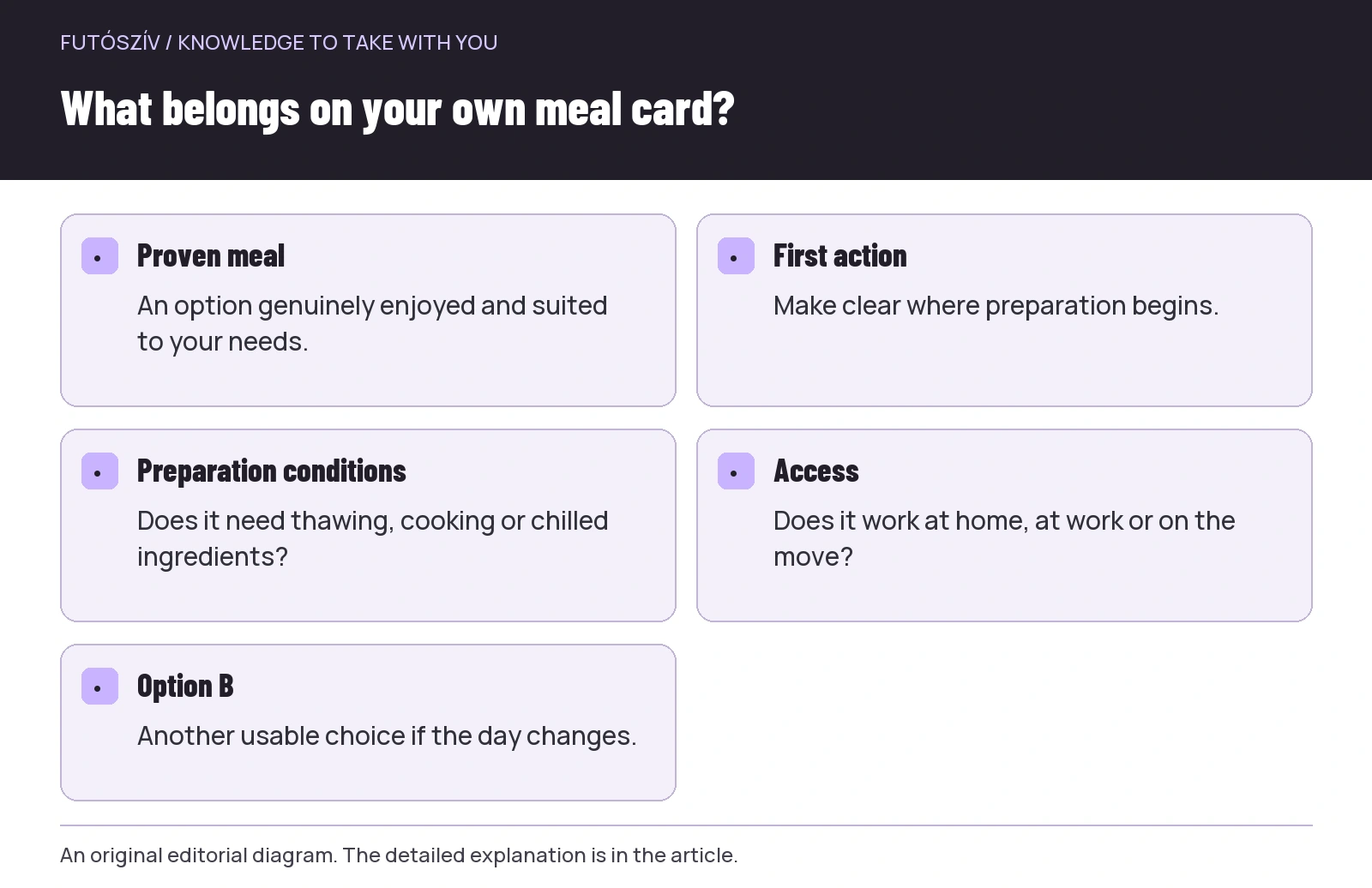 Enlarge diagram
Text version of the diagram
- Proven meal
- An option genuinely enjoyed and suited to your needs.
- First action
- Make clear where preparation begins.
- Preparation conditions
- Does it need thawing, cooking or chilled ingredients?
- Access
- Does it work at home, at work or on the move?
- Option B
- Another usable choice if the day changes.
When training moves into a meal’s place
The NSWIS sports nutrition Q&A addresses advance organisation of the whole day when sport falls at a usual meal time. Here we use the practical point that changing training should not quietly erase eating from the day. Precise timing, quantity and food choices need to fit your own comfort, workload and needs. If this is a recurring question that is difficult to resolve, work with a sports dietitian on a personal plan for your actual work schedule.
A run moving later does not automatically mean all eating must wait until the end. Equally, a general article cannot prescribe one pre-exercise meal and time suitable for everyone. Briefly record your own experience specifically: in which situation food was unavailable, what felt comfortable and under which circumstances symptoms occurred. Do not try to address persistent or recurring health symptoms solely through an organising spreadsheet. A note of the routine can support appropriate professional consultation, not replace it.
Do not let packing become a separate surprise
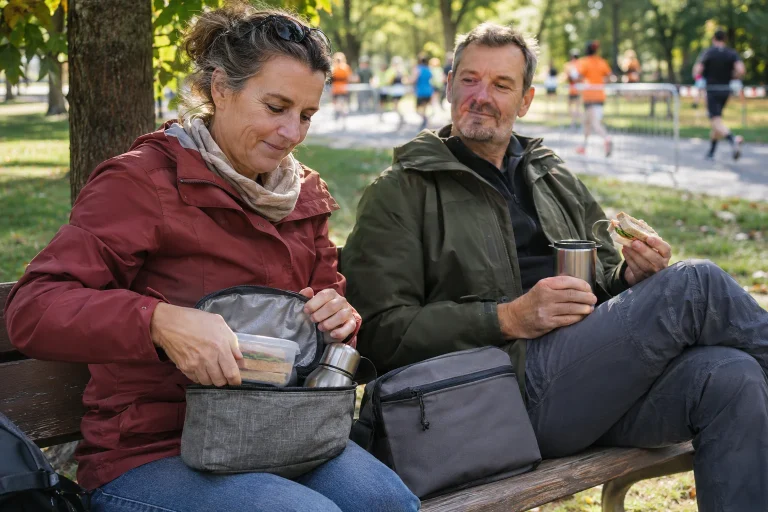
Choose a suitable, clean food container and plan separation from running equipment. A poorly sealed container squeezed beside used shoes and wet clothing is not a good organising solution. For food needing refrigeration, provide appropriate transport and storage conditions. The Nébih information on shopping and transport home also highlights separation and keeping necessary products cold. The principle matters for a workday packed meal too: the safe path of food should not break down when packing a sports bag.
Include cutlery, a napkin and washing the container later in the routine too. You do not need spare sets of everything, but resolving a frequently missing small item can prevent much rushing. A spoon left at home is not a lack of nutritional knowledge, yet it can obstruct a planned meal. Do not leave a used container sealed among equipment for days; cleaning and preparing for the next use belong together. The everyday system then extends beyond making the food and remains manageable into the next day.
Improve one bottleneck for the following week
If you plan a new recipe system and a major shop for every disrupted day, the solution itself may become a burden. At the end of the week, choose the most common obstacle instead. Was food unavailable between work and running? Did the late-evening meal require too many actions? Was refrigeration unresolved? Each calls for a different change. A useful meal card, suitable storage or clarifying an actually available food source may be more targeted than creating an entirely new diet. Detailed nutritional needs remain a separate question.
A system for a changing working week works well when it supports appropriate eating opportunities in several everyday situations. Prepared food, simple assembly and known sources can work alongside one another. Food should remain enjoyable, suited to your own needs and safe to handle; the plan should allow adaptation to the real routine. Instead of another rigid task list alongside running and work, this provides less uncertainty and more genuinely achievable choices.
Sources and further reading
- AIS: Performance Nutrition HQ Modules
- NSWIS: What should I do if I train during meal times?
- Nébih: Menu planning without leftovers
- Nébih: Shop wisely
How Futószív articles are prepared: our editorial guidelines.