A pre-run snack is useful when it fits your own needs and actual timetable. It is not a compulsory ritual before every activity and does not automatically replace main meals missed earlier in the day. It is a smaller eating opportunity best planned alongside your whole diet and training. In everyday life, the best selection often consists of a few familiar, easily accessible foods you can store appropriately and enjoy eating.
This article offers adult recreational runners a practical selection system without personalised portions or nutrient prescriptions. With a known allergy, illness or special diet, follow your own professional guidance. Do not try to resolve recurring gastrointestinal symptoms through an increasingly narrow food list. A sports dietitian can help decide which eating routine fits your load. The formats presented here are starting ideas, rather than training instructions to follow as identical recipes for everyone.
First question: where does the snack fit in the day?
Check when and what you ate earlier, when the run starts and what load you plan. Leaving for an easy loop a shorter time after your usual lunch differs from a situation where work and a long journey have passed since lunch. The snack’s purpose follows from that situation. Do not automatically attach a new food to the run time while leaving the rest of the whole day disorganised.
The Sports Dietitians Australia guide to pre-exercise eating emphasises that there is no single best choice for everyone. Timing, the food’s character and individual tolerance belong together. In practice, this means choosing a snack by more than a product name. You also know when you will eat it, how long remains before movement and what experience you previously had in a similar situation.
Identify the actual eating opportunity. Running for a bus, changing quickly or a pre-session briefing may not allow calm eating. If the bag is accessible only after the run, it does not work as a pre-departure option. A snack needs space and time even when preparing the food takes little work. Checking access is the first step, rather than a minor afterthought once the product has been chosen.
You can build a small selection from everyday foods too
A bread product or baked item fitting your diet can be an easily portioned format. The precise product, topping and amount determine the combination you get. A simple slice of bread and a richly filled pastry are not the same choice. If you seek a comfortable, familiar option close to training, start from actual ingredients and your own previous experience. The broad category “bakery product” is not a precise enough reference.
With fruit, transport and preparation matter too. A whole fruit suitable for you needs different equipment from a pre-cut version releasing juice. Consider whether washing, peeling, a container or utensils are needed, and where waste will go appropriately. Do not try to predict your comfort from another runner enjoying the same food. Fruit type, quantity and timing matter together in the particular situation.
For a cereal-based biscuit, bar or other packaged product, the label helps identify the precise choice. Ingredients, allergens and information for the whole pack or a serving can differ. A sporty name in large letters does not replace that information. Even one flavour of a familiar product is not necessarily identical to every other. Check the pack in your bag rather than merely remembering packaging seen earlier.
For yogurt or another combination needing refrigeration, first check whether appropriate storage is possible. A favourite food may suit you well on a day at home while not fitting the same way into an all-day journey without refrigeration. Suitability of the food format and available storage are separate questions. If necessary conditions are absent, choose another option; do not abandon a food-safety requirement for the run.
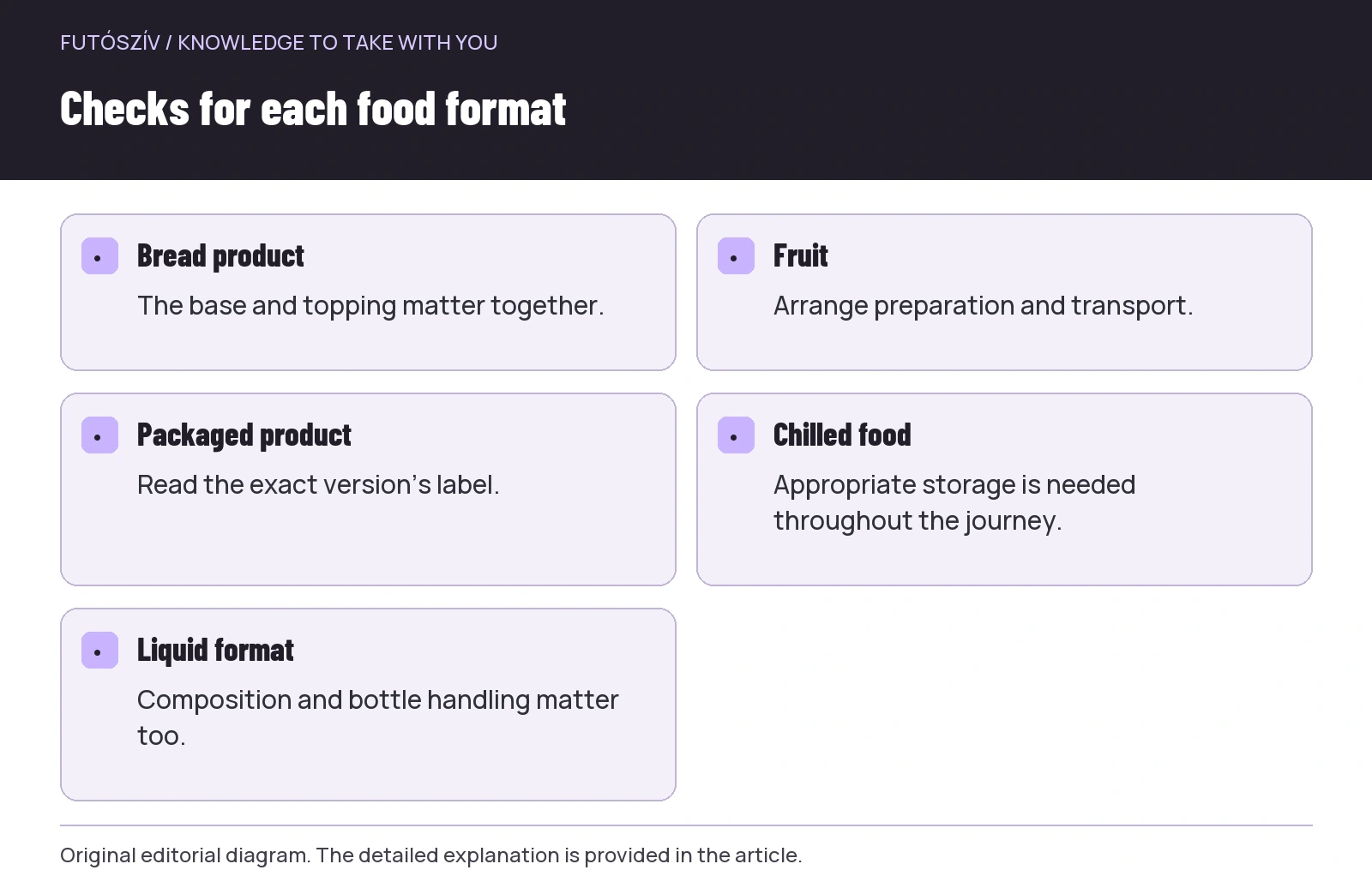 Enlarge diagram
Text version of the diagram
- Bread product
- The base and topping matter together.
- Fruit
- Arrange preparation and transport.
- Packaged product
- Read the exact version’s label.
- Chilled food
- Appropriate storage is needed throughout the journey.
- Liquid format
- Composition and bottle handling matter too.
Choose consciously between liquid and solid forms too
Some people find a softer or more liquid combination comfortable in a particular situation; others prefer food easily held in the hand. Format alone does not identify the complete composition or necessary amount. A large smoothie made from many ingredients is not automatically a small meal either. Check what it contains and the role you intend for it in the day. Work with the actual combination rather than the product or recipe name.
Food in a cup or bottle still needs appropriate containment, cleaning and refrigeration where required. If you will consume a drink made in the morning much later, plan the entire intervening journey. A dry bar may be more convenient when travelling, but its ingredients and your tolerance still need checking. Consider several points together: preferred texture, specific contents, timing and safe handling under actual conditions.
The British Dietetic Association sports nutrition overview places daily eating patterns and carbohydrate intake adapted to load within a broader framework. A snack is not a standalone performance trick. Assess your needs from the whole day and the session’s demands. Sports foods may be convenient tools in some situations, but do not make everyday food choices or an appropriate overall diet unnecessary.
| Food format | Practical advantage | What should you check? |
|---|---|---|
| Bread product | Easy to pack | Specific product, topping and your own portion |
| Whole fruit | May require little equipment | Preparation, transport and your own experience |
| Packaged bar | An easily identifiable version | Label, allergens and any caffeine |
| Chilled combination | Convenient at home or with suitable refrigeration | The whole storage and transport journey |
| Drink or softer food | Offers another texture | Composition, container and consumption time |
The topping and addition are part of the choice too
A topping can take a familiar base in many directions. The spread on bread, coating on a cereal bar or seed-and-nut mix beside fruit changes the actual food. When looking for your own comfortable option, try the complete combination. Do not simply remember that bread worked if you eat it next time with an entirely different topping and quantity. Naming a recognisable personal version helps more than an overly broad food category.
If you want a new topping, get to know it on a calmer occasion first. Change only one detail where possible during a pre-session trial. Alongside ingredients, seasoning, serving temperature and texture can differ from the familiar. The aim is not avoiding every novelty, but knowing what you are trying. Testing several new flavours and products together on the morning of an important event provides little useful experience.
With an allergy, apparently identical packaging is not enough either. The ingredients list and allergen information belong to the particular product. For food offered communally, you may also need to ask about preparation circumstances. Follow your prescribed diet consistently; running is not a separate rule system in which previously necessary checks can be dropped. If composition is uncertain, do not take on guesswork at the last moment.
Transport: food should be accessible and in appropriate condition
A snack requires preparation even when the food can be bought ready-made. The Nébih shopping guide also highlights appropriate transport of foods needing refrigeration. For your own bag, consider circumstances from morning departure until consumption. The journey to a workplace fridge and the onward trip to the running location may be two separate stages.
Put drier food in packaging that protects it from crushing and keeps it clean. Fruit should not travel in the same compartment as shoes and used clothing. Carry runny components in a container genuinely suitable for them, and keep necessary utensils clean too. A secure lid is not refrigeration, and a cool bag does not replace the food’s own storage instructions. The two items serve different purposes.
Do not put food at the very bottom of a kit bag intended for baggage drop if you want to eat it before running. Make a backup pack recognisable, but check its date and condition occasionally. A damaged pack travelling in a bag for months is not automatically usable because it was originally intended as a reserve. The system is predictable when you review supplies occasionally and deliberately replace what you use.
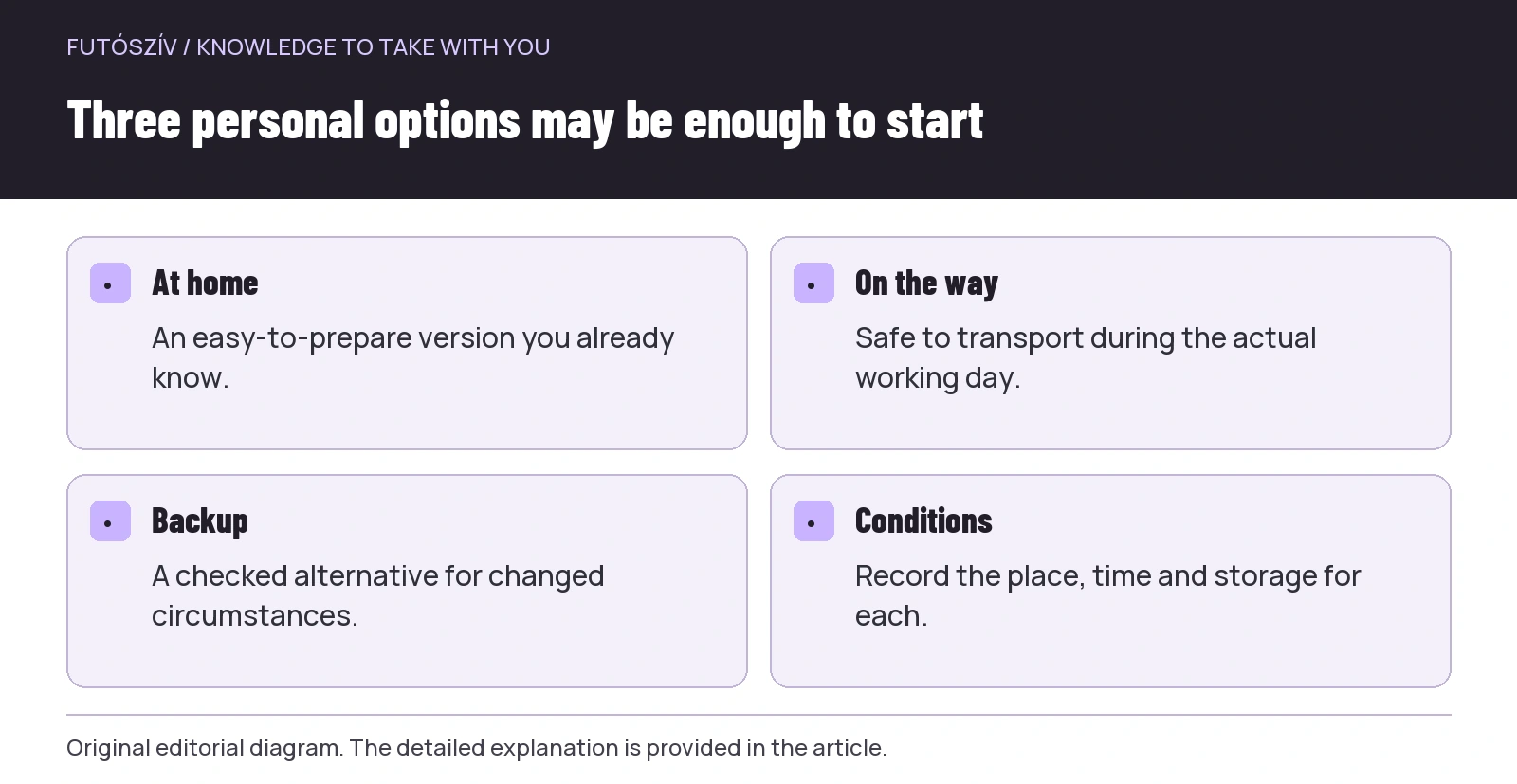 Enlarge diagram
Text version of the diagram
- At home
- An easy-to-prepare version you already know.
- On the way
- Safe to transport during the actual working day.
- Backup
- A checked alternative for changed circumstances.
- Conditions
- Record the place, time and storage for each.
Build your own three-option selection
The first option should be something easily accessible at home that you have already tried. Note the ingredients and a brief preparation sequence. The second may suit travel or a working day, with storage you can manage. The third should be a checked backup for a changed eating opportunity. You do not need a separate sports product for every possibility. The aim is to collect manageable, familiar choices.
Beside each option, write a condition: where it is usable, what equipment it needs and what storage it requires. This offers real guidance instead of an “always good” label. For example, a chilled combination may be planned at home or with appropriate workplace storage, while another food may be practical in other circumstances. Naming the condition prevents automatically transferring one choice into every situation.
Do not copy your quantity from another runner’s figures. Appetite, daily eating, load and individual requirements matter together. If your needs are unclear, show the whole day’s timetable at a sports nutrition consultation. The selection can then be adapted to the individual plan. General food formats ease organisation, but do not provide an identical quantitative answer for every runner.
What is worth recording after a trial?
First, feasibility: could you take it out in time and eat calmly? Were texture, utensils and packaging appropriate? Then briefly describe your own comfort and actual eating and departure times. Add any new drink, harder run or unusually hot weather that day. The experience is then less likely to slide into an apparently certain judgement about a single ingredient.
One uncomfortable occasion should not automatically lead to excluding an entire food group. One comfortable occasion does not establish that the food suits every quantity and race situation either. A useful conclusion stays specific: in this combination, timetable and session, this is what you experienced. If the difference recurs or causes symptoms, the notes can support discussion with a professional.
When the day needs rearranging rather than the snack
If you try to make up for a missed lunch in the final minutes before departure on every running day, the problem may not be the absence of the right bar. Review lunch’s place, access and the work schedule too. The same applies if planned food repeatedly stays untouched because there is no utensil or calm opportunity. Changing one practical point in the whole process may achieve more than comparing further products.
A pre-run snack does not need its own complicated system. Have a few tested choices fitting your diet, know their storage conditions and when you can access them. Continue to consider the whole day and your load together. The snack then has a well-defined role: part of an appropriately developed routine you can use thoughtfully on a real working day and a calmer weekend alike.
Sources and further reading
- Sports Dietitians Australia: Pre-exercise fuelling
- British Dietetic Association: Sport and exercise
- Nébih: Vásároljunk okosan!
How Futószív articles are prepared: our editorial guidelines.