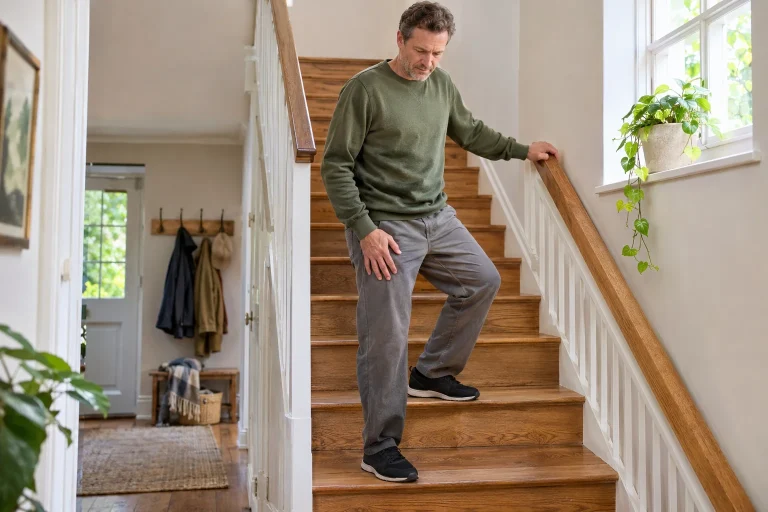
Going downstairs is easier, muscle soreness has faded and your running shoes are calling again. But are less pain, familiar movement and full sporting performance returning the same thing? Research after marathons follows several separate outcomes. Understanding them helps prevent a better day from becoming automatic permission to train and allows more precise questions about the next goal.
What do you mean when you say you have recovered?
Several kinds of recovery can be discussed after a marathon. How sore your muscles feel, how usual walking goes, how much force you produce in a standardised test and the workload planned for the next session are different questions. They relate, but do not mean the same outcome. Improving pain is welcome, yet is not an abbreviated version of a complete performance assessment.
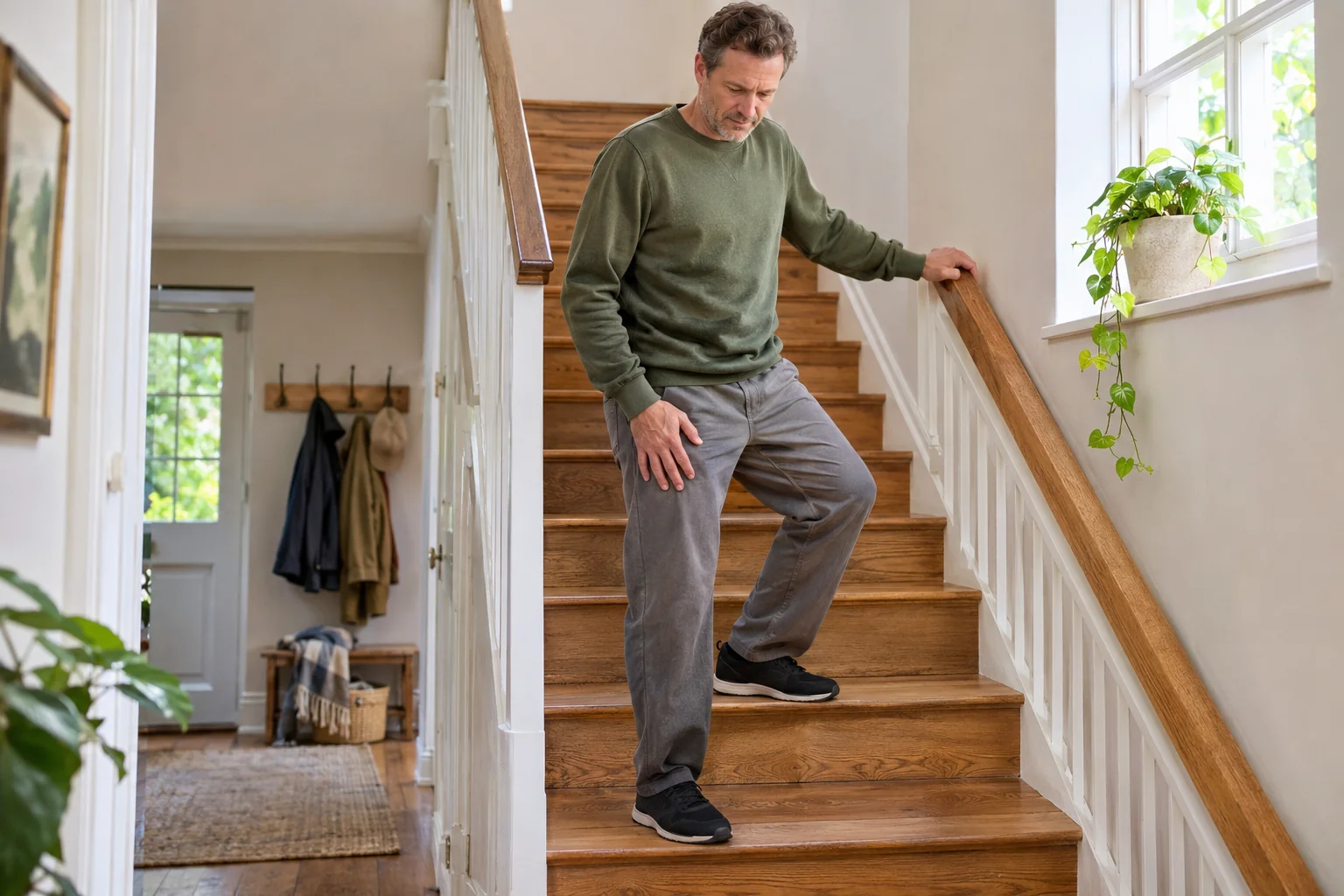
Here, movement quality means an everyday observation: has your usual movement changed, do you avoid one side, use the handrail differently or feel less certain during a familiar task? These are not home diagnostic tests or compulsory challenges. They describe daily movements that occur anyway, without forcing a trial.
Ask specifically, therefore: what improved, and what do I still lack useful experience of? Sitting down becoming easier is a real change. If your next goal is a fast interval session, that is another task not decided by sitting in a chair more comfortably. Precise interpretation of recovery preserves the distinction between an observation and the planned exertion.
The post-marathon study used several timelines
The comparative research examining the week after a marathon involved 64 finishers, mostly men, with average results of approximately three and a half hours. Researchers examined blood-based measures at several times before and after the race, and squat jumps at separate time points. Measured neuromuscular performance was therefore not simply another name for participants’ pain sensations.
After finishing, participants were randomly assigned to running, elliptical exercise and rest groups. Within the specific protocol, early running showed no adverse effect on recovery of the muscle-damage measures followed during the period examined, and a more favourable neuromuscular result also appeared. This observation came from a defined sample and controlled programme.
The study therefore does not become an instruction that everyone must run two days after a marathon. The particular programme, participants and measured outcomes together define the result’s meaning. For someone finishing with different history, a much longer completion time or symptoms, a personal decision cannot be tied to one study day. Research refines a question rather than granting permission without knowing the person.
 Enlarge image
Do not turn a jump-test result into a living-room challenge
A laboratory or research functional test has a specified method, measurement equipment and comparison baseline. A study following jump height does not mean you should prove recovery by jumping at home. Measurement’s value also comes from standardisation and interpretation. Repeating a painful or uncertain movement does not produce better personal information because of this.
Everyday observation can be simpler. Note how natural your usual short walk felt and whether any movement still makes you noticeably change execution. Do not create extra exertion merely to check. The diary aims to follow change, rather than extend the race’s aftermath with a new proving task every morning.
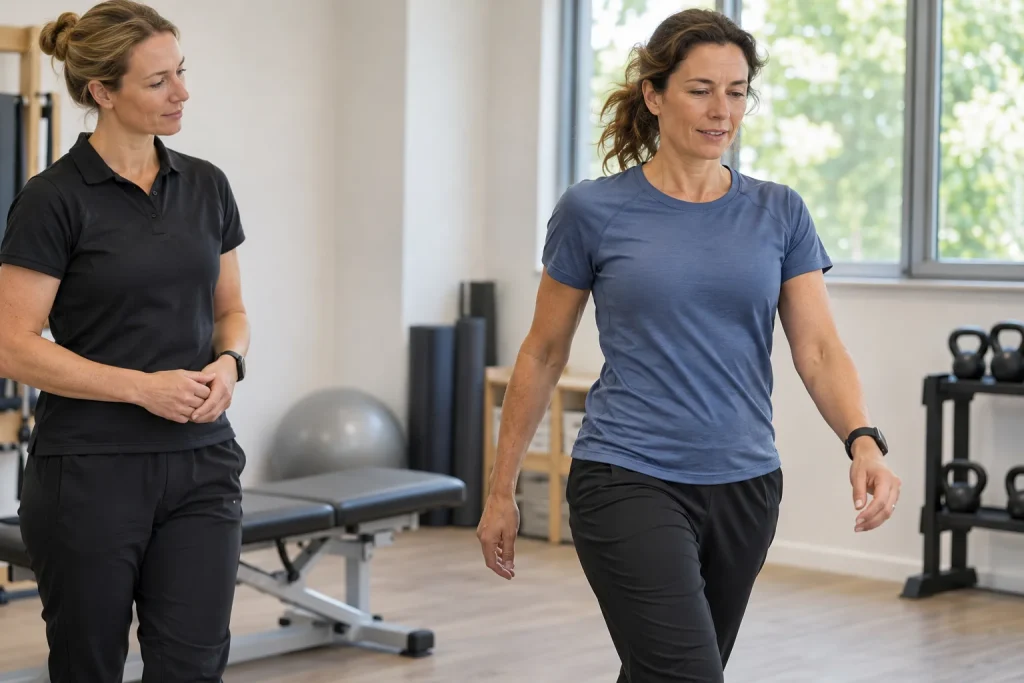
If consulting a professional, state which specific task you want to return to. Comfortable everyday movement, a short easy run and another hard race raise different questions. Assessment helps when it connects to that aim and considers symptoms, history and actual function. Every situation need not be compressed into one general ‘I am ready’ label.
A blood marker is not individual permission to train
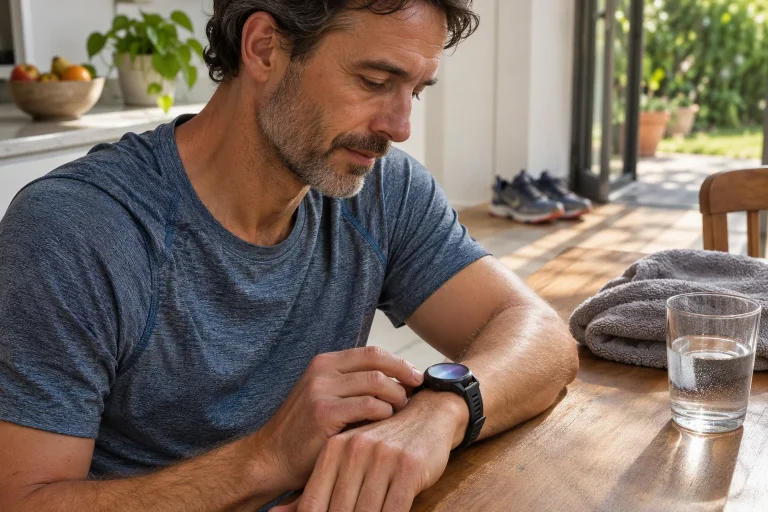
Creatine kinase and other laboratory measures in research are not home green lights equivalent to a sports watch display. The sample, measurement time and clinical situation all belong to interpretation. An average change in a paper cannot establish that your own value is definitely at the same point. This article does not recommend a training threshold derived independently from a lab value.
A recovery time point reported in research means the particular outcome was measured then and analysed in the chosen way. It does not automatically establish that every other bodily, movement-related or subjective process ended at the same time. If a study includes several measures, examine them separately. The shared word ‘recovery’ does not make all metrics interchangeable.
If laboratory testing takes place for a healthcare reason, interpret the result with the professional conducting the assessment. Symptoms, history and change over time matter together. Selecting a number from an online training article, measuring yourself against it and overriding advice on that basis is not a good solution. Research helps you ask questions; individual healthcare assessment is a different task.
Capability measured while fresh is not an unchanged reserve either
The laboratory research on marathon runners’ durability measured physiological characteristics both while fresh and after a longer run. Some measures changed; others did not differ significantly. This study is not a return programme for the days after a marathon, but illustrates that measurement conditions and timing form part of a result’s meaning.
Your previous fitness is therefore important history, but does not answer every current question. A pace feeling easy in preparation does not automatically make the first similar post-race session the same situation. Keep earlier experience as a comparison without allowing former ability to obscure what actually happens that day. Together they provide a more precise account.
Do not let the race result retrospectively dictate a compulsory recovery pace either. A good finishing time does not mean you must train again quickly, while a difficult race does not prove you will be unable to do anything for a long time. What matters for the next decision is the relationship between current function, symptoms and the planned task. An earlier performance in the calendar does not replace this.
Easy movement, an elliptical machine and rest: separate options
Different activities are different tasks, so should not automatically be treated as identical loads. Using an elliptical machine does not become exertion-free because it lacks a running step. Rest is not necessarily a blank box either: it can have a planned place in a programme. A research group’s name alone does not provide your own duration or intensity for the next day.
In practical planning, state the aim: everyday mobility, enjoyable activity or returning to a specific sporting task? If these merge, an activity called easy can become another performance test. Finishing planned activity should not depend on an app finally rating the day as adequate. Discuss the actual movement and experience rather than the label.
Translate ‘active recovery’ into your own sentence too. Exactly what did you do, for how long, and how did function change during and afterwards? This description tells a coach or healthcare professional more than ‘I recovered for forty minutes’. The actual response matters in determining the next step, rather than how gentle the session’s name sounds.
 Enlarge image
When is an observation diary not enough?
Do not try at all costs to call stronger-than-usual or worsening symptoms a normal race after-effect. The CDC information on rhabdomyolysis describes muscle pain more severe than expected, tea- or cola-coloured urine and marked weakness as important warning symptoms requiring immediate healthcare assessment. Symptoms alone do not establish the diagnosis.
This does not mean every muscle sensation after a marathon should be regarded as the same illness. It means certain symptoms must not be dismissed as soreness or tested with another workout. Your observations can be useful information in care, but do not replace it. An average recovery time online is not a reason to wait with a striking change.
Persistent symptoms, those substantially changing movement or those repeatedly worsening also need individual assessment. Describe precisely what happened in the race, when the symptom began and which everyday task it affects. A clear timeline is far more useful than self-diagnosis. Clarifying the healthcare question is the first task here; the training calendar can adapt accordingly.
Look at the process before the next goal
In the diary, distinguish the first post-race improvement, the return of usual daily movement and experience associated with sporting tasks. A long analysis every day is unnecessary. A few specific sentences preserve how the process developed and prevent a better morning immediately becoming a conclusion about every workload. Discussions about returning to training goals become more precise too.
If planning another race, look beyond the number of days between dates. The two events’ character, preparation history, execution of the first race and current function all matter. This one study cannot establish the same compulsory waiting time for everyone. Adapt the plan to the actual situation and name remaining questions separately.
Soreness disappearing is therefore good news, but only one observable part of recovery after a marathon. Pain sensation, function and performance measured in research offer different views. Preserving this distinction makes the next training decision less tied to one day or signal and more grounded in what actually occurred in your own recovery.
Sources
- Martínez-Navarro and colleagues: running, elliptical exercise and rest in the week after a marathon.
- Hunter and Muniz-Pumares: physiological characteristics while fresh and after a longer run.
- CDC: rhabdomyolysis symptoms and the need for healthcare assessment.
How Futószív articles are prepared: our editorial guidelines.