Several schedules meet at a family meal after a longer run. The runner’s return time may change, others may become hungry earlier and individual family members do not have identical needs. A well-organised shared table therefore involves more than making a large quantity. Choose food and a sequence of work that allow individual portions, appropriate preparation and a realistic serving time to be handled together. The aim is a feasible, enjoyable meal that does not require everyone to have the same plate or daily schedule.
This guide helps adult recreational runners organise household tasks. It is not a personalised recovery diet or a nutrition plan for children or pregnant people. Adapt family members’ meals to their own ages, health and needs. Where allergies or prescribed diets apply, both ingredients and preparation conditions must be suitable. The examples are kitchen work plans, rather than identical portion recommendations or performance promises for everyone.
Separate the runner’s individual plan from shared cooking
The British Dietetic Association’s sports-nutrition guidance highlights the particular importance of rapid refuelling when another training session or competition follows shortly afterwards. Individual recovery needs therefore depend on the specific load and timetable too. Do not automatically treat the family lunch time as a sports-nutrition solution suitable for every situation. If necessary, develop the individual plan with a sports dietitian.
Shared kitchen organisation addresses different questions: when food will be ready, who will do each step and how it will reach the table in an appropriate condition. A simple family dish can form part of a runner’s day without everyone needing a sports menu. Nor do other people’s portions determine the runner’s individual quantity. Different needs do not necessarily require cooking completely separate dinners; thinking through shared components and separate serving can often help.
Before the run, clarify when the shared meal can realistically be expected. An approximate return window may be more useful than a seemingly precise but uncertain minute. Starting food preparation still requires a concrete decision. If the dish needs finishing freshly, agree which update will trigger the final stage. The whole family should not leave cooked food on the counter while waiting for an uncertain arrival.
Plan the menu as separate components
Think in terms of a shared base, suitable main elements, a vegetable accompaniment and seasonings that can be adjusted separately. This is a way to divide work, not a compulsory plate ratio. The shared base might be something everyone concerned can eat, with separate components suited to individual needs. For allergies, establish separately whether shared preparation is appropriate; simply leaving something out afterwards may not be enough.
The New South Wales Institute of Sport’s meal-ideas guidance also emphasises that food-group proportions and portion sizes vary with the person, goal and activity. In family planning, the idea and the individual quantity therefore belong at different levels. Preparing a recipe together does not make everyone at the table have the same requirements. Adapt serving accordingly.
| Menu component | Work that can be shared | What remains individual? |
|---|---|---|
| Suitable base. | Shopping and the preparation required for that meal. | Quantity eaten and individual suitability. |
| Main accompaniment. | One or a few familiar options that can be prepared safely. | A choice fitting the diet and the required portion. |
| Vegetable accompaniment. | Appropriate preparation and separate serving. | Preference, individual restrictions and quantity. |
| Seasoning or dressing. | Known ingredients and a separate clean utensil. | Flavours and ingredients suitable for you. |
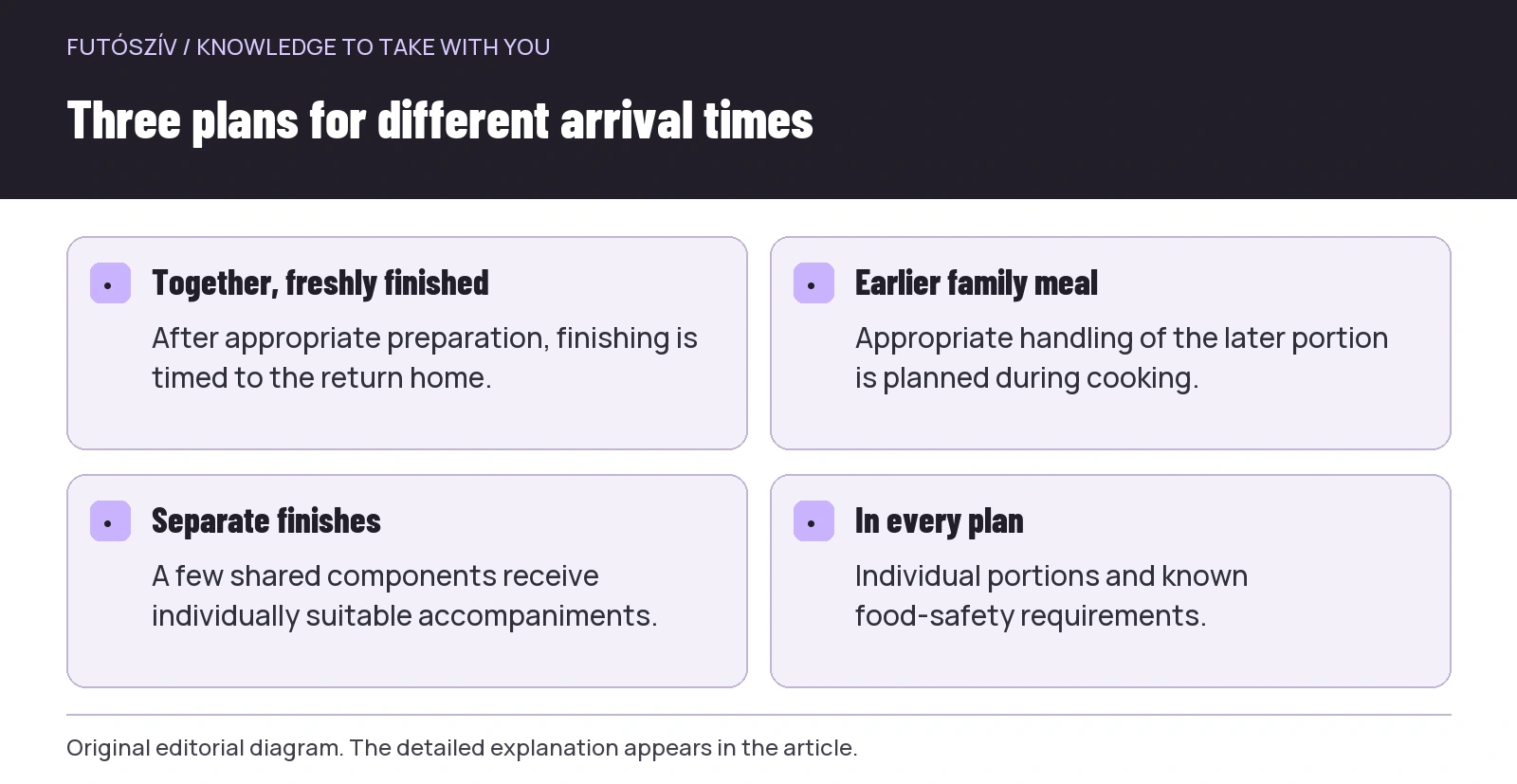 Enlarge diagram
Text version of the illustration
- Together, freshly finished
- After appropriate preparation, finishing is timed to the return home.
- Earlier family meal
- Appropriate handling of the later portion is planned during cooking.
- Separate finishes
- A few shared components receive individually suitable accompaniments.
- In every plan
- Individual portions and known food-safety requirements.
First plan: the final stage begins after returning home
This can work when the expected meal time also suits the rest of the family and finishing the dish genuinely involves a short, familiar task. Prepare ingredients and equipment according to their own safe-handling requirements, then time the final cooking step to the return-home update. Finished food need not wait for a long time. Make sure everyone understands the distinction between a prepared ingredient and finished food ready to eat.
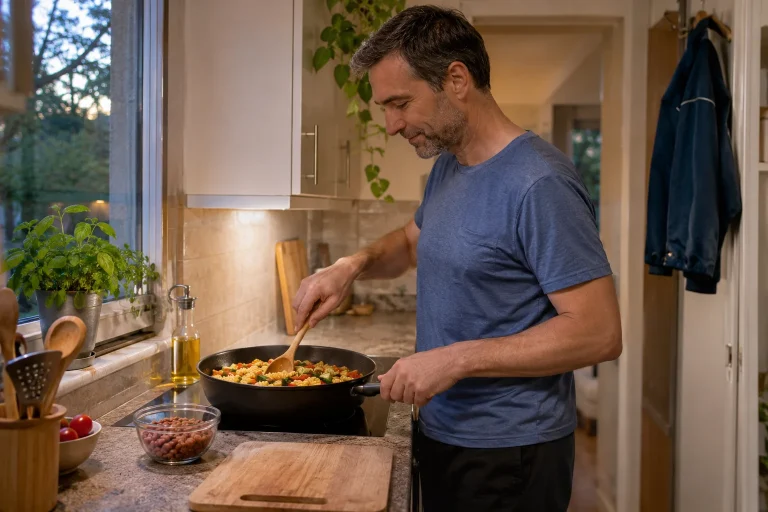
For example, a suitable pasta dish allows the sauce and pasta to be timed together. The NHS pasta and tomato sauce recipe starts cooking the pasta while the sauce is being made. The family-portion recipe can suggest a parallel sequence of work, rather than determine the runner’s individual quantity. For your own version, follow appropriate preparation for the specific products and the complete dish.
If the runner will not start working in the kitchen immediately on returning, account for this from the outset. Necessary washing and changing clothes are not an unexpected delay. The person responsible for cooking needs realistic information about when the meal can be served. Household work does not automatically all fall to the person who has just run, nor should it automatically all be left to everyone else. Agree the tasks beforehand, specifically and in a way that is manageable for everyone involved.
Second plan: the family eats earlier
If other people’s schedules require an earlier meal, handle that separately. The runner’s return is no reason for everyone to wait indefinitely. Choose a dish whose later portion can be appropriately and traceably handled for that food, or a version that can be finished freshly for the runner. Ingredients and shopping can remain shared while serving happens at different times. The individual eating plan also needs to account for the timing difference.
The later portion cannot simply stay on the kitchen counter waiting for the runner. Plan appropriate cooling and subsequent use when preparing the original meal. The Food Standards Agency’s cooking guidance also discusses appropriate cooling of leftovers and thorough reheating no more than once. Particular foods may have stricter, specific rules, so do not apply a single general storage time to every dish.
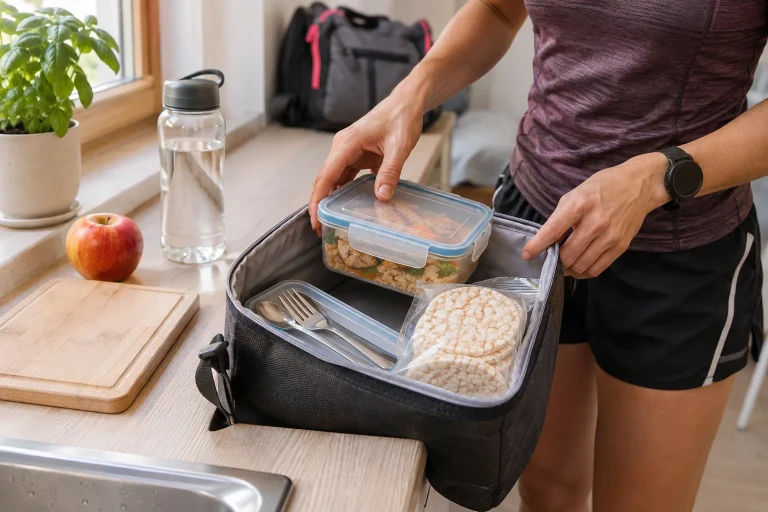
Make the runner’s reserved portion identifiable: what was made, when and how it was handled. If someone else finishes or reheats it, give them the information they need. “Made recently” is not precise enough when several containers and meals are involved. A short, legible label and a concrete handover can prevent repeated cycles of reheating and cooling.
Third plan: shared components with separate finishes
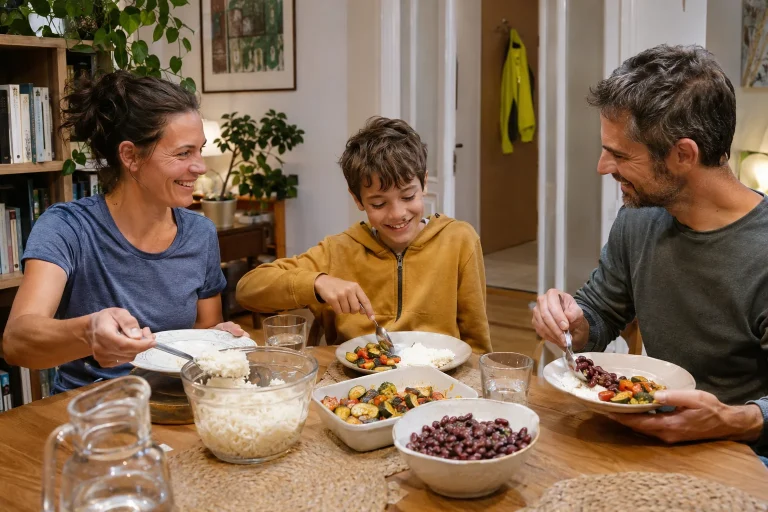
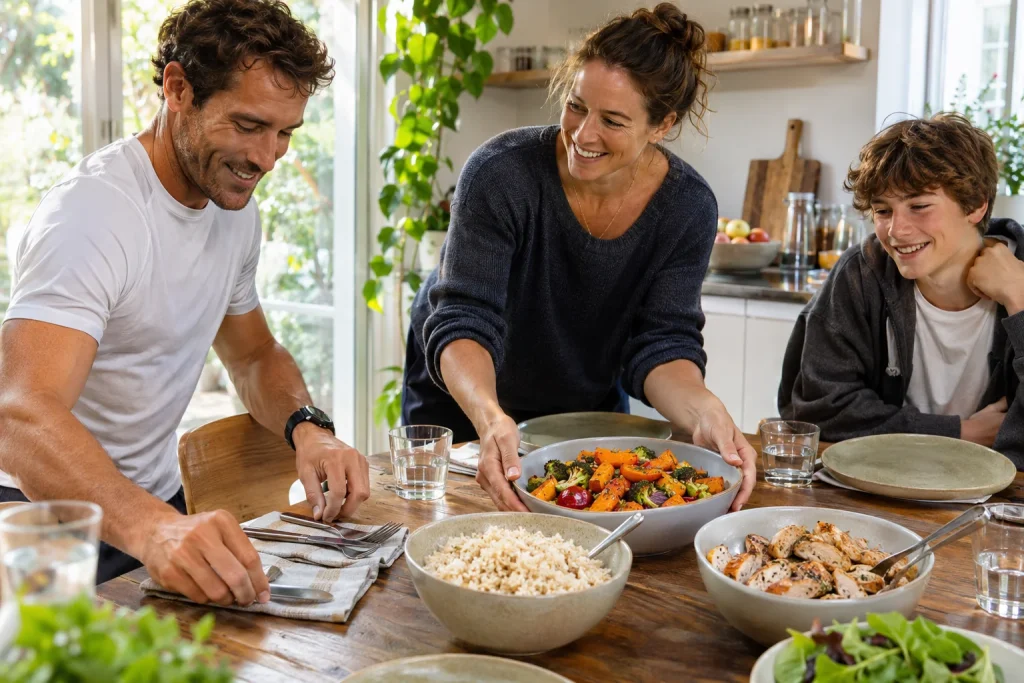
In this version, a few appropriately handled components are shared while the final dish may differ for each person. You could have a common side dish with separately prepared main ingredients, or serve known ingredients in separate dishes at the table. This is practical when people prefer different seasonings or accompaniments. Keep the number of variations realistic: two clearly manageable options may be worth more than many dishes being prepared hastily in parallel.
Separate finishing does not automatically provide complete allergen separation. If that is required, ingredients, surfaces and utensils must also be handled appropriately. Separate serving can, however, make the ingredients visible and allow individual quantities. The experience of sharing a table does not depend on every plate looking the same. Organisation should keep differences clear during cooking too.
Hand over an operation rather than a vague request
“Make some kind of side dish” leaves many decisions open. A more precise handover identifies the chosen food, required product and next operation. Who prepares the vegetables? Who starts cooking? Who finishes the main accompaniment and who sets the table? The person doing the task should know the equipment and appropriate method. Responsibility does not disappear simply because several people are cooking together.
Give a child only tasks appropriate to their age and ability, carried out with supervision. This article does not teach children to handle hot cookware or prepare raw ingredients independently. Family participation can mean simple table preparation or another appropriate activity. Safe kitchen work matters more than everyone working at the same moment on the same small surface.
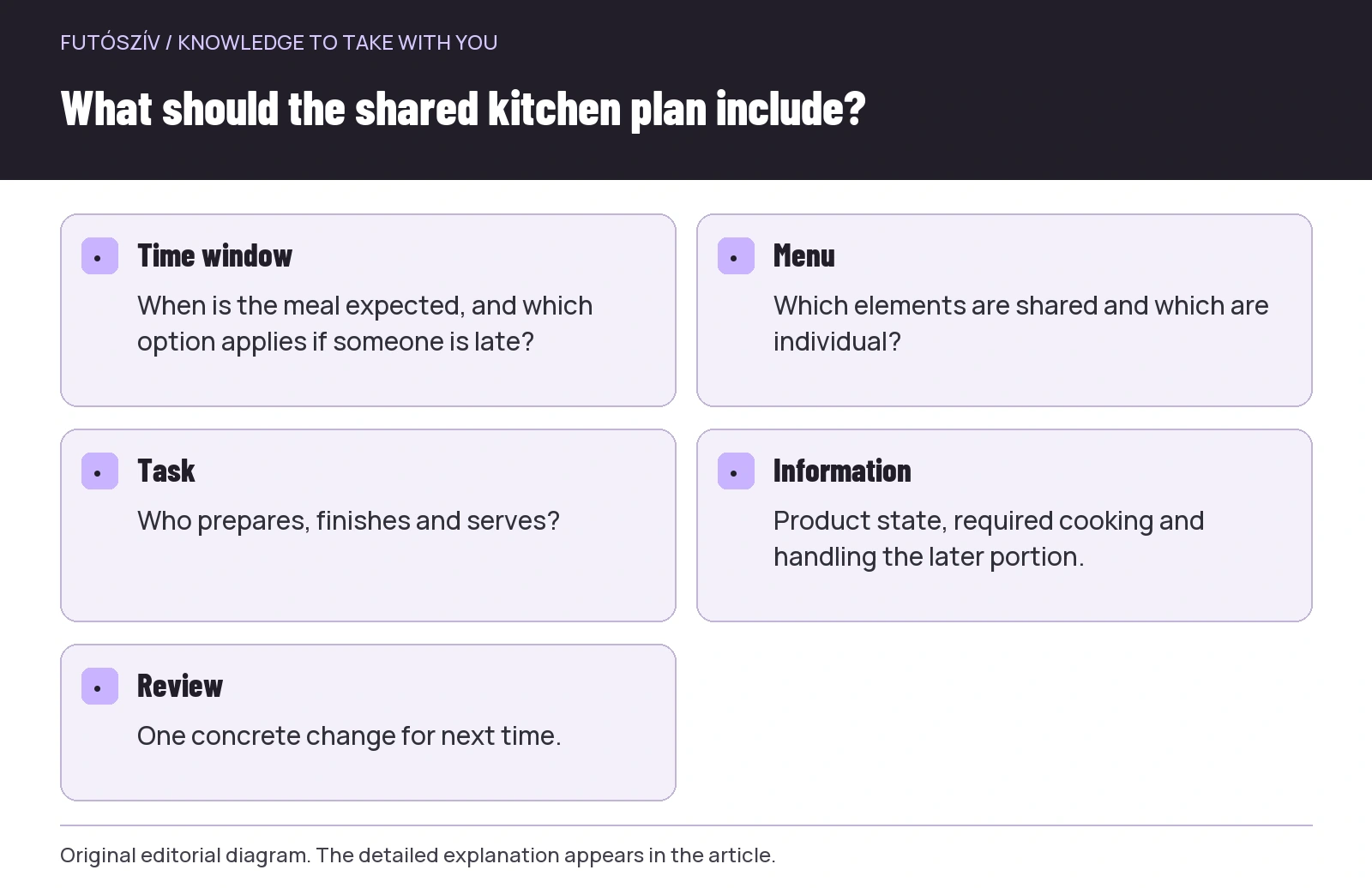 Enlarge diagram
Text version of the illustration
- Time window
- When is the meal expected, and which option applies if someone is late?
- Menu
- Which elements are shared and which are individual?
- Task
- Who prepares, finishes and serves?
- Information
- Product state, required cooking and handling the later portion.
- Review
- One concrete change for next time.
Choose the alternative for a delay beforehand
If the run takes longer, the next step in the cooking plan may change. Has the final stage not started yet? Within the applicable conditions, appropriately stored prepared ingredients may allow the plan to move later. Is finished food already on the table? The family’s meal and appropriate handling of the later portion then become separate decisions. Do not treat both situations with the same “we will just wait” response.
Keep updates short and factual: an expected arrival window and information needed for the cooking plan already agreed. If necessary, stop somewhere appropriate to communicate during the run; organising a meal is not worth using your phone in an unsafe situation. Planning can also become simpler if cooking does not require a fresh, precise update at every stage. A well-chosen dish can be made with little coordination.
Leave room for individual portions when serving
Whether serving from a shared pan or separate components, give each person a meal suited to their needs. A runner’s larger or differently composed portion is not a judgement on anyone else’s plate. Do not transfer an adult athlete’s portions or nutrient targets to children. Conversation at the family table can emphasise favourite flavours, shared food and the enjoyment of preparing it rather than checking one another’s quantities.
If the runner’s individual eating needs and the shared menu regularly prove difficult to reconcile, do not seek the solution in arbitrarily rewriting the whole family’s diet. Professional help is available for the individual plan, and the kitchen system can adapt to it. A shared base with appropriate additions is one possible format, but not the only good solution in every situation. Start from the realities of daily life.
A short Sunday meal-planning sheet
Write down that day’s meal window, chosen menu and three main tasks: preparation, fresh finishing and serving. Add the alternative to follow if someone is late, along with different individual needs. The sheet should help everyone in the household understand the same plan. You do not need a complicated timetable; a few clear decisions can reduce tension around returning home and hurried work in the kitchen.
After the meal, review what worked. Was the timing realistic? Did every necessary operation have someone responsible? Did the food reach the table in an appropriate condition, and could individual needs still be accommodated? Change one concrete detail for next time. A family meal after a longer run becomes a sustainable routine when it makes room for both the individual running plan and shared household work.
Sources and further reading
- British Dietetic Association: Sport and exercise
- NSW Institute of Sport: 38 balanced meal ideas for athletes
- NHS: Perfect pasta and tomato sauce
- Food Standards Agency: Cooking your food
How Futószív articles are prepared: our editorial guidelines.